
Roof Snow Removal
Ice Dam Now provides roof snow removal across 38 cold-climate states. No snow on the roof means no meltwater, and no meltwater means no new dam. Crews are licensed, insured and harness-certified, dispatch same day for active interior leaks, and bill by the crew hour at a rate quoted before dispatch. Dated photographs are supplied for insurance claims.
The cheapest ice dam is the one that never forms. Clearing snow off a roof in after a heavy fall removes the raw material a dam is made from.
Get Ice Dam Help Now
Clearing the eaves is what matters
The first three to six feet above the gutter line is where dams build, because that strip of roof sits past the heated part of the house. Taking the snow off that band removes the meltwater supply before the next thaw-freeze cycle can turn it into ice.
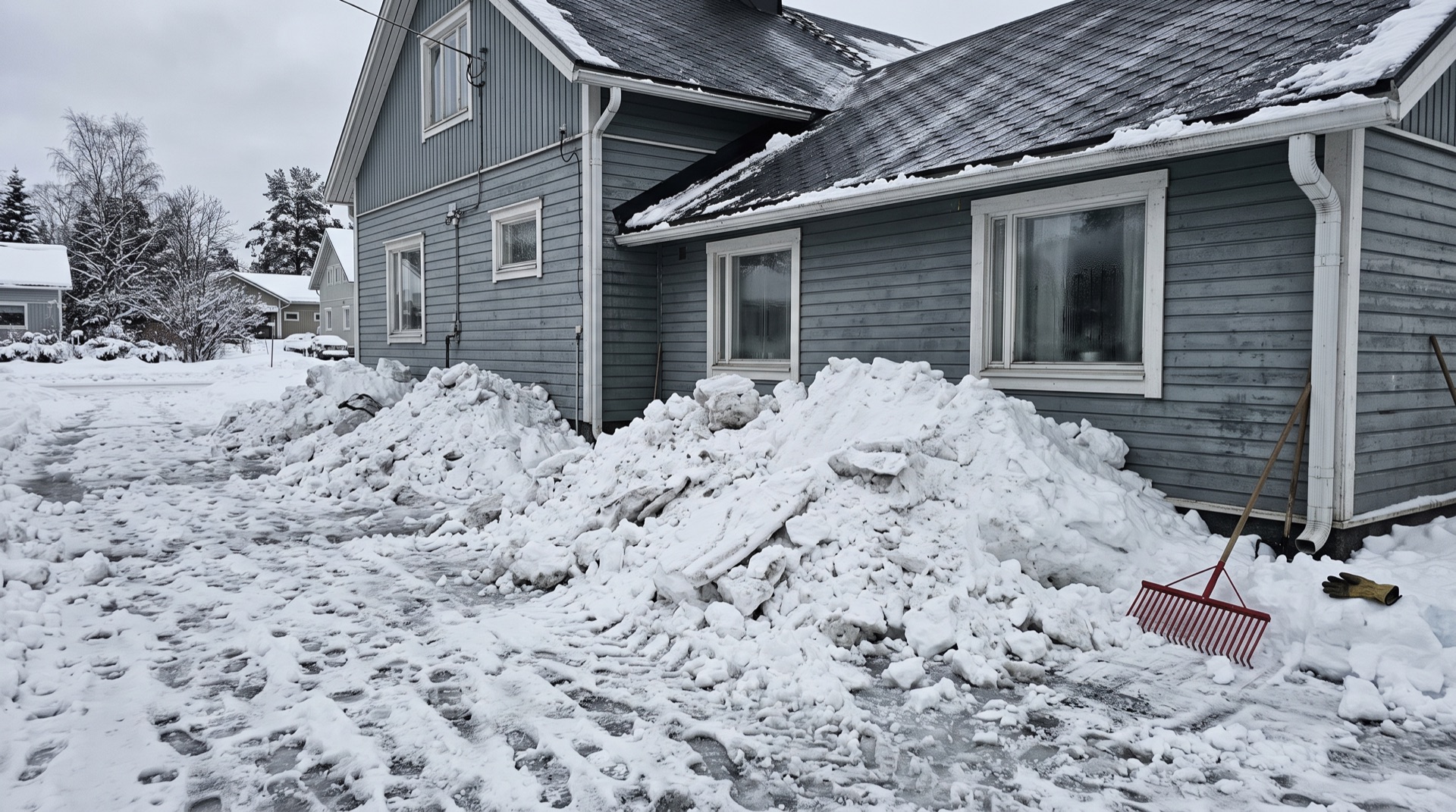
Crews work from the ground with extended rakes wherever the pitch and height allow, and from the roof with harnesses and anchors when they do not. A cushion layer of snow is always left behind on the surface, because a rake run hard against bare shingle does its own damage.
Snow load is a structural question too
Snow is not weightless. Wet pack and drifted snow can carry serious weight per square foot, and it collects unevenly — behind dormers, against parapets, in valleys and on the lee side of a ridge. Older framing and low-slope roofs are where that shows up first as deflection.
If a roof in is already groaning, sagging between rafters or showing new cracks in interior drywall, that is a load problem and not a cosmetic one. Say so on the call and the crew treats it as urgent.
When to book it
After any heavy snowfall, and before a forecast thaw followed by a hard freeze — that sequence is what builds dams fastest. Properties with a history of dams at the same eave every year are worth putting on a standing clear-after-every-storm schedule rather than calling each time.
What you get
- Eave-first clearingThe lower roof band where dams form gets cleared first, not last
- Surface never touchedA cushion layer is left so the rake never rides on bare shingle
- Load reductionWeight comes off valleys, dormer pockets and drift zones that collect the most
- Standing schedulesRepeat properties can be cleared automatically after every storm
- Drift points measuredDepth read where snow collects, not in the middle of the field
- Drop zones plannedSnow lands clear of decks, walkways, shrubs and window wells
- Paths cleared behind usDriveways and walks are not left buried when the crew leaves
Water coming in right now? Call (888) 561-9664. Active interior leaks go to the front of the schedule during a freeze event.
Roof Snow Removal Across 38 States
Pick your state to find local dispatch, crews and response times for your city.
Northeast & New England
9 statesRockies & Pacific Snow Corridors
12 statesPlains, Mid-Atlantic & Appalachia
10 statesQuestions We Get About Roof Snow Removal
It depends on whether it is light powder or wet pack, and on the age and span of your framing. A practical rule: if you are asking the question, it is worth a look. Deflection between rafters, doors inside that suddenly stick and new drywall cracks are all signals to call that day.
From the ground, yes — a roof rake used with both feet on the ground is the one safe DIY option, and clearing the lower few feet genuinely helps. What is not safe is a ladder on ice, or climbing up to reach the rest.
Yes, and it is the single most effective preventive step there is. A dam needs three things: snow on the roof, heat under it and a cold eave. Removing the snow removes the only one of those three you can change in an afternoon.
No. Crews work the snow, not the roof surface, and leave a protective layer behind. Frozen gutters are cleared with steam rather than forced, because a gutter full of ice bends and tears when it is pried at.
No. Roof snow clearing is entirely an outside job. What helps is a cleared path to the working side, vehicles moved off the driveway and any side gate unlocked, so the crew is not spending its first half hour making room to put a ladder up.
Usually the lower three to six feet of every eave, plus valleys, and more than that where the load reading says so. Clearing the eaves is what prevents dams; clearing the whole roof is only necessary when the weight itself is the problem, and you will be told which situation you are in.
It lands in drop zones chosen before the work starts, clear of shrubs, condensers, railings and anything made of lattice. Walkways and the driveway get cleared again afterwards. Where there is nowhere safe to drop, material gets carried out and that adds hours, which is said in the quote rather than discovered later.
Often yes, because the danger is compounding rather than any single storm. A cleared roof meets the next storm from zero instead of adding it to a hardened base. The exception is the day before a heavy fall with no thaw behind it, in which case waiting a day is usually the better value and gets suggested.
Roof Snow Removal In Practice
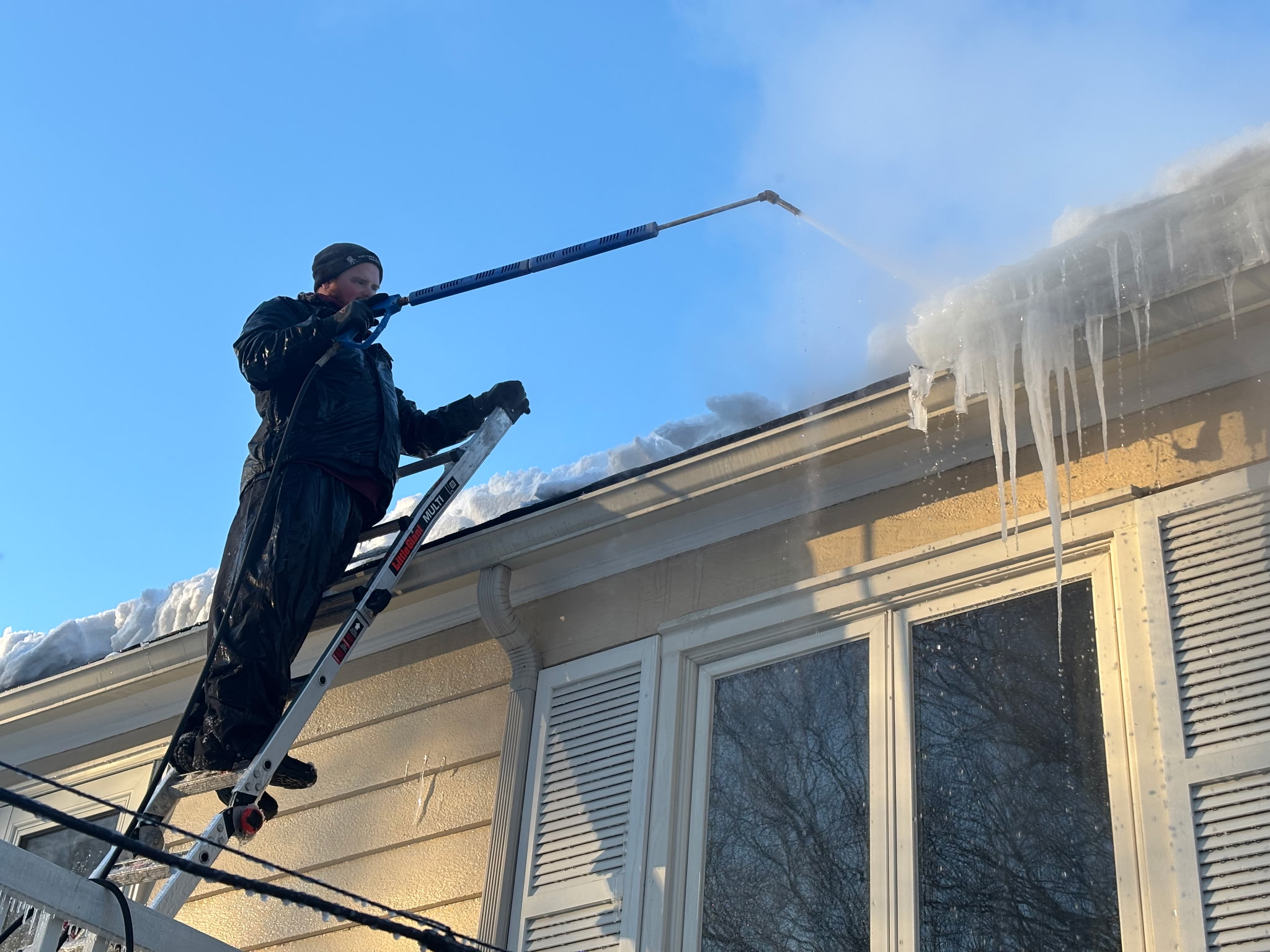
What the work looks like on real roofs. Every job is photographed before and after.


What Usually Goes With It
Ice Dam Removal
Low-pressure steam melts the dam off the eave in sections until the shingle is clear and water is draining again.
Book Ice Dam RemovalRoof Shoveling
Deep pack, dead valleys and dormer pockets, cleared by hand where a rake cannot reach.
Request Hand ShovelingHeated Roof & Gutter Cables
Self-regulating heat trace on the eaves, valleys, gutters and downspouts, so meltwater keeps a path out all winter.
Get A Cable QuoteGet A Crew Out
Tell us the address and what you are seeing. You get the rate on the phone before anyone is dispatched.