
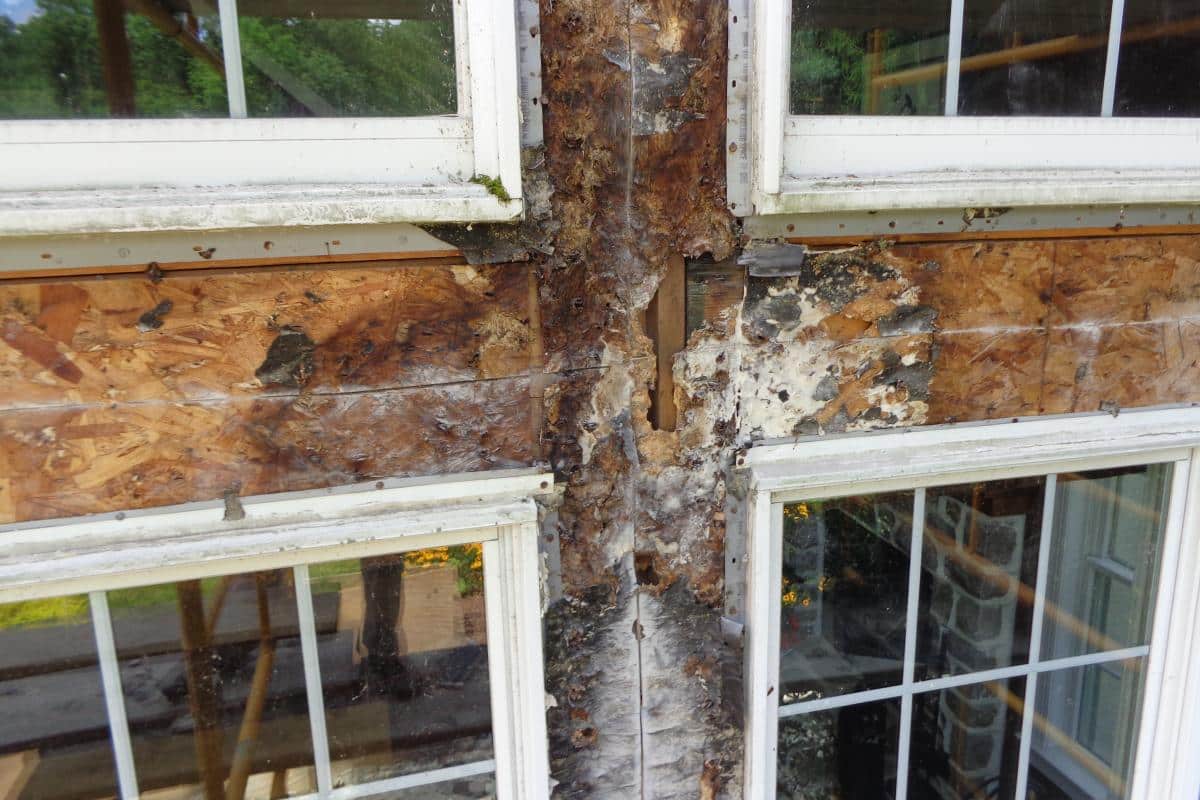
The top plate is the doorway
Where an outside wall meets the roof there is a horizontal wood, the top plate, with the ceiling drywall butting up to it and the rafters sitting on it. It is a busy junction with several seams, and it sits directly under the eave — which is exactly where ice dam water arrives.
Water reaching that junction does not have to break through the ceiling. It runs over the plate and straight down the inside face of the wall sheathing, inside the cavity.
What it is soaking on the way down
Cavity insulation, the backs of the drywall, the bottom plate at the bottom, and whatever sits on the floor below. Batt insulation that gets wet slumps and stays slumped, so you lose the insulation value permanently in that bay even after it dries.
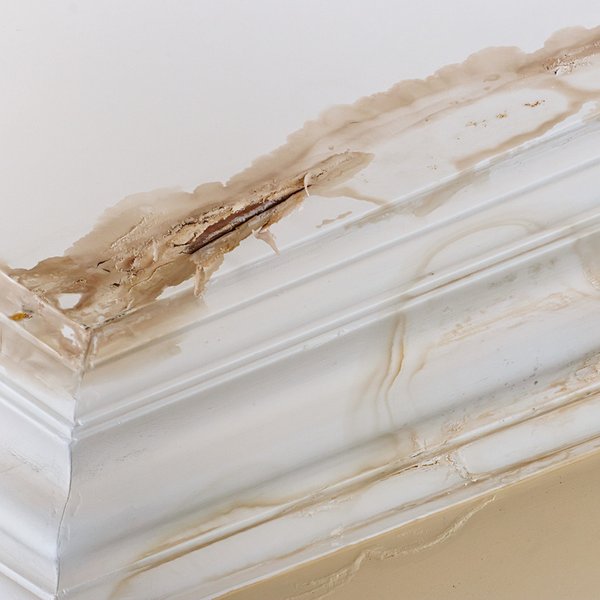
The visible stain on the wall surface is usually a fraction of the wet area behind it. If you can see a damp line on the drywall, assume the cavity behind it is wet from the ceiling down.
Why it often shows at a window head first
A window interrupts the cavity. Water running down the inside of the sheathing hits the head of the window opening, has nowhere to continue, and comes out at the junction between the frame and the drywall. People then reasonably conclude the window is leaking. The window is just the first obstacle.
How to tell which one you have
It is probably an ice dam
Top floor, outside wall, snow and ice above, water appears high and runs down. Worse in thaws.
It is probably a wall or flashing fault
It happens in wind-driven rain too, in any season, and is localised to one spot such as a vent, a pipe or a bad lintel detail.
It is probably condensation in the cavity
A cold damp patch rather than running water, often in a corner, with mold, in a poorly insulated or poorly ventilated wall.
What to do in the next ten minutes
- Pull furniture and floor coverings away from that wall and lift anything absorbent.
- If there are outlets or switches on that wall below the wet area, turn the circuit off.
- Photograph the full height of the wall, and the ceiling junction above it.
- Do not close the room up to hide it. A sealed wet cavity is how mold starts.
- Call us for the ice, and expect to need the cavity opened and dried afterwards — that is the part that gets skipped and then costs more.
Questions people ask
Often, yes. A wall cavity with wet insulation in it will not dry through intact drywall in any useful time, and a moisture meter reading through the surface is what settles the argument. Small inspection openings low on the wall are usually enough to tell whether full removal is needed.
A cavity that stays damp through a winter is the most reliable mold incubator in a house: an organic food source, a stable temperature and no air movement. Drying it properly is cheaper than remediating it later.
Opening a cavity to dry it is normal mitigation work, and mitigation is the part of an ice dam claim insurers most often cover, because it limits the eventual loss. What any policy actually pays is for your adjuster to decide, so get it documented before work starts.