
Wet insulation does not insulate
Fiberglass and mineral wool work by trapping still air. Fill those air pockets with water and the assembly conducts heat instead of resisting it. Soaked batts can lose the large majority of their effective R-value while wet, and more heat into the roof deck means more melting and a bigger dam next time.
That is the feedback loop that turns one bad winter into an annual event.
What recovers and what does not
Fiberglass batts that got damp and dried quickly, still lofted and not compressed, are usually serviceable. Batts that were saturated and slumped do not spring back, and a slumped batt leaves an air gap at the top of the bay that defeats the point of it.
Blown cellulose is the one to watch. It mats and compacts when wet, loses loft permanently, and it carries borate fire retardant that leaches out. Wet cellulose generally gets removed rather than dried.
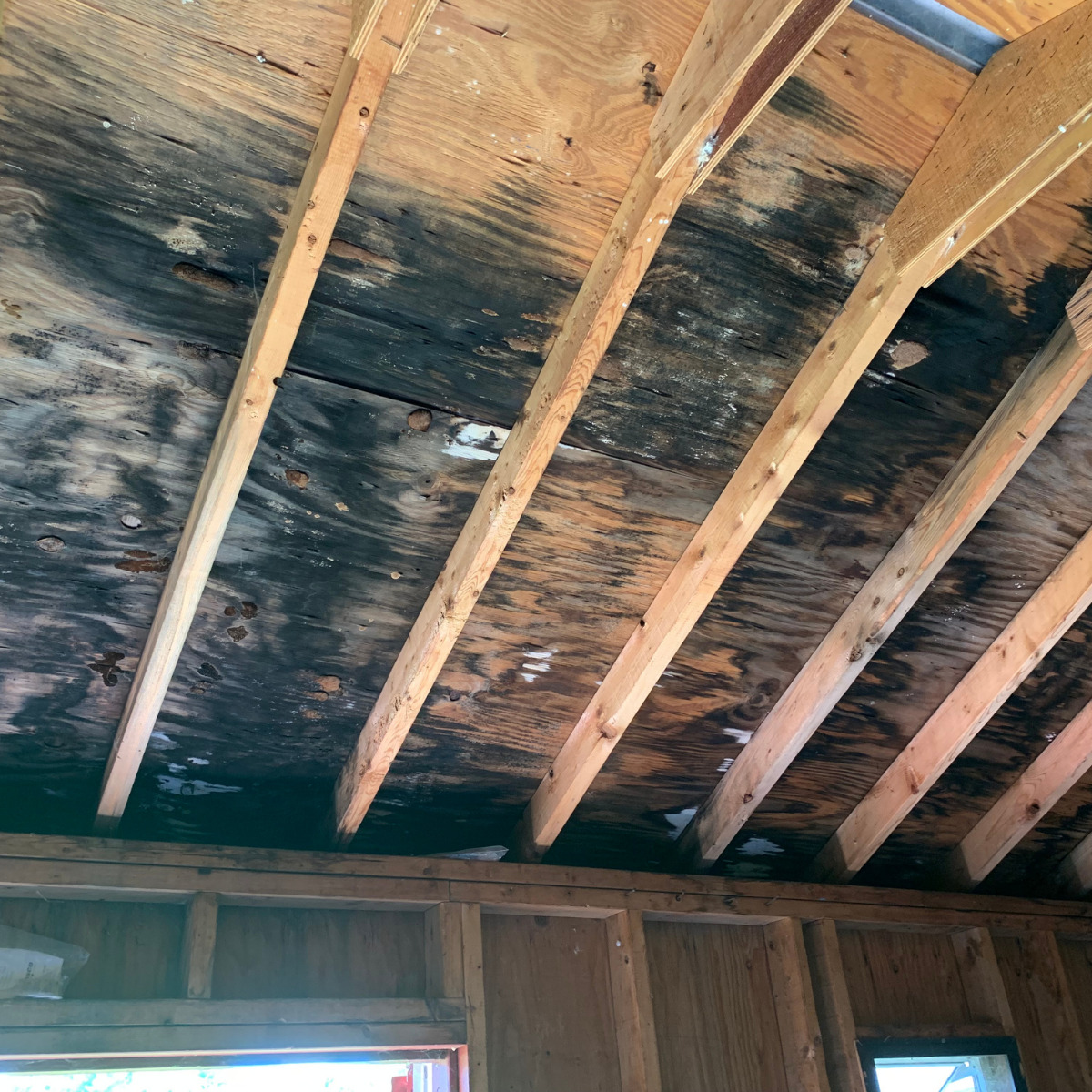
Anything with visible mold growth comes out regardless of material.
How to check it without wrecking the ceiling
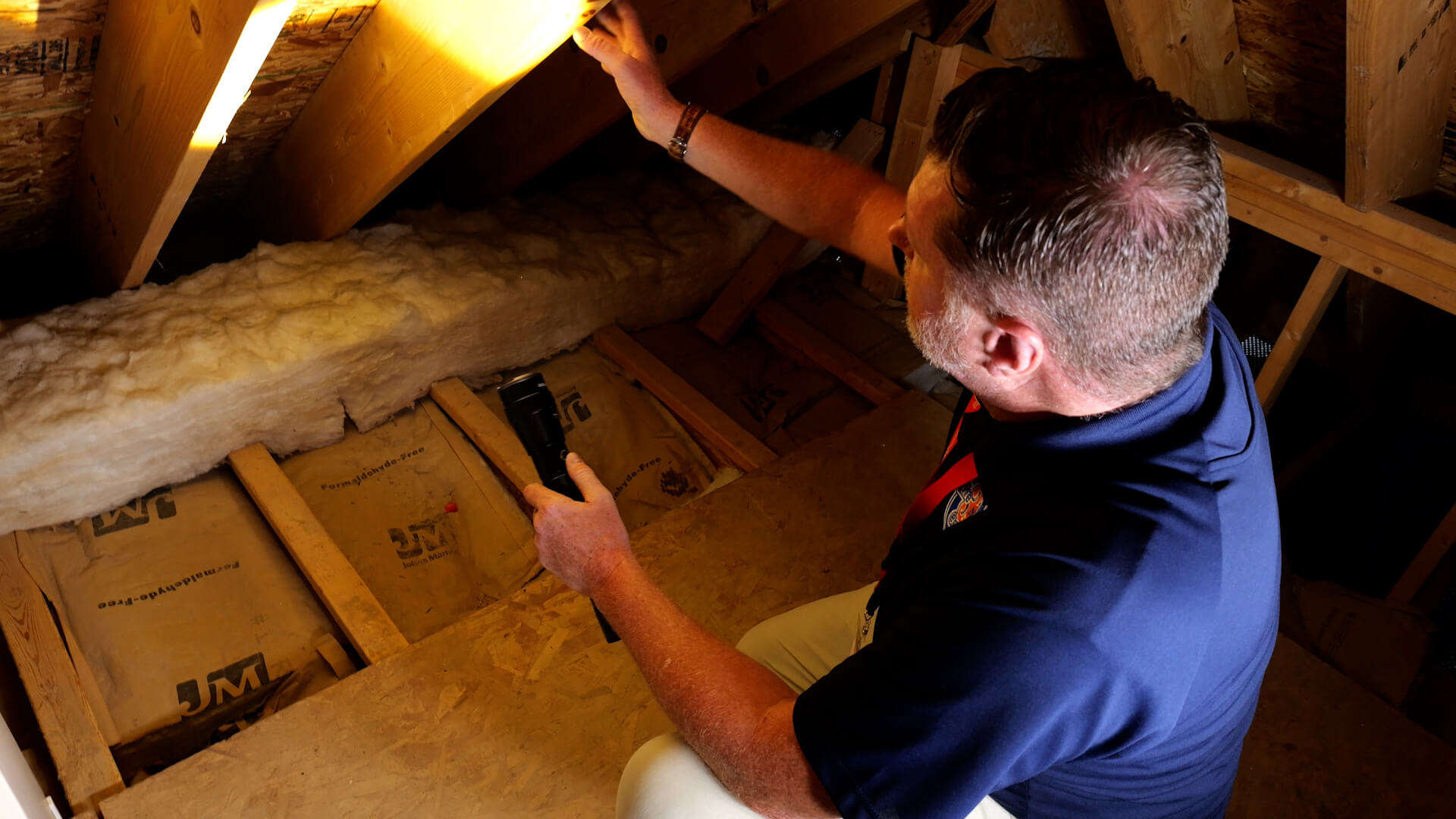
From the hatch with a flashlight, look along the eaves for dark, flattened, or discolored areas, and for daylight where insulation has been pushed aside. Do not walk on the ceiling joists in the dark, and do not crawl into a low eave space — that is how people put a foot through a ceiling.
A thermal camera from inside the room below, on a cold day, shows wet and missing insulation as cold patches, which is a far safer way to map it.
How to tell which one you have
It is probably ice dam water
Wet concentrated along the eaves and the outside walls, worst where the ice is outside, dry in the middle of the attic.
It is probably condensation
Frost or damp on the underside of the sheathing across the whole attic, often with the worst of it near a bathroom fan or the hatch. A ventilation and air-sealing problem.
It is probably a roof fault
A single wet patch around a vent, a pipe boot or a nail, present after rain in any season.
What to do in the next ten minutes
- Do not go crawling around an attic in the dark during a leak. Look from the hatch.
- Photograph what you can see, including the dry areas for comparison.
- Leave the hatch closed — an open hatch is one of the biggest heat leaks into the attic.
- Get the ice off the roof so no more water arrives.
- Have the insulation assessed with a meter before anyone decides it will dry out.
Questions people ask
Sometimes, if it was a small amount and the attic is well ventilated. Often not. Trapped moisture against sheathing in a cold attic does not evaporate quickly, and what it does instead is grow mold on the wood above it.
It holds the moisture that lets mold grow on the wood it touches. The sheathing and the rafters are the organic food source; the insulation is the sponge keeping them damp.
Insulation wetted by a covered loss is damaged property and is frequently included, which is why it should be photographed and measured before anybody pulls it out. Replacing insulation that was simply too thin to begin with is an upgrade, and that is normally your own cost.