
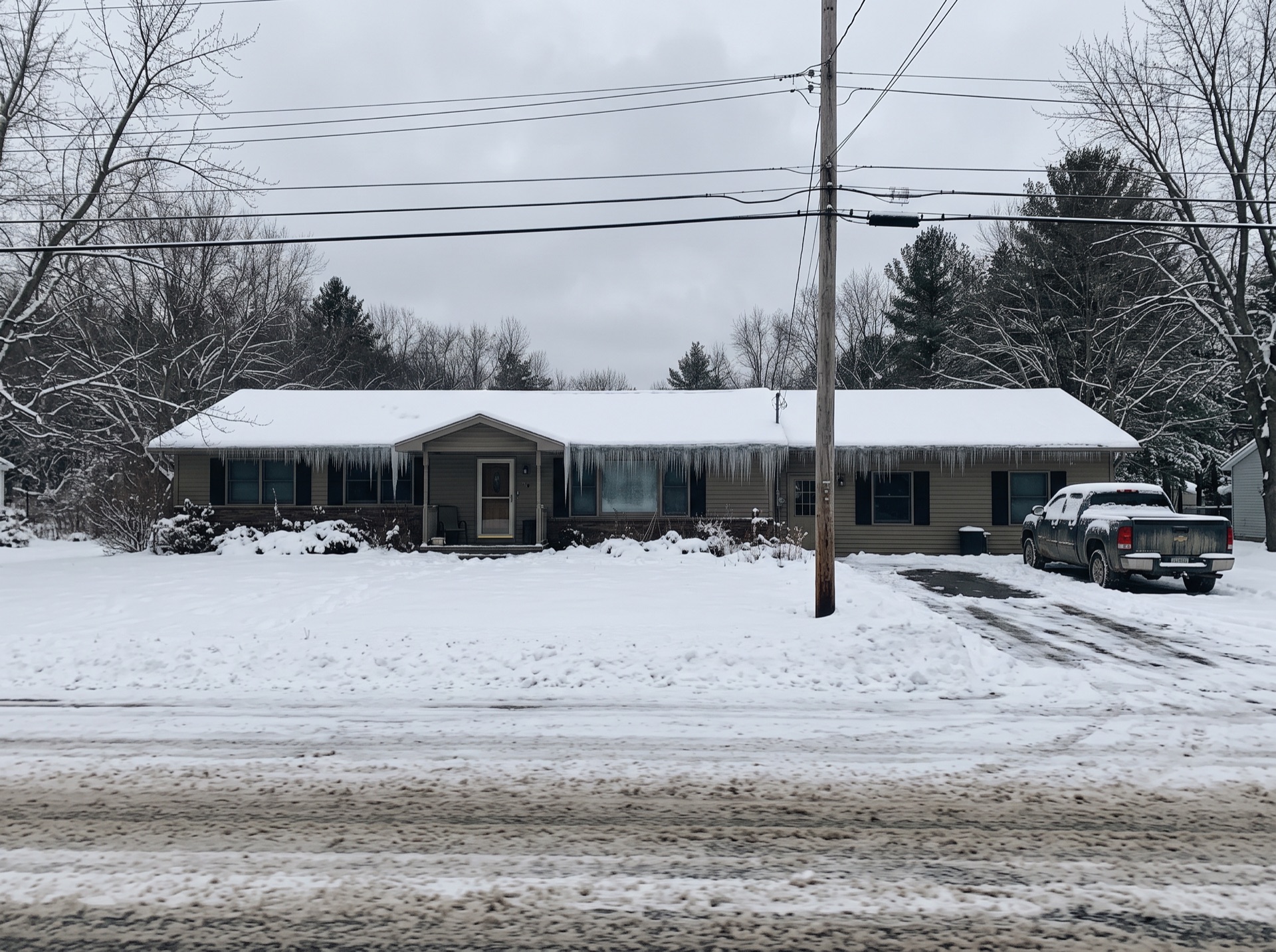
Why the window is where it appears
Ice dam water that gets over the top plate runs down inside the wall. The first thing it meets on the way down is the head of the window opening: a solid lintel with no cavity above it to carry on into. The water pools on the lintel and comes out at the weakest seam, which is the joint between the frame and the drywall.
The window is doing nothing wrong. It is simply the first horizontal surface in the path.
The test that separates them
A failed window seal leaks in driving rain and in any season. An ice dam leaks when there is snow on the roof and the weather turns mild, and it does not care whether it is raining.
If you can, run a hose on the window on a mild day with the roof clear of snow — top of the frame first, for several minutes, then the sides. If it stays dry, the window is not your problem.
What else to look at before you buy a window
Check whether the same thing is happening at other windows on the same wall or the same elevation. One window is a window fault. Three windows along the same eave is a roof problem, every time.
How to tell which one you have
It is probably an ice dam
Upstairs window, directly under an eave with ice on it, leaking in cold dry weather, often more than one opening on the same wall.
It is probably the window
It leaks in wind-driven rain in fall too, it is one window not several, and the sealant around the frame is cracked or missing.
It is probably condensation on the glass
Water on the inside face of the glass itself running onto the sill, worst on the coldest mornings, with no path from above. That is a ventilation and humidity issue, not a leak.
What to do in the next ten minutes
- Dry the sill and the reveal, and keep checking whether it returns with thaws or with rain.
- Photograph the head of the frame, the reveal and the eave directly above it from outside.
- Lift any curtains or blinds away so the drywall can dry.
- Look along the gutter line above for a ridge of ice.
- Clear the dam before committing to a window replacement that may not be the cause.
Questions people ask
It can. A marginal frame seal can sit there for years without leaking and only fail when water arrives from above in volume. Clearing the dam first tells you whether anything is left.
Drywall that got damp and dried usually just needs stain-blocking and repainting. Drywall that was saturated for days, or a reveal that stayed wet long enough to blow the skim, needs cutting out. A meter reading, not an opinion, is what decides it.
We dispatch same day for an active leak where we have a crew in range, and typically within 24 to 48 hours elsewhere in the states we cover. Enter your ZIP code on this page for a straight answer about your address.