
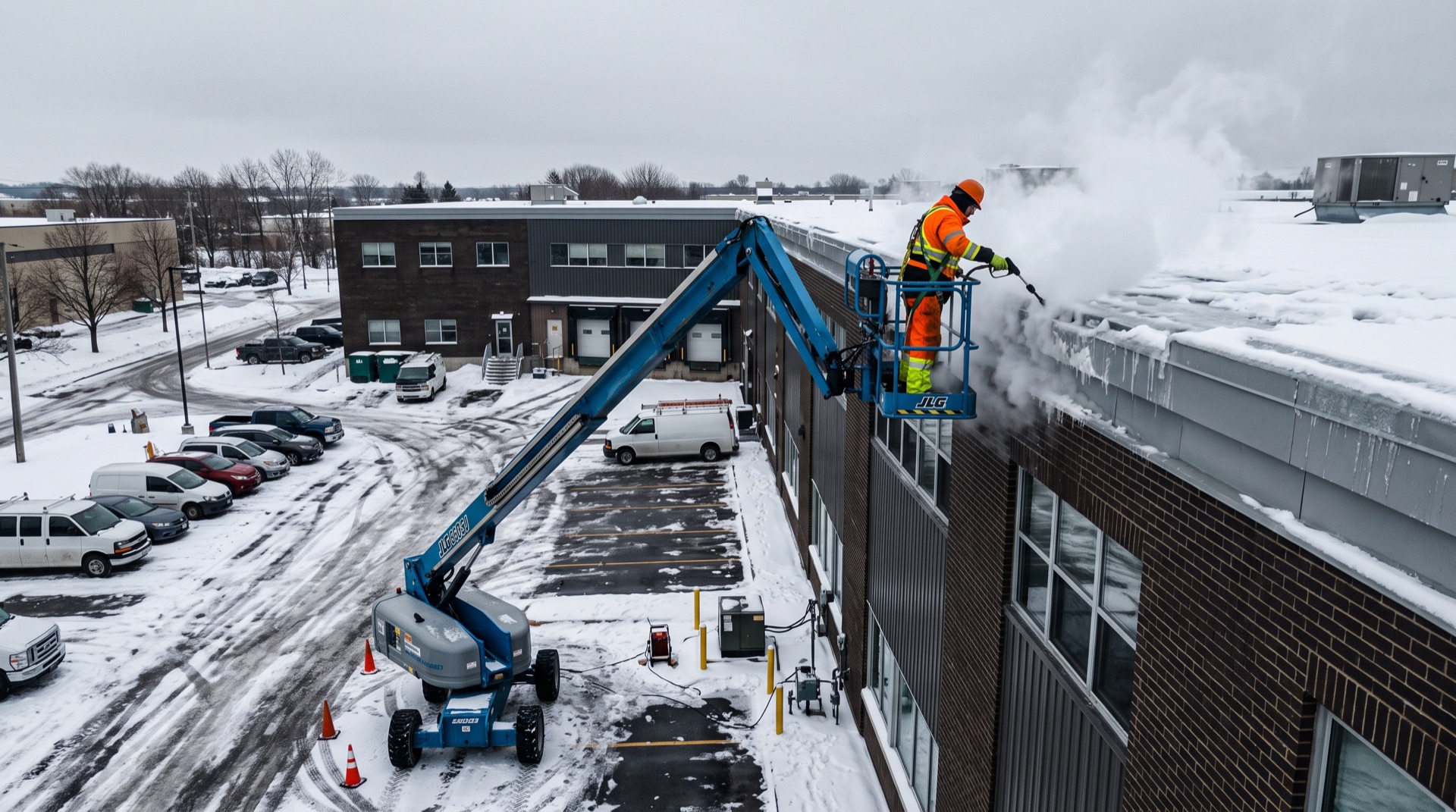
Crane-Assisted Snow Removal
Ice Dam Now provides crane-assisted snow removal across 38 cold-climate states. Snow tarps rigged and lifted by boom crane where drifts are too deep and too heavy to move by hand. Crews are licensed, insured and harness-certified, dispatch same day for active interior leaks, and bill by the crew hour at a rate quoted before dispatch. Dated photographs are supplied for insurance claims.
When a roof is carrying feet of drifted pack, hand clearing is too slow to matter. A crane takes it off in picks instead of wheelbarrows.
Get Ice Dam Help Now
When a crane is the right call
Multi-story homes and estates where the upper roof cannot be safely reached. Large commercial and industrial decks where the sheer tonnage makes hand clearing a multi-day job. Any roof where deflection is already visible and the load has to come off today rather than over a week.
The decision is made on numbers, not instinct. Depth, density and area give a working load figure, and that figure against the roof's design capacity is what determines whether a crane gets mobilised to a property in.
How a pick actually works
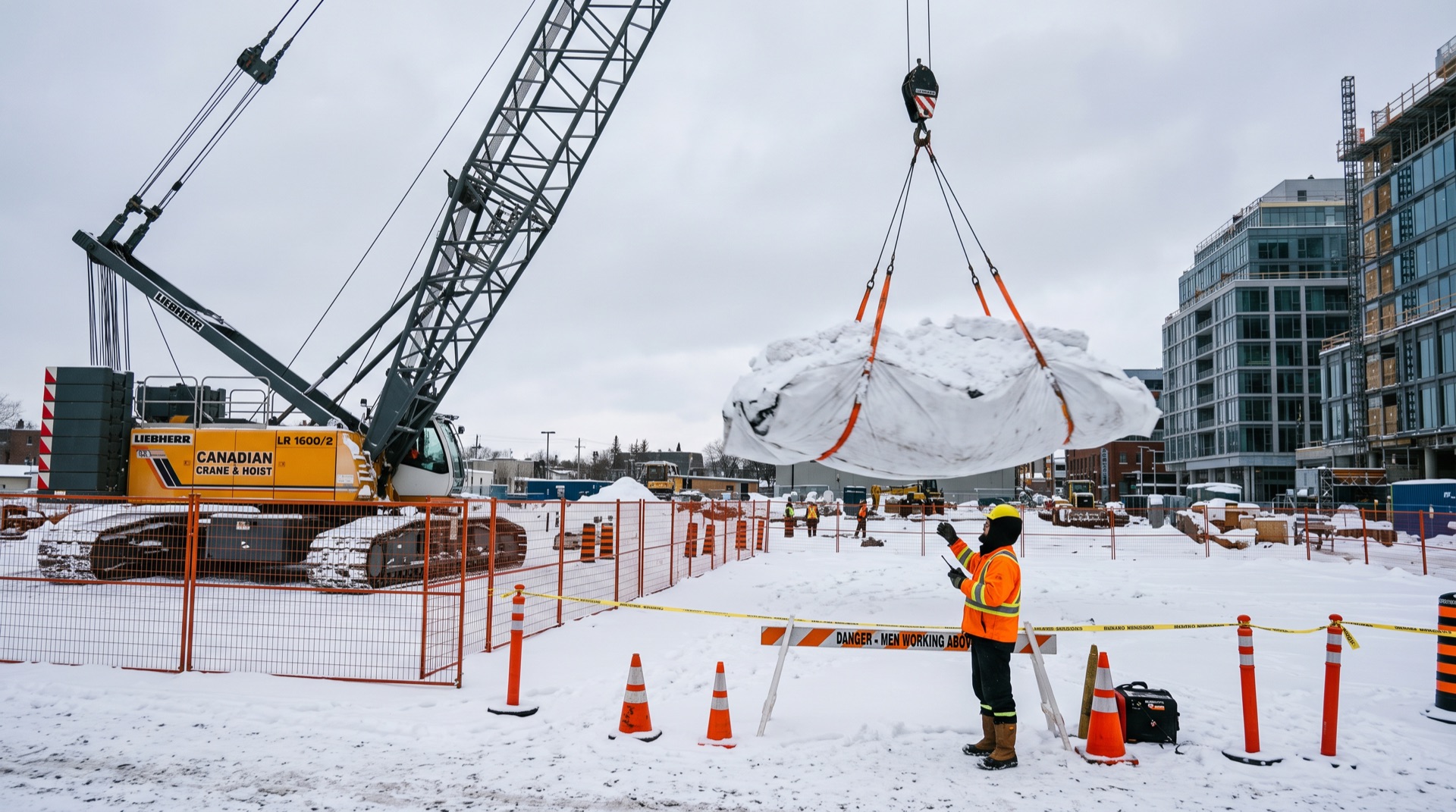
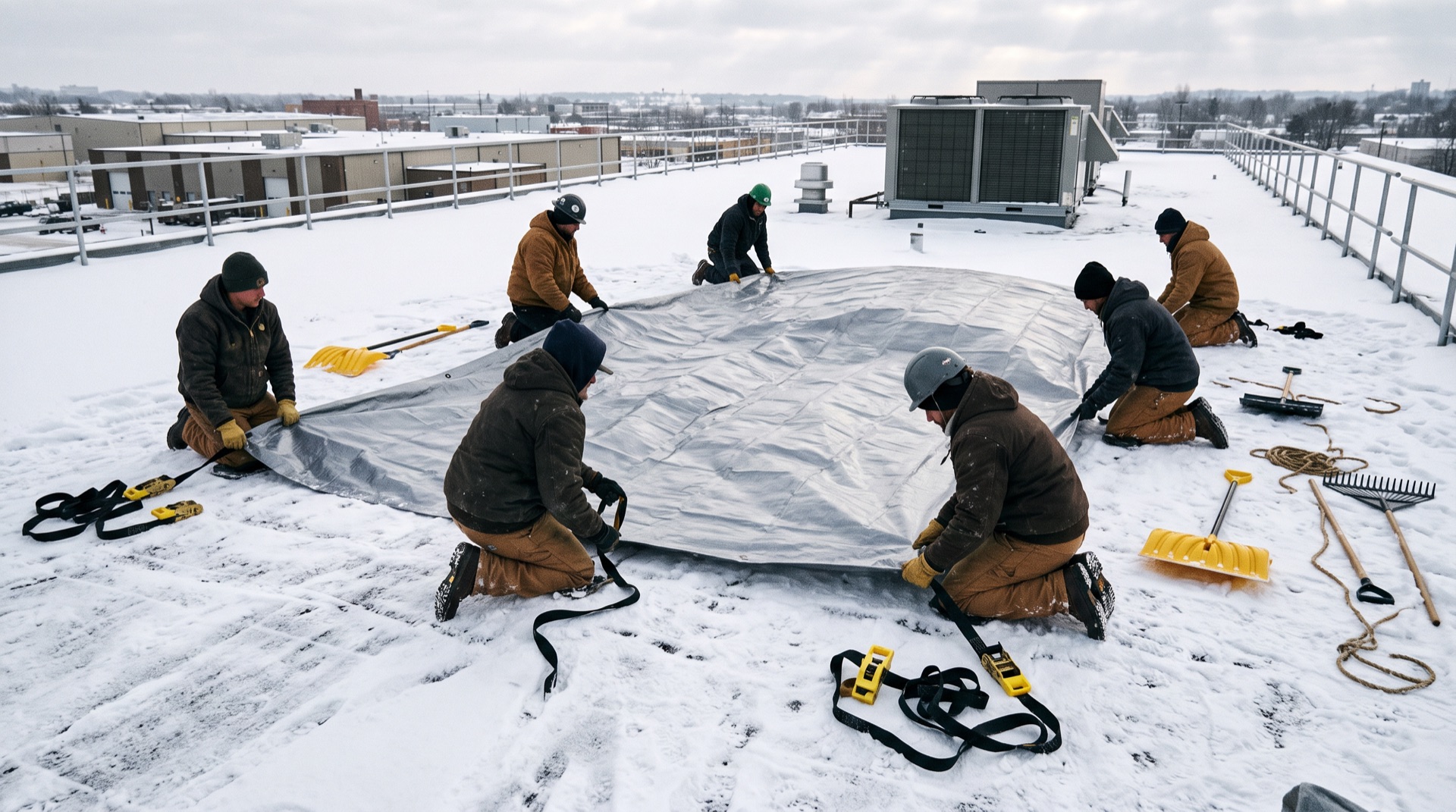
Rip-stop tarps are laid out and anchored on the deck, crews load them, and the boom lifts each loaded tarp clear and sets it down in a designated drop zone on the ground. Outrigger pads are placed on frozen ground rated for the load, and a pedestrian exclusion zone is set and marshalled for the whole operation.
It is a planned lift, not an improvisation. Site access, swing radius, overhead lines, drop zone and ground bearing all get walked before the first tarp goes down.
What it protects
Avoiding a structural failure is the obvious part. The less obvious part is that most carriers treat preventing an imminent collapse as loss mitigation, which is a very different conversation from a claim filed after the deck comes down. Weights, depths and dates are documented throughout for exactly that reason.
What you get
- Load calculated firstDepth, density and area against design capacity before anything mobilises
- Rip-stop tarp picksRated tarps and rigging, with lifts planned around the swing radius
- Outrigger padsBearing pads sized and placed for frozen and uneven ground
- Marshalled exclusion zonePedestrian and vehicle control for the whole operation
- Lift planned firstAccess, swing radius, overhead lines and drop zone walked before scheduling
- Permits handledPulled where the municipality requires them for a street setup
- Weights documentedDepths, densities and loads recorded for the carrier
Water coming in right now? Call (888) 561-9664. Active interior leaks go to the front of the schedule during a freeze event.
Crane-Assisted Snow Removal Across 38 States
Pick your state to find local dispatch, crews and response times for your city.
Northeast & New England
9 statesRockies & Pacific Snow Corridors
12 statesPlains, Mid-Atlantic & Appalachia
10 statesQuestions We Get About Crane Snow Removal
Crews calculate the working load from snow depth, density and roof area and compare it against the structure's design capacity. If hand clearing cannot get the weight off faster than the next storm adds to it, or the roof is already deflecting, that is the threshold.
Usually yes, with planning. Setup needs clear access, a bearing surface for the outriggers, a swing radius free of overhead lines and a ground drop zone. Those get walked before scheduling, and permits are pulled where the municipality requires them.
Per hour, yes. Per roof, often not — a pick that takes an afternoon can replace several crew-days of shoveling. On large decks the crane is frequently the cheaper number as well as the faster one.
No. Tarps are laid on the snow, not the deck, and the load is lifted vertically clear rather than dragged. Nothing is skidded across the surface.
Enough to set outriggers fully, which is wider than the machine looks, plus clearance to the building and a unobstructed swing path. That is established on a site walk before anything is booked rather than discovered on the morning. Overhead power lines are frequently the deciding factor.
Setup and breakdown are a fixed cost of several hours whatever the roof. The lifting itself depends on how much material there is and how quickly the crew can cut it into liftable sections. A large deck that would be several crew-days by hand is commonly an afternoon once the crane is rigged.
Less than people expect. The noise is a crane idling rather than impact work, and most of the activity is on the roof and in the drop zone. What does get restricted is the area under the swing path, which means some doors, parking and footpaths are out of use for the day and that gets planned with you in advance.
Cold is not the problem; wind is. Every machine has a wind chart and a tarp of snow is a large, light load that is dangerous in gusts. A pick gets postponed for wind rather than pushed through, and rescheduling is built into how these jobs are booked.
Crane-Assisted Snow Removal In Practice
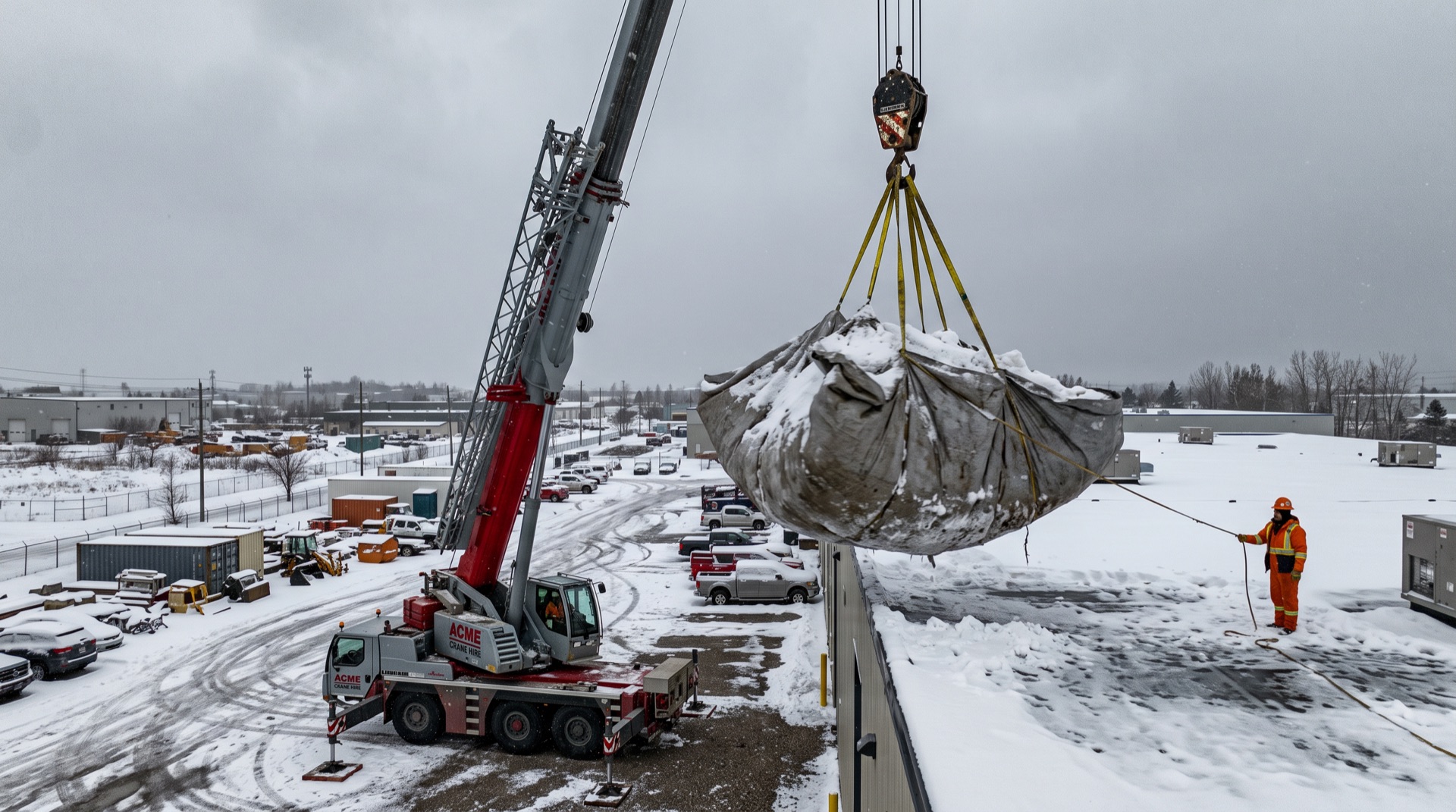
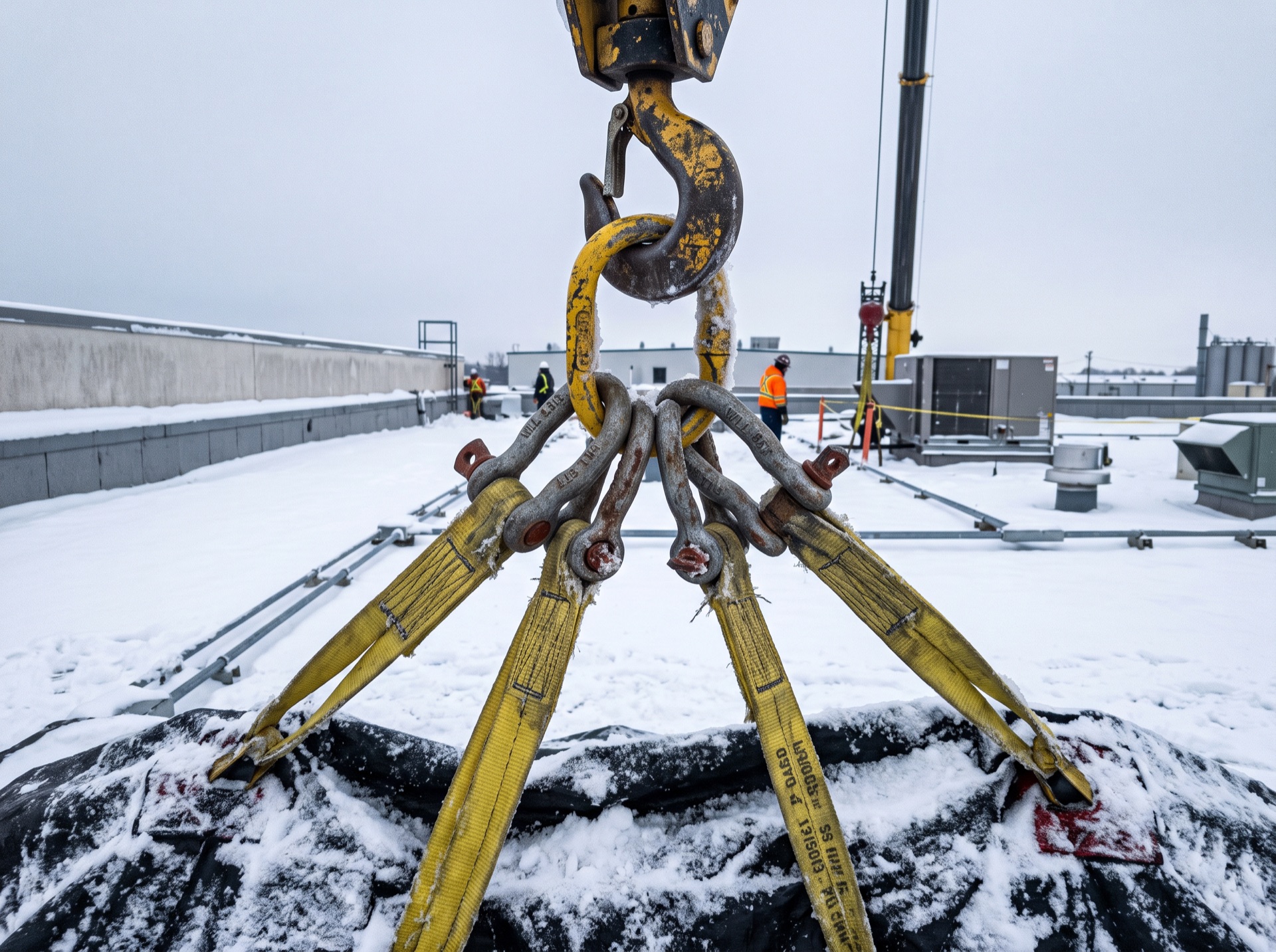
What the work looks like on real roofs. Every job is photographed before and after.
What Usually Goes With It
Commercial Roof Snow Removal
Scheduled load reduction for warehouses, retail, schools and multi-unit buildings before drift weight becomes a deflection problem.
Schedule Load ReductionRoof Shoveling
Deep pack, dead valleys and dormer pockets, cleared by hand where a rake cannot reach.
Request Hand ShovelingIce Dam Removal
Low-pressure steam melts the dam off the eave in sections until the shingle is clear and water is draining again.
Book Ice Dam RemovalGet A Crew Out
Tell us the address and what you are seeing. You get the rate on the phone before anyone is dispatched.