
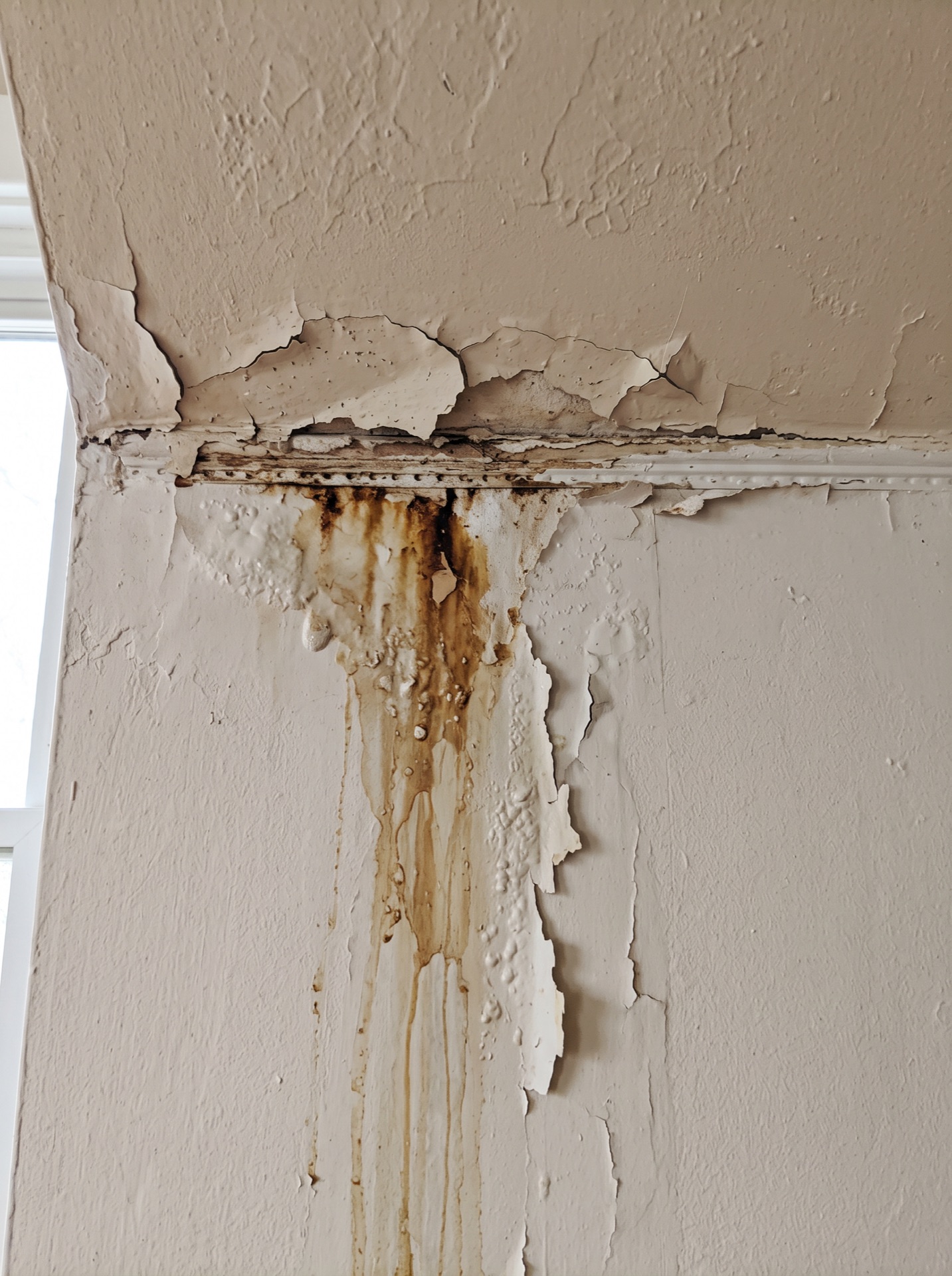
The molding is a gutter you did not want
Cove molding is fixed to both the wall and the ceiling with adhesive and filled along both edges. That creates a sealed triangular void running the length of the room, right at the junction where meltwater comes through.
Water fills that void, travels along it, and exits wherever the filler has shrunk or a mitre has opened — often several feet from where it entered. So the drip location tells you very little about where the water is coming in.
Plaster and wood moldings behave differently
Plaster cove molding softens and crumbles when saturated and usually has to come off. Wood or MDF molding swells and the joints open, and MDF does not recover. Polystyrene cove molding survives the water but hides it longest.
Expect the molding to come off as part of drying the junction properly. That is not over-servicing; it is the only way to get at the void behind it.
What it means for the ceiling either side
Because the water travels along the void, the wet area in the ceiling and wall boards behind it is usually much longer than the visible drip. Moisture readings along the whole run are what define the repair, not the one wet patch.
How to tell which one you have
It is probably an ice dam
Top-floor room, molding on an outside wall, dripping during a thaw with ice at the eaves.
It is probably condensation
A damp, moldy line along the cove molding in a cold, closed room, rather than running water.
It is probably a plumbing leak above
Molding on an internal wall, below a bathroom, dripping on fixture use.
What to do in the next ten minutes
- Bucket under the drip, and towels along the run of the molding.
- Photograph the whole length of the molding, not just the drip point.
- Expect more water than you can see and do not assume the drip point is the entry point.
- Do not re-fill or repaint the mitres to stop it. You will trap the water.
- Clear the ice, then have the junction opened and dried.
Questions people ask
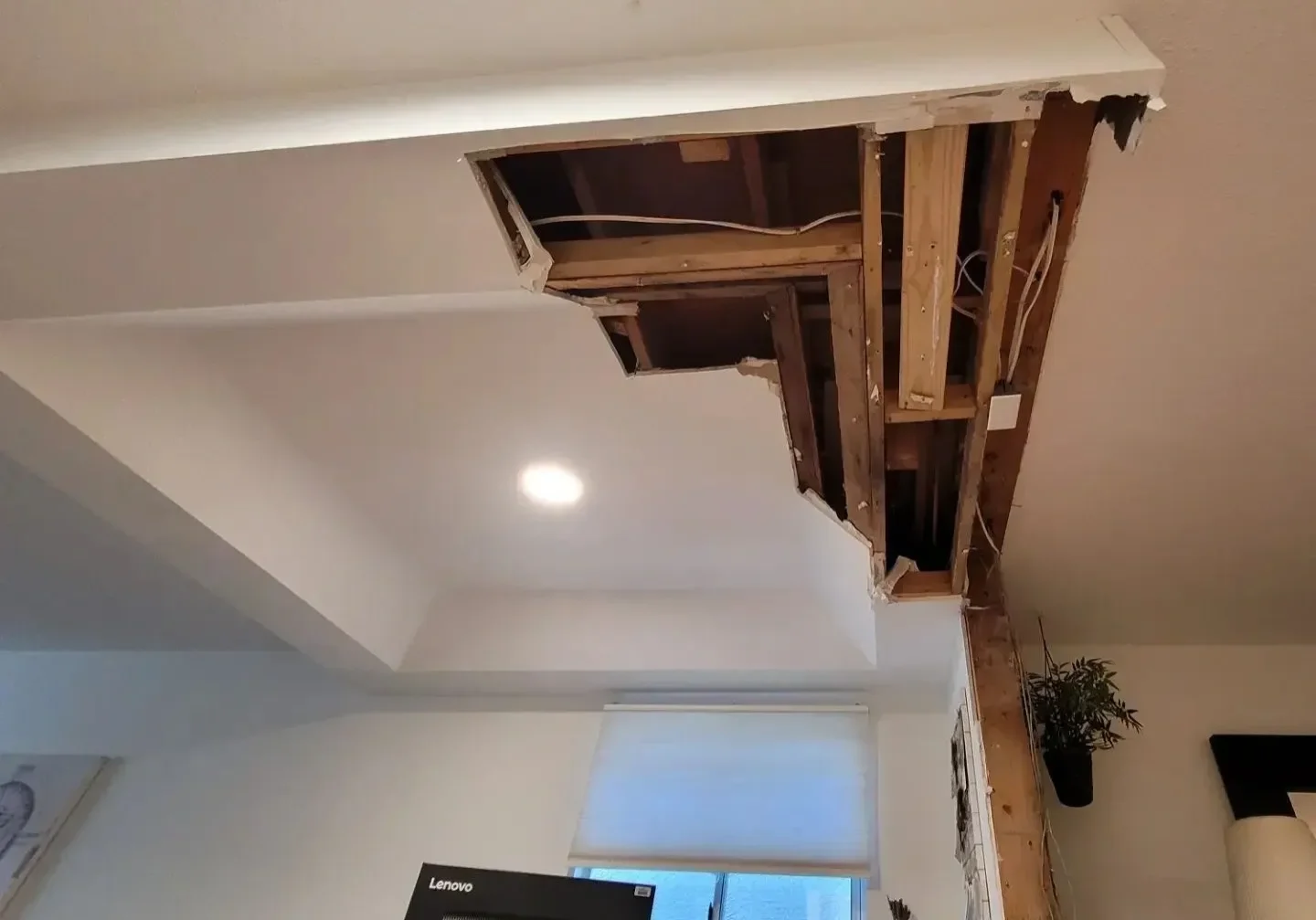
Usually yes, if water has been sitting behind it. It is the only way to dry the void and check the boards, and plaster cove molding rarely survives removal anyway. Wood can sometimes be taken off carefully and refitted.
Occasionally, with injection drying through small holes, if the run is short and it was caught quickly. A long run that has been wet for days is usually faster and cheaper to strip.
Restoring damaged decorative finishes after a covered loss is generally within scope, though period or bespoke moldings can raise questions about matching. If yours is original or unusual, photograph it in detail before anything is removed.