
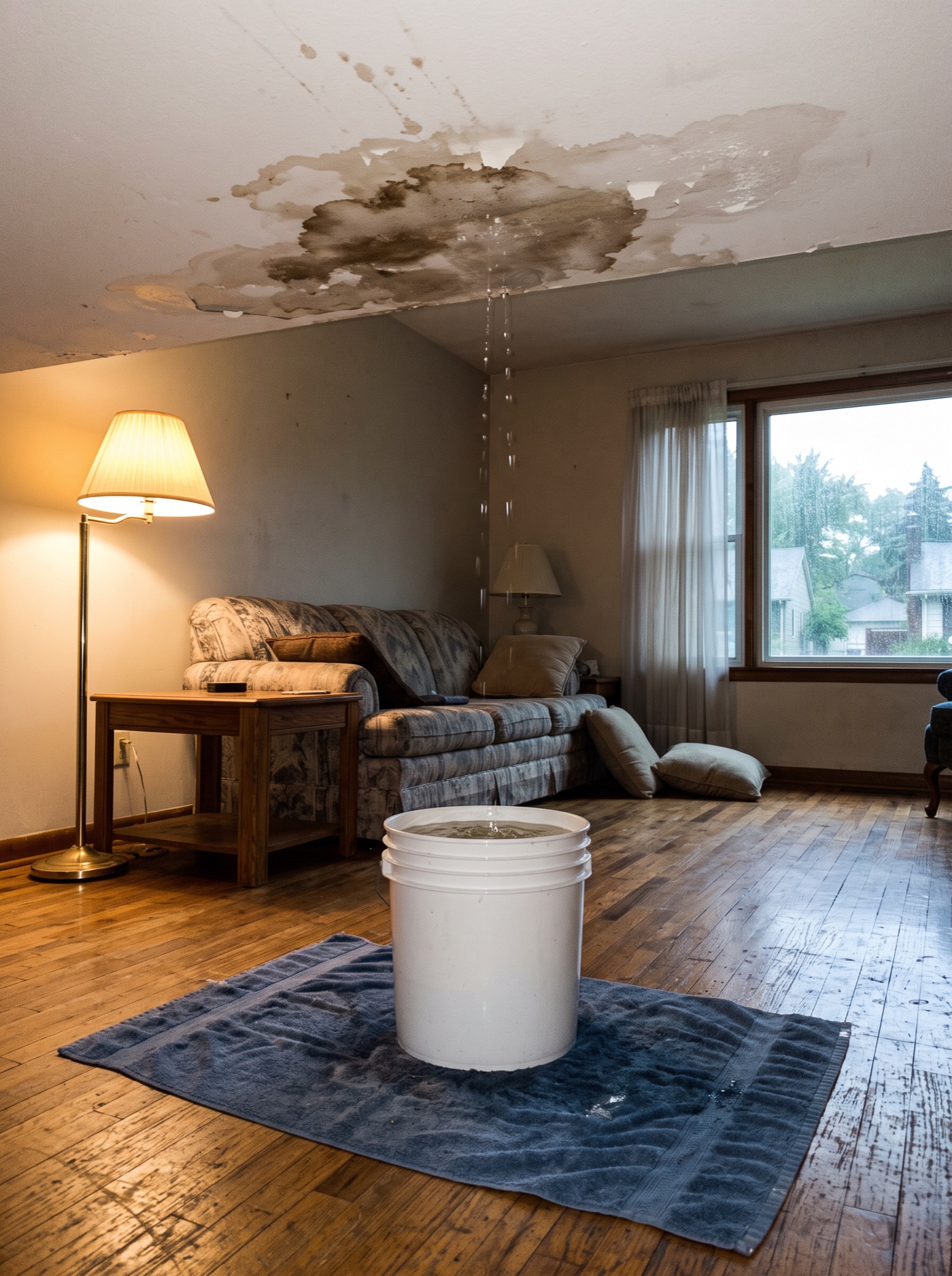
Why closets get it worst
A built-in closet against an outside wall has the same thin insulation above it as the rest of the eave line, no heat of its own, and a closed door stopping any air exchange. Everything that makes a room dry out quickly is absent.
It is also often directly below a roof valley or an eave return, where meltwater concentrates.
Stored contents make it worse
Cardboard boxes, bedding, clothing and paper are all absorbent and all organic. They hold the water against the structure and they feed mold growth directly. A closet with a wet ceiling and a stack of boxes under it is a worse situation than a bare room with the same leak.
Clear it out as soon as you find it, and photograph the contents before you do.
Finding it before the stain
Open the door and smell. Put a hand on the ceiling and the back wall. Check the top shelf and the back corners. If anything is cool and damp rather than just cold, you have found it.
How to tell which one you have
It is probably an ice dam
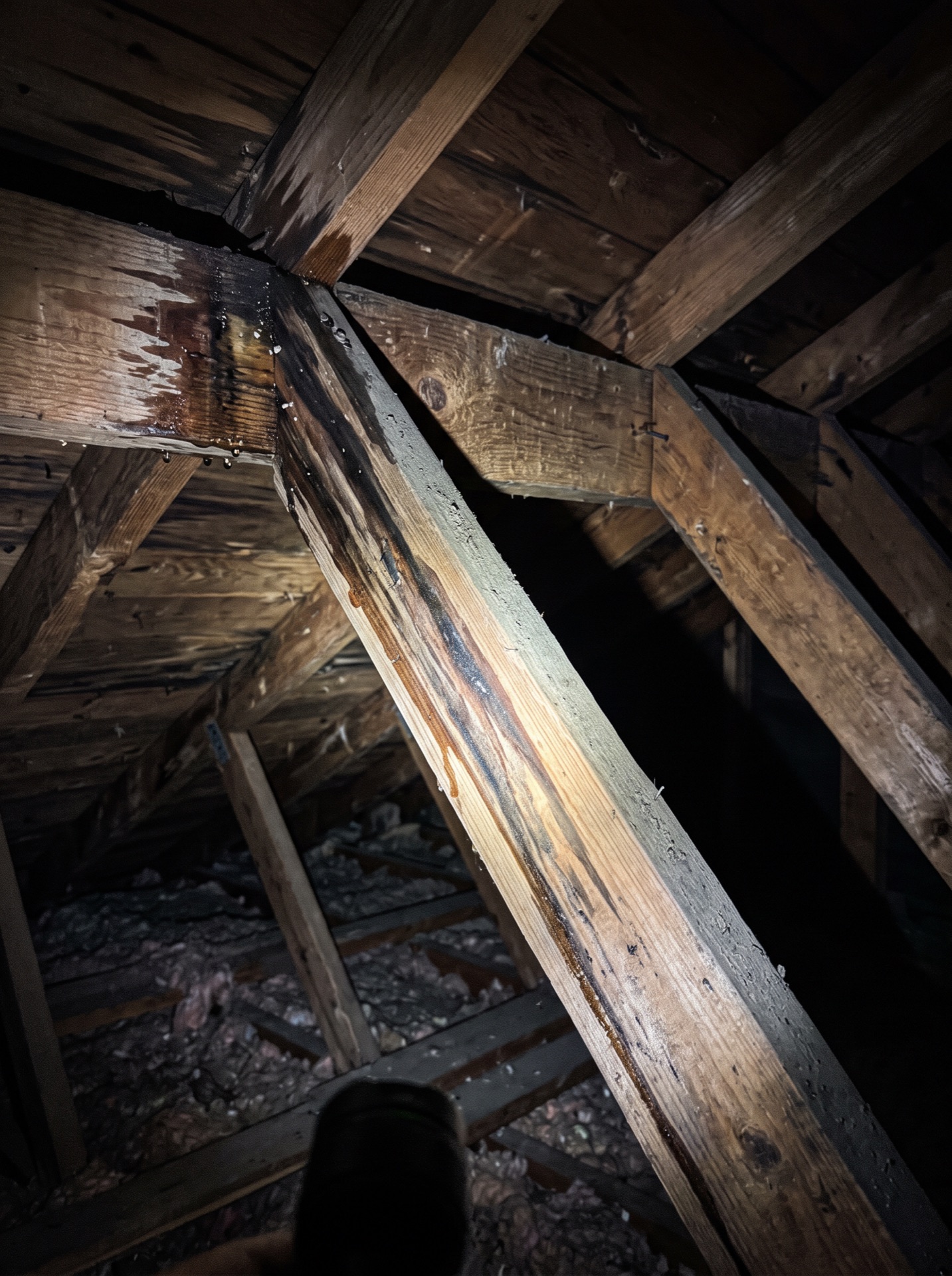
Closet on an outside top-floor wall, damp appearing in a thaw, ice at the eave above.
It is probably condensation
Damp and mold on the back wall and contents, in a closed unheated closet, with no running water at any point.
It is probably a plumbing leak
The closet backs onto or sits below a bathroom.
What to do in the next ten minutes
- Empty it, photographing the contents in place first.
- Leave the door wide open and get air moving through it.
- Check the ceiling and the back wall for soft spots.
- Bag anything with visible mold separately rather than carrying it through the house.
- Clear the ice above, then get the closet checked with a meter — it dries slowest of anywhere in the house.
Questions people ask
Washable items usually can. Anything with visible growth, and anything that stayed damp for a long period, is a judgment call — and it is a judgment worth photographing before you make it, because contents are claimable.
No heat, no air movement and absorbent contents. The same amount of water in an open bedroom would have dried.
Contents damaged by a covered water loss are normally within the scope of a homeowners policy, subject to your limits and excess. Photographs taken before you move anything are the difference between a straightforward contents claim and an argument.