
Each can is a chimney
An older non-airtight downlight vents warm room air straight into the attic, continuously, all winter. A ceiling with a dozen of them is leaking a remarkable amount of heat upward, and that heat lands on the roof deck.
Older fittings also could not be covered with insulation because of the heat they produced, so installers left a gap around each one — a deliberate hole in your insulation layer, multiplied by however many lights there are.
And each can is a drain
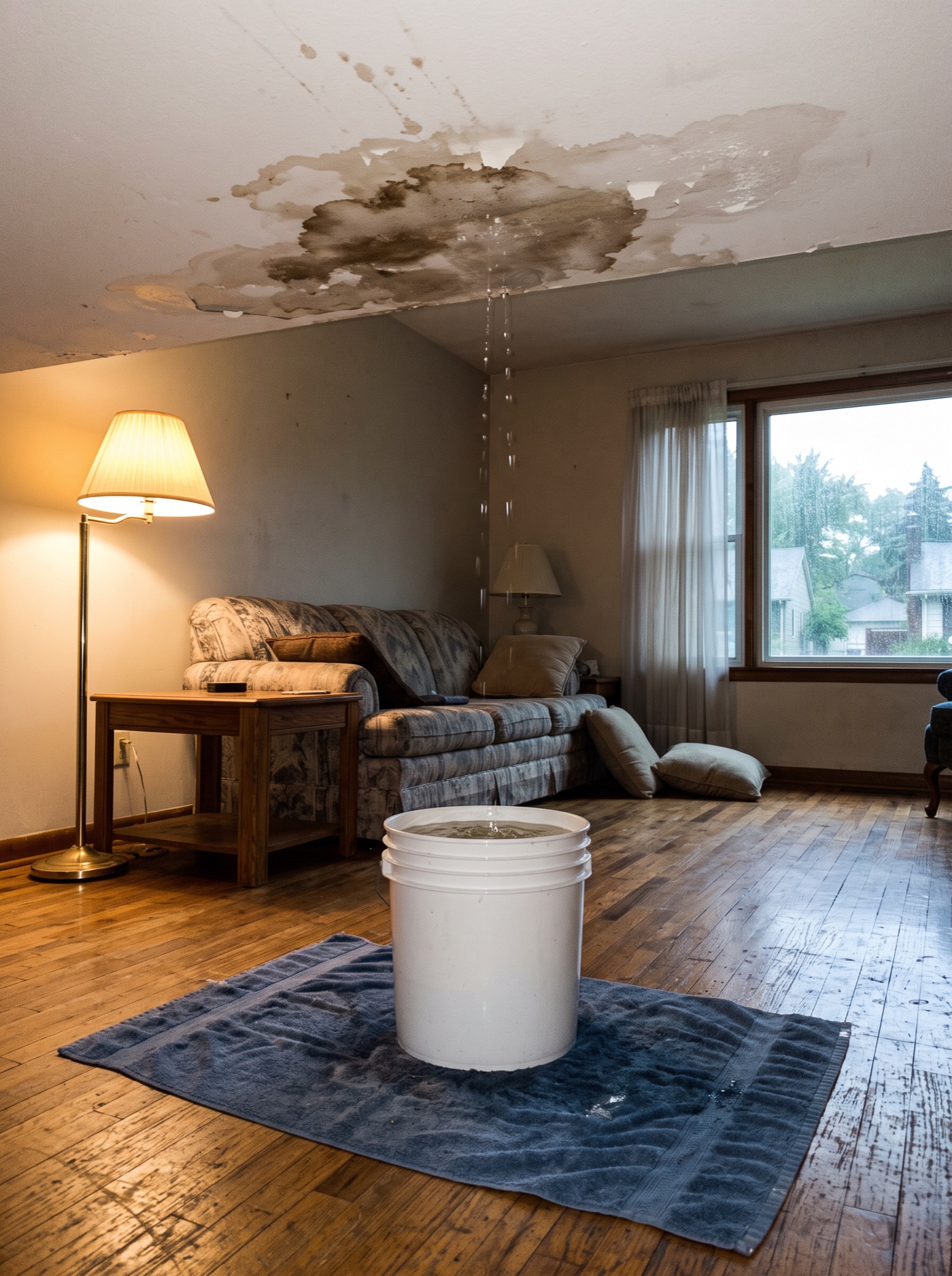
Water moving across the top of the ceiling reaches the housing, runs around the outside of the can and comes out of the trim. Which is why downlights are usually the first visible sign, before any stain appears on the board.
The fix that stops it recurring
Swapping to sealed, insulation-contact-rated LED fittings, and air-sealing around each housing from the attic, removes both the heat leak and the hole. It is ordinary work, it is not expensive per light, and on a ceiling with a lot of downlights it is often the single highest-value thing you can do to stop the dam coming back.
That is dry-weather work for after the emergency, not something to attempt while water is coming through.
How to tell which one you have
It is probably an ice dam
Several downlights on the same ceiling, nearest the outside wall, during a thaw with snow and ice on the roof.
It is probably plumbing
One fitting, directly below a wet room, tracking fixture use.
It is probably condensation in the housing
Damp rather than running water, in a bathroom or kitchen ceiling, worst in cold weather with poor extraction.
What to do in the next ten minutes
- Turn the circuit off at the breaker panel before you do anything else.
- Bucket under each affected fitting.
- Do not remove the trim while the circuit is live or while water is running.
- Photograph each fitting and note how many are affected and where they sit relative to the outside wall.
- Call us for the ice, and get an electrician to check the fittings before they go back into service.
Questions people ask
Sometimes, after an electrician has inspected and dried them. LED units with integrated drivers that have taken water usually get replaced, because the driver is the part that fails later rather than immediately.
On a ceiling under an attic, yes, and it pays back twice: lower heat loss into the roof space, and the holes in your insulation layer disappear. It is the most common sensible recommendation we make after clearing a dam.
Fittings damaged by a covered water loss are usually treated as damaged property. Upgrading the whole ceiling to sealed LEDs because it is a better design is an improvement and is normally yours to fund. Those are two separate lines and it helps to keep them separate on the claim.