
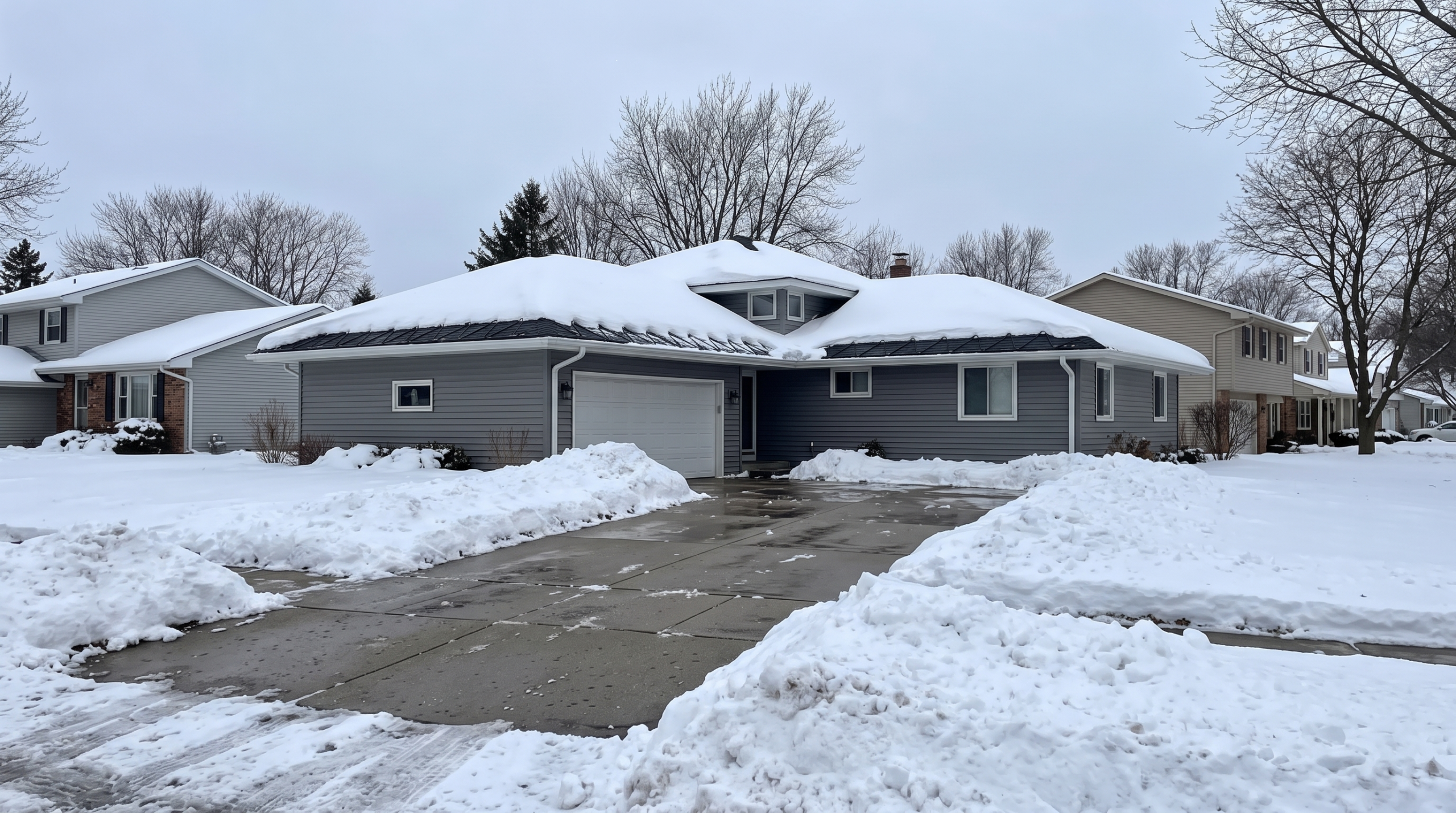
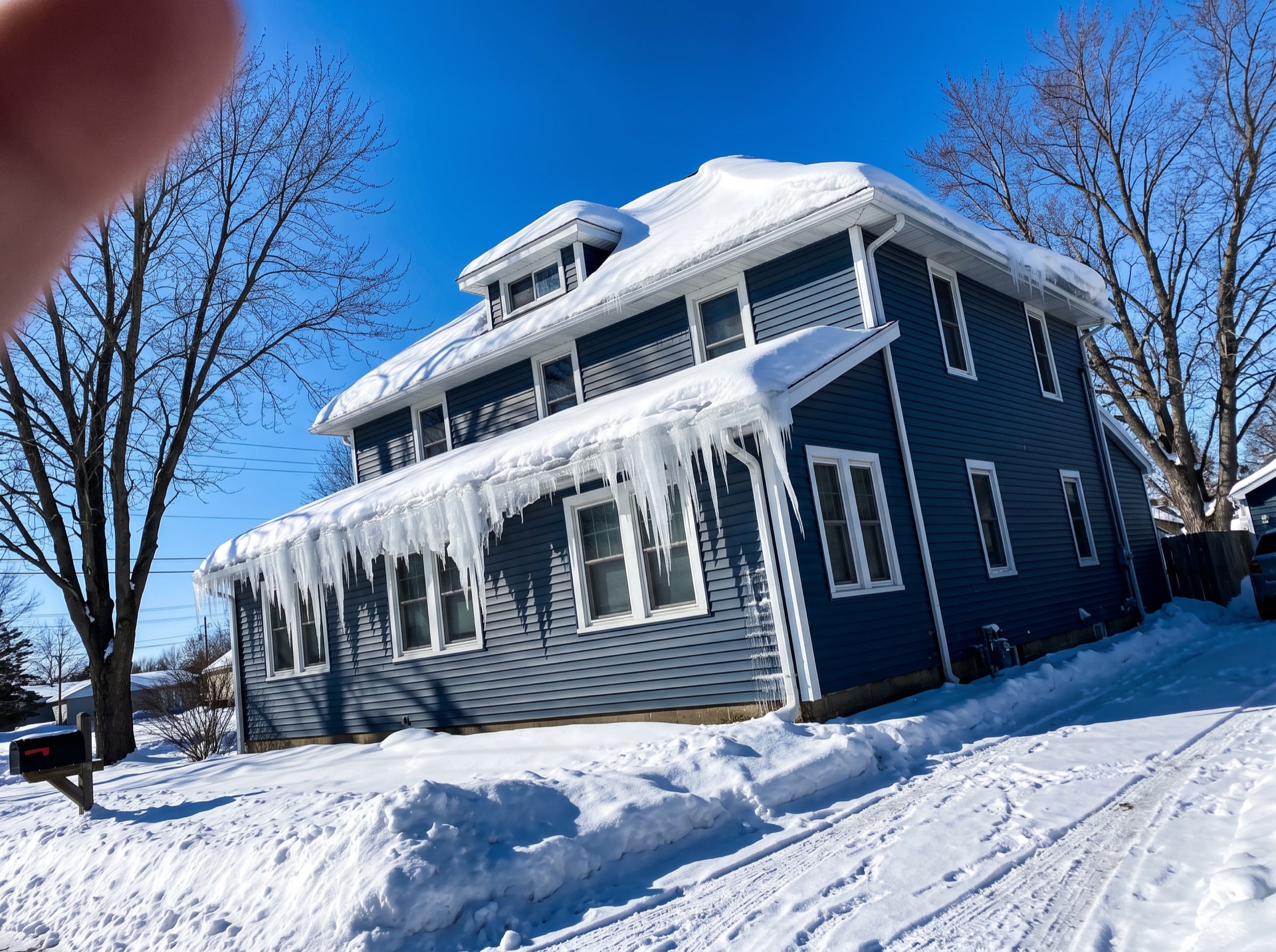
What the icicles actually indicate
An icicle means water is running off your roof in freezing weather. Water only runs off a roof in freezing weather if something is melting the snow, and in almost every case that something is heat escaping from the house.
So a row of icicles is a readout of heat loss. A roof with no icicles in the same street, in the same weather, is a roof with a colder attic.
Reading where they are
Icicles concentrated over one section tell you the heat loss is concentrated there — often over a bathroom, a stairwell, a poorly sealed hatch or a run of downlights. Icicles along the whole eave suggest general insulation and air-sealing shortcomings.
Icicles hanging from a gutter with a thick ridge of ice sitting on the shingles above them is a dam. Icicles from an otherwise clear eave, after a sunny day, may just be ordinary melt and nothing to act on.
Why knocking them off is a bad idea
A falling icicle is heavy and sharp, and hitting them brings down the ones you were not aiming at. More to the point, striking ice that is bonded to shingles and gutters in freezing weather pulls granules off, splits shingles and tears gutters off their fixings.
If the icicles are over a doorway or a path, rope the area off and keep people out of it until a crew can clear it properly.
How to tell which one you have
There is a dam behind them
A visible band of ice on the roof surface above the gutter, water staining inside, icicles that keep regrowing after a thaw.
It is ordinary melt
Thin icicles after a sunny day, a clear roof surface above the gutter, nothing wet inside.
It is a gutter problem
Ice filling the gutter but the roof surface above it clear, usually from a blocked outlet or a downpipe frozen at the bottom.
What to do in the next ten minutes
- Rope off or barrier anything underneath them — doorways, paths, where children play.
- Photograph the eave from the ground, including the roof surface above the gutter.
- Note which sections of the roof have the most, and what rooms are underneath.
- Do not knock them down and do not go up a ladder to reach them.
- Book the dam to be steamed off, and use the heat-loss map the icicles just gave you to plan the permanent fix.
Questions people ask
Common, but not inevitable, and not harmless. A well-insulated, well-sealed, well-ventilated roof keeps the deck near outside temperature and produces very little meltwater. Annual heavy icicles mean annual heat loss you are paying for twice: once on the energy bill and once on the roof.
They keep a channel open so meltwater can drain, which genuinely helps on a problem eave, and they are quoted and installed by our heated cable division rather than by an ice dam crew. They manage the symptom; insulation and air-sealing address the cause. Both are legitimate, and which is right depends on the roof.
Same day where we have a crew in range if water is coming in, typically 24 to 48 hours elsewhere across the 38 states we cover. The ZIP code box on this page gives you a straight yes or no for your address.