
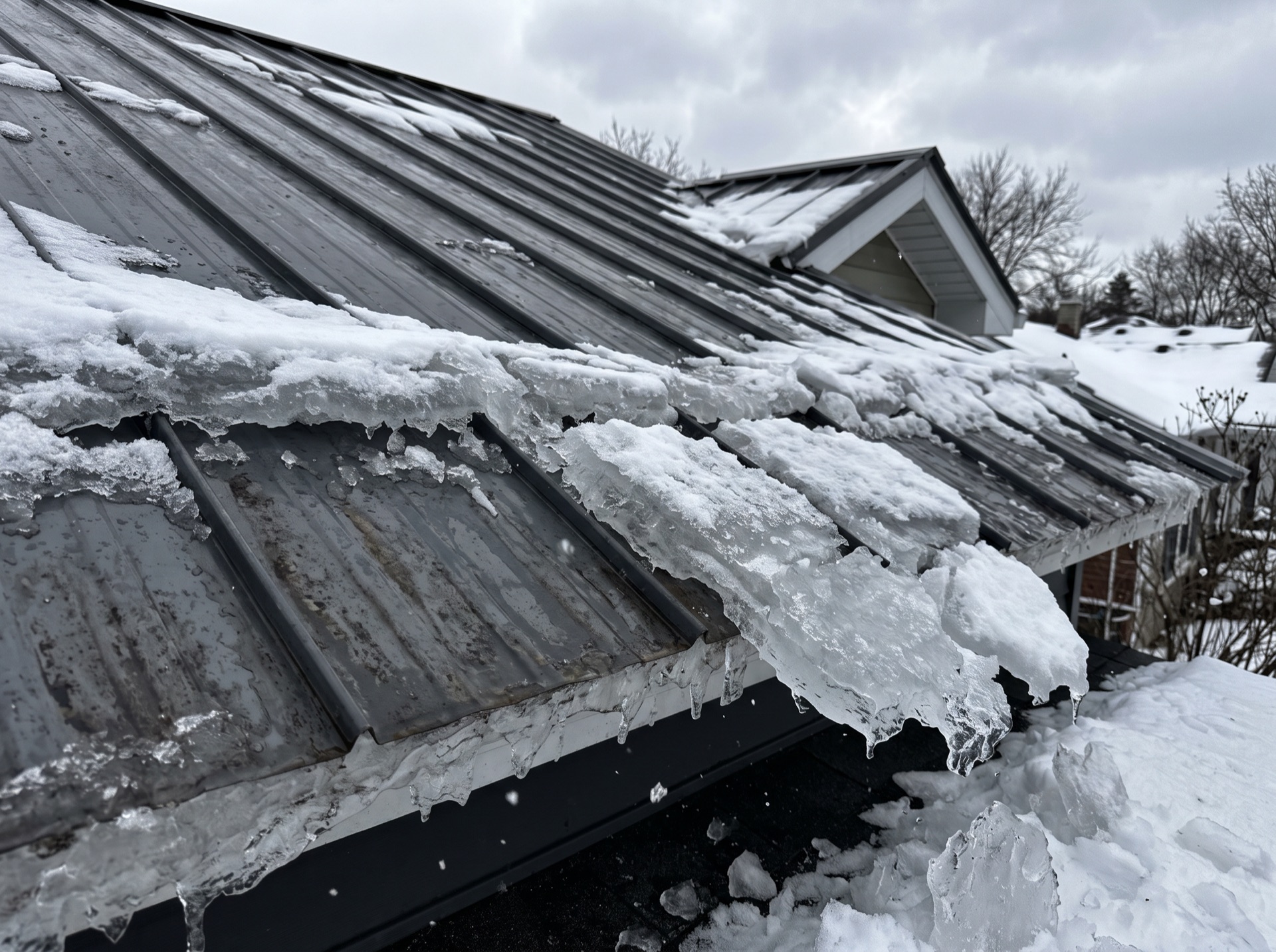
Why a bonus room builds dams
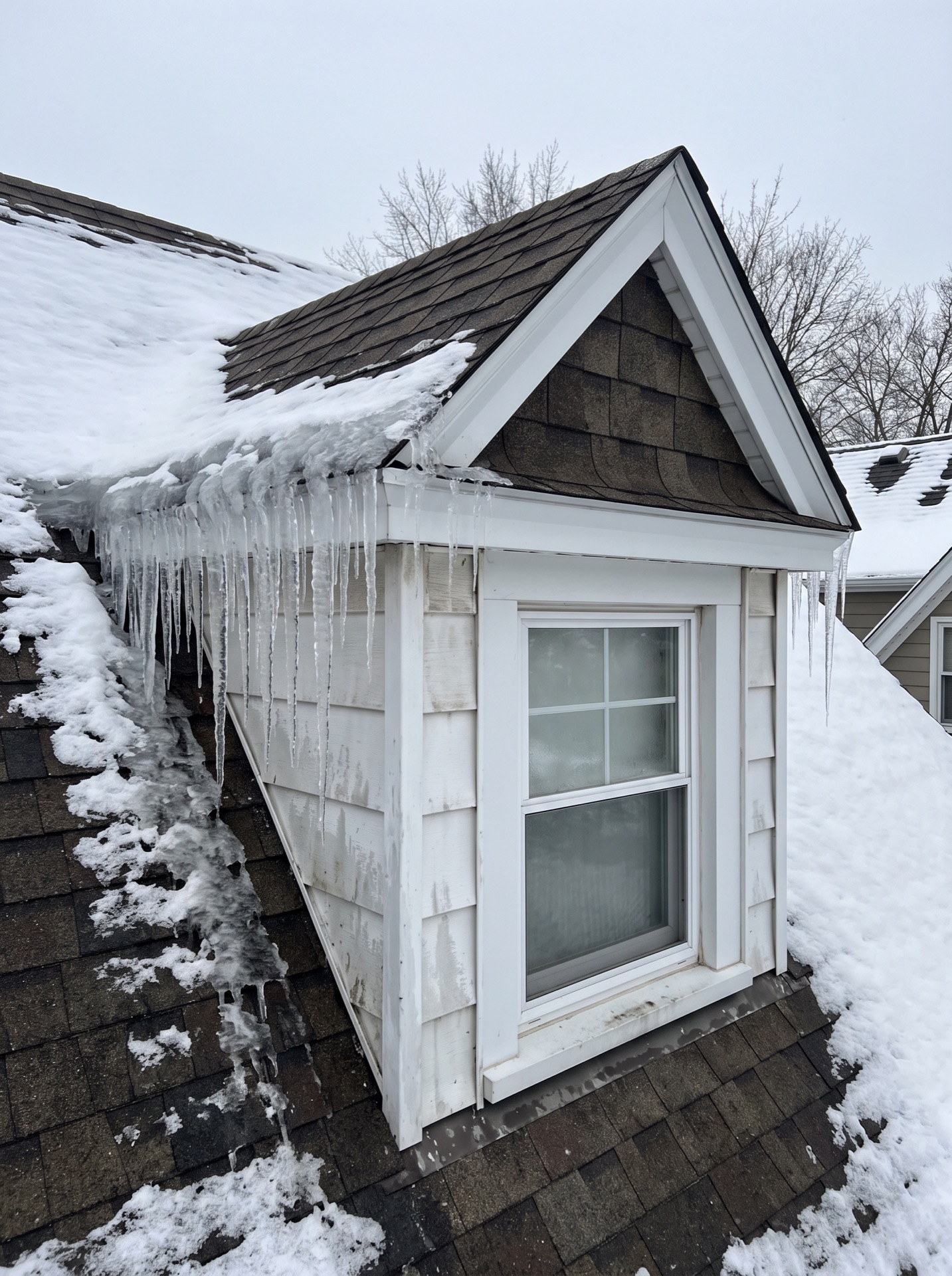
The room over the garage usually has sloped ceilings, knee walls and very little room for insulation where the roof meets the wall. It is cold, so it gets more heat pumped into it, and that heat has a short route into a shallow roof space with poor ventilation.
Meanwhile the garage below is unheated, so the eave on that side is especially cold. A warm deck above and a very cold eave below is the exact recipe.
Why it shows in the garage ceiling
Water entering at that eave can run down inside the wall between the room and the garage, or along the floor framing, and emerge at the garage ceiling — a floor below where it entered and in an unheated space where it will not dry.
Garage ceilings are often unpainted drywall or exposed insulation, so the water is visible early if anyone looks, which is the one advantage here.
The fire separation matters
The ceiling between a garage and a habitable room above is usually a fire-resisting construction. Water-damaged board in that ceiling needs replacing to the correct specification, not just patching with whatever is handy. Mention it to whoever does the repair.
How to tell which one you have
It is probably an ice dam
Snow on the roof over the bonus room, ice at that eave, water in the garage ceiling during a thaw.
It is probably condensation
An unheated garage with a warm room above and poor insulation between them will condense on the cold surfaces, especially if cars come in wet.
It is probably plumbing
A bathroom in the room above, or pipework run through the garage ceiling, which is also a freeze risk in its own right.
What to do in the next ten minutes
- Move vehicles and anything stored out from under it.
- Check whether any pipework runs through that ceiling, and whether it is at risk of freezing.
- Photograph the ceiling and note whether the board is fire-rated.
- Resist turning the garage into a drying room with a heater — that adds moisture and heat where you do not want it.
- Clear the ice at that eave, and plan on insulating and air-sealing the bonus room properly before next winter.
Questions people ask
Because it is surrounded by unconditioned space on more sides than a normal room — cold garage below, roof on two or three sides, often knee wall voids beside it. It is an insulation and air-sealing problem, and solving it also solves the ice dam.
It helps the room above considerably and it is usually straightforward work. Do it alongside sealing the knee walls and the sloped ceiling, or you will move the cold spot rather than remove it.
Sudden water damage to the structure is normally within scope for a homeowners policy. If the ceiling is a fire-resisting assembly, say so to the adjuster — the correct replacement specification is part of the proper repair, not an upgrade.