
What you are actually looking at
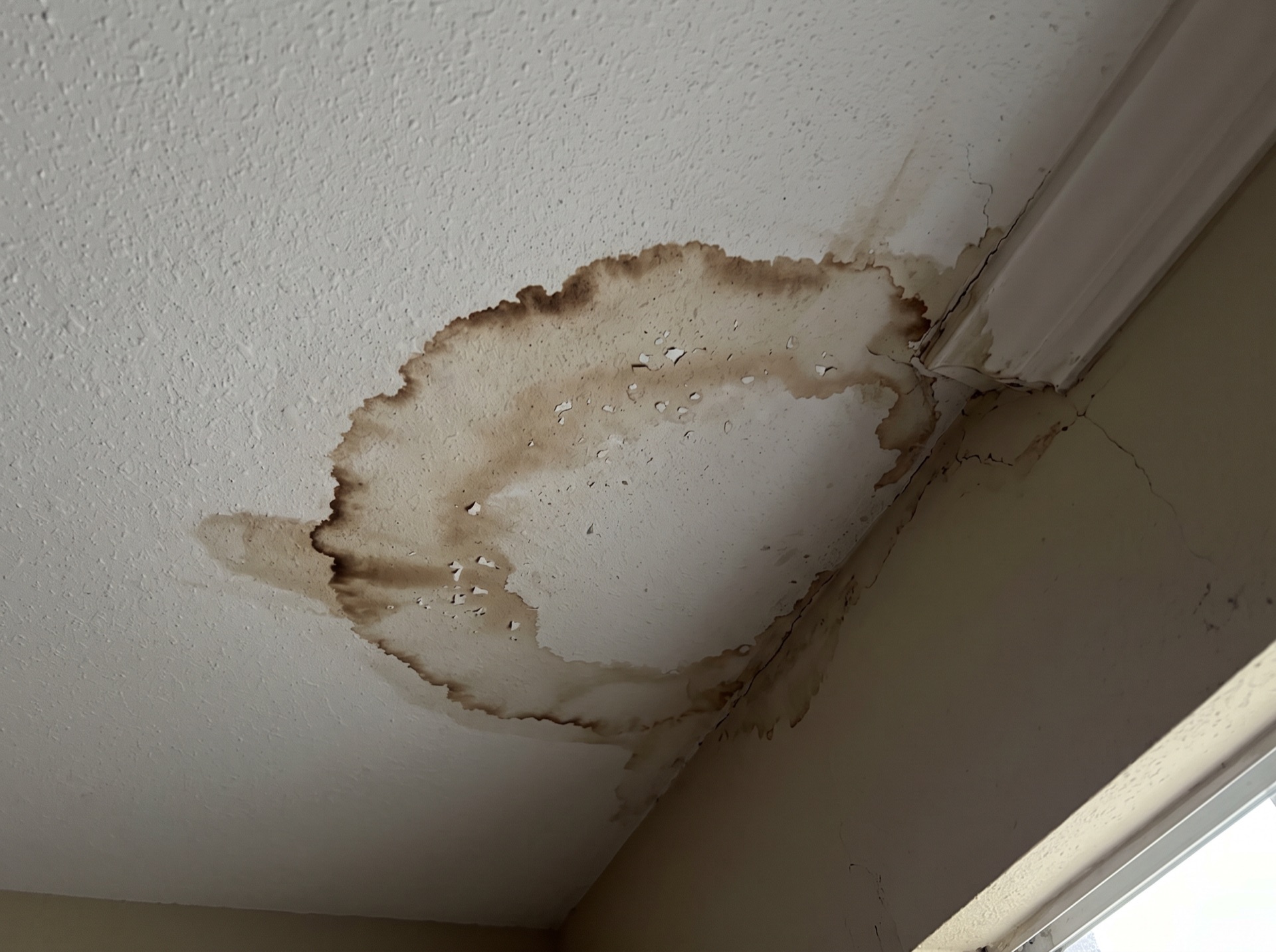
A water stain is tannin. Water passes through the attic insulation, picks up dust and wood sugars on the way, reaches the back of the drywall and wicks outward through the paper facing. By the time you can see a ring, water has been moving for hours and the drywall above it is already saturated.
The ring usually has a darker edge and a lighter center. That edge is the furthest the water reached before it stopped; the center is where it is still arriving. If the edge moves overnight, the leak is active.
Why an ice dam makes a stain in the middle of a freeze
Heat escaping into the attic melts the underside of the snow pack. That meltwater runs down the roof deck until it reaches the eave, which hangs out past the warm part of the house and stays well below freezing. There it refreezes, and the ice builds into a ridge.
Once the ridge is a couple of inches high, the next round of meltwater has nowhere to drain. It backs up behind the ice, finds the seam between two courses of shingles, and runs under them onto the decking. Shingles shed water going down. They do nothing at all against water pushed uphill.
Why it shows up on an inside wall, not at the edge
People expect a roof leak to show at the outside wall, directly under the gutter. Ice dam water rarely does. It enters at the eave, runs along the top of the ceiling drywall following the slope of the framing, and comes through at the first low point or seam it meets — which is often several feet into the room.
A stain six feet from the exterior wall does not rule out an ice dam. It is the normal pattern.
How to tell which one you have
It is probably an ice dam
There is snow on the roof and ice at the eaves. The stain appeared during or just after a thaw, or on a sunny day after a cold snap. It is on a top-floor ceiling. It got worse during the day and slowed overnight.
It is probably plumbing
The stain is under a bathroom, kitchen or laundry on the floor above. It is the same whatever the weather. It grows when a particular fixture runs. There is no snow or ice on the roof.
It is probably condensation
Not a defined ring but a broad damp patch, often with mold spotting, usually near a bathroom, around an attic hatch, or on an outside wall. Worse in a tightly sealed house during a long cold spell.
What to do in the next ten minutes
- Put a bucket under it and move anything that matters out of the room.
- If the ceiling is bulging or spongy, pierce the center of the bulge with a screwdriver and let it drain into the bucket. A controlled hole beats the whole sheet coming down.
- Photograph it now, with something in frame for scale, and again as it changes. Dated photographs are what an adjuster works from.
- Turn the heat down a little in the room below. Less heat into the attic means less meltwater feeding the dam.
- Do not climb onto the roof and do not attack the ice with a hammer or a hatchet.
- Call us. Steam takes the ice off without touching the shingles, and it is the only method we use.
Questions people ask
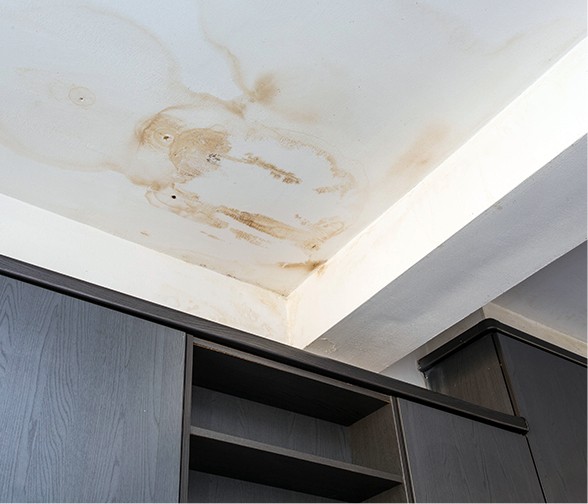
The stain will dry and stop spreading once the dam is cleared. Whether the structure is fine depends on how much water got in and how long it sat. Wet cellulose or fiberglass insulation loses most of its R-value while it is wet and does not reliably recover, and drywall that stayed saturated for more than a day or two usually needs replacing rather than painting.
Not until the leak is fixed and the cavity is dry. Painting a damp stain traps moisture against the board and the ring comes back through the new paint within weeks. A stain-blocking primer over genuinely dry drywall is the right order.
We dispatch same day for an active interior leak where we have a crew in range, and typically within 24 to 48 hours elsewhere in the states we cover. Enter your ZIP code on this page and you will get a straight yes or no for your address before anything is booked.