
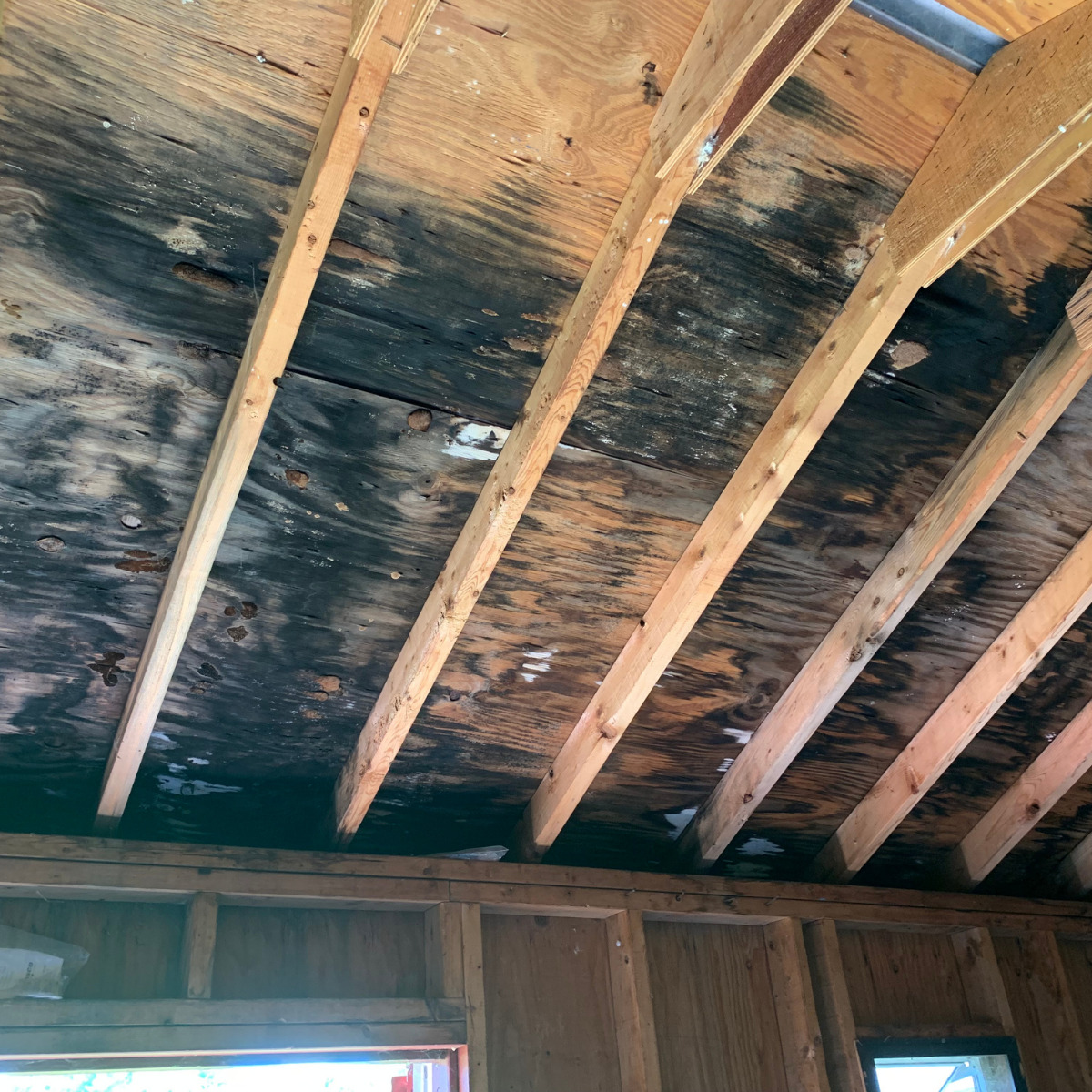
Why there is a smell and no stain
Water that runs down inside a wall cavity, soaks into insulation, or pools on the back of a drywall sheet never has to break through the decorated surface. The microbial activity that produces the smell starts within a day or two in a warm house, long before any mark appears.
A stain means water reached the surface. A smell means water is present somewhere. The smell comes first.
Where to look, in order
Built-in closets and cabinets on outside walls, because they are unheated, unventilated and against the coldest surface. The corner where the ceiling meets the outside wall. Around and above any recessed lights. The attic hatch — open it and smell the air coming down.
Also check the floor along the outside wall of the room below. Water that ran down a cavity ends up at the bottom plate and wicks into the floor edge.
Separating damp from a cold-house smell
A closed-up house in winter smells stale. Damp is different: it is earthy and it gets stronger when you open a confined space such as a closet. If opening a closet door releases a noticeable musty smell, that is where to look.
How to tell which one you have
It is probably ice dam water
Top floor, outside wall, smell appeared after a thaw, there is or was ice at the eaves.
It is probably condensation
Smell plus visible black spotting on cold surfaces and in corners, worst in a room that is kept shut and unheated.
It is probably a slow plumbing leak
Smell near a bathroom or a kitchen, unrelated to weather, present in summer too.
What to do in the next ten minutes
- Open closets and cabinets on outside walls and get air moving through them.
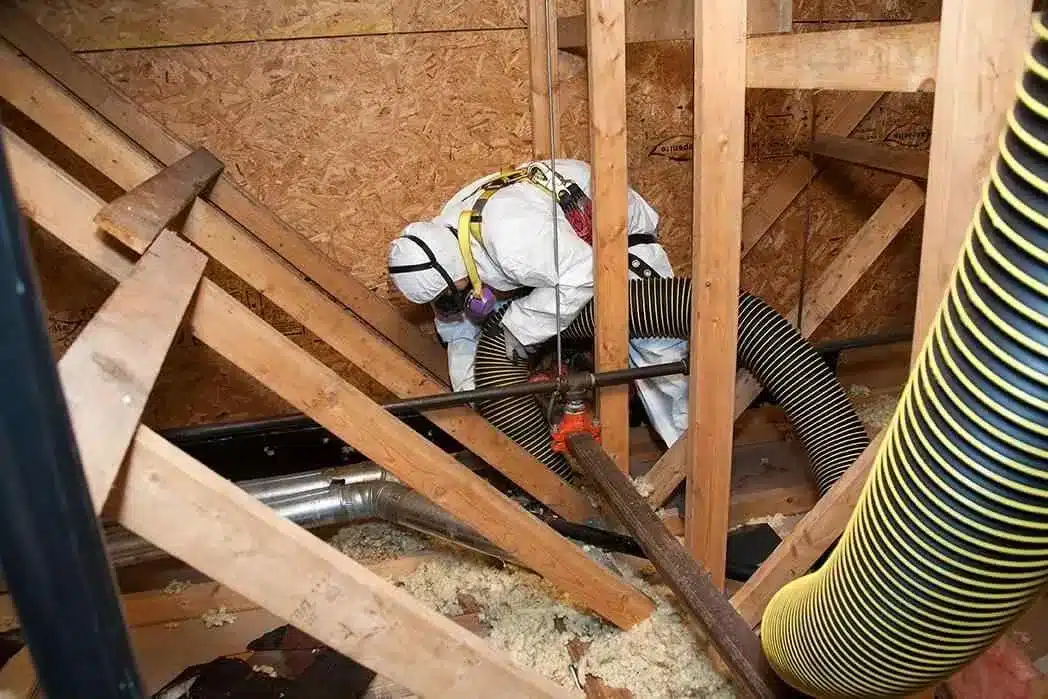
- Smell the air at the attic hatch without climbing in.
- Feel along the top of the baseboard on the outside wall of the room below for damp.
- Get a cheap moisture meter, or ask whoever attends to bring one. A reading settles it.
- If there is ice on the roof, clear it now rather than waiting for the stain to appear.
Questions people ask
A basic pinless meter run along a wall will show you relative differences, which is often enough to find the wet area. It will not tell you how deep it goes or what is behind the board. It is a good first step, not a diagnosis.
A dehumidifier helps the room air and may slow things down. Neither reaches water inside a closed cavity, and masking the smell just delays finding it.
On its own, usually not — an adjuster works from damage, not odour. It is enough to justify getting it inspected and documented, and if an inspection finds wet cavity insulation then you have something concrete.