
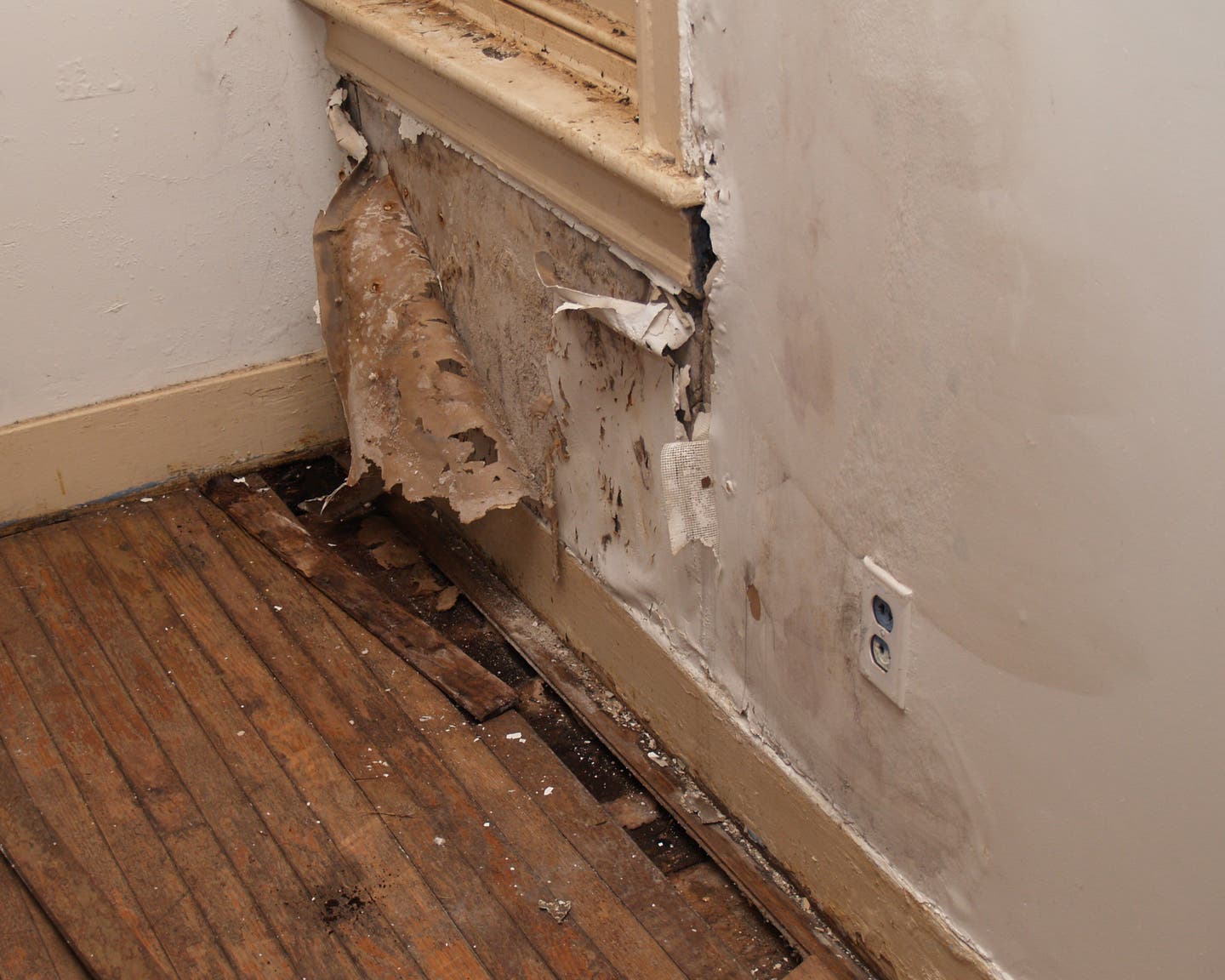
Three causes, one wet ceiling
An ice dam puts meltwater on top of the ceiling from the roof. A plumbing fault puts water there from a pipe or a seal. Condensation puts it there from the air in the room itself, which carries far more moisture than the rest of the house and goes somewhere when the extractor is poor.
They look similar on the ceiling and they are repaired by completely different trades, so the diagnosis matters.
The extractor fan duct is the usual quiet culprit
A bathroom fan that vents into the attic rather than through the roof or the soffit is dumping warm, saturated air directly above your ceiling all winter. That air hits cold sheathing, condenses, runs back down and drips. It looks exactly like a roof leak and it has nothing to do with the roof.
It is also a cause of ice dams in its own right: that plume of warm wet air is a heat source melting the underside of the snow directly above it. If your fan duct ends in the attic, you have two problems that feed each other.
Check it when it is safe to do so: the duct should run to a vent on the roof or in the soffit, be insulated along its length, and be clamped at both ends. A flexible duct that has fallen off its collar is extremely common.
Why winter makes a long-standing shower leak suddenly visible
A failing shower pan or grout line can leak slowly for a year and dry out between uses without ever marking the ceiling. In winter the house is closed up, the humidity is higher and the drying is slower, so the same leak finally shows. The ice dam gets the blame for a plumbing fault that was already there.
How to tell which one you have
It is probably an ice dam
Snow and ice on the roof above. The stain is nearer the outside wall than the shower. It tracks with thaws rather than with showers.
It is probably plumbing
The wet patch sits directly under the bath, the shower tray or the WC. It grows after use and settles between times. No snow on the roof and it still happens.
It is probably condensation or the fan duct
A broad damp area rather than a drip, often with black spotting, worst in the coldest weather, worst in the room with the longest showers, and the fan is noisy, weak or vents into the attic.
What to do in the next ten minutes
- Stop using the shower in that bathroom for a day and see whether the ceiling keeps getting wetter. That one test separates plumbing from the roof better than anything else.
- Run the extractor for twenty minutes after every shower and leave the door ajar.
- Photograph the ceiling, and the fan duct if you can see it safely from the hatch.
- Bucket under any active drip and pierce a bulge rather than letting it fall.
- If there is ice at the eaves above this room, call us — that part we can settle quickly.
Questions people ask
Look from the attic hatch with a flashlight for the duct leaving the fan housing. If it ends in mid-air, points at the soffit without connecting, or has come off its collar, it is venting into the attic. If you cannot see it safely, do not climb around on joists to find out — any roofer or insulation contractor can check it in minutes.
No. Steaming the eave removes the dam and stops meltwater entering, and that is worth doing if there is ice up there. It does nothing about moist air condensing in the attic, which is an insulation, air-sealing and ventilation job. We will tell you plainly which one you have.
Sudden damage from an ice dam is typically within what a homeowners policy is written for. A slow plumbing leak or long-term condensation very often is not, because most policies exclude gradual damage. That distinction is exactly why diagnosing it properly matters before a claim goes in.