
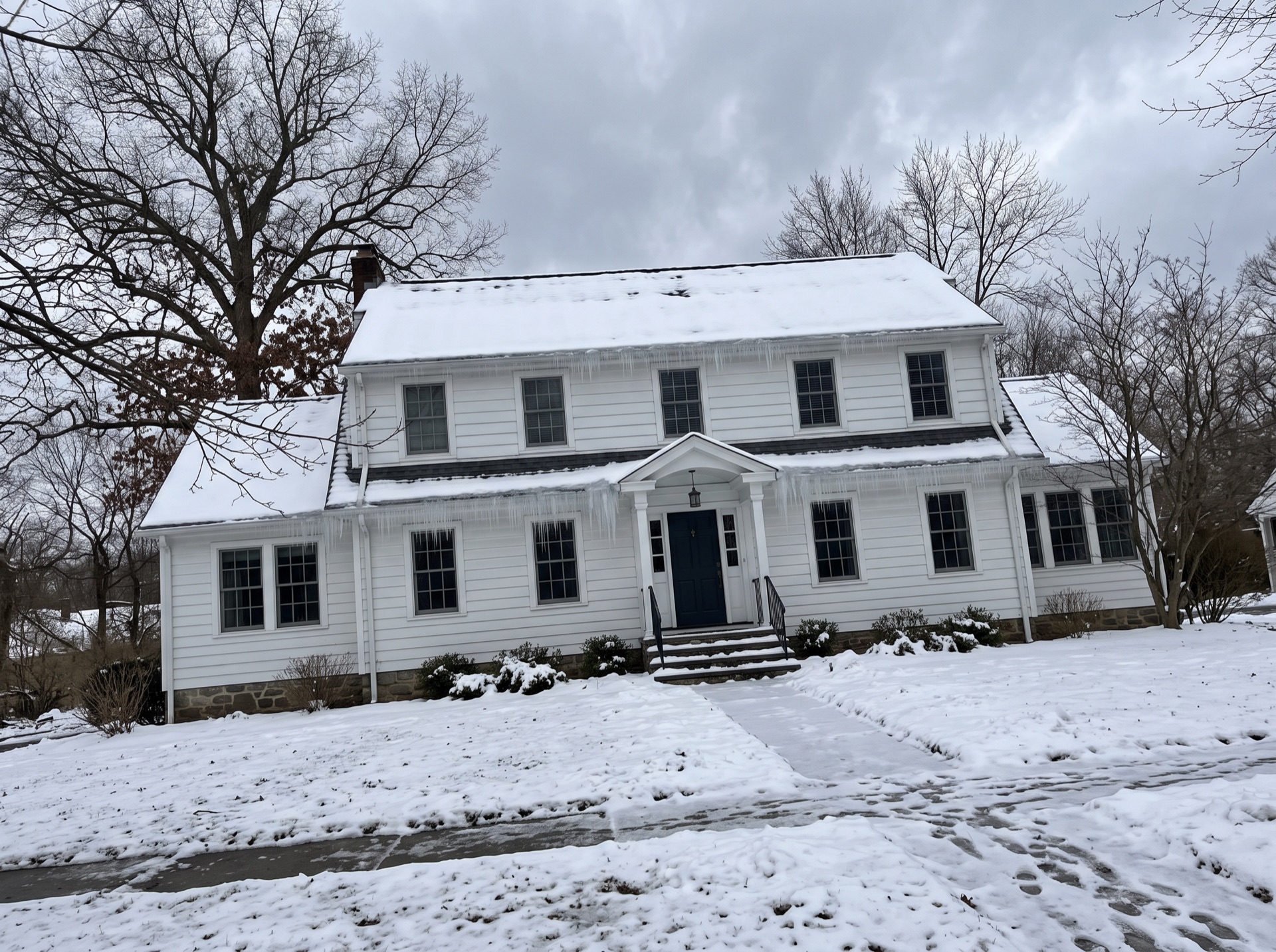
Why ice collects on the upper side
The skylight curb stands proud of the roof surface. Snow sliding or melting down the slope piles against it and stops there. Meanwhile the glass itself loses heat from the room below, which melts the snow immediately around it and refreezes it at the edges where it is colder.
The result is a small dam above the skylight, well away from the eave, with the same consequences: standing water pushed uphill under a covering designed to shed it downhill.
Flashing is a downhill system
Skylight flashing is a set of overlapping pieces, each one lapping over the one below so that water running down crosses every joint from above. Backed-up water reverses that logic and goes under each lap instead of over it. No amount of sealant fixes that, because the detail is not failing — it is being used backwards.
This is why a skylight that has been watertight through years of rain starts dripping in its first bad ice winter.
Condensation on the glass muddies the picture
A skylight is the coldest surface in the room and the one most likely to run with condensation, particularly in a bathroom or a kitchen. Water on the inside of the glass that runs onto the lining is a humidity problem. Water appearing at the top corner of the lining or on the ceiling beside it has come from outside.
How to tell which one you have
It is probably an ice dam
Snow on the roof, ice piled on the upslope side of the skylight, leaking in a thaw, water at the head or corners of the lining.
It is probably the flashing or the seal
It leaks in heavy rain in other seasons. The unit is old, the gasket has failed, or the flashing has lifted.
It is probably condensation
Water on the glass itself, running down the pane, heaviest on cold mornings, in a humid room.
What to do in the next ten minutes
- Dry the lining and watch where water next appears — glass or drywall tells you which problem you have.
- Photograph the skylight from inside and, if it is visible safely from a window or the ground, from outside.
- Do not try to chip ice off around a skylight. Cracking a pane in a freeze is a far worse day.
- Reduce humidity in the room if the glass is running.
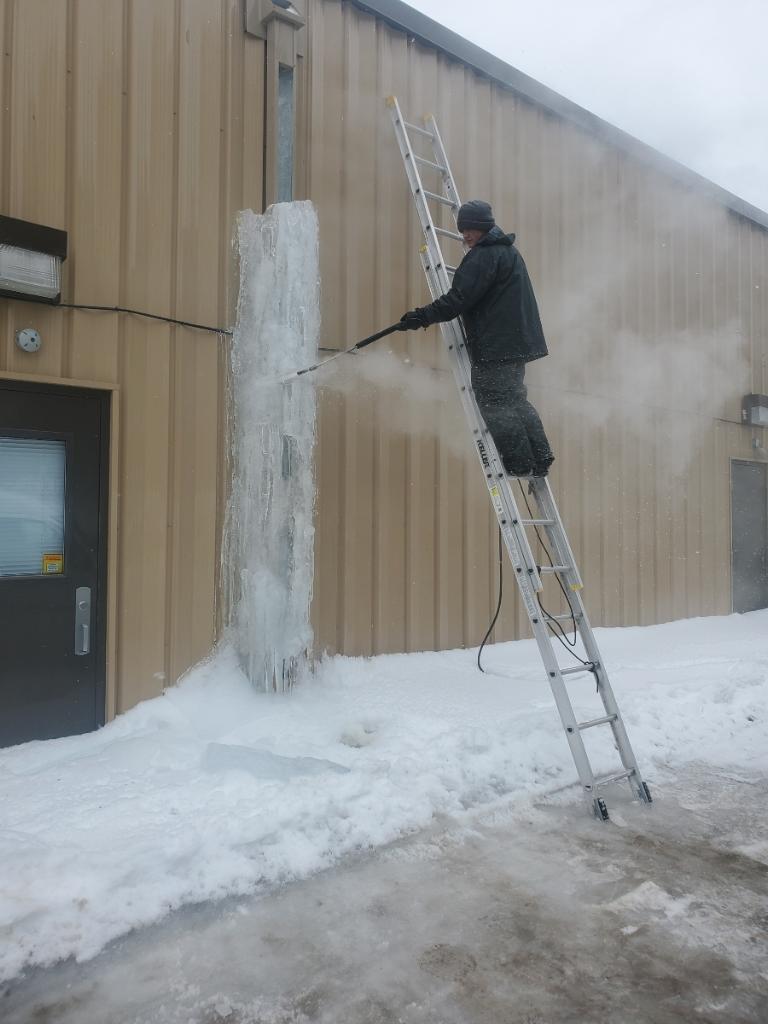
- Call us to steam the ice off above it, which is delicate work and exactly what steam is for.
Questions people ask
Usually not, if the unit itself is sound. The repair is removing the ice, then checking the flashing laps and the curb once the roof is clear. An old unit with a failed seal is a different conversation, and one we will tell you about honestly rather than pretending steam fixed it.
Yes. Low-pressure steam is about 290°F at a pressure you could hold your hand in, and it melts ice rather than blasting it. That is precisely why it is the right tool around glass, flashing and anything else a pressure washer or a hammer would wreck.
Sudden water damage from an ice dam is the kind of loss most homeowners policies address, and interior damage around a skylight is normally part of that. Whether the unit itself is covered depends on whether it failed or was simply overwhelmed, which your adjuster decides.