
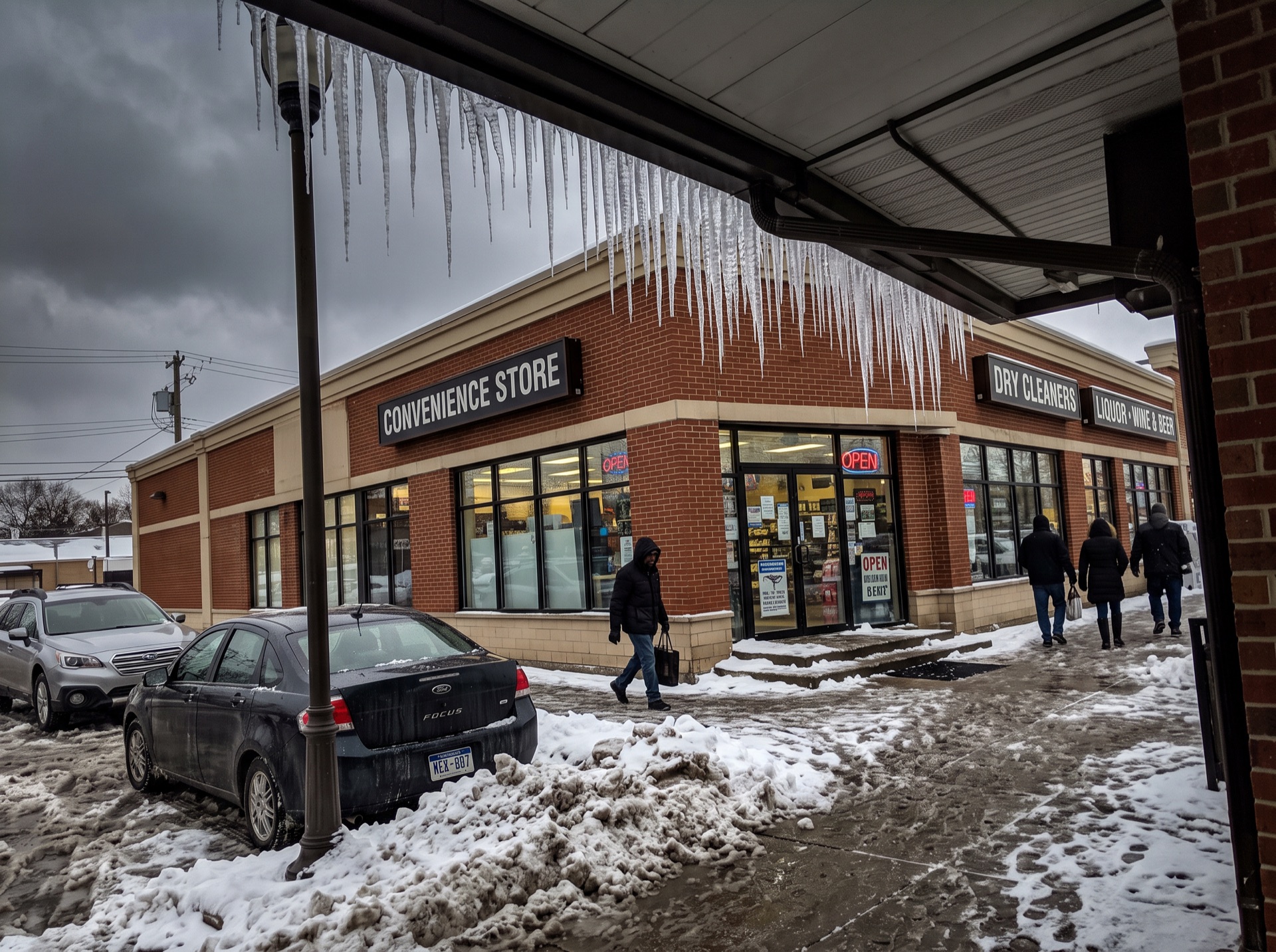
Commercial Roof Snow Removal
Ice Dam Now provides commercial roof snow removal across 38 cold-climate states. Scheduled load reduction for warehouses, retail, schools and multi-unit buildings before drift weight becomes a deflection problem. Crews are licensed, insured and harness-certified, dispatch same day for active interior leaks, and bill by the crew hour at a rate quoted before dispatch. Dated photographs are supplied for insurance claims.
Big flat roofs are the ones that fail. They shed nothing on their own, they drift unevenly, and the load lands on the longest unsupported spans in the building.
Get Ice Dam Help Now
Why large decks carry the most risk
A long-span steel or open-web joist roof has the least margin exactly where the drift is deepest — mid-span. Snow does not settle evenly either: it piles against parapets, behind rooftop units, in the lee of higher adjoining roofs, and in valleys between bays. The average depth across the roof is not the number that matters.
Crews survey depth and density at the drift points rather than the middle of the field, and calculate the working load from that against the structure's design capacity.
Reduction, not bare deck
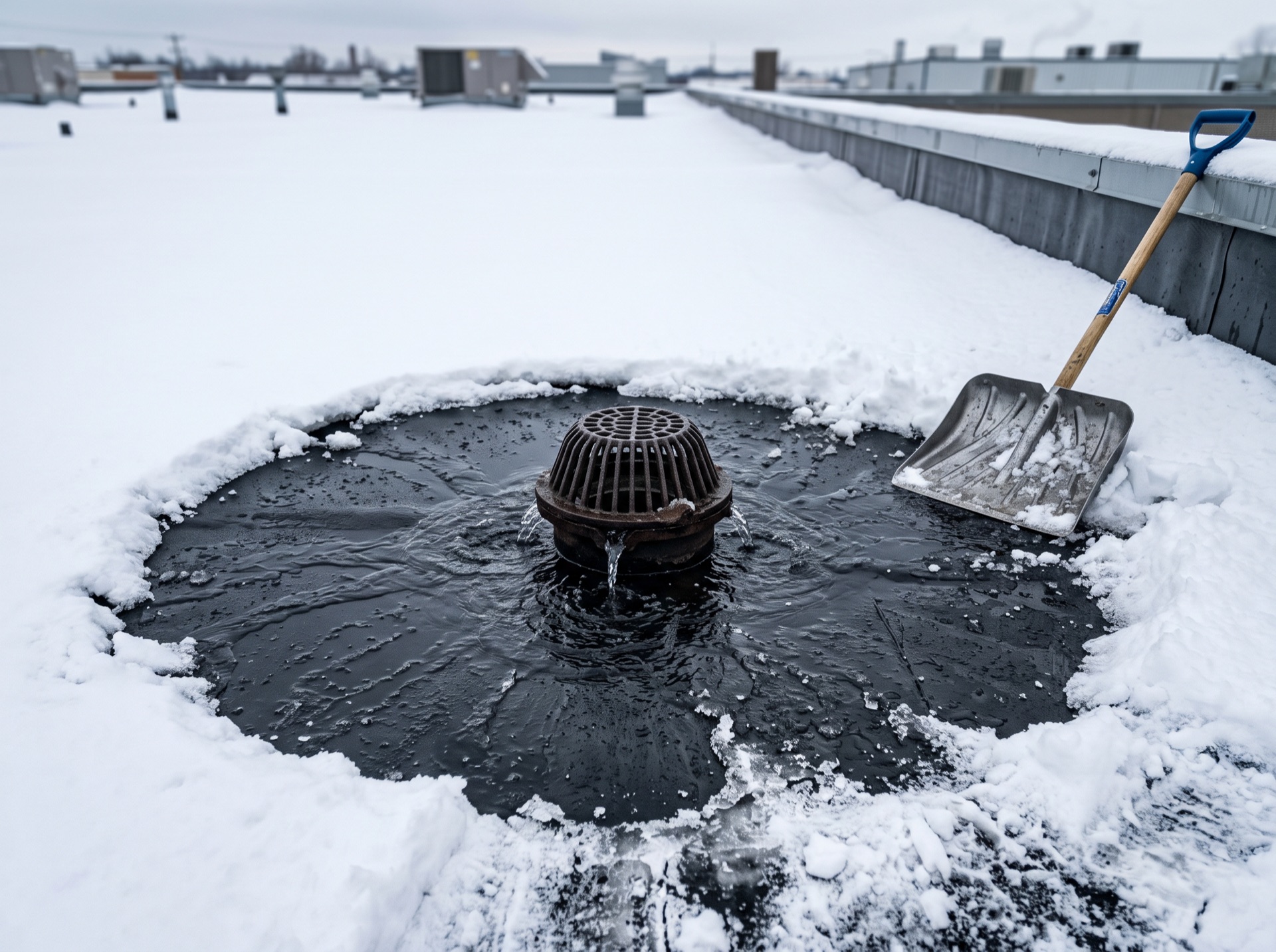
The goal is to bring the load under threshold safely, not to scrape a roof in clean. Clearing is balanced across the deck so load is not shifted onto one bay, drains and scuppers are opened so melt has an exit, and a cushion layer always stays on the membrane.
Where the figures call for it, crews bring in crane-assisted picks instead of adding bodies to a roof that is already carrying too much.
Storm routes and standing contracts
Properties on a standing contract get a scheduled clear after each qualifying snowfall, with a single point of contact and a condition report per visit. For a portfolio, that means the clearing order is decided in advance by risk rather than by whoever calls first during the storm.
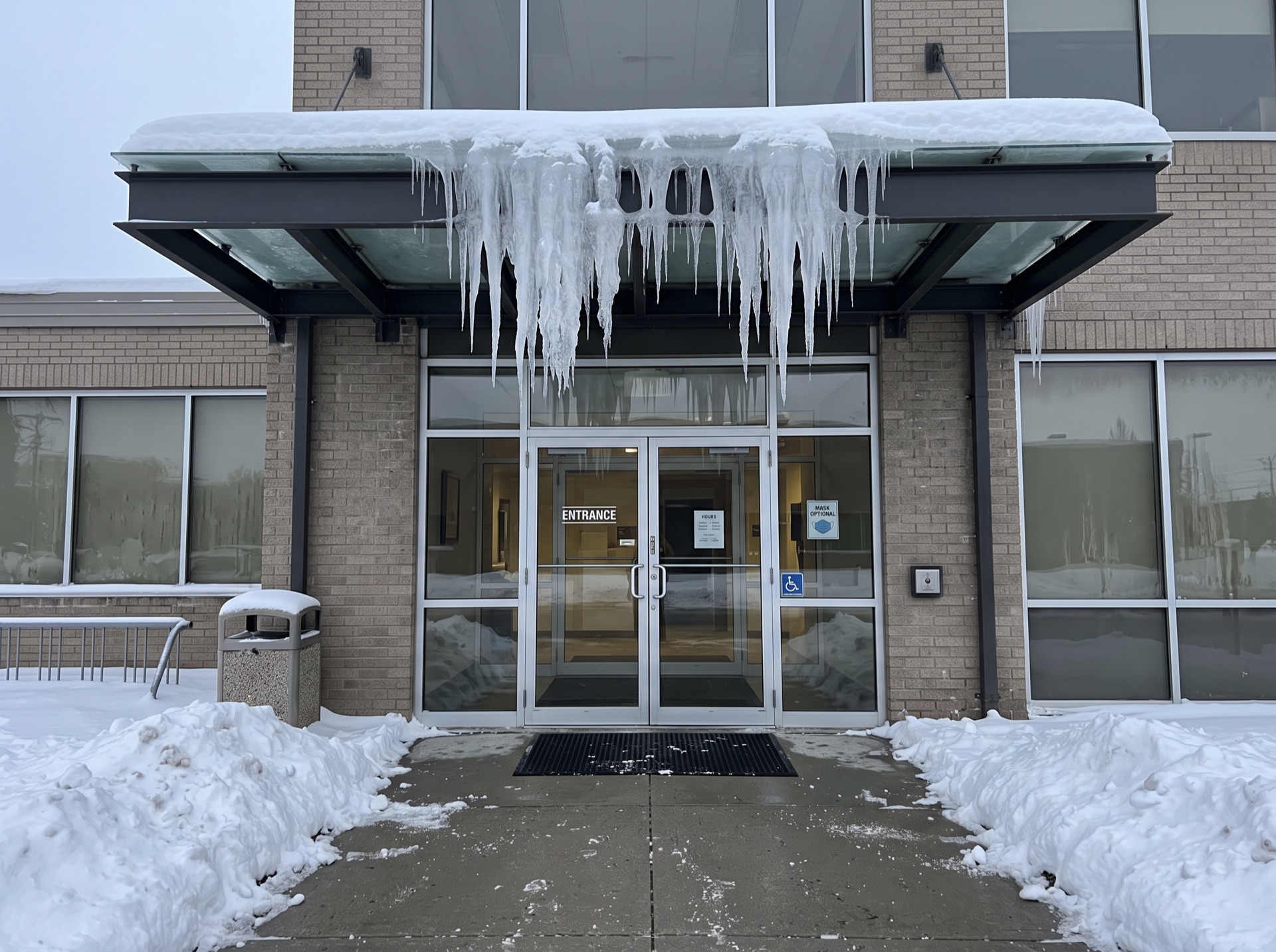
What you get
- Drift-point surveyDepth and density measured where it collects, not where it is convenient
- Balanced reductionLoad brought under threshold without shifting it onto one bay
- Drains kept openScuppers and internal drains cleared so meltwater has an exit
- Portfolio routesStanding storm schedules with per-visit condition reports
- Mid-span measuredDepth read over the longest unsupported span, not the average
- Overflows opened firstDrains and scuppers cleared before the load comes off
- One invoice per siteMulti-building properties scoped and billed together
Water coming in right now? Call (888) 561-9664. Active interior leaks go to the front of the schedule during a freeze event.
Commercial Roof Snow Removal Across 38 States
Pick your state to find local dispatch, crews and response times for your city.
Northeast & New England
9 statesRockies & Pacific Snow Corridors
12 statesPlains, Mid-Atlantic & Appalachia
10 statesQuestions We Get About Commercial Snow
Visible deflection between joists, new cracks in interior finishes, doors or roof hatches that suddenly bind, and sprinkler lines or ceiling grid that have moved are all late signals. The reliable method is measuring depth and density at the drift points and comparing the load to the design capacity.
Properties on a standing contract are cleared on a scheduled route and need no call. Everyone else is scheduled by severity, with active deflection and life-safety situations moved to the front.
Yes. HVAC units, exhaust fans, conduit, gas lines, solar racking and safety railing are all worked around. Equipment wells and the drift shadows behind units are usually the deepest snow on the roof and get specific attention.
Yes. Each visit produces depth and load figures, photographs and a written condition report. Preventing an imminent structural failure is treated as loss mitigation by most carriers, and that record is what supports it.
When the measured load approaches a meaningful fraction of design capacity, when rain is forecast onto an existing pack, when drifting has loaded one area far more than the rest, or when the drains have stopped taking water. Depth alone is a poor trigger - density is what matters, and that needs measuring.
Depth and density readings, the calculated load per square foot and dated photographs, yes - taken across the roof rather than at one convenient spot. Certifying a structure against those numbers is a structural engineer's signature, and where the readings warrant one that gets said plainly.
For light snow on an accessible roof with proper edge protection, sometimes. The limits are fall protection on a deck with no anchors, membrane damage from the wrong tools, and knowing when a load is actually dangerous. Where in-house clearing is reasonable, that is worth saying, and the equipment and training it needs can be set out.
Contracted properties are on a storm route and get reached in a set order that is agreed before the season. Uncontracted calls are fitted around those, prioritized by load and by whether water is already inside. During a regional event, a standing agreement is the difference between hours and days.
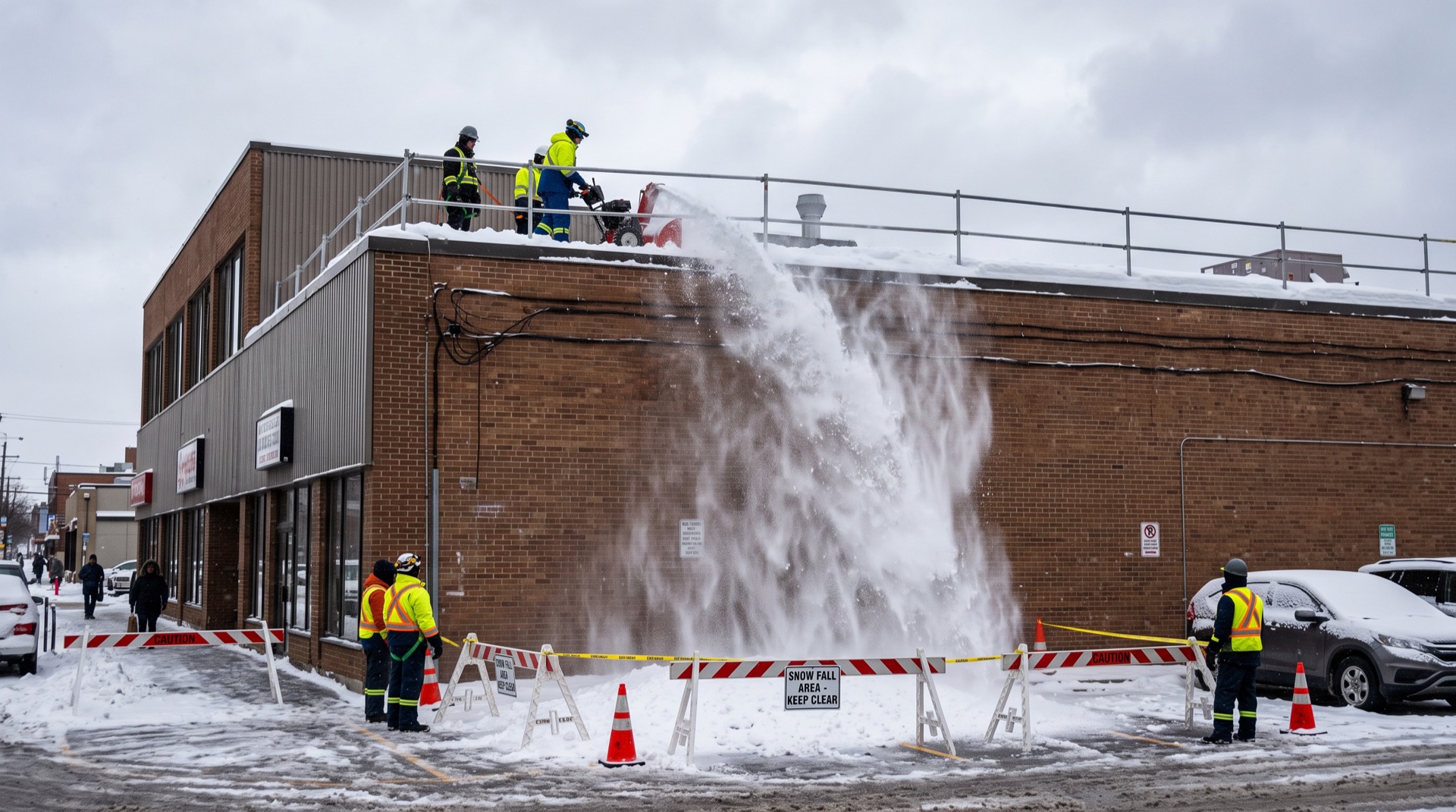
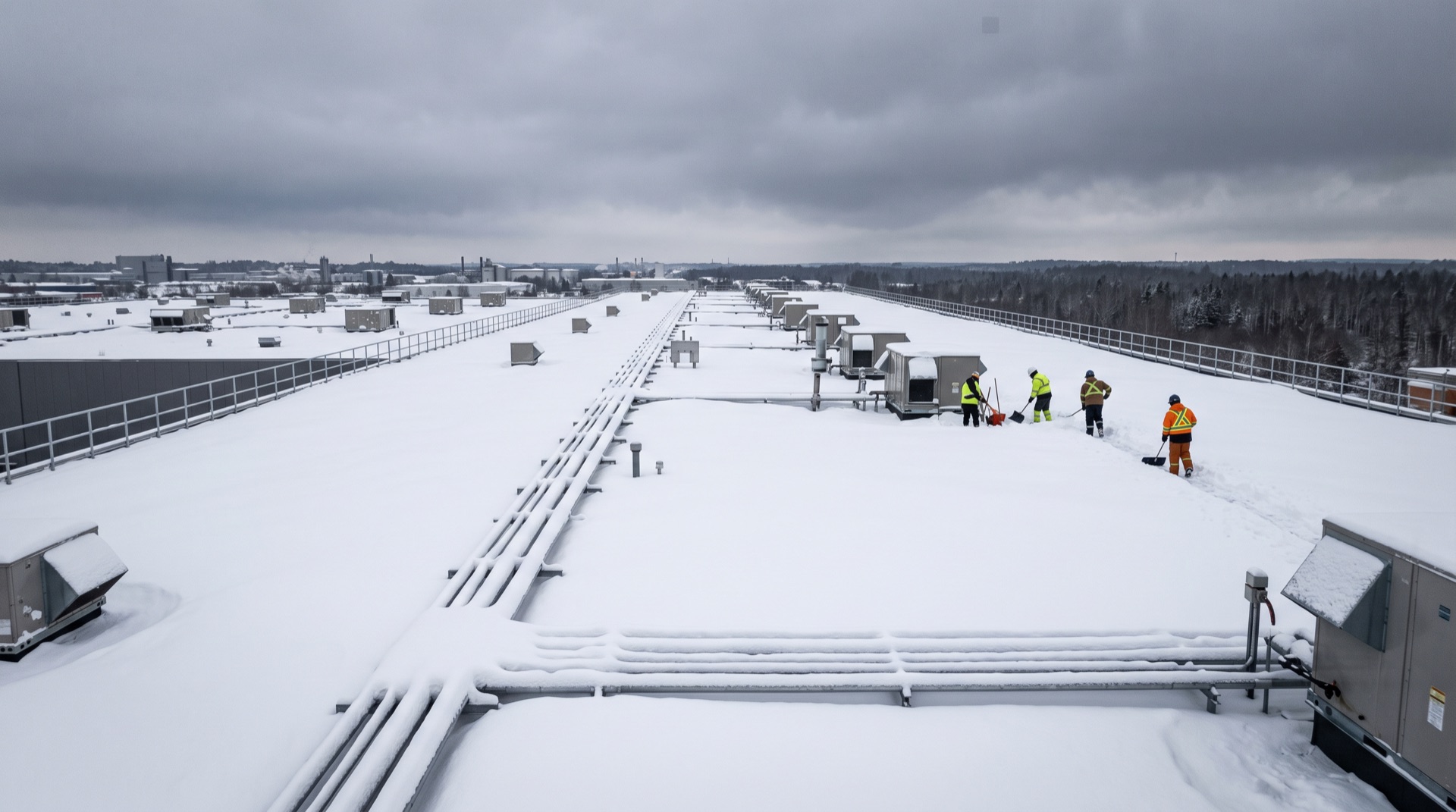
Commercial Roof Snow Removal In Practice
What the work looks like on real roofs. Every job is photographed before and after.
What Usually Goes With It
Crane-Assisted Snow Removal
Snow tarps rigged and lifted by boom crane where drifts are too deep and too heavy to move by hand.
Ask About A Crane PickCommercial Ice Dam Removal
Membrane-safe steaming for EPDM and TPO decks, frozen parapet scuppers and blocked internal drains.
Book Commercial SteamingIce Dam Insurance Claims
One claim for the whole event: ice dam removal, water mitigation, mold remediation, interior repair and roof replacement where the storm damaged it, documented in Xactimate line items.
Start My Claim DocumentationGet A Crew Out
Tell us the address and what you are seeing. You get the rate on the phone before anyone is dispatched.