
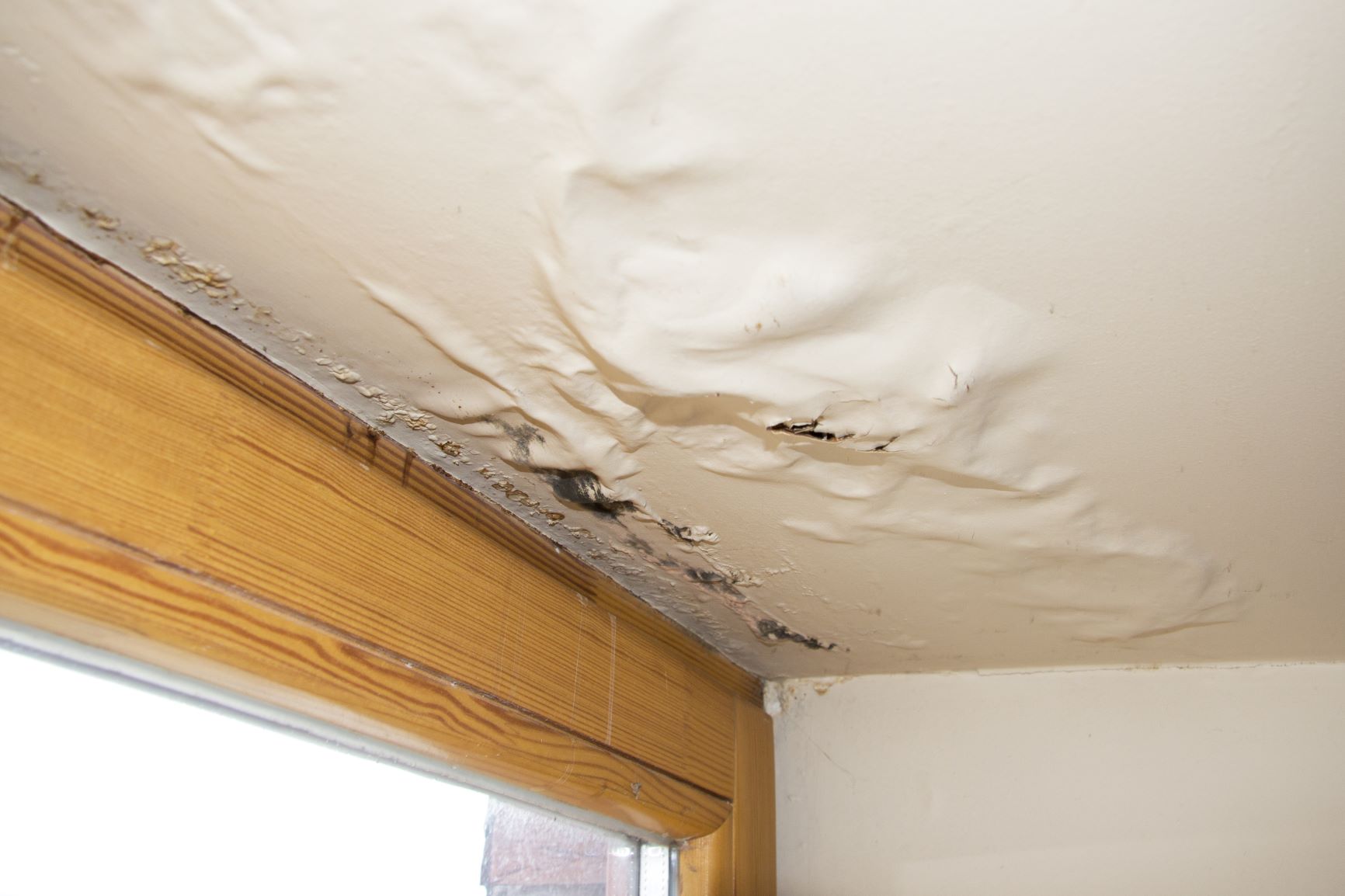
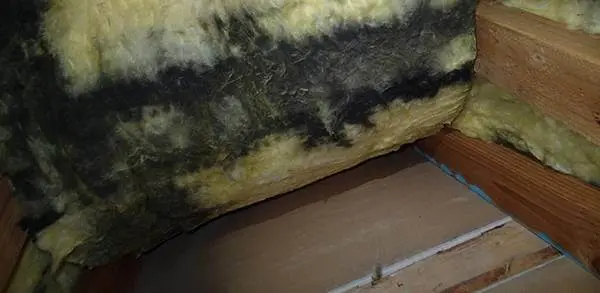
Why the sheathing and not the insulation
Mold needs an organic food source, moisture and a stable temperature. Fiberglass is not food; the plywood or OSB above it is, and so are the rafters. So the growth appears as dark gray or black patches on the underside of the roof boards, typically heaviest near the eaves where the water came in and the air moves least.
OSB is the more vulnerable of the two because the adhesive bond between the strands weakens as it repeatedly wets and dries. Sheathing that has delaminated to the point of being soft is a structural repair, not a cleaning job.
Surface growth against damaged wood
Light surface growth on sound, dry wood can usually be treated in place and the moisture source fixed. Staining that has penetrated, wood that is soft to a screwdriver, or delaminated OSB is a different proposition and means sheets coming off.
The distinction is made by somebody who can get up there and probe it, not from a photograph.
Fixing the moisture is the actual remediation
Cleaning or encapsulating mold without stopping the water is painting over a problem that returns the following winter. The sequence that works is: stop the water, dry the space, remove what is damaged, then address the heat loss and ventilation that let the attic get warm and wet in the first place.
How to tell which one you have
It is probably from ice dam water
Growth concentrated along the eaves and the outside walls, following where the water came in, with clean sheathing higher up.
It is probably from condensation
Even growth across the whole underside of the deck, often with frost in cold weather, worst near a bathroom fan duct or an unsealed hatch.
It is probably an old stain, not active
Dry, gray, unchanged over years, with no moisture source. Worth confirming rather than assuming.
What to do in the next ten minutes
- Do not disturb it. Brushing or vacuuming mold without containment puts spores through the whole house.
- Keep the attic hatch shut.
- Photograph it from the hatch with a flashlight, including how far along the eave it runs.
- Deal with the water source first — that is us, and it is the part that stops it getting worse.
- Get a remediation contractor to assess the extent before you agree to any scope of work.
Questions people ask
An attic is normally outside the living space and separated by the ceiling, so exposure tends to be lower than people fear. That is not a reason to leave it. If anyone in the house has asthma or is immunocompromised, treat it as a priority and get a professional assessment rather than a reassurance from the internet.
Be careful here, and do not take anyone's promise on it. Many homeowners policies limit mold coverage to a modest capped amount, and a good number exclude it outright or only cover it where it results directly from a covered sudden loss. That makes mold the least reliable part of an ice dam claim. It also makes the dated photographs from the day of the leak genuinely valuable, because showing that the mold followed a sudden covered event is what the cap or the exclusion often turns on. Read your own policy wording and ask your adjuster directly.
Household bleach is mostly water and it does not penetrate porous wood, so it lightens the color and leaves the growth. It also adds moisture to the exact space you are trying to dry. Proper remediation uses containment, removal and an antimicrobial rated for the substrate.