
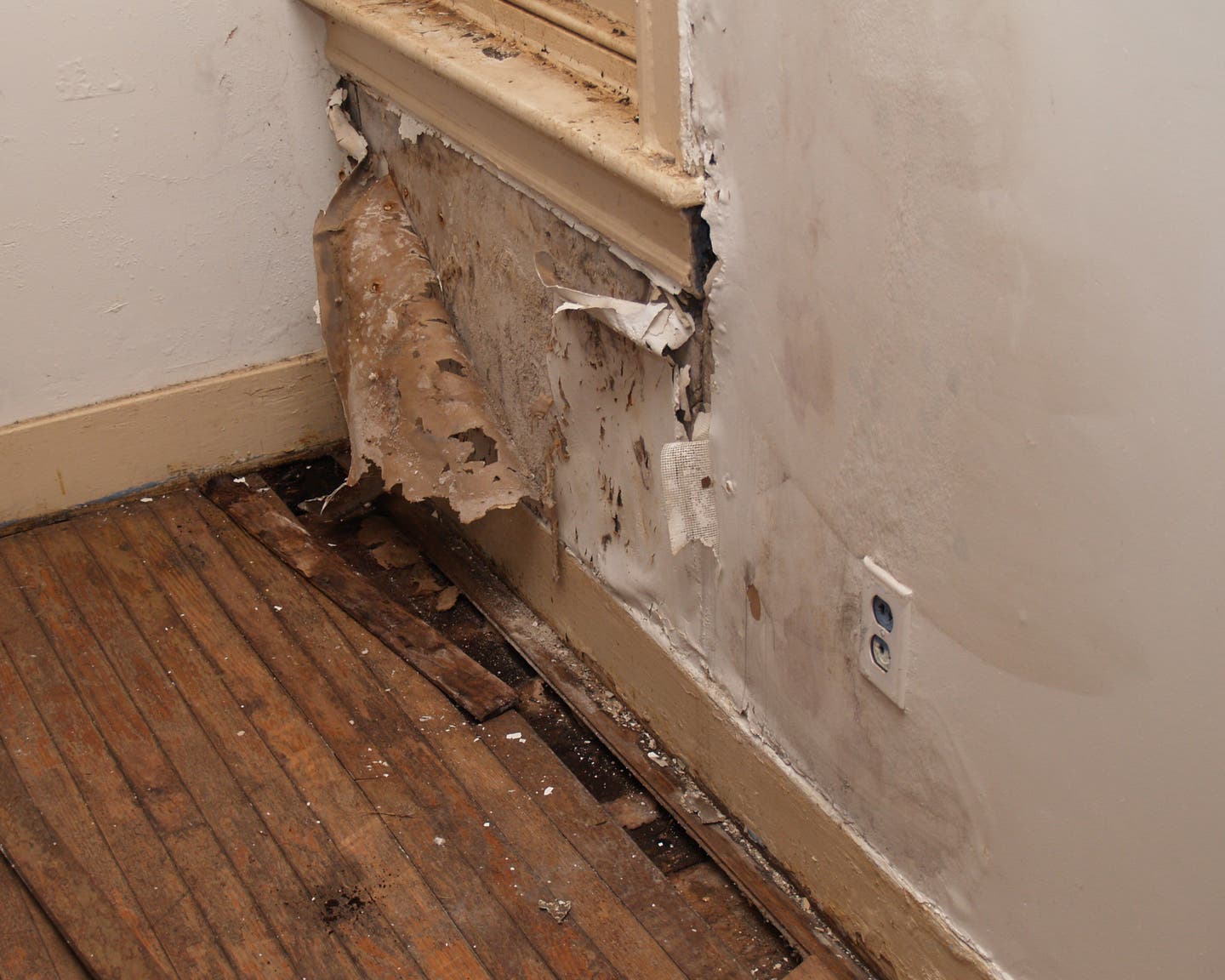
The coldest corner in the house
Insulation is nearly always at its thinnest where the roof slope meets the top of the wall, because the rafter is coming down to meet the plate and there is simply less room. Many houses have a few inches there against a foot or more in the open attic.
That means the corner is cold on the inside and, more importantly, it is where the warm attic air meets the cold eave. It is the hinge the whole ice dam mechanism turns on.
A seam is an invitation
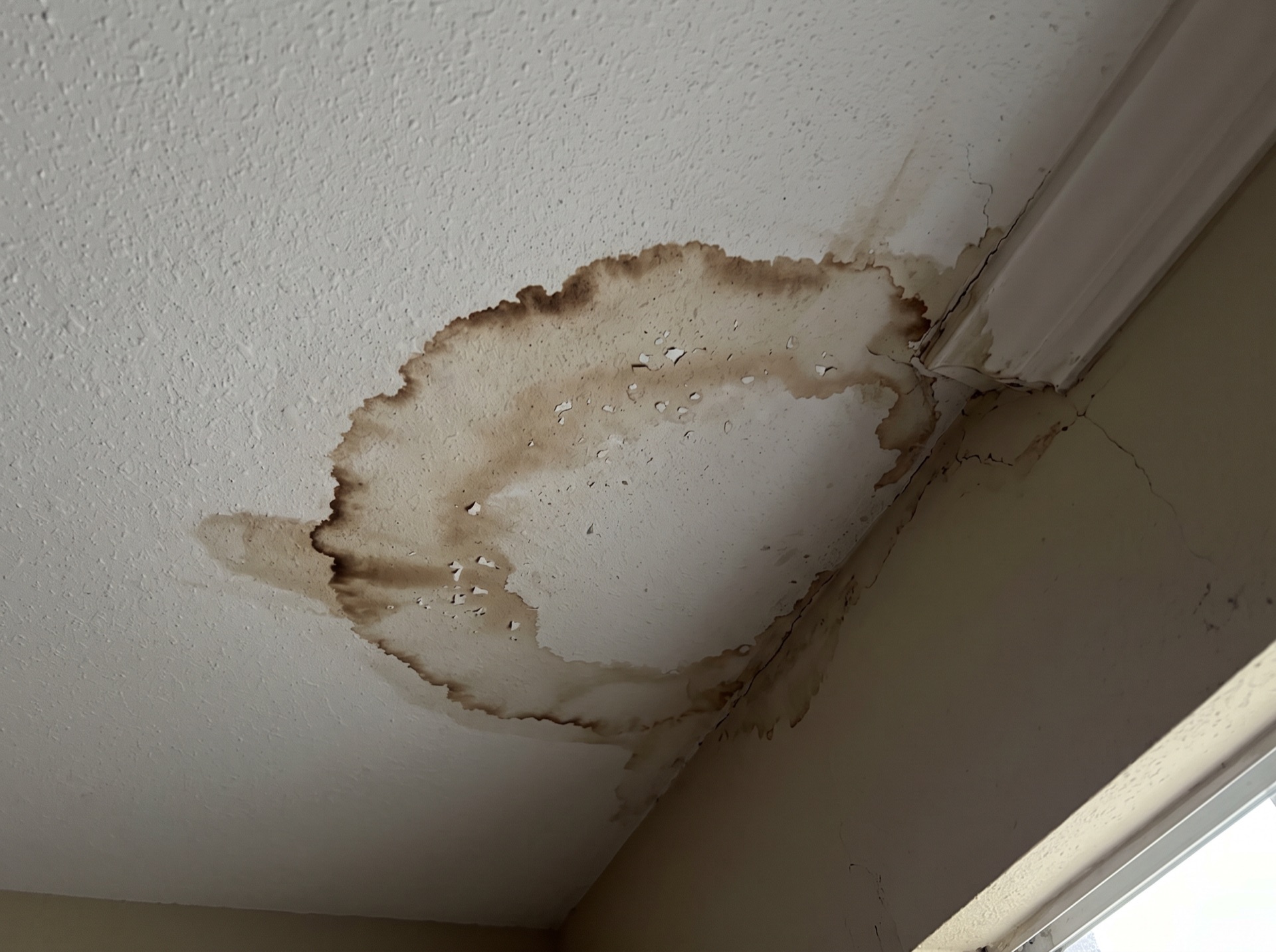
The ceiling board and the wall board meet at that corner with tape and joint compound over the joint. It is not a water barrier. Meltwater arriving on top of the ceiling runs to the lowest edge it can find, which is this one, and comes through the seam.
The damp line usually runs parallel to the outside wall for several feet, which is a useful diagnostic: a plumbing leak makes a patch, an ice dam makes a line.
Cove molding and crown molding hide it
If there is cove molding or a crown molding at that junction it will hold the water behind it for a while and then release it in a run. People often report that the leak 'suddenly started' when in fact it had been collecting behind the molding for a day.
How to tell which one you have
It is probably an ice dam
A line rather than a patch, parallel to an outside wall, on the top floor, with ice at the eave outside and a thaw in progress.
It is probably condensation
The same corner, but a broad cold damp with mold spotting rather than running water, worst in the coldest spell, often in a bedroom that is kept closed.
It is probably a gutter overflow
The gutter above is blocked or has come away, water is sheeting down the wall outside, and the inside damp follows rain rather than thaws.
What to do in the next ten minutes
- Photograph along the whole line, not just the worst bit — the length is what tells the story.
- Pull back carpet at the edge of the room below if water has tracked down.
- If there is cove molding, expect more water behind it than you can see.
- Do not re-skim or repaint until the cavity has been checked with a meter.
- Clear the dam, then get the corner checked for wet insulation while access is open.
Questions people ask
Because the cause is in the roof space, not the drywall. Until the heat loss and the thin insulation at that corner are dealt with, every snowy winter with a thaw in it will do the same thing. Clearing the ice solves this year; air-sealing and insulating solves it for good.
Usually the single most effective thing you can do, along with sealing the air leaks that feed the attic. The constraint is keeping the soffit vents clear so the eave stays cold — stuffing insulation into the eave without baffles makes it worse, not better.
Replacing insulation that was wetted by a covered loss is frequently included, because wet insulation is damaged property. Upgrading insulation that was simply inadequate is an improvement and generally is not. Document which one you are dealing with.