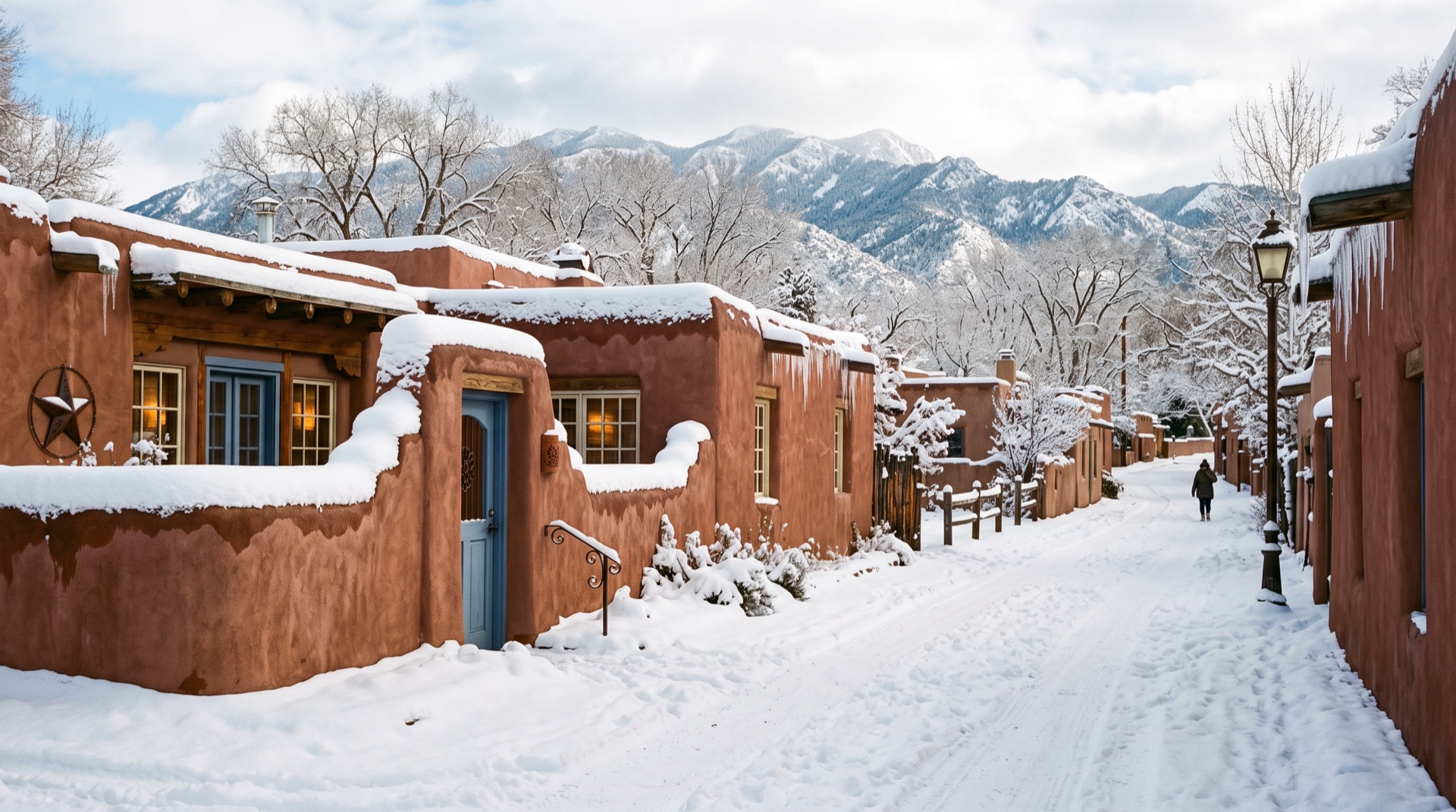
Winter in Santa Fe does not need a record storm to put water inside a house. It needs a roof with snow on it, an attic leaking heat, and one cold night. As part of our complete Santa Fe winter roof services, crews handle water mitigation & dryout across Santa Fe County.
Why Santa Fe Roofs Dam on Days It Never Thaws
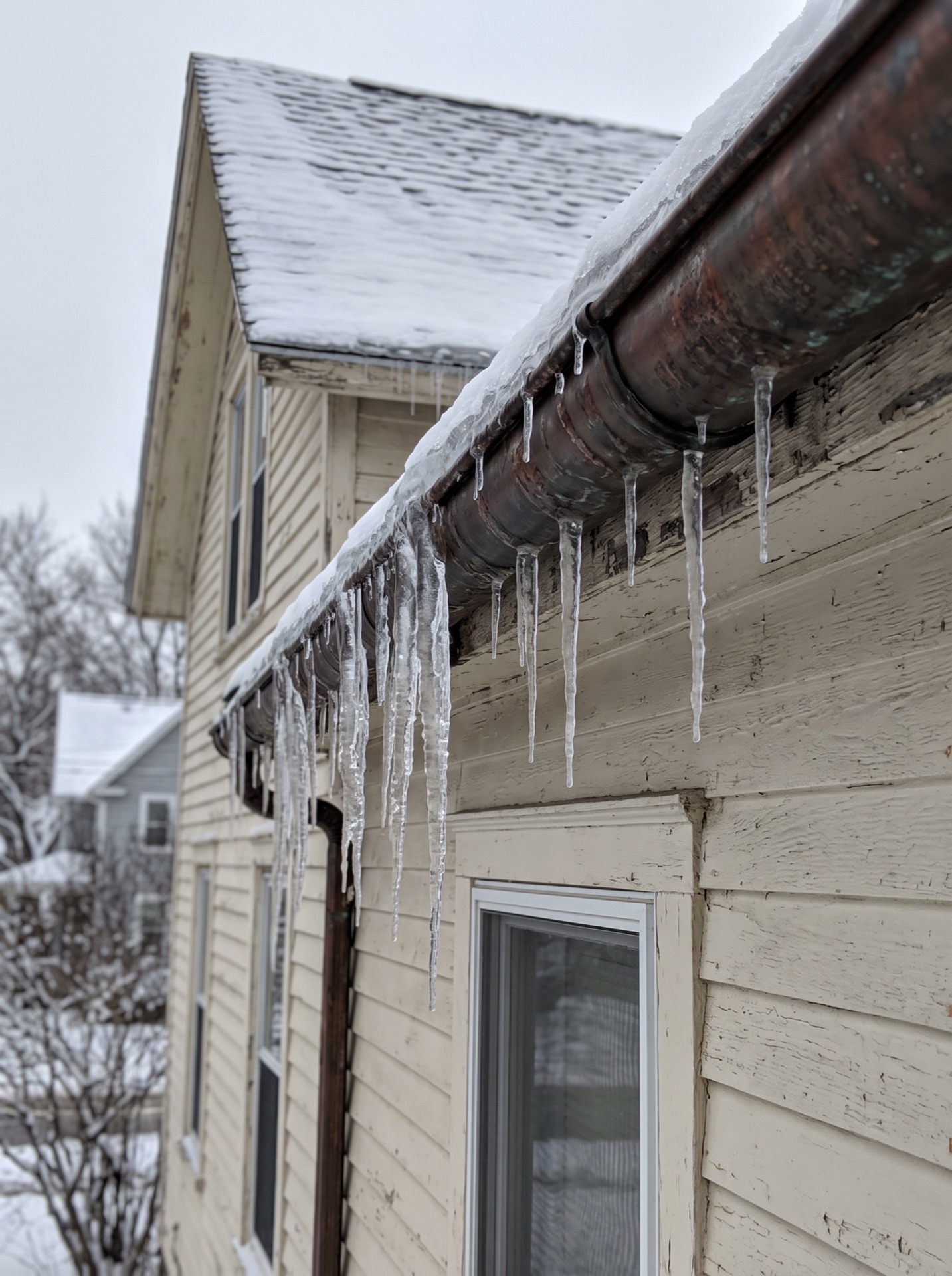
Mountain ice dams are a solar problem more than a temperature one. The sun works the pack from above while the air stays cold, so meltwater is produced and refrozen within the same afternoon.

That is why mountain roofs dam up on clear, cold weeks that look harmless. South and west faces melt, north-facing eaves and shaded valleys hold the ice, and the pack above keeps feeding it.
Ice-barrier practice in Santa Fe County
Mountain jurisdictions across Santa Fe County generally require ice-barrier membrane well up the roof plane, not just the first course, along with snow retention on metal roofs above entries and walkways.
Water Mitigation & Dryout in Santa Fe: How The Work Runs
Dry does not mean dry
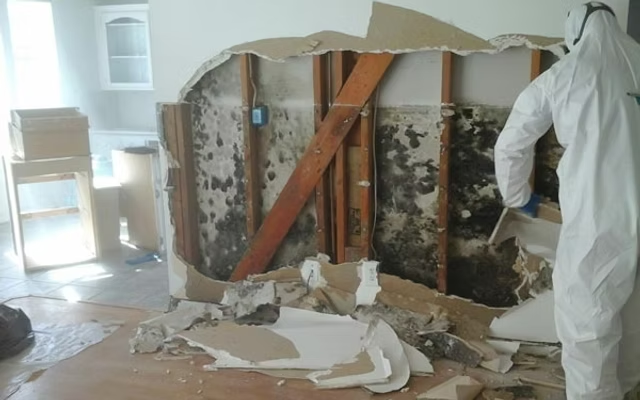
A ceiling stain stops spreading long before the cavity behind it is dry. Wet cellulose and fiberglass hold water against the framing for weeks, and in a cold attic the evaporation that would normally handle it simply does not happen. That is how a January leak becomes a spring mold problem. Wet Insulation in the Attic.
Mitigation means getting the structure back to a documented dry standard — not back to looking fine. Moisture meter readings on framing, sheathing and drywall are what close the job, not appearance.
Ceilings: when it comes down and when it stays
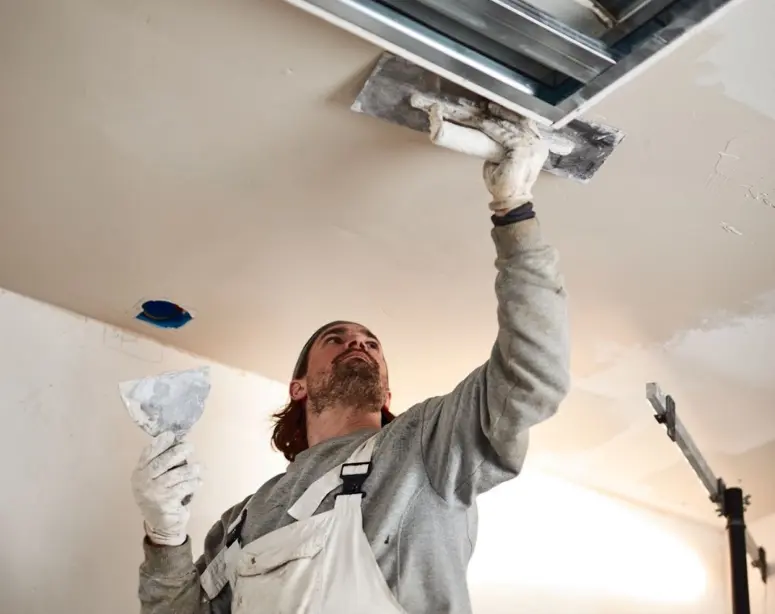
A stained ceiling is not automatically a demolished ceiling. Painted drywall that has been wetted once and can be dried from above through the insulation cavity will often flatten out and need nothing but paint.
What does come down is drywall that has lost its bond and gone soft, anything sagging under held water, textured or plaster ceilings that have delaminated, and any ceiling where the cavity above cannot be reached another way. The call is made with a meter, and shown to you before anything is opened.
The sequence
Standing water is extracted first. Saturated insulation comes out, because it cannot be dried in place and it is holding moisture against everything it touches. Containment goes up where tear-out is needed, with HEPA scrubbers running inside it. Dehumidifiers and air movers are placed to the room's volume and load rather than scattered around.
Then the readings get taken daily until they hit standard. In a Santa Fe winter, with cold cavities and low ambient humidity outside, that typically takes longer than people expect.
Drying to a number, not to a look
Air movers and dehumidifiers get placed to the room's volume and the moisture load, not scattered around. Readings are taken daily on framing, sheathing and drywall until they hit the dry standard for that material.
In a Santa Fe winter, with cold cavities and dry outside air, that generally takes longer than people expect. The job closes on the readings, not on appearance.
Electrical safety where water reached fixtures
Water running into a ceiling light, a fan box or down inside a wall to a panel is an electrical matter before it is a drying matter. Affected circuits get killed before any equipment goes in.
That is standard on every Santa Fe job where water reached a fixture, and it is worth saying out loud because homeowners often reach for a wet fixture first.

What you get in Santa Fe
- Electrical made safeCircuits killed where water reached fixtures, before equipment goes in
- Wet insulation removedIt cannot be dried in place and it holds water against the framing
- Containment and HEPABarriers and air scrubbers wherever tear-out is required
| Primary climate stressor | Solar melt on deep pack, shaded eaves |
|---|---|
| Interior repair | Insulation, drywall, texture, trim and paint, done in-house after drying |
| Coverage area | Santa Fe and Santa Fe County |
| Service | Water Mitigation & Dryout in Santa Fe, NM |
| Method | Containment, HEPA filtration and drying to a measured IICRC standard |
| Dispatch window | 24 to 48 hours in mountain terrain |
| Local ice-barrier practice | Extended membrane plus snow retention |
Neighborhoods and Towns We Reach From Santa Fe
Crews working Santa Fe cover the adjoining communities on the same route — Tesuque and Glorieta — so a storm week usually means one truck handling several addresses in Santa Fe County rather than separate trips.
Nearest hub towns with their own water mitigation pages: Los Alamos, Espanola, Las Vegas, Taos, Taos Ski Valley, Angel Fire.
Crews cover Santa Fe and the surrounding Santa Fe County towns through the whole season, and during a freeze event they run from first light until dark.
Most jobs do not stop at one service. Water Mitigation in Santa Fe often runs alongside ice dam removal in Santa Fe, and both get written into one scope rather than billed as separate visits.
Active leak right now? Our 24/7 Santa Fe steam ice dam removal crews are dispatched first during a freeze event. Call (888) 561-9664.