


Sun on Cold Snow: The Los Alamos Pattern
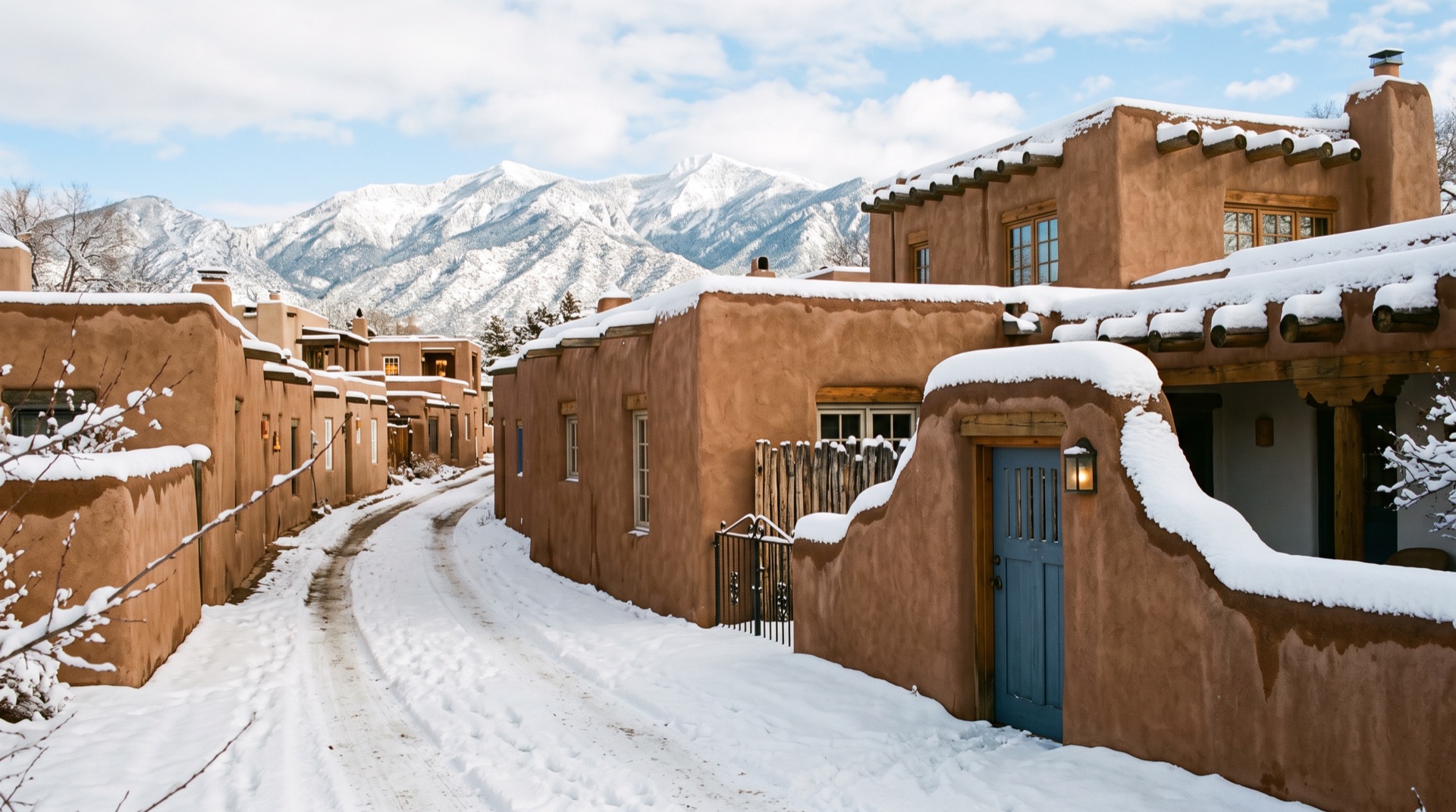
Thin air at altitude means intense direct sun even in deep cold. A Los Alamos roof can be melting on its south face at midday in air that never gets near freezing, and all of that water has to go somewhere.

Aspect decides which eaves suffer. A sunny plane sheds water across a roof in Los Alamos to a shaded eave that has not been above freezing for weeks, and that is where the ice builds into a wall.
Ice-barrier practice in Los Alamos County
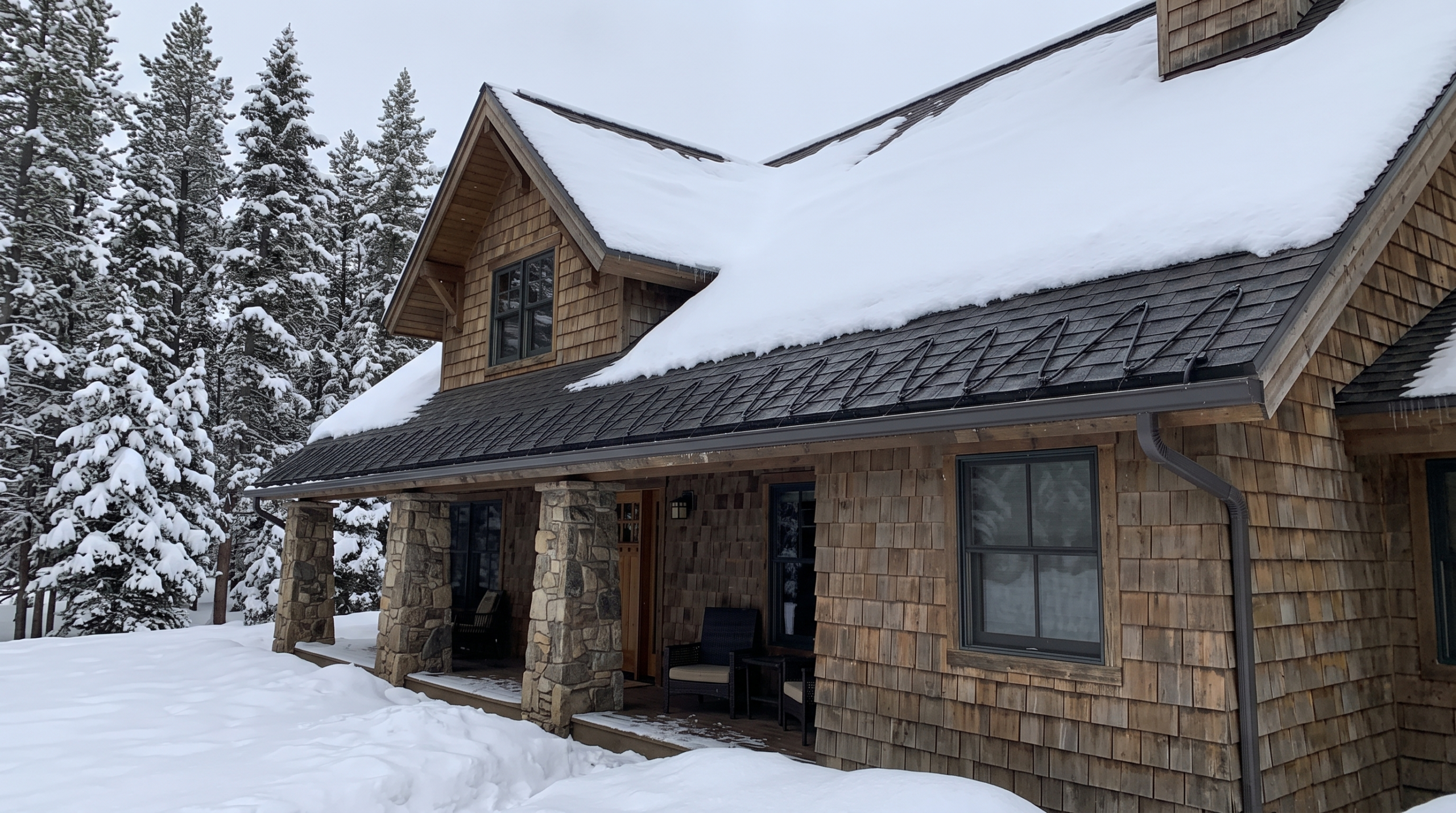
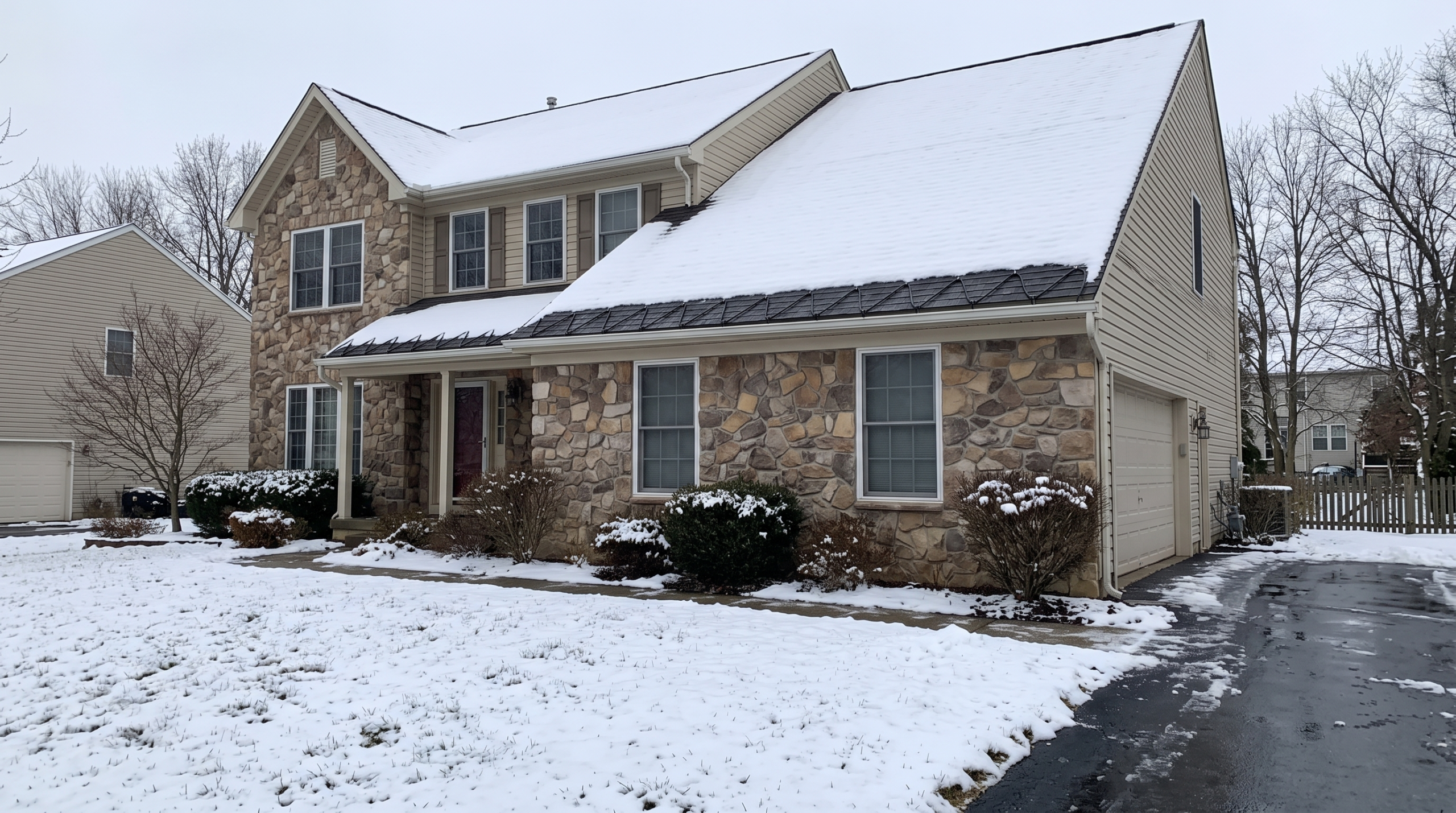
High-country New Mexico codes typically call for extended ice barrier and, on metal roofing, snow guards above any door, walkway or parking area. Both exist because of what comes off these roofs.
What a Crew Does on a Los Alamos Roof
Nothing gets touched until the roof has been walked and photographed. The crew finds every dam, locates where water is getting in, shows you, and gives you the crew-hour rate and a time estimate before the equipment comes off the truck.
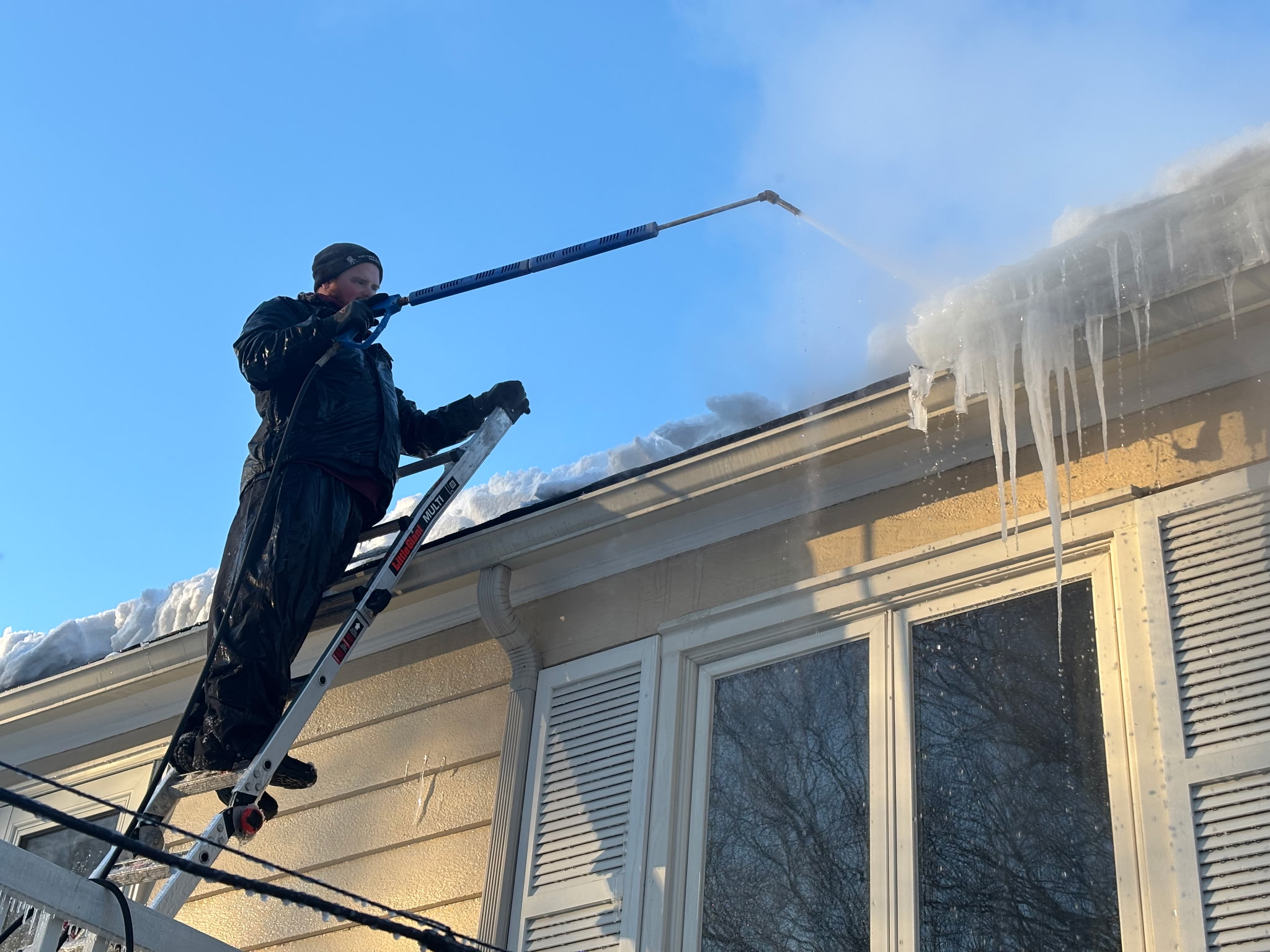
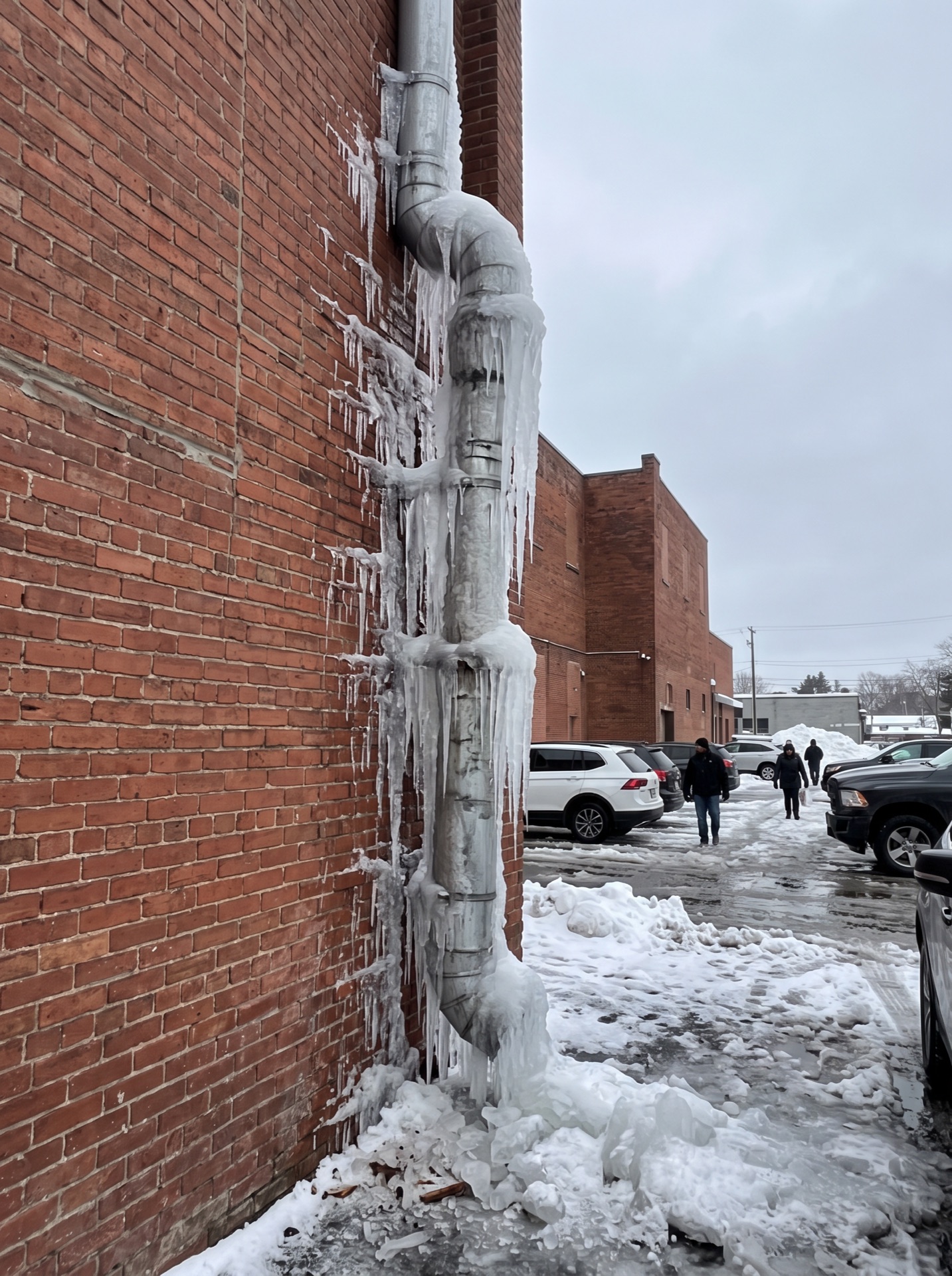
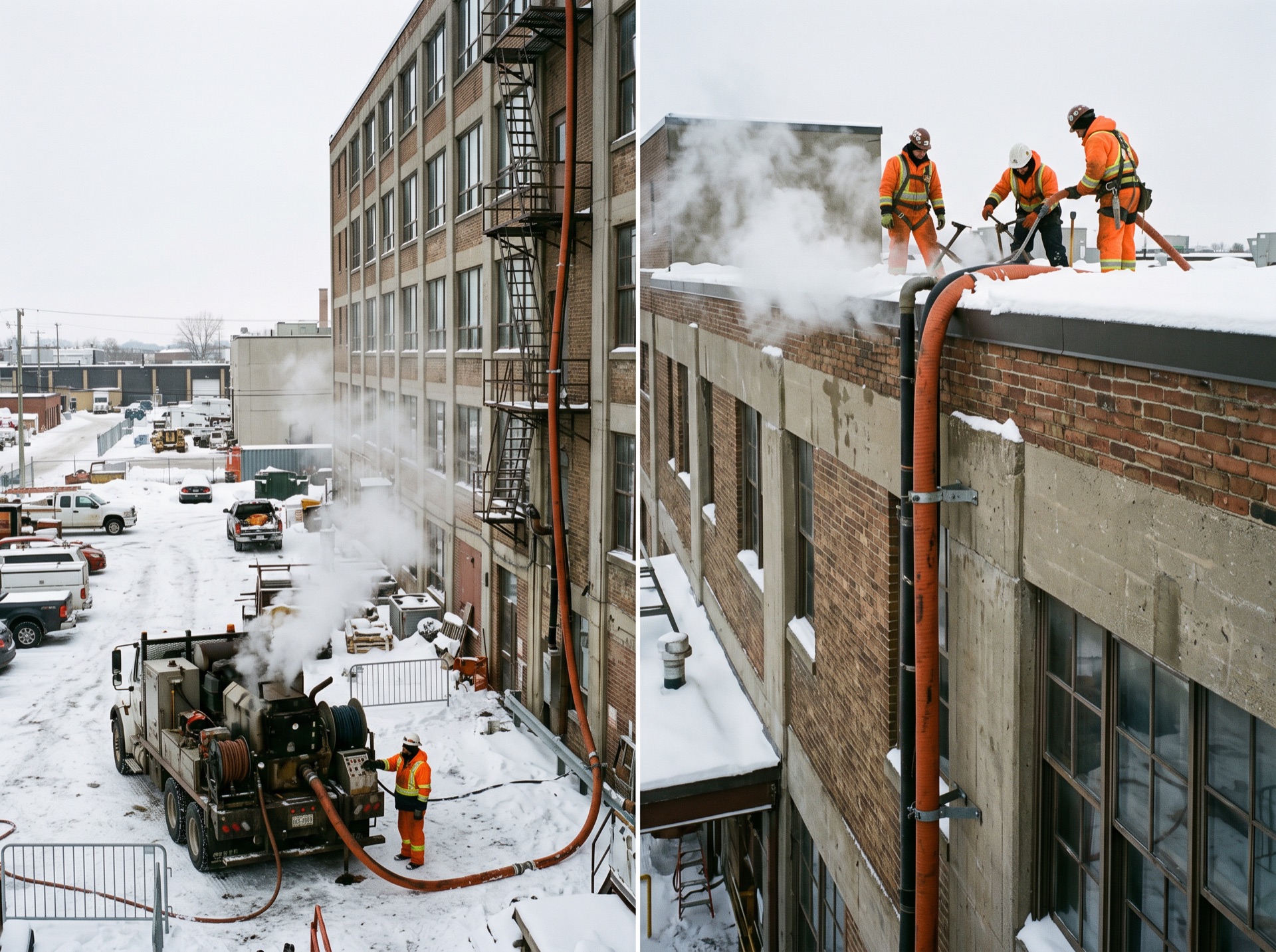
Removal then works from the worst point outward, so water starts draining early rather than at the end. Gutters and downspouts frozen solid get steamed through in the same visit — leaving them means the eave dams again within days.
Working at night and during an active storm
Freeze events do not keep office hours, and the worst leaks tend to announce themselves in the evening when the day's melt refreezes. Crews run lit, and a roof that is actively collecting snow is worked anyway, because waiting for better weather means the dam is bigger when somebody finally gets to it.
What does stop a crew is wind and lightning. Both are judgment calls made on site in Los Alamos, and a postponed start gets explained rather than dressed up.
How long a removal actually takes
A single-story eave with a thin dam and clear gutters is often an hour or two. A two-story Los Alamos house with ice standing a foot deep across the front, frozen downspouts and a valley packed solid is most of a day for a two-man crew. The honest answer on the phone is a range and the reason for it, not a number designed to win the booking.
The estimate is revised out loud if the roof turns out worse than it looked from the ground, before the extra hours are worked rather than after they appear on the invoice.
Dormers, valleys and dead spots
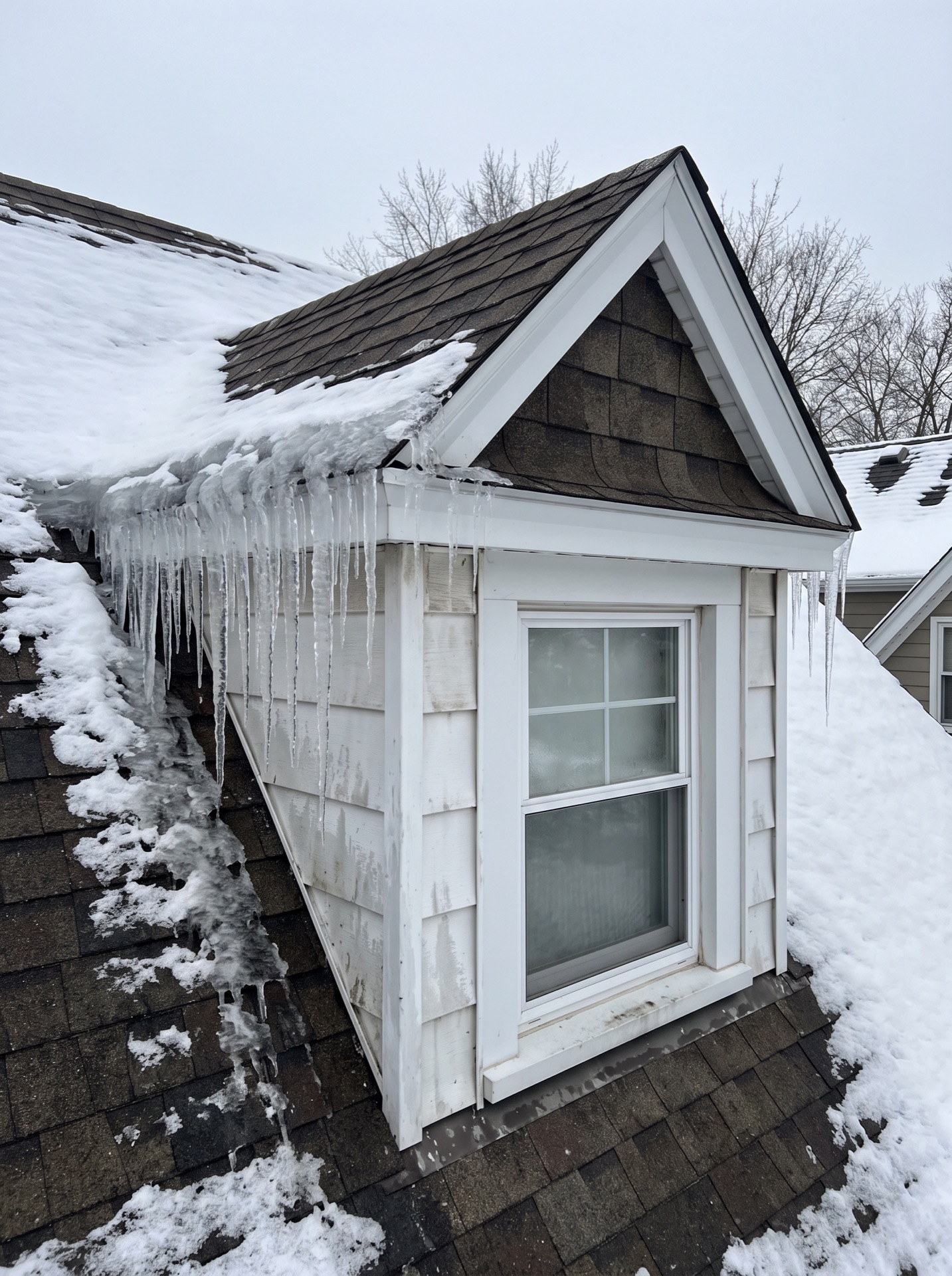
Ice does not distribute evenly. It concentrates where two roof planes meet, behind dormers, in dead valleys that drain nowhere, and along the north face that never sees sun. Those pockets hold water deepest and leak first.
A crew working a roof in Los Alamos clears the full eave line and then goes back through the valleys and dormer pockets specifically, because clearing the easy straight run and calling it done is how a roof leaks again a week later.
| Pricing model | Billed by the crew hour, rate quoted before dispatch |
|---|---|
| Typical scope | Steam, 8-16 crew hours typical |
| Documentation | Dated before and after photos, written scope in Xactimate line items |
| Service | Ice dam removal in Los Alamos, NM |
| Dispatch window | 24 to 48 hours in mountain terrain |
| Coverage area | Los Alamos and Los Alamos County |
| Removal method | Low-pressure steam only. No chipping, salt or pressure washing. |
Los Alamos County Coverage From Los Alamos
Crews working Los Alamos cover the surrounding Los Alamos County addresses on the same route, so a storm week usually means one truck handling several properties rather than separate trips.
Nearest hub towns with their own crew pages: Espanola, Santa Fe, Taos, Las Vegas, Taos Ski Valley, Angel Fire.
During a cold snap Los Alamos gets worked alongside the neighboring Los Alamos County towns on the same route, with active interior leaks moved to the front of the list.
If water is already inside a property in Los Alamos, call (888) 561-9664 rather than filling in a form — the phone is faster and leaks jump the line.