




Elevation, Aspect and Ice: The Colfax County Pattern
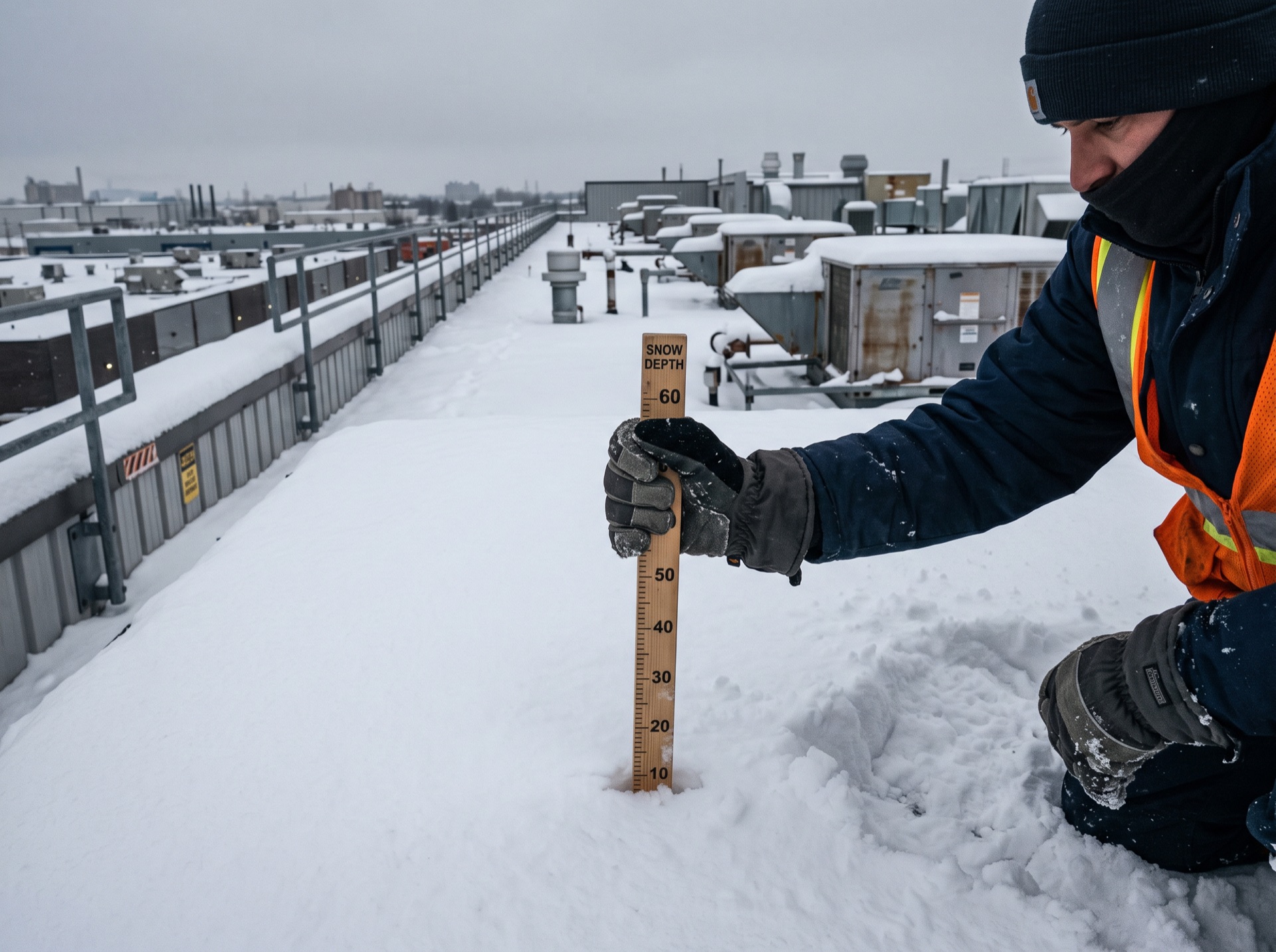
The pack at this elevation is deep enough to act as its own insulation, which means the surface melts under sun while the base stays locked. Water released at the top has to travel through and under all of it.

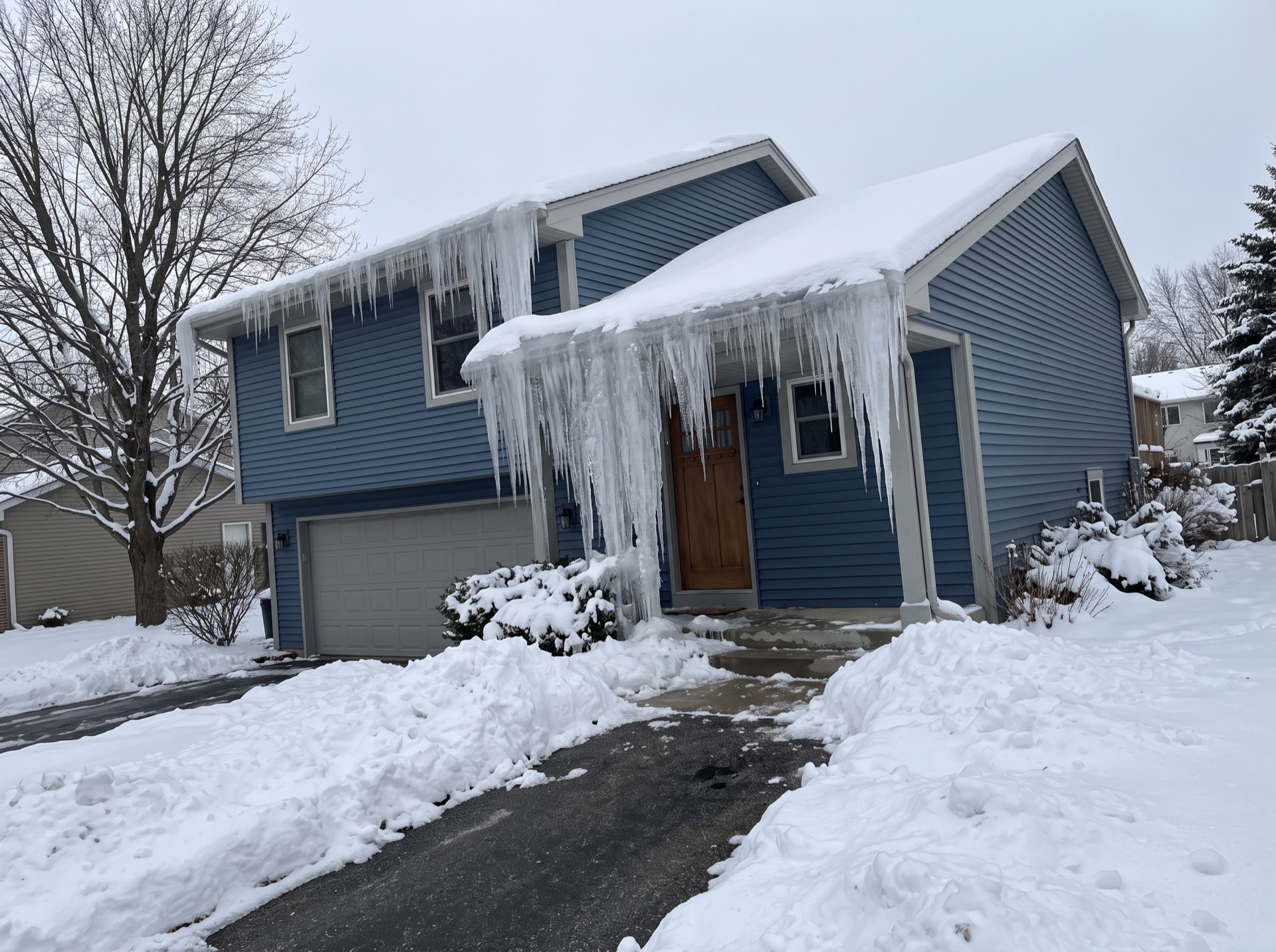
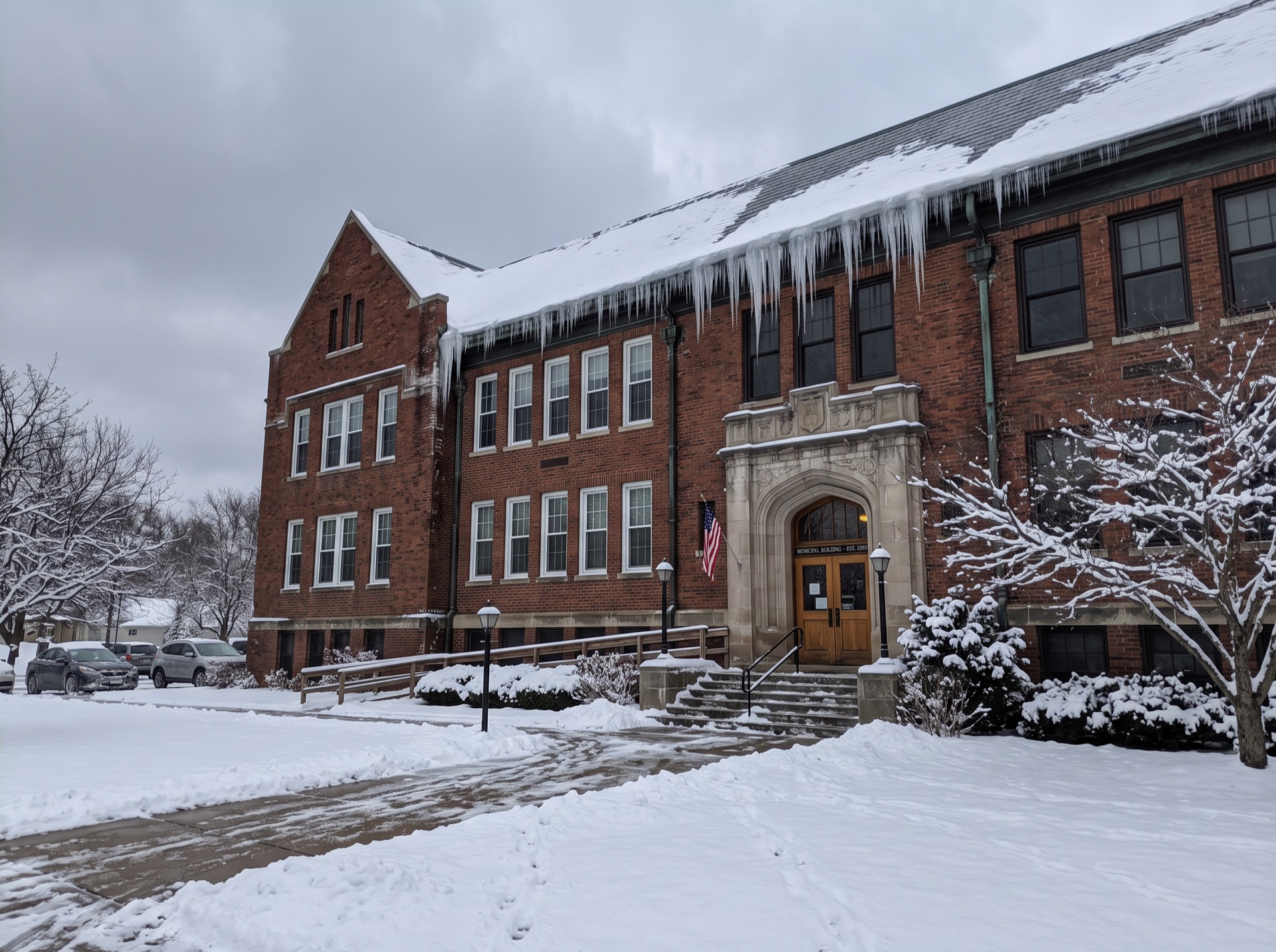
Aspect decides everything here. The sunny plane sheds water that the shaded plane and the shaded eave then lock up, so one side of a roof in Angel Fire is clear while the other carries a wall of ice.
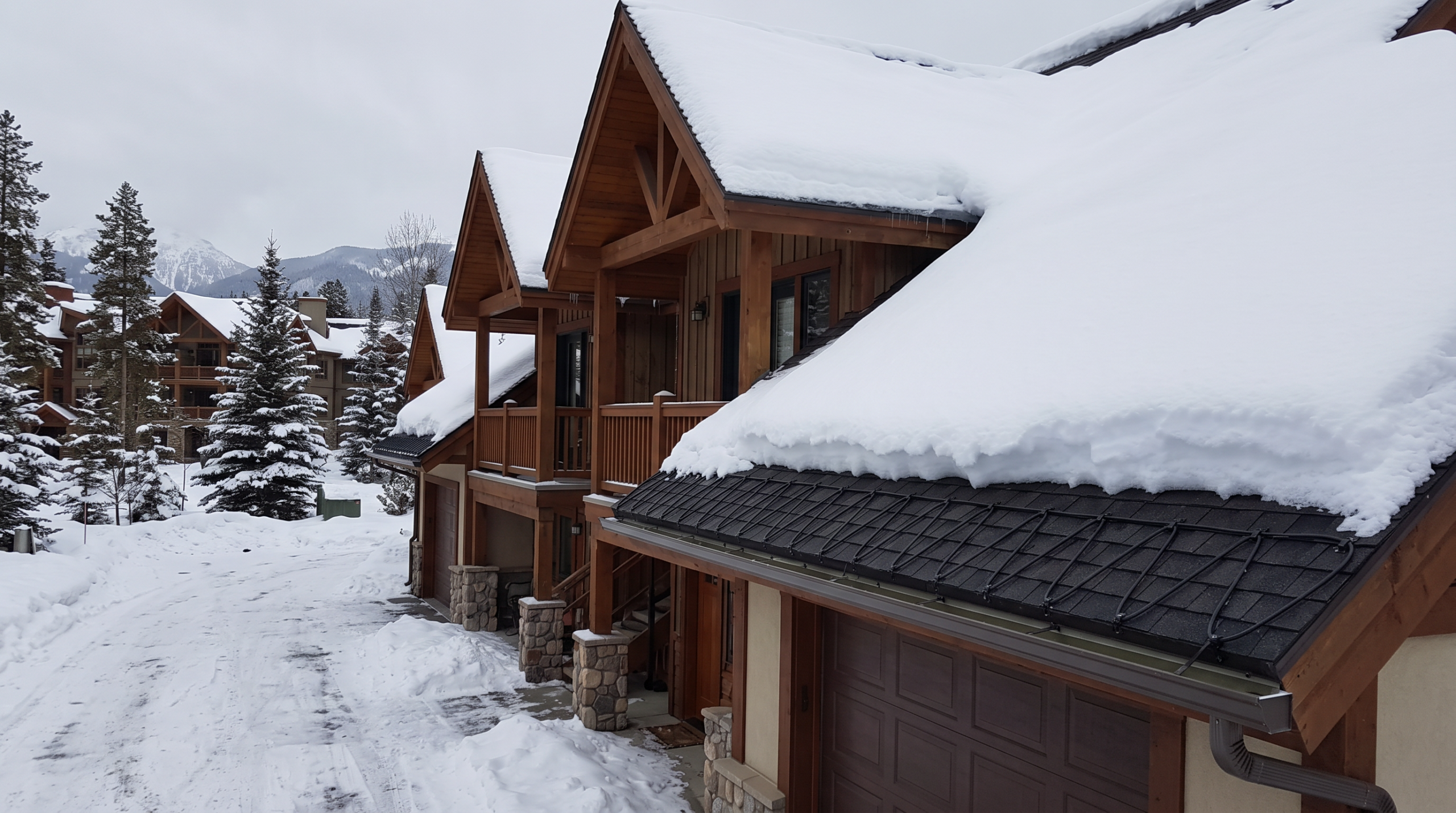
Ice-barrier practice in Colfax County
Snow retention above doors, walkways and parking is a requirement in most Colfax County jurisdictions for good reason: a release off a metal mountain roof is a serious event, not an inconvenience.
What a Crew Does on an Angel Fire Roof
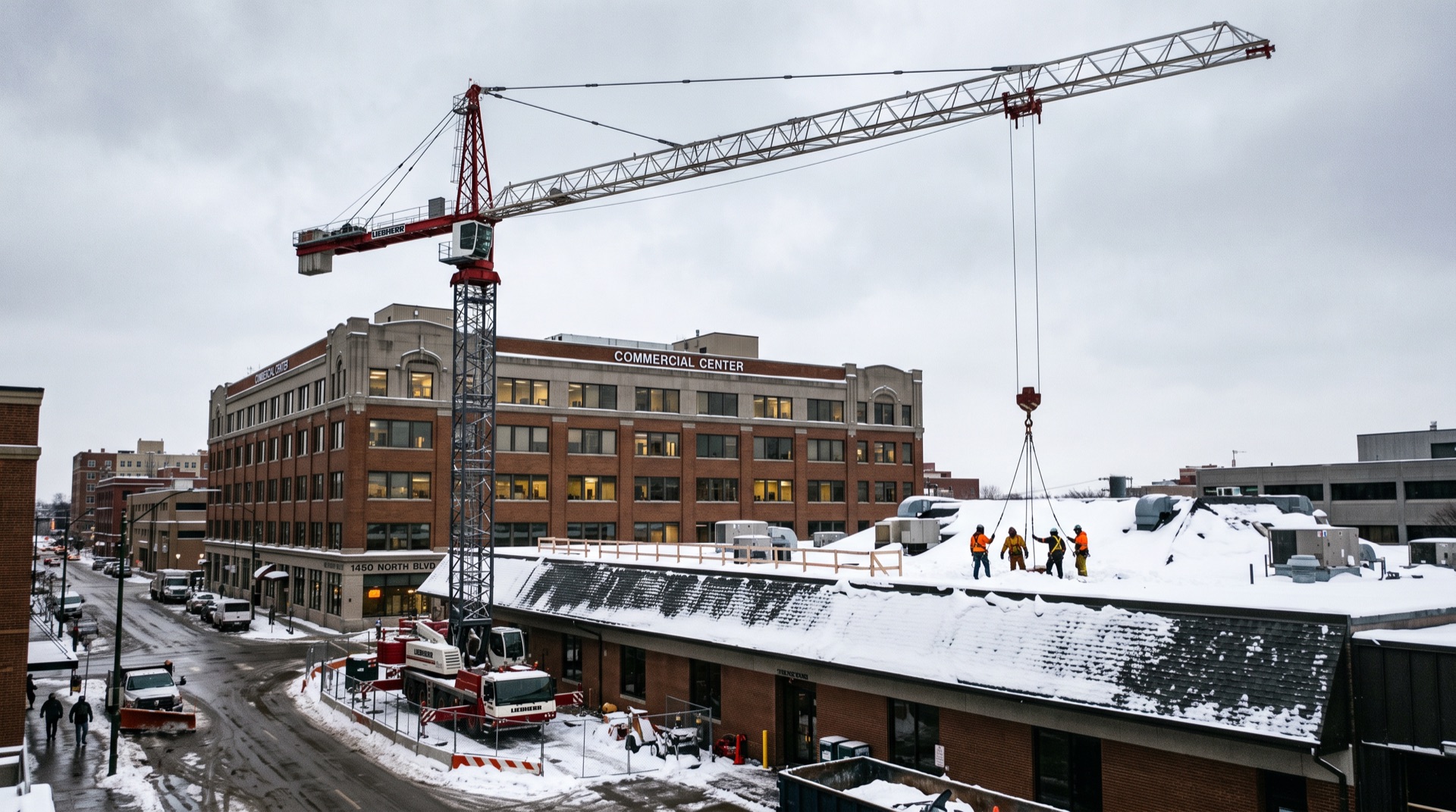
Nothing gets touched until the roof has been walked and photographed. The crew finds every dam, locates where water is getting in, shows you, and gives you the crew-hour rate and a time estimate before the equipment comes off the truck.
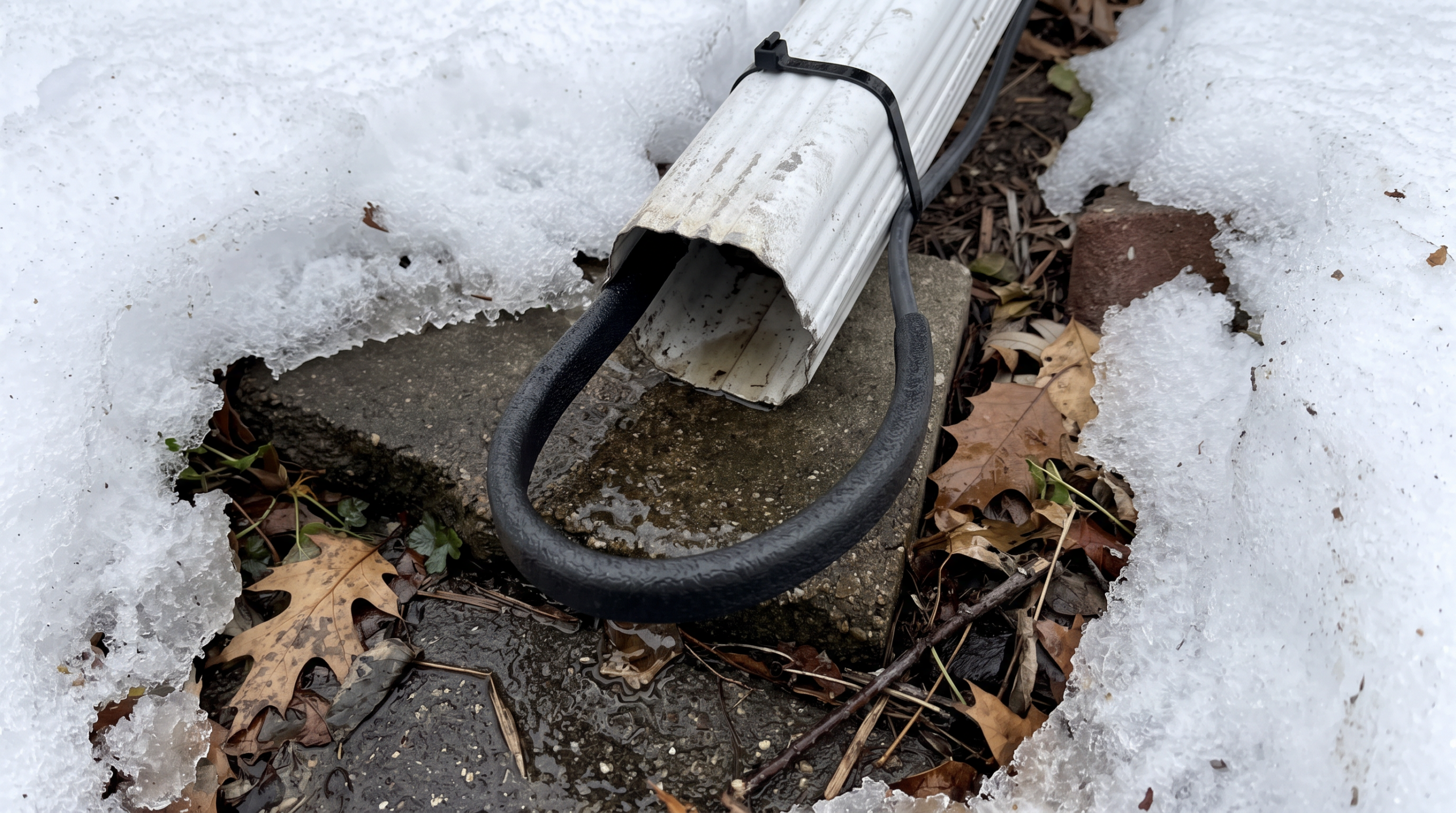
Removal then works from the worst point outward, so water starts draining early rather than at the end. Gutters and downspouts frozen solid get steamed through in the same visit — leaving them means the eave dams again within days.
What the dam has already done to the gutter and fascia
Ice expands as it forms, and a trough packed solid pushes the gutter away from the fascia a little more every cycle. By the time the dam is thick enough to leak, the hangers are often pulled, the back of the trough has lifted, and the fascia board behind it has been wet for weeks.
None of that is visible until the ice is off. It gets photographed when it appears, because a bent gutter found in February is a great deal easier to argue about with a carrier than one discovered in May.
What happens after the ice is off
Once the eave is clear and water is draining, the crew walks the interior with you where there is visible damage and says plainly whether it needs drying. Wet insulation and a damp ceiling cavity do not resolve themselves in a cold Angel Fire February.
If it does, that is a separate scope and it gets written separately — nobody is upsold a dryout on the strength of one damp patch.
Dormers, valleys and dead spots
Ice does not distribute evenly. It concentrates where two roof planes meet, behind dormers, in dead valleys that drain nowhere, and along the north face that never sees sun. Those pockets hold water deepest and leak first.
A crew working a roof in Angel Fire clears the full eave line and then goes back through the valleys and dormer pockets specifically, because clearing the easy straight run and calling it done is how a roof leaks again a week later.
| Service | Ice dam removal in Angel Fire, NM |
|---|---|
| Coverage area | Angel Fire and Colfax County |
| Local ice-barrier practice | Extended membrane plus snow retention |
| Typical scope | Steam, 8-16 crew hours typical |
| Documentation | Dated before and after photos, written scope in Xactimate line items |
| Dispatch window | 24 to 48 hours in mountain terrain |
| Pricing model | Billed by the crew hour, rate quoted before dispatch |
Colfax County Coverage From Angel Fire
Crews working Angel Fire cover the adjoining communities on the same route — Eagle Nest, Ute Park, Cimarron and Valdez — so a storm week usually means one truck handling several addresses in Colfax County rather than separate trips.
Nearest hub towns with their own crew pages: Taos Ski Valley, Red River, Taos, Espanola, Las Vegas, Santa Fe.
When a storm hits Colfax County, crews are dispatched by severity rather than by call order — water already inside the house goes first.
If water is already inside a property in Angel Fire, call (888) 561-9664 rather than filling in a form — the phone is faster and leaks jump the line.