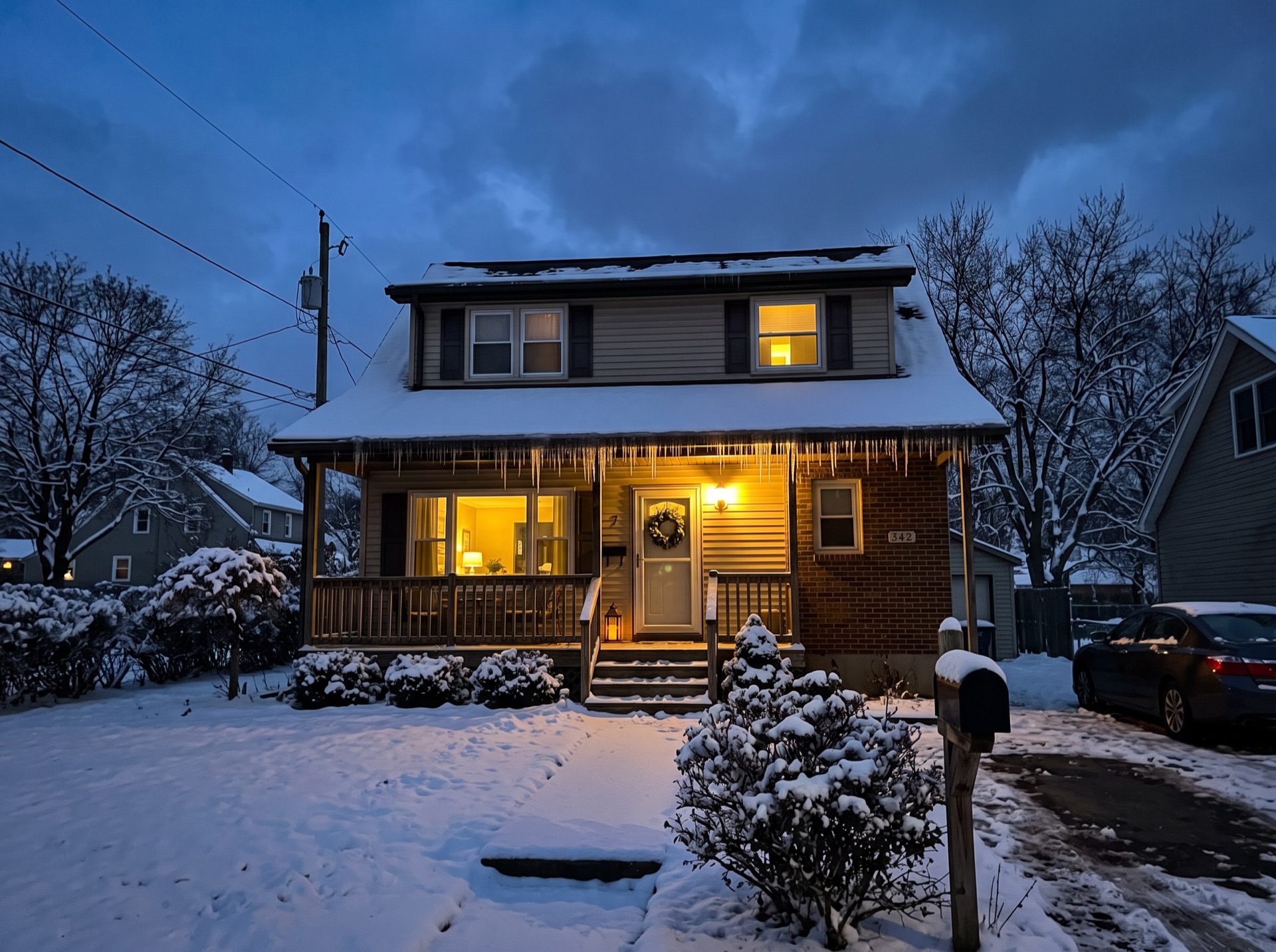
Ice dams are not a Great Falls problem so much as a Montana one, and they show up on the same handful of eaves and valleys year after year. As part of our complete Great Falls winter roof services, crews handle mold remediation across Cascade County.
Elevation, Aspect and Ice: The Cascade County Pattern
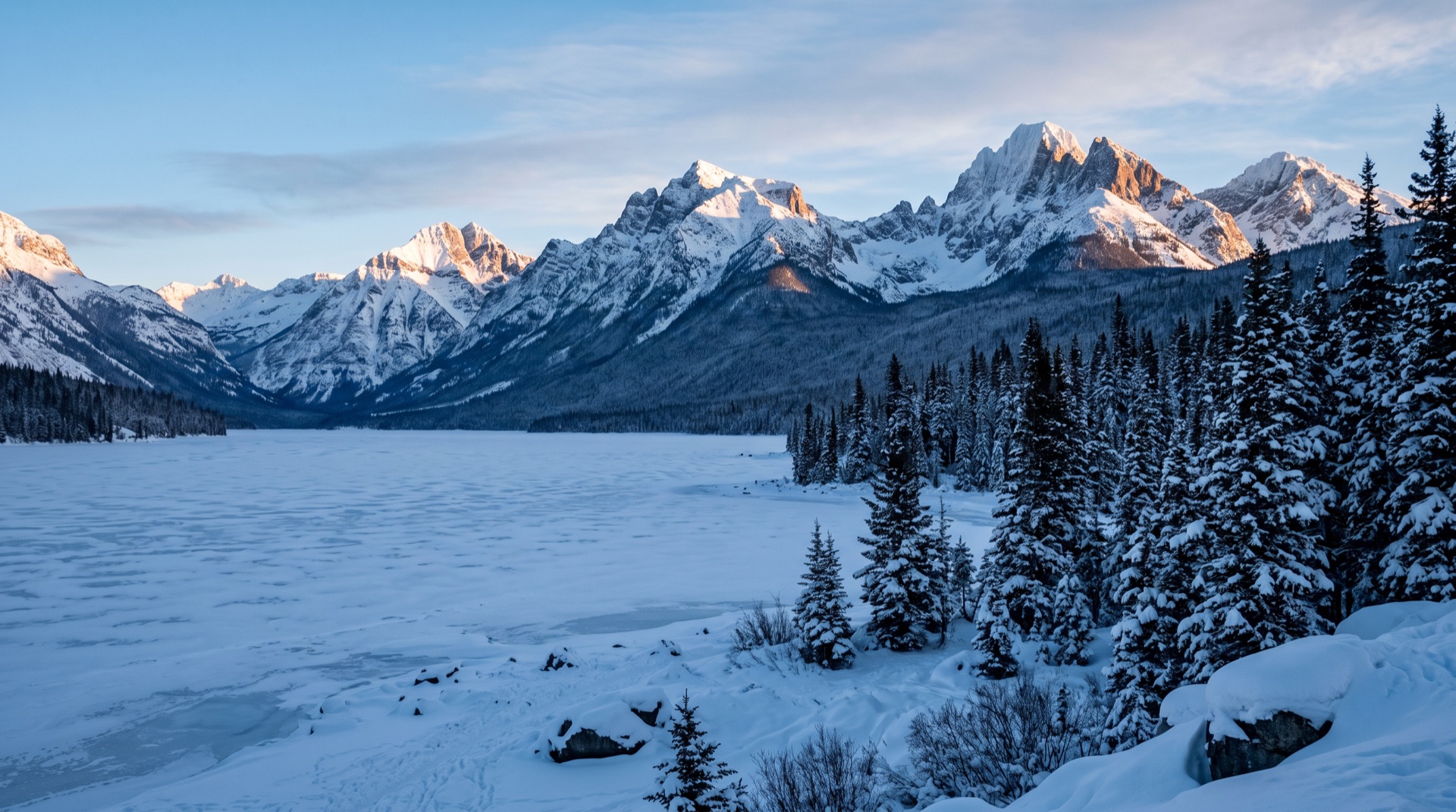
Mountain ice dams are a solar problem more than a temperature one. The sun works the pack from above while the air stays cold, so meltwater is produced and refrozen within the same afternoon.

Volume is the other factor. A Cascade County roof carrying several feet of pack has an enormous reservoir above an overhang that never sees direct sun, and the supply does not run out until spring.
Ice-barrier practice in Cascade County
Design snow loads in Cascade County are among the highest anywhere, and the membrane and retention requirements that go with them are not formalities. On an older Great Falls cabin or chalet neither may be present.
Mold Remediation in Great Falls: How The Work Runs
Why drying comes before rebuilding
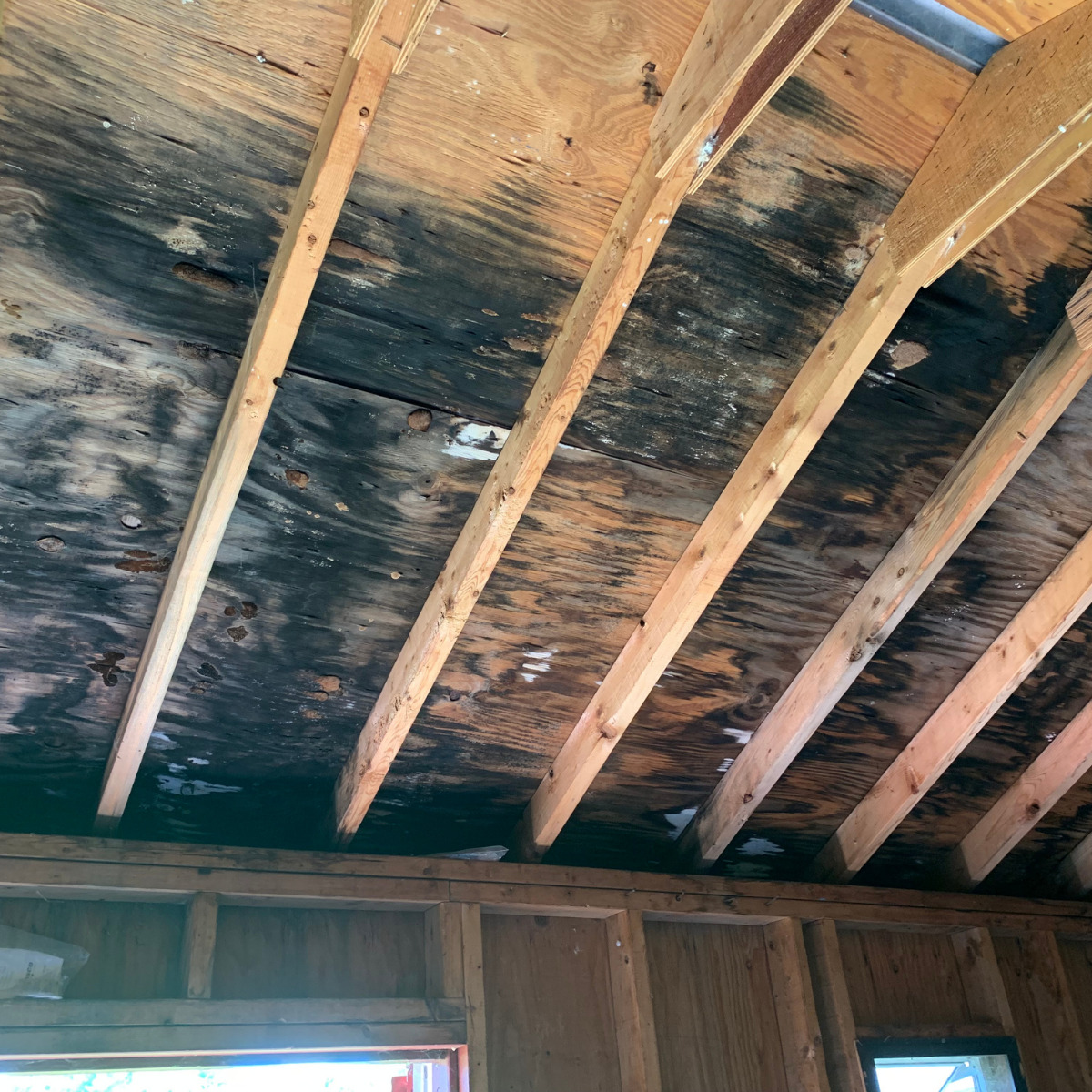
Closing up a wall or ceiling over damp framing is how mold comes back. Air movers and dehumidifiers run until moisture readings on the framing and sheathing reach a dry standard for that material. Mold in the Attic After an Ice Dam.
Only then does insulation and drywall go back in. In a Great Falls winter, with cold cavities, that can take longer than people expect, and the daily readings show exactly where it is up to.
Mold coverage and the sublimit
Where mold is the result of a covered water loss, many policies cover remediation, but often under a separate, smaller limit than the rest of the claim. Knowing that number before work starts matters, because it changes how the scope is written.
The water mitigation, the interior repair and the roof work generally sit under the dwelling coverage, while the mold-specific line items sit under the sublimit. Scoping them separately keeps the mold cap from swallowing the rest of the claim.
Fixing the cause so it does not come back
Mold remediation without fixing the water source is temporary. The ice dam comes off with low-pressure steam, and the reason it formed (attic heat loss, crushed soffit baffles, bath fans venting into the attic) gets identified.
Where the attic needs air sealing, new baffles or ventilation, that is written into the scope too, so the next Great Falls winter does not start the whole cycle again.
Attic mold: the sheathing, the rafters and the insulation
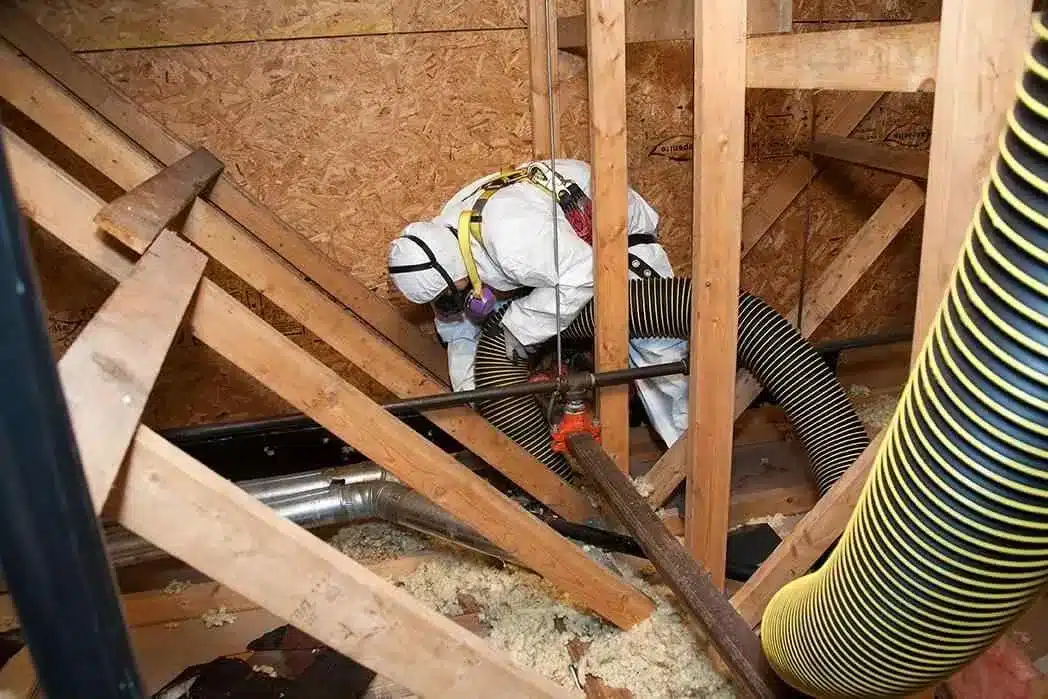
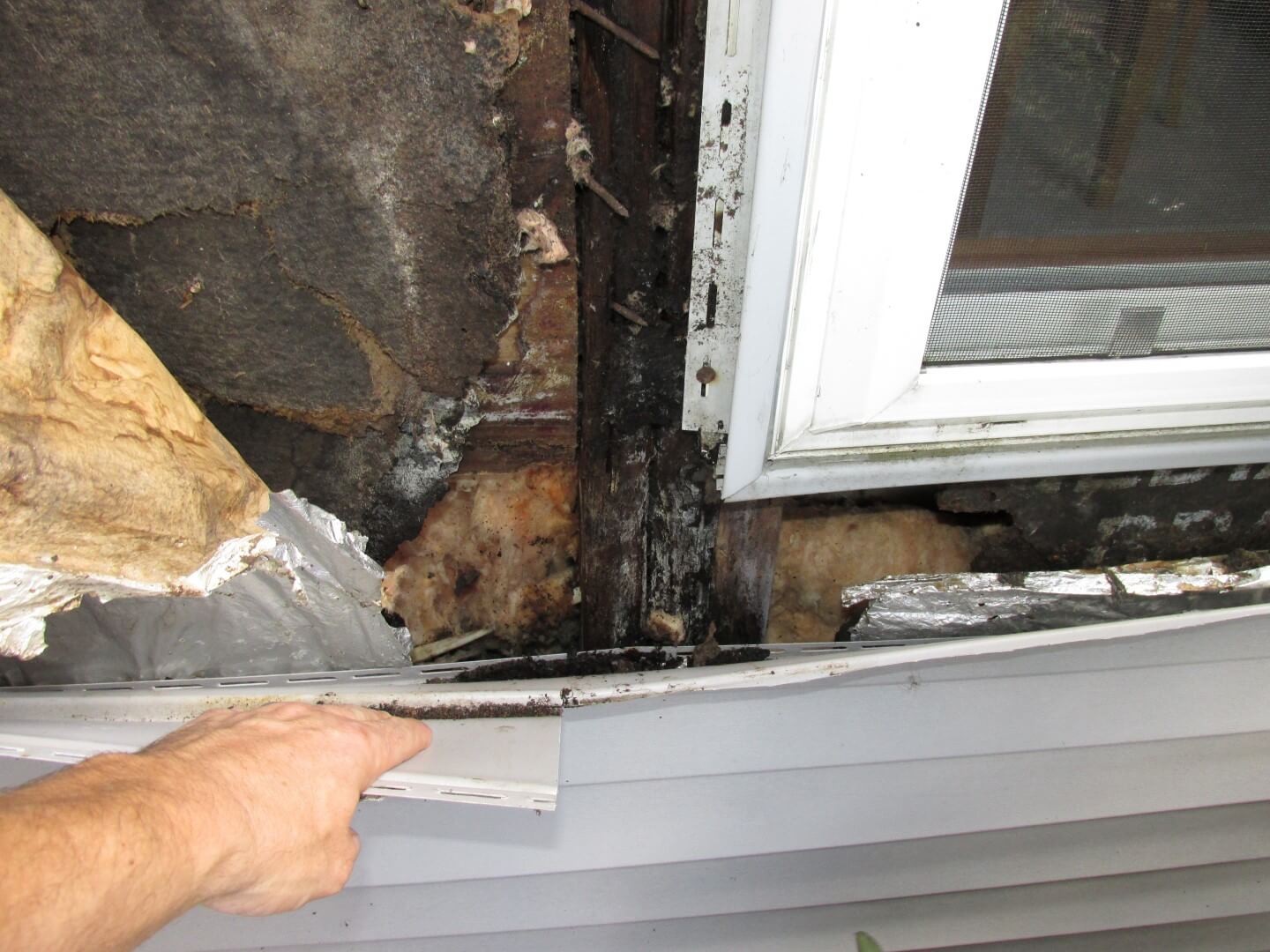
Most ice dam mold is in the attic. Meltwater backs up under the shingles at the eave, wets the roof deck from above, and runs down onto the insulation. Black spotting on the underside of the OSB or plywood along the eave line, darkened rafters and matted, stained insulation are the signs.
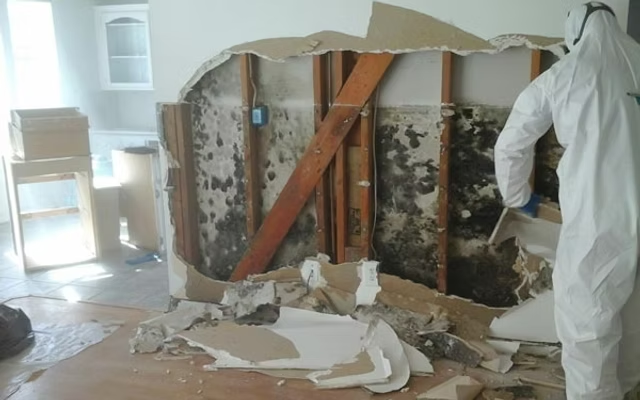
Wet insulation comes out and is bagged inside the containment. Affected sheathing and framing are HEPA vacuumed, cleaned and treated, or cut out and replaced where the wood has lost strength. Then the attic is dried to a measured number before anything goes back in.
Clearance before the room is closed up
Before rebuild starts, the cleaned area is inspected again and, where appropriate, tested to confirm it is clear. Containment stays up until that point.
The clearance result goes into the claim file along with the before photographs, the removal photographs and the moisture log.
What you get in Great Falls
- Framing and sheathing cleanedHEPA vacuuming, cleaning and treatment, or replacement where the wood is compromised
- Moldy material removedWet insulation, drywall and trim that cannot be cleaned are bagged and taken out
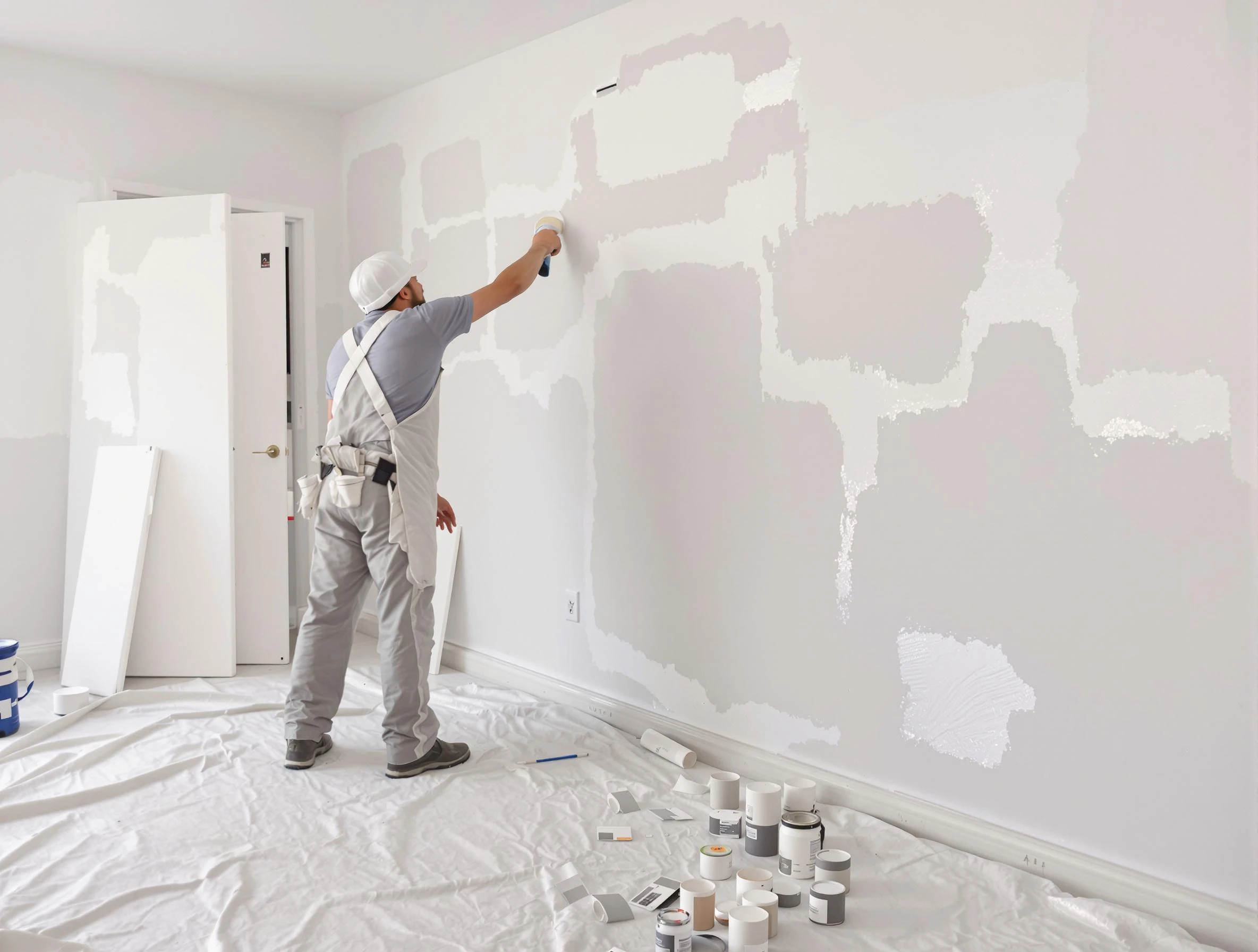
- Interior repair in-houseInsulation, drywall, texture, trim and paint put back by the same crews
| Billing | Xactimate line items on one claim; carrier billed directly where the policy allows |
|---|---|
| Coverage area | Great Falls and Cascade County |
| Primary climate stressor | Solar melt on deep pack, shaded eaves |
| Dispatch window | 24 to 48 hours in mountain terrain |
| Method | Containment, HEPA filtration and drying to a measured IICRC standard |
| Interior repair | Insulation, drywall, texture, trim and paint, done in-house after drying |
| Service | Mold Remediation in Great Falls, MT |
Cascade County Coverage From Great Falls
Crews working Great Falls cover the adjoining communities on the same route — Black Eagle, Malmstrom A F B, Sand Coulee, Ulm and Floweree — so a storm week usually means one truck handling several addresses in Cascade County rather than separate trips.
Nearest hub towns with their own mold remediation pages: Helena, Havre, Belgrade, Butte, Bozeman, Livingston.
Crews cover Great Falls and the surrounding Cascade County towns through the whole season, and during a freeze event they run from first light until dark.
Most jobs do not stop at one service. Mold Remediation in Great Falls often runs alongside water mitigation & dryout in Great Falls, and both get written into one scope rather than billed as separate visits.
Active leak right now? Our 24/7 Great Falls steam ice dam removal crews are dispatched first during a freeze event. Call (888) 561-9664.