By the time a roof in Great Falls has a visible ridge of ice at the eave, meltwater has already been pooling behind it for several freeze-thaw cycles. As part of our complete Great Falls winter roof services, crews handle ice dam removal across Cascade County.
Elevation, Aspect and Ice: The Cascade County Pattern
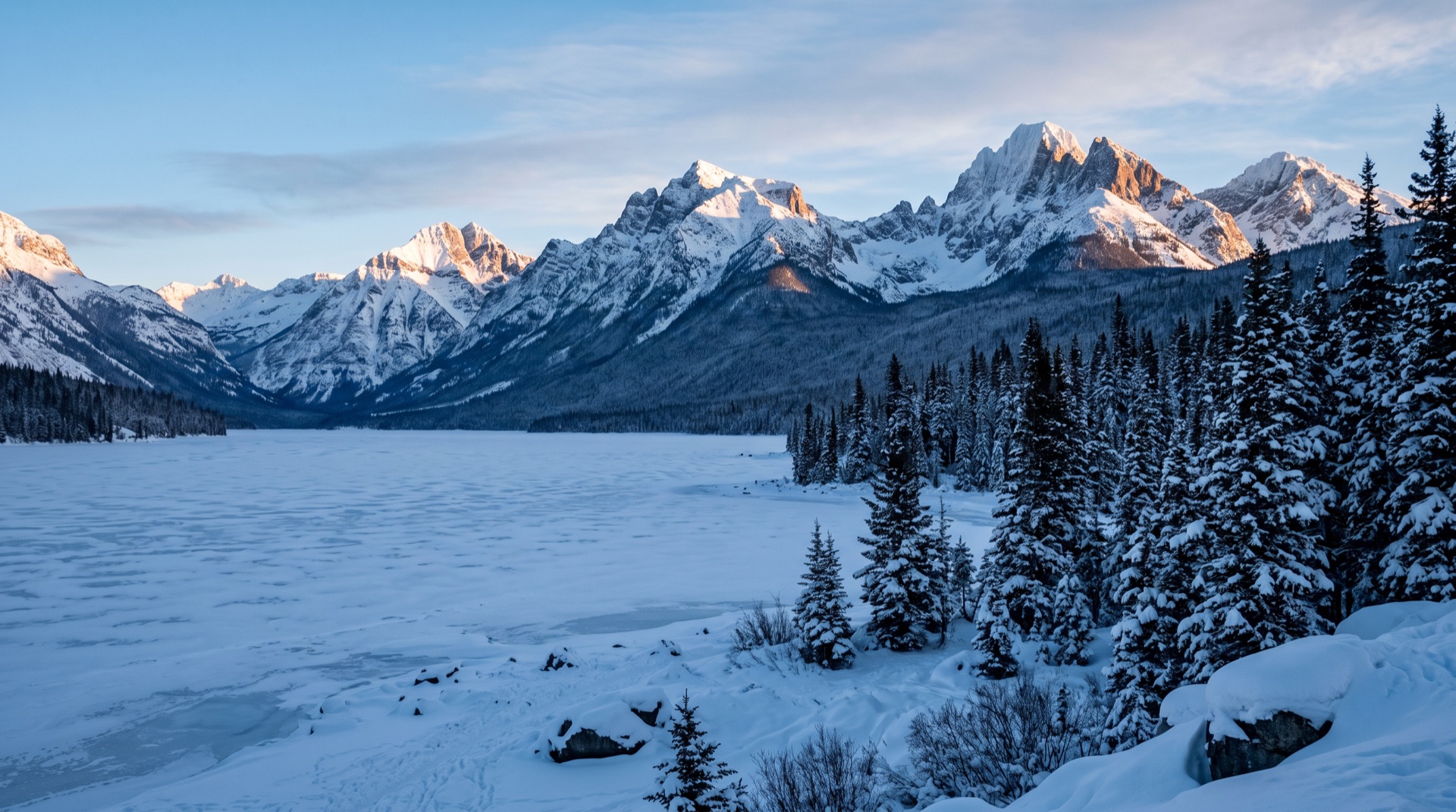
Mountain ice dams are a solar problem more than a temperature one. The sun works the pack from above while the air stays cold, so meltwater is produced and refrozen within the same afternoon.

Volume is the other factor. A Cascade County roof carrying several feet of pack has an enormous reservoir above an overhang that never sees direct sun, and the supply does not run out until spring.
Ice-barrier practice in Cascade County
Design snow loads in Cascade County are among the highest anywhere, and the membrane and retention requirements that go with them are not formalities. On an older Great Falls cabin or chalet neither may be present.
Ice Dam Removal in Great Falls: How The Work Runs
What the dam has already done to the gutter and fascia
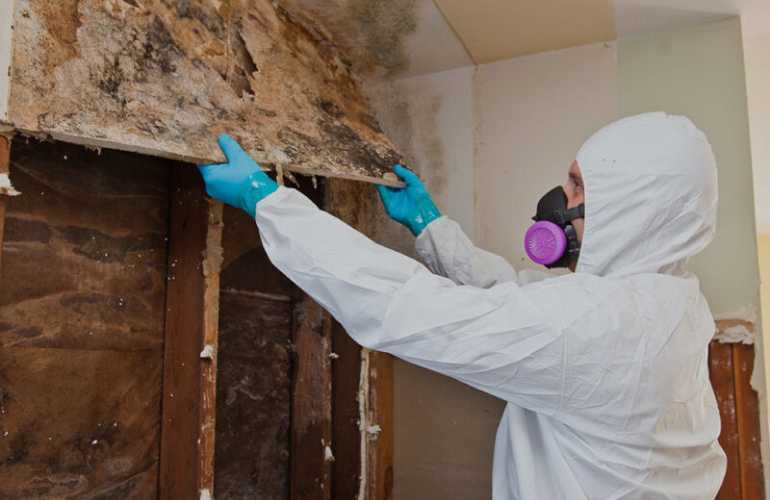
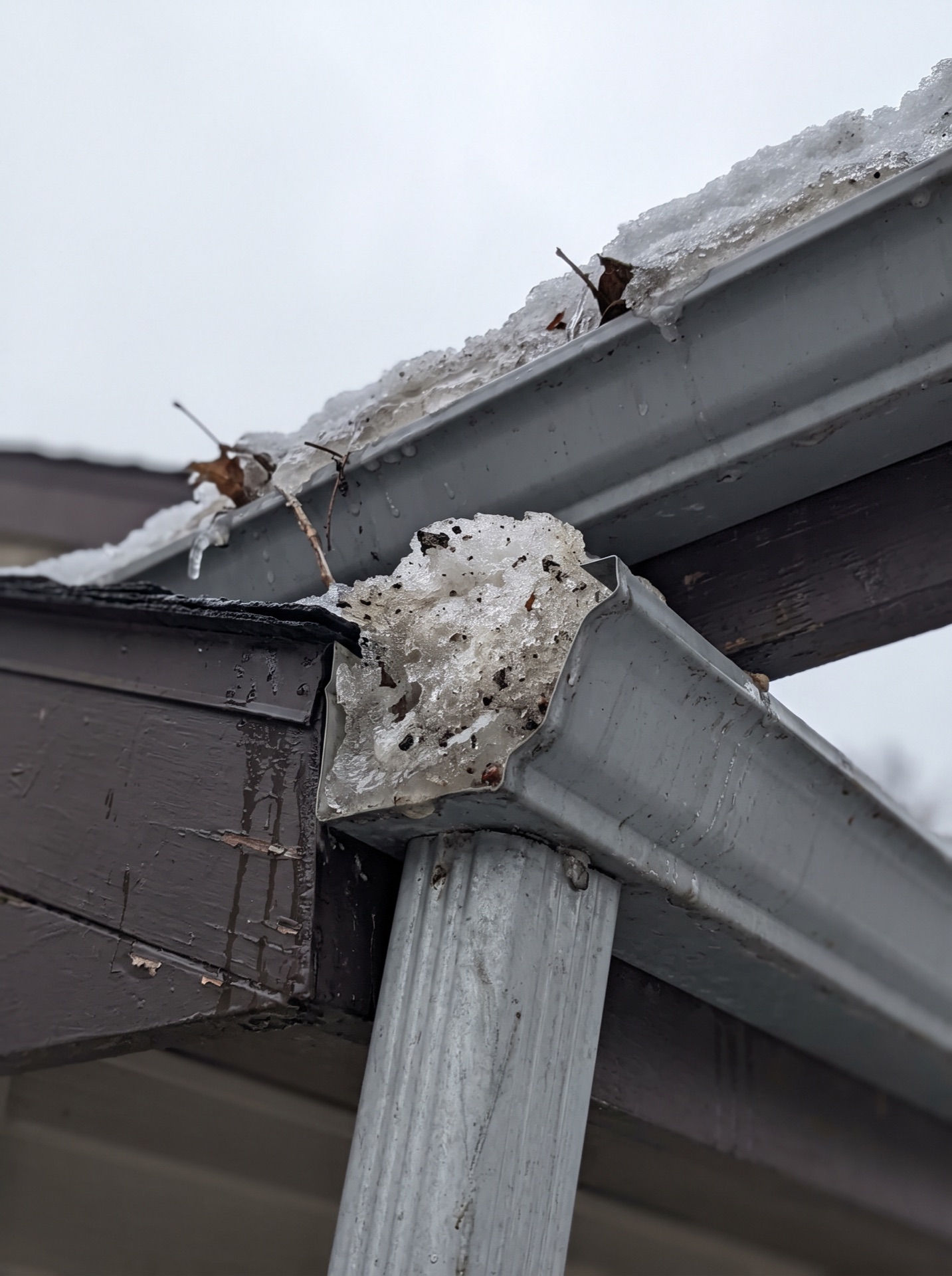
Ice expands as it forms, and a trough packed solid pushes the gutter away from the fascia a little more every cycle. By the time the dam is thick enough to leak, the hangers are often pulled, the back of the trough has lifted, and the fascia board behind it has been wet for weeks. Water Stain on the Ceiling in Winter.
None of that is visible until the ice is off. It gets photographed when it appears, because a bent gutter found in February is a great deal easier to argue about with a carrier than one discovered in May.
Why the dam formed in the first place
Ice dams are a heat problem wearing a weather costume. Warm air escaping into the attic melts snow on the upper roof; that meltwater runs to the eave, which hangs past the heated envelope and stays below freezing; it refreezes there, and the ridge of ice grows a layer every cycle. Removal is the emergency fix. Before the crew leaves you will know which part of your attic is feeding it.
What the crew does on arrival
Before anything is touched, the crew walks the eaves, valleys and gutter line and photographs every dam and every point where water is tracking inside. You get shown what they found. Then the dam comes off in sections, starting wherever water is actively backing up, so drainage opens early rather than at the end.
Downspouts and gutter troughs get cleared in the same visit where they are frozen, because a dam removed above a solid block of ice in the gutter just reforms in the next cold night.
How long a removal actually takes
A single-story eave with a thin dam and clear gutters is often an hour or two. A two-story Great Falls house with ice standing a foot deep across the front, frozen downspouts and a valley packed solid is most of a day for a two-man crew. The honest answer on the phone is a range and the reason for it, not a number designed to win the booking.
The estimate is revised out loud if the roof turns out worse than it looked from the ground, before the extra hours are worked rather than after they appear on the invoice.
Dormers, valleys and dead spots
Ice does not distribute evenly. It concentrates where two roof planes meet, behind dormers, in dead valleys that drain nowhere, and along the north face that never sees sun. Those pockets hold water deepest and leak first.
A crew working a roof in Great Falls clears the full eave line and then goes back through the valleys and dormer pockets specifically, because clearing the easy straight run and calling it done is how a roof leaks again a week later.

What you get in Great Falls
- Steam onlySafe on asphalt, cedar, slate, tile and metal — no chipping, no pressure, no salt
- No salt, no chippingNothing corrosive and nothing mechanical touches the covering
- Cleared to the shingleThe dam comes off completely, not just a drainage channel cut through it
| Coverage area | Great Falls and Cascade County |
|---|---|
| Local ice-barrier practice | Extended membrane plus snow retention |
| Pricing model | Billed by the crew hour, rate quoted before dispatch |
| Removal method | Low-pressure steam only. No chipping, salt or pressure washing. |
| Typical scope | Steam, 8-16 crew hours typical |
| Primary climate stressor | Solar melt on deep pack, shaded eaves |
| Dispatch window | 24 to 48 hours in mountain terrain |
Cascade County Coverage From Great Falls
Crews working Great Falls cover the adjoining communities on the same route — Black Eagle, Malmstrom A F B, Sand Coulee, Ulm and Floweree — so a storm week usually means one truck handling several addresses in Cascade County rather than separate trips.
Nearest hub towns with their own ice dam removal pages: Helena, Havre, Belgrade, Butte, Bozeman, Livingston.
Coverage runs across Great Falls and the nearby towns all winter, and capacity is surged into whichever Montana market the storm actually hits.
Most jobs do not stop at one service. Ice Dam Removal in Great Falls often runs alongside water mitigation & dryout in Great Falls, and both get written into one scope rather than billed as separate visits.
Active leak right now? Our 24/7 Great Falls steam ice dam removal crews are dispatched first during a freeze event. Call (888) 561-9664.