Winter in Bozeman does not need a record storm to put water inside a house. It needs a roof with snow on it, an attic leaking heat, and one cold night. As part of our complete Bozeman winter roof services, crews handle ice dam removal across Gallatin County.
Sun on Cold Snow: The Bozeman Pattern
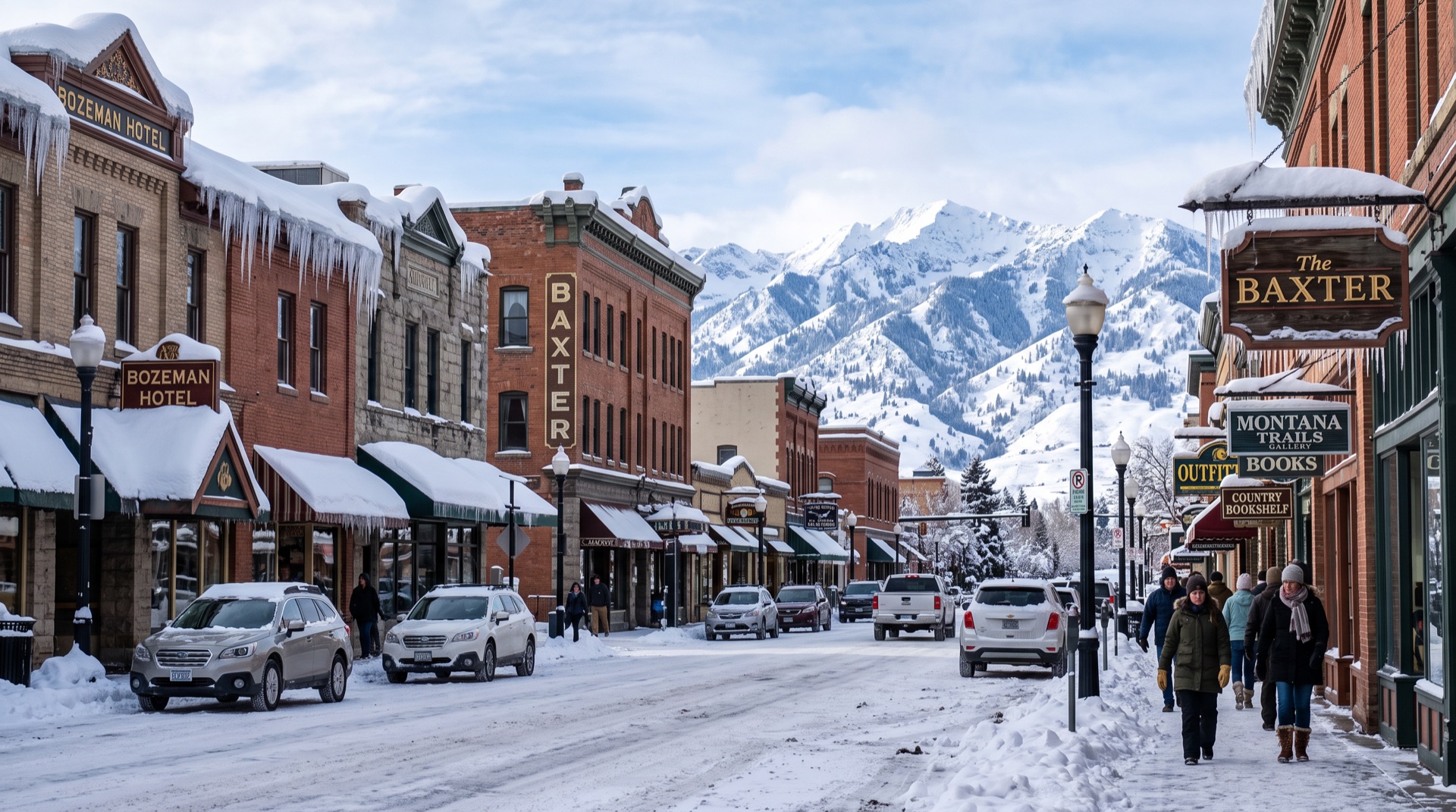
Altitude makes the sun stronger and the air colder at the same time. A roof in Bozeman can be producing meltwater on its south face at midday while the thermometer reads well below freezing.

That is why mountain roofs dam up on clear, cold weeks that look harmless. South and west faces melt, north-facing eaves and shaded valleys hold the ice, and the pack above keeps feeding it.
Ice-barrier practice in Gallatin County
Snow retention above doors, walkways and parking is a requirement in most Gallatin County jurisdictions for good reason: a release off a metal mountain roof is a serious event, not an inconvenience.
Ice Dam Removal in Bozeman: How The Work Runs
What steam actually does
A steam unit delivers water at roughly 290°F at a pressure low enough to rest your hand in the plume. It cuts a channel straight through the ice and lifts the dam off in sections, right down to the shingle. The heat does the work, not force, so granules, seal strips and flashing come through untouched. Water Stain on the Ceiling in Winter.
That is the whole difference between steam and the hot pressure washers often sold as steam. A pressure washer cuts ice fast because of its pressure — and that same pressure strips the granules off asphalt shingles and drives water up under the courses. One method removes ice. The other removes ice and roof.
Why the dam formed in the first place
Ice dams are a heat problem wearing a weather costume. Warm air escaping into the attic melts snow on the upper roof; that meltwater runs to the eave, which hangs past the heated envelope and stays below freezing; it refreezes there, and the ridge of ice grows a layer every cycle. Removal is the emergency fix. Before the crew leaves you will know which part of your attic is feeding it.
What gets photographed, and why it matters later
Before the lance comes out, the crew shoots the dam from the ground and from the roof, the icicle line, any staining visible inside, and the specific courses where water is tracking under the shingles. Timestamps are on every frame.
That record is the whole case if a claim follows. An adjuster arriving in March sees a dry roof and a stained ceiling; the photographs are what connect the two, and they are what a maintenance-exclusion denial runs into.
Why salt and ice melt make it worse
Calcium chloride opens a narrow channel and leaves the dam standing. The channel refreezes, the dam does not go anywhere, and in the meantime the runoff corrodes gutter seams, fasteners, flashing and anything growing underneath.
It is a stopgap at best. On a roof in Bozeman with an active leak it buys hours, not days, and it adds a corrosion problem to the water problem.
Steep, high and awkward Bozeman roofs
Pitch and height change the job more than ice thickness does. A walkable ranch eave is a ladder and a lance. A three-story roof with a steep pitch means anchors, rope, staging and two people where one would otherwise do.
Crews quote on that honestly. If a property in Bozeman needs a longer setup, it is said on the phone rather than discovered at the end of the invoice.

What you get in Bozeman
- Cleared to the shingleThe dam comes off completely, not just a drainage channel cut through it
- Photographed as we workDated before and after images and a written scope your adjuster will accept
- Gutters cleared tooTrough and downspout steamed through to daylight in the same visit
| Coverage area | Bozeman and Gallatin County |
|---|---|
| Local ice-barrier practice | Extended membrane plus snow retention |
| Documentation | Dated before and after photos, written scope in Xactimate line items |
| Pricing model | Billed by the crew hour, rate quoted before dispatch |
| Typical scope | Steam, 8-16 crew hours typical |
| Removal method | Low-pressure steam only. No chipping, salt or pressure washing. |
| Service | Ice Dam Removal in Bozeman, MT |
Gallatin County Coverage From Bozeman
Crews working Bozeman cover the adjoining communities on the same route — Gallatin Gateway — so a storm week usually means one truck handling several addresses in Gallatin County rather than separate trips.
Nearest hub towns with their own ice dam removal pages: Belgrade, Livingston, Big Sky, Butte, Helena, Billings.
Coverage runs across Bozeman and the nearby towns all winter, and capacity is surged into whichever Montana market the storm actually hits.
Most jobs do not stop at one service. Ice Dam Removal in Bozeman often runs alongside water mitigation & dryout in Bozeman, and both get written into one scope rather than billed as separate visits.
Active leak right now? Our 24/7 Bozeman steam ice dam removal crews are dispatched first during a freeze event. Call (888) 561-9664.