Skip to content
Livingston, MT
IICRC S520 Standard · Park County

Mold Remediation in Livingston, MT — Alpine Emergency Crews

Ice Dam Now handles mold remediation for Livingston, MT homes and the wider Park County. Wet and moldy material comes out, the structure is dried to a measured standard, and the same crews put the insulation, drywall and paint back. Dated photographs and moisture logs go into one claim with the ice dam removal and any roof damage.

Framing and sheathing cleaned — HEPA vacuuming, cleaning and treatment, or replacement where the wood is compromised
Containment first — Poly barriers and negative air so spores stay in the work area
Dried and documented — Moisture readings to a dry standard before any rebuild starts
Interior repair in-house — Insulation, drywall, texture, trim and paint put back by the same crews

Get Ice Dam Help Livingston

A few quick questions, then pick a time. If water is coming in, call instead.

What is the zip code of the home?

Roof leaking right now? Call (888) 561-9664 — that is faster than any form.
Water coming through the ceiling?Every hour an ice dam sits there, more water gets under the shingles.Call (888) 561-9664
24/7
Dispatch All Winter
Steam
Only — No Pressure
Park
County Coverage
Same Day
For Active Leaks
Insured
Licensed & Harness-Certified

Most Livingston homeowners find out about an ice dam from the inside — a damp patch on a bedroom ceiling, or water tracking down the inside of a window frame. As part of our complete Livingston winter roof services, crews handle mold remediation across Park County.

Why Livingston Roofs Dam Up: Altitude Sun on a Deep Pack

The pack at this elevation is deep enough to act as its own insulation, which means the surface melts under sun while the base stays locked. Water released at the top has to travel through and under all of it.

Diagram showing how ice dams form on a roof from heat loss and snow melt
Heat escaping into the attic melts roof snow; the meltwater refreezes at the cold eave and the dam grows a layer every cycle.

Aspect decides which eaves suffer. A sunny plane sheds water across a roof in Livingston to a shaded eave that has not been above freezing for weeks, and that is where the ice builds into a wall.

Ice-barrier practice in Park County

High-country Montana codes typically call for extended ice barrier and, on metal roofing, snow guards above any door, walkway or parking area. Both exist because of what comes off these roofs.

Mold Remediation in Livingston: How The Work Runs

The smell is a symptom

A musty smell upstairs in winter, in a closet on an exterior wall, or coming out of a ceiling light usually means growth somewhere you cannot see, most often the attic or a wall cavity under the eave. Mold in the Attic After an Ice Dam.

It is worth investigating rather than masking. Air fresheners and ozone machines do nothing about the growth or the moisture behind it.

What it looks like from the homeowner side

Most people stay in the house. The affected room or attic is sealed off, the equipment runs for a few days, and the crew comes and goes through a zippered door in the containment.

The noise is the air scrubbers and dehumidifiers running around the clock. Placement can usually be worked around bedrooms, and the timeline is set out before anything starts.

The attic is the usual starting point

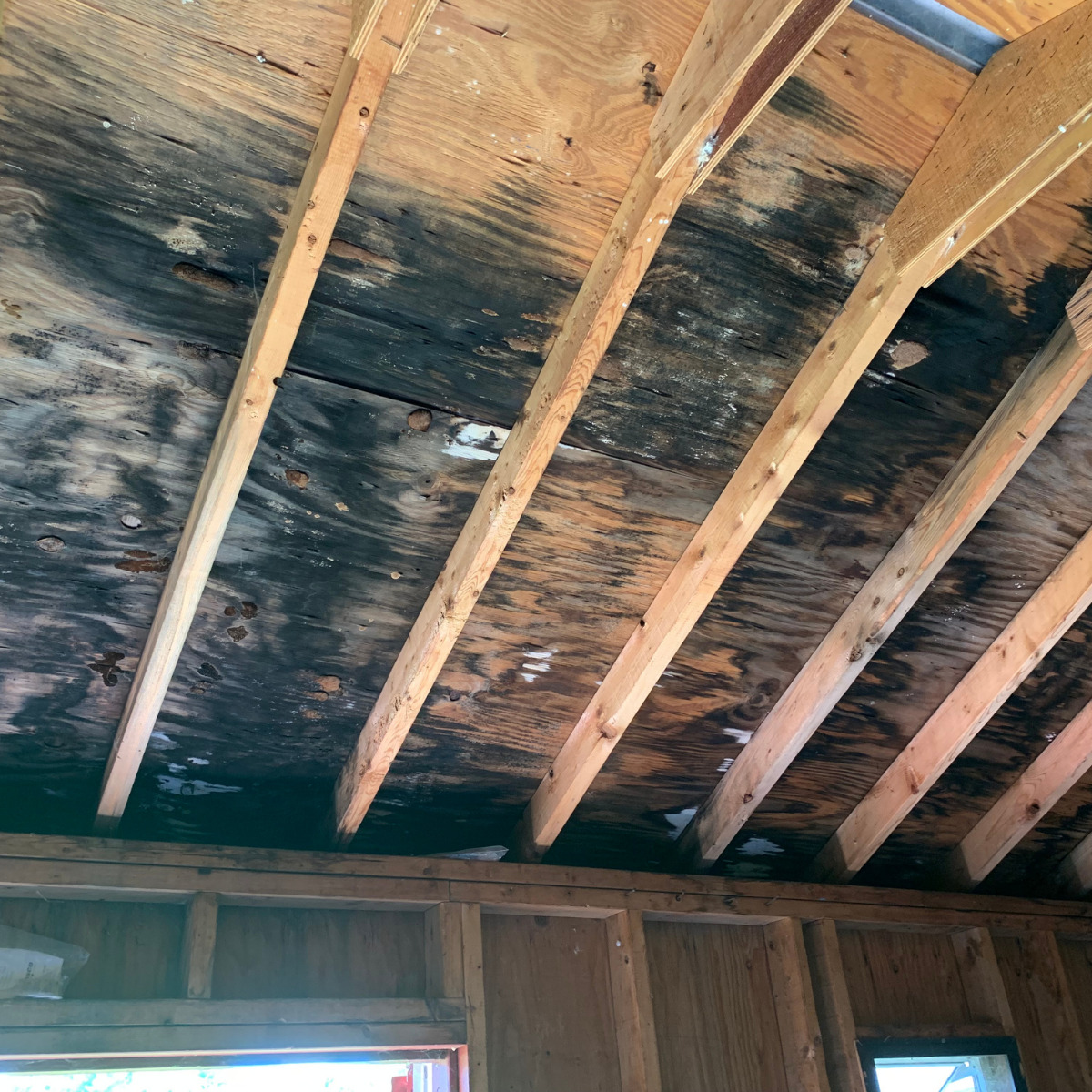
On most ice dam jobs in Livingston the worst growth is on the underside of the roof deck in the first few feet above the eave, exactly where the meltwater backed up. It often looks like a band of dark spotting running along the eave line.

Insulation along the same line is usually matted and stained. Both come into the scope together, because drying the deck while leaving wet insulation against it does not work.

Clearance before the room is closed up

Before rebuild starts, the cleaned area is inspected again and, where appropriate, tested to confirm it is clear. Containment stays up until that point.

The clearance result goes into the claim file along with the before photographs, the removal photographs and the moisture log.

What comes out and what gets cleaned

Porous material that has grown mold, such as wet insulation, drywall paper and ceiling tile, cannot be reliably cleaned, so it comes out, bagged inside the containment.

Structural wood is different. Rafters, joists and sheathing with surface growth are HEPA vacuumed, cleaned and treated. Where the wood has gone soft or lost strength from repeated wetting, it gets cut out and replaced.
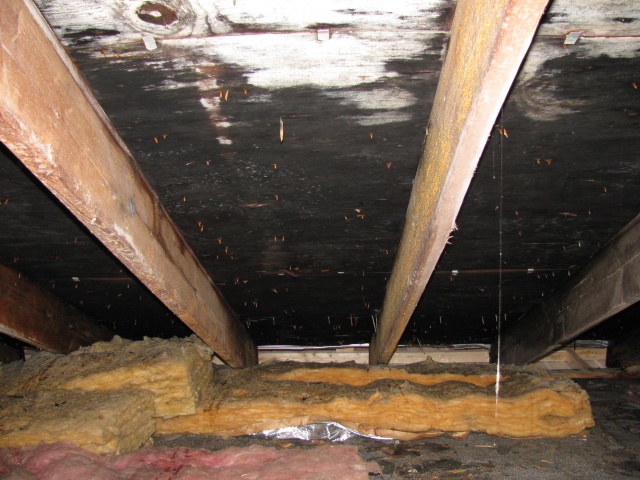
black attic mold covering roof sheathing between rafters above fiberglass insulation
Extensive black mold growth covers the roof sheathing in an attic following ice dam water infiltration.

What you get in Livingston

  • Claim-ready recordsDated photos and Xactimate line items alongside the water loss
  • Moldy material removedWet insulation, drywall and trim that cannot be cleaned are bagged and taken out
  • HEPA air scrubbingAir filtration running for the whole job, not just the tear-out
Mold Remediation in Livingston, MT — specification
Service specification for Livingston, MT
Primary climate stressorSolar melt on deep pack, shaded eaves
MethodContainment, HEPA filtration and drying to a measured IICRC standard
Dispatch window24 to 48 hours in mountain terrain
DocumentationDated before and after photos, written scope in Xactimate line items
ServiceMold Remediation in Livingston, MT
Coverage areaLivingston and Park County
Interior repairInsulation, drywall, texture, trim and paint, done in-house after drying

Where We Dispatch Around Livingston

Crews working Livingston cover the surrounding Park County addresses on the same route, so a storm week usually means one truck handling several properties rather than separate trips.

Nearest hub towns with their own mold remediation pages: Bozeman, Belgrade, Big Sky, Helena, Butte, Billings.

Scheduling for Livingston tightens up during a freeze event, which is exactly when the phone beats the form. Water coming in means a call, not an email.

Most jobs do not stop at one service. Mold Remediation in Livingston often runs alongside water mitigation & dryout in Livingston, and both get written into one scope rather than billed as separate visits.

Active leak right now? Our 24/7 Livingston steam ice dam removal crews are dispatched first during a freeze event. Call (888) 561-9664.


One Event, One Claim

Everything The Ice Dam Caused In Livingston, On One Claim

Taking the ice off is usually the cheapest part. The water that already got in, the mold it leaves, the ceiling that has to come down and sometimes the roof itself are one loss event, so they go on one insurance claim, handled by one company.

How it goes on the claim

  • One loss, one claim number. Removal, mitigation, mold, interior repair and roof damage from the same ice dam are reported as one event.
  • Broken out by coverage. Mitigation, mold (often under its own sublimit), interior repair and the roof are written as separate Xactimate sections, so a question on one line does not hold up the rest.
  • Documented the whole way. Dated photographs and moisture readings run from the ice on the roof to the finished room, from one company, in one file.
  • Honest about the limits. Coverage depends on your policy. A roof that was simply old is not storm damage, and you and your carrier make the coverage decision.
Ice Dam Claims In Livingston
Conditions We Work In

Mold Remediation In Practice

Conditions crews work in across Park County. Every job is photographed before and after.

Severe black mold covering attic roof sheathing between exposed wood rafters
Extensive black mold growth covers attic sheathing following moisture intrusion from ice dams.
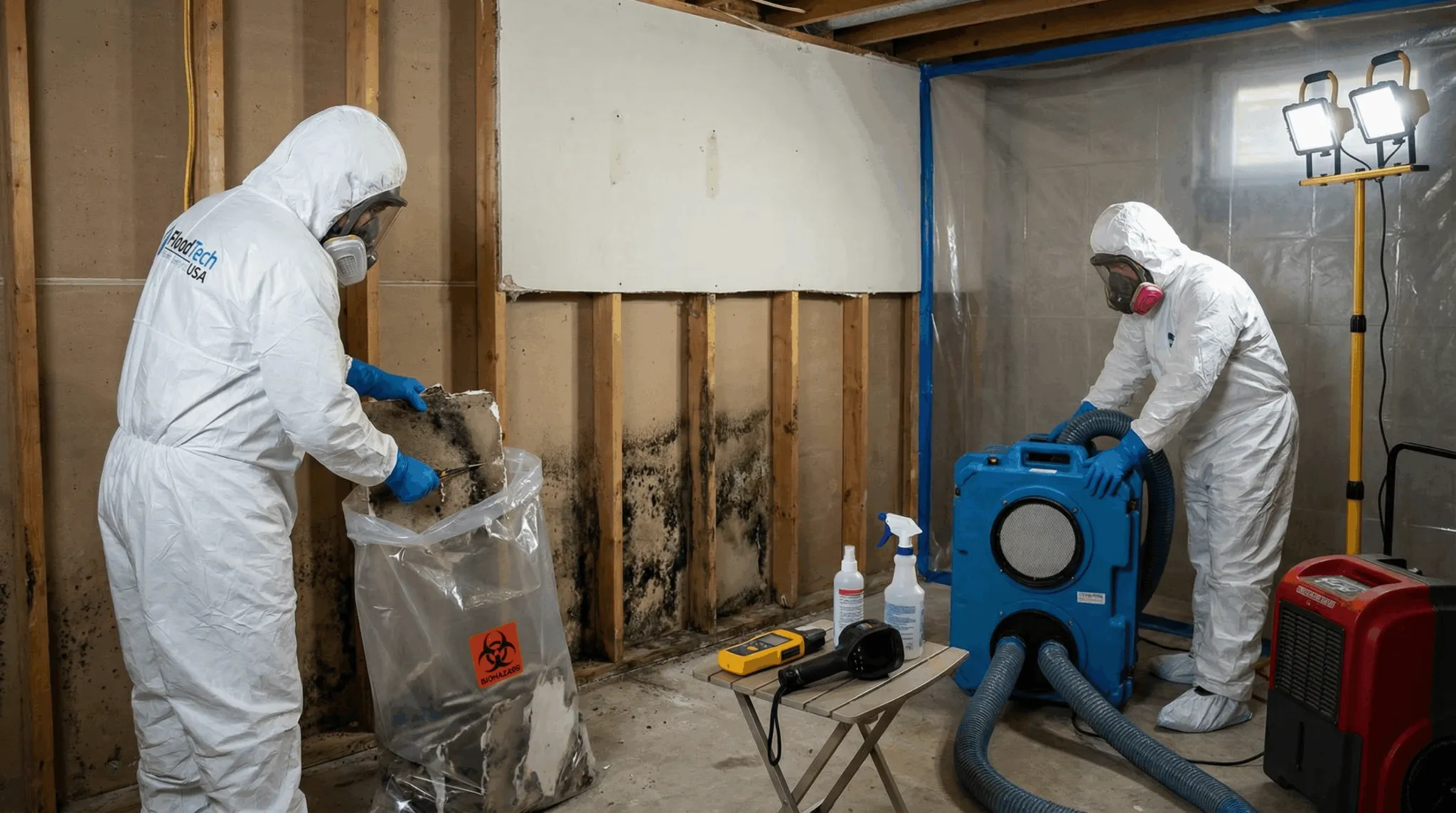
Two remediation workers in hazmat suits removing black mold from basement wall studs
Certified technicians safely remove mold-contaminated drywall and studs inside a contained basement work zone.
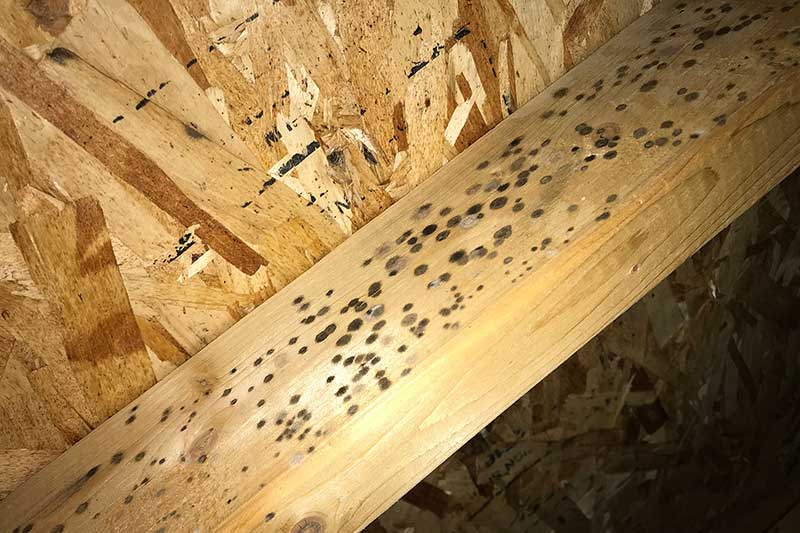
black mold spots on attic rafter and OSB sheathing after ice dam damage
Black mold colonies visible on attic rafters and OSB sheathing following moisture intrusion from ice dams.
FAQ

Local Questions About Livingston Roofs

It is billed by the crew hour, and the rate plus a realistic time estimate are quoted on the phone before anyone is dispatched.

  • Scope drives the hours: length and thickness of the ice, roof pitch and height, and whether the gutters are frozen solid.
  • Access matters too — a three-story Livingston roof takes longer to set up on than a ranch.
  • The invoice matches the quote. There are no surprise add-ons written on the tailgate.

Please do not. Salt corrodes flashing, fasteners, gutters and anything metal it drains across, and it damages whatever is planted below.

  • Calcium chloride is less aggressive than rock salt but still ends up in the soil at the drip line.
  • A puck melts a hole, not a drainage path, so the water simply refreezes a few inches further on.
  • Crews use heat and nothing else - no salt, no chemicals, nothing corrosive.

On a roof that is still leaking heat, it can — removal treats the symptom and the cause is in the attic.

  • Crews say so before leaving if the attic is obviously the problem.
  • A second visit in the same season at the same property is priced as the shorter job it usually is.
  • Air sealing, insulation and heat trace are what stop the cycle for good.

Only where there is interior damage to document or dry. Pure exterior removal happens entirely from outside.

  • If water has come in, seeing it is what makes the claim documentation worth anything.
  • Attic access helps identify the heat source but is not required for removal.
  • Nobody needs to be home for exterior-only work, provided access and payment are arranged.

No, but there is a worse one: after the thaw, when the evidence has melted and the damage is all that is left.

  • Mid-storm calls are fine — crews work through freeze events.
  • An evening call for a leak that started that afternoon usually gets a next-morning slot.
  • Waiting for a weekend to pass is the most common and most expensive delay.

Often, when the mold resulted from a covered water loss, such as an ice dam leak that was reported and dealt with. Many policies cap mold at a separate sublimit, commonly a few thousand to ten thousand dollars, so read that section of your policy. Mold from a long-term leak nobody reported is the part carriers usually push back on, which is why reporting the water early matters.

Not if the cause is fixed. Mold comes back when the moisture does. That means the ice dam has to be dealt with, the attic has to be dried to a measured number, and the heat loss or ventilation problem that made the dam in the first place has to be addressed. All three get covered before the job is called done.

Nearby

Mold Remediation In Towns Around Livingston

Same-Day Response

Get A Livingston Crew Out

Waiting for a thaw is a strategy, but it is an expensive one — the melt has to go somewhere, and it goes into the insulation first.

✓ Licensed & insured✓ Low-pressure steam only✓ Rate quoted up front✓ Photos for your claim
Online Quote(888) 561-9664