Skip to content
Fort Dodge, IA
IICRC S500 Standard · Webster County

Ice Dam Water Mitigation in Fort Dodge, IA — Snow‑Belt Storm Response

Ice Dam Now handles water mitigation & dryout for Fort Dodge, IA homes and the wider Webster County. Wet and moldy material comes out, the structure is dried to a measured standard, and the same crews put the insulation, drywall and paint back. Dated photographs and moisture logs go into one claim with the ice dam removal and any roof damage.

Containment and HEPA — Barriers and air scrubbers wherever tear-out is required
Electrical made safe — Circuits killed where water reached fixtures, before equipment goes in
Documented to standard — Daily moisture readings until the structure meets IICRC S500 dry standard
Wet insulation removed — It cannot be dried in place and it holds water against the framing

Get Ice Dam Help Fort Dodge

A few quick questions, then pick a time. If water is coming in, call instead.

What is the zip code of the home?

Roof leaking right now? Call (888) 561-9664 — that is faster than any form.
Water coming through the ceiling?Every hour an ice dam sits there, more water gets under the shingles.Call (888) 561-9664
24/7
Dispatch All Winter
Steam
Only — No Pressure
Webster
County Coverage
Same Day
For Active Leaks
Insured
Licensed & Harness-Certified

Winter in Fort Dodge does not need a record storm to put water inside a house. It needs a roof with snow on it, an attic leaking heat, and one cold night. As part of our complete Fort Dodge winter roof services, crews handle water mitigation & dryout across Webster County.

What the Lake Does to a Roof in Fort Dodge

Lake-effect snow arrives in bands rather than fronts, which is why Fort Dodge can take a foot overnight while a town twenty miles inland takes two inches. It falls wet, it compacts fast, and it does not blow off.

Diagram showing how ice dams form on roofs due to inadequate insulation and poor ventilation
Heat escaping into the attic melts roof snow; the meltwater refreezes at the cold eave and the dam grows a layer every cycle.

Each band is followed by a clearance and a cold night, and that is the cycle doing the damage. Meltwater released during the day sets at the eave after dark, and the ridge at the gutter line gains a layer every time.

Ice-barrier practice in Webster County

What matters on a Fort Dodge roof is not whether ice barrier exists but how far up it runs. Water backed up behind a foot of ice travels much further than the first course, and a membrane that stops short is a membrane that stops working.

Water Mitigation & Dryout in Fort Dodge: How The Work Runs

From dry to finished: the interior repair

Mitigation ends when the readings hit standard. The repair starts right after, with the same company: new insulation, drywall hung and finished, texture matched, trim replaced and painted, and flooring where it did not recover. Wet Insulation in the Attic.

Keeping it in-house means one scope, one claim and one set of documentation from the first photograph in Fort Dodge to the last coat of paint, rather than a dried-out room sitting open while you look for a contractor.

Why a cold attic will not dry itself

Drying is evaporation, and evaporation needs warmth and air movement. A Fort Dodge attic in February has neither. Wet insulation and damp sheathing sit at near-freezing with no meaningful vapor drive, which is why a leak that stops in January can still be wet in March.

Equipment supplies what the season does not. Without it the structure is not drying slowly - in a cold cavity it is very largely not drying at all.

Clean water does not stay clean

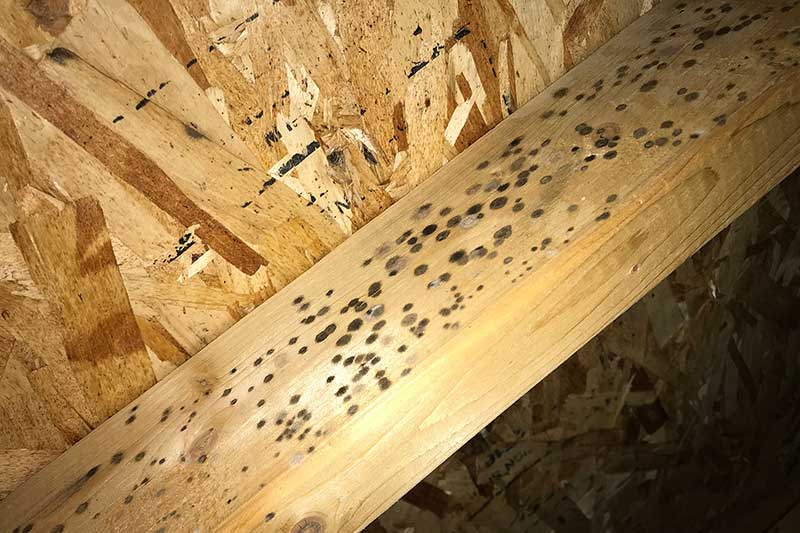
Meltwater off a roof starts as category one - essentially clean. It does not stay that way. Passing through old insulation, wall cavities, dust and whatever has accumulated in a ceiling plane for forty years degrades it, and standing more than a day or two degrades it again.

That classification drives what can be dried in place and what has to be removed, and it is the reason a leak dealt with on day one is a smaller job than the identical leak dealt with on day five.

Containment before tear-out

Where drywall or insulation has to come out, barriers go up and HEPA scrubbers run inside them. That keeps the dust and whatever is growing in the wet material out of the rest of the house.

It also keeps the job to one room rather than the whole floor, which on an occupied Fort Dodge home is the difference between staying and moving out.

Contents, storage and what moves out of the way

Mitigation needs the room. Furniture gets blocked up or moved, stored boxes come out of the affected area, and in a finished basement the contents usually have to leave entirely before tear-out starts.

What is already wet gets photographed and listed as it is moved, because contents are a separate part of most policies and the list is considerably harder to assemble once everything has been shifted.

technician in Tyvek suit and respirator removing contaminated pink insulation in attic
A remediation technician removes mold-contaminated insulation from a tight attic space following ice dam damage.

What you get in Fort Dodge

  • Extraction firstStanding water out before anything else starts
  • Documented to standardDaily moisture readings until the structure meets IICRC S500 dry standard
  • Hidden water mappedThermal imaging and pin meters find what left no stain
Water Mitigation & Dryout in Fort Dodge, IA — specification
Service specification for Fort Dodge, IA
Local ice-barrier practiceEave membrane expected on re-roofs
Primary climate stressorLake-effect bands, wet heavy pack
DocumentationDated before and after photos, written scope in Xactimate line items
BillingXactimate line items on one claim; carrier billed directly where the policy allows
ServiceWater Mitigation & Dryout in Fort Dodge, IA
MethodContainment, HEPA filtration and drying to a measured IICRC standard
Coverage areaFort Dodge and Webster County

Neighborhoods and Towns We Reach From Fort Dodge

Crews working Fort Dodge cover the adjoining communities on the same route — Otho, Badger, Duncombe, Vincent and Moorland — so a storm week usually means one truck handling several addresses in Webster County rather than separate trips.

Nearest hub towns with their own water mitigation pages: Ames, Ankeny, Johnston, Urbandale, Waukee, Mason City.

Coverage runs across Fort Dodge and the nearby towns all winter, and capacity is surged into whichever Iowa market the storm actually hits.

Most jobs do not stop at one service. Water Mitigation in Fort Dodge often runs alongside ice dam removal in Fort Dodge, and both get written into one scope rather than billed as separate visits.

Active leak right now? Our 24/7 Fort Dodge steam ice dam removal crews are dispatched first during a freeze event. Call (888) 561-9664.

One Event, One Claim

Everything The Ice Dam Caused In Fort Dodge, On One Claim

Taking the ice off is usually the cheapest part. The water that already got in, the mold it leaves, the ceiling that has to come down and sometimes the roof itself are one loss event, so they go on one insurance claim, handled by one company.

How it goes on the claim

  • One loss, one claim number. Removal, mitigation, mold, interior repair and roof damage from the same ice dam are reported as one event.
  • Broken out by coverage. Mitigation, mold (often under its own sublimit), interior repair and the roof are written as separate Xactimate sections, so a question on one line does not hold up the rest.
  • Documented the whole way. Dated photographs and moisture readings run from the ice on the roof to the finished room, from one company, in one file.
  • Honest about the limits. Coverage depends on your policy. A roof that was simply old is not storm damage, and you and your carrier make the coverage decision.
Ice Dam Claims In Fort Dodge
Conditions We Work In

Water Mitigation & Dryout In Practice

Conditions crews work in across Webster County. Every job is photographed before and after.

technician in Tyvek suit and respirator removing contaminated pink insulation in attic
A remediation technician removes mold-contaminated insulation from a tight attic space following ice dam damage.
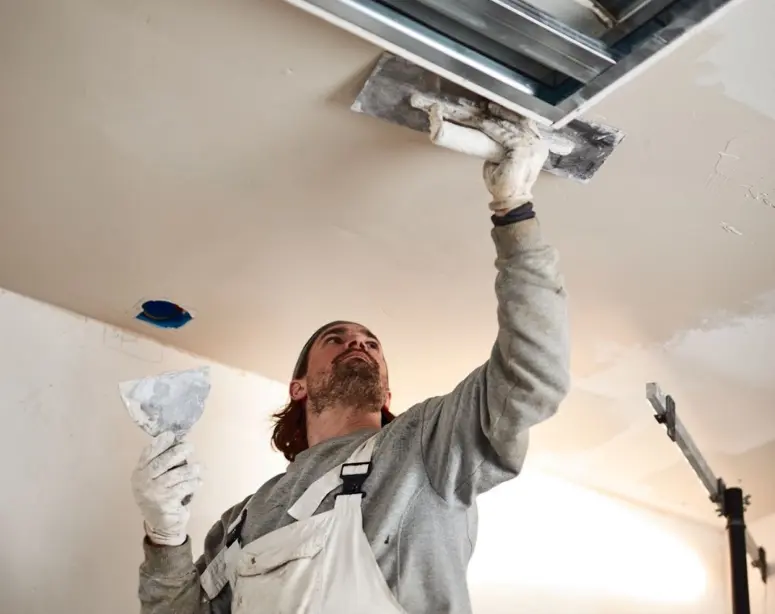
contractor using drill to repair ceiling drywall after ice dam water damage
A contractor drills into a water-damaged ceiling where drywall was removed to expose insulation after ice dam damage.
plastic containment sheeting and air mover set up inside living room after water damage
Plastic containment barriers and a commercial air mover protect the living area during water damage remediation.
FAQ

Fort Dodge and Webster County FAQ

It is billed by the crew hour, and the rate plus a realistic time estimate are quoted on the phone before anyone is dispatched.

  • Scope drives the hours: length and thickness of the ice, roof pitch and height, and whether the gutters are frozen solid.
  • Access matters too — a three-story Fort Dodge roof takes longer to set up on than a ranch.
  • The invoice matches the quote. There are no surprise add-ons written on the tailgate.

Before the thaw rather than after it. The leak happens when the ice has water behind it, which is a day or two after the snow stops.

  • Calling during the storm is fine and often gets an earlier slot.
  • The expensive version is waiting until water appears on a ceiling.
  • Crews run across Webster County from first light through a freeze event.

Yes. Steam is safe on slate, cedar shake, tile and metal as well as asphalt, because it removes ice with heat rather than force.

  • Older Fort Dodge housing stock with original slate is exactly where chipping does the most damage.
  • Crews adjust the lance distance and dwell rather than the pressure.
  • Nothing mechanical touches the covering at any point.

Yes. The dispatch area runs across Webster County, and several addresses in one area are usually handled in the same run.

  • Adjoining communities are on the same route rather than treated as a separate trip.
  • Rural addresses outside the normal radius get told the travel position on the call.
  • Capacity is moved into whichever part of Iowa the storm actually hits.

Same day or next morning for most Fort Dodge calls, with active interior leaks moved to the front of the schedule.

  • During a freeze event crews run from first light until dark across Webster County.
  • The same route covers Otho, Badger, Duncombe, so several addresses are usually handled in one run.
  • Call rather than using the form if water is coming in — the phone is always faster.

Both. Once the readings hit standard, the same company does the interior repair: insulation, drywall, texture, trim, paint and flooring. It goes into the same scope and the same claim, so there is no gap between the dryout and the rebuild. If you would rather use your own builder, the moisture log and photographs are handed over either way.

In an open, heated room, sometimes. Inside an attic, a wall cavity or above a ceiling in winter, no — there is no air movement and no evaporation to speak of. Those are exactly the spaces ice dam water gets into.

Nearby

Water Mitigation In Towns Around Fort Dodge

Same-Day Response

Get A Fort Dodge Crew Out

Nothing about an ice dam improves by waiting. It refreezes tonight, thicker, and the water behind it keeps looking for a way in.

✓ Licensed & insured✓ Low-pressure steam only✓ Rate quoted up front✓ Photos for your claim
Online Quote(888) 561-9664