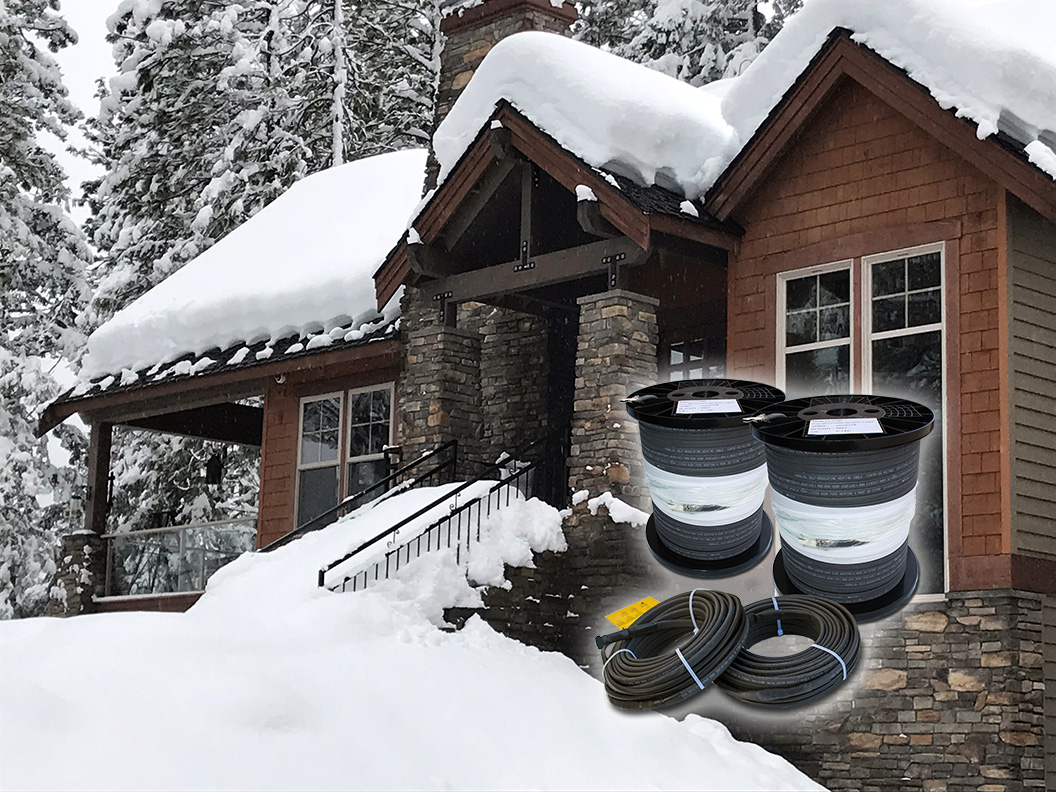
Every Fort Dodge winter produces the same two calls: the ones who see the ice early, and the ones who see the ceiling stain first. As part of our complete Fort Dodge winter roof services, crews handle heated roof & gutter cables across Webster County.
What the Lake Does to a Roof in Fort Dodge
Lake-effect snow arrives in bands rather than fronts, which is why Fort Dodge can take a foot overnight while a town twenty miles inland takes two inches. It falls wet, it compacts fast, and it does not blow off.

Each band is followed by a clearance and a cold night, and that is the cycle doing the damage. Meltwater released during the day sets at the eave after dark, and the ridge at the gutter line gains a layer every time.
Ice-barrier practice in Webster County
What matters on a Fort Dodge roof is not whether ice barrier exists but how far up it runs. Water backed up behind a foot of ice travels much further than the first course, and a membrane that stops short is a membrane that stops working.
Heated Roof & Gutter Cables in Fort Dodge: How The Work Runs
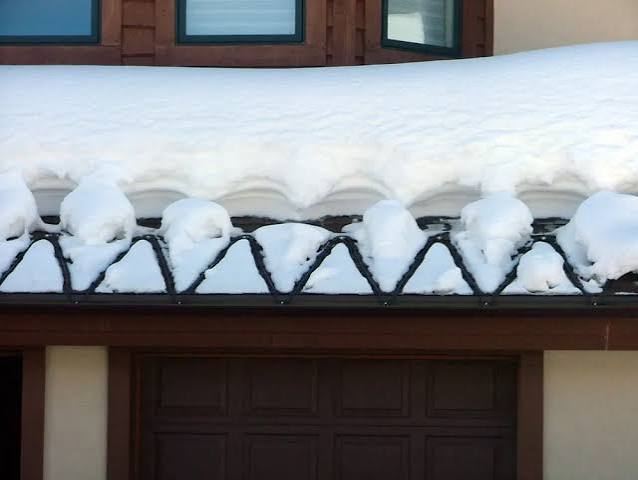
Fastening without putting holes in the roof
Clips and standoffs designed for the job, adhered or clipped to the shingle edge. Never a fastener driven through the covering, and never left loose to abrade in the wind. Icicles and a Wet Ceiling.
The failures that give heat cable a bad name are nearly all installation failures of this kind rather than product failures.
What shortens the life of a cable run
Self-regulating cable is generally good for a decade or more. What ends it early is ultraviolet exposure on a run left unshaded through summer, physical damage from somebody raking or shovelling over it, rodents in the gutter, and ice loading on clips that were never rated for it.
A system installed with UV-stable cable, proper clips and a note on the roof plan saying where it runs will usually outlast one that was simply stapled up in a hurry.
Cable is the backstop, not the cure
The underlying cause of an ice dam is heat leaving the house. Air sealing the attic, fixing crushed baffles and topping up insulation addresses that; cable manages what is left.
A Fort Dodge property that gets both rarely needs an emergency call again. One that gets only cable usually needs fewer.
What heat trace does and does not do
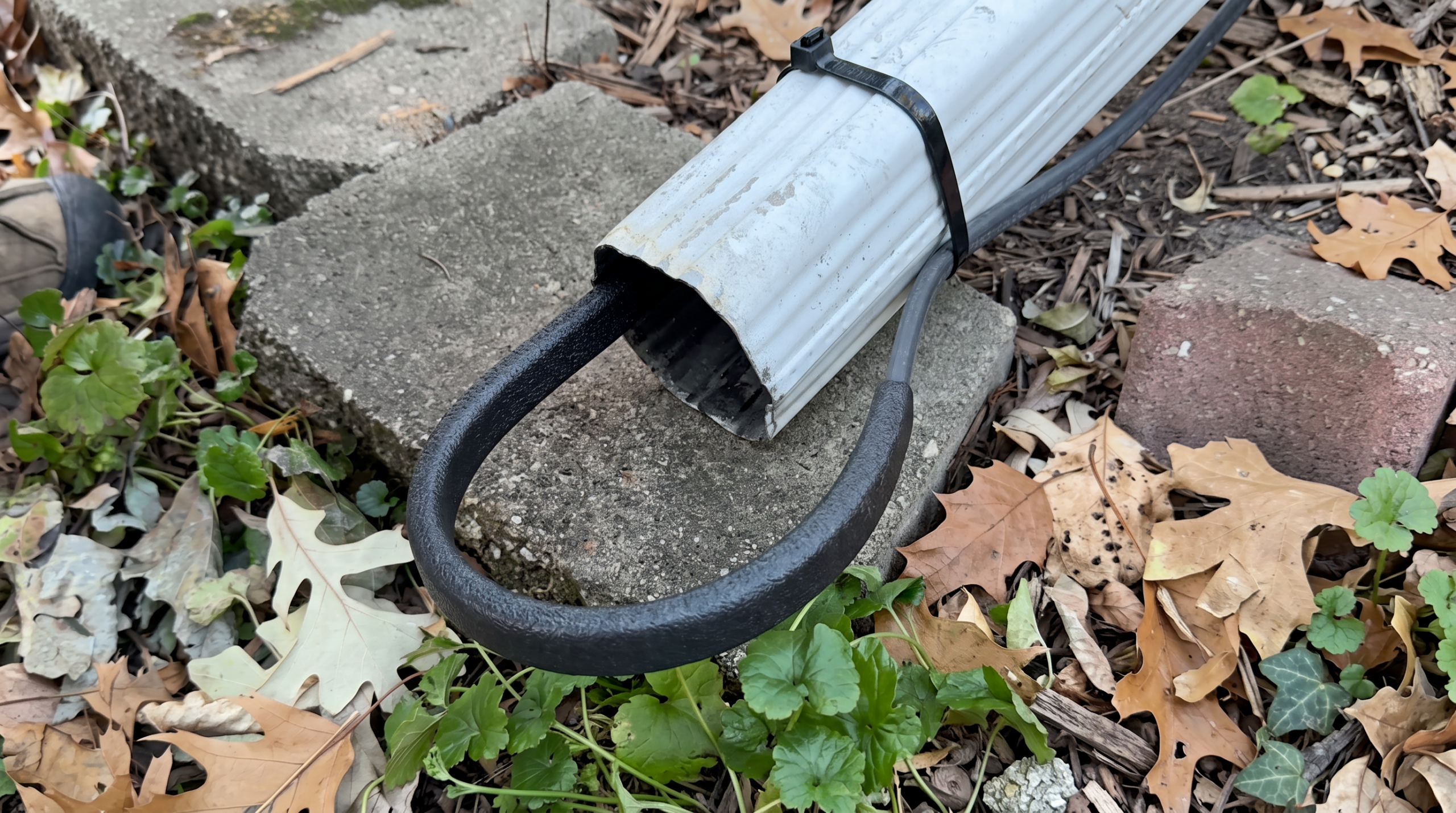
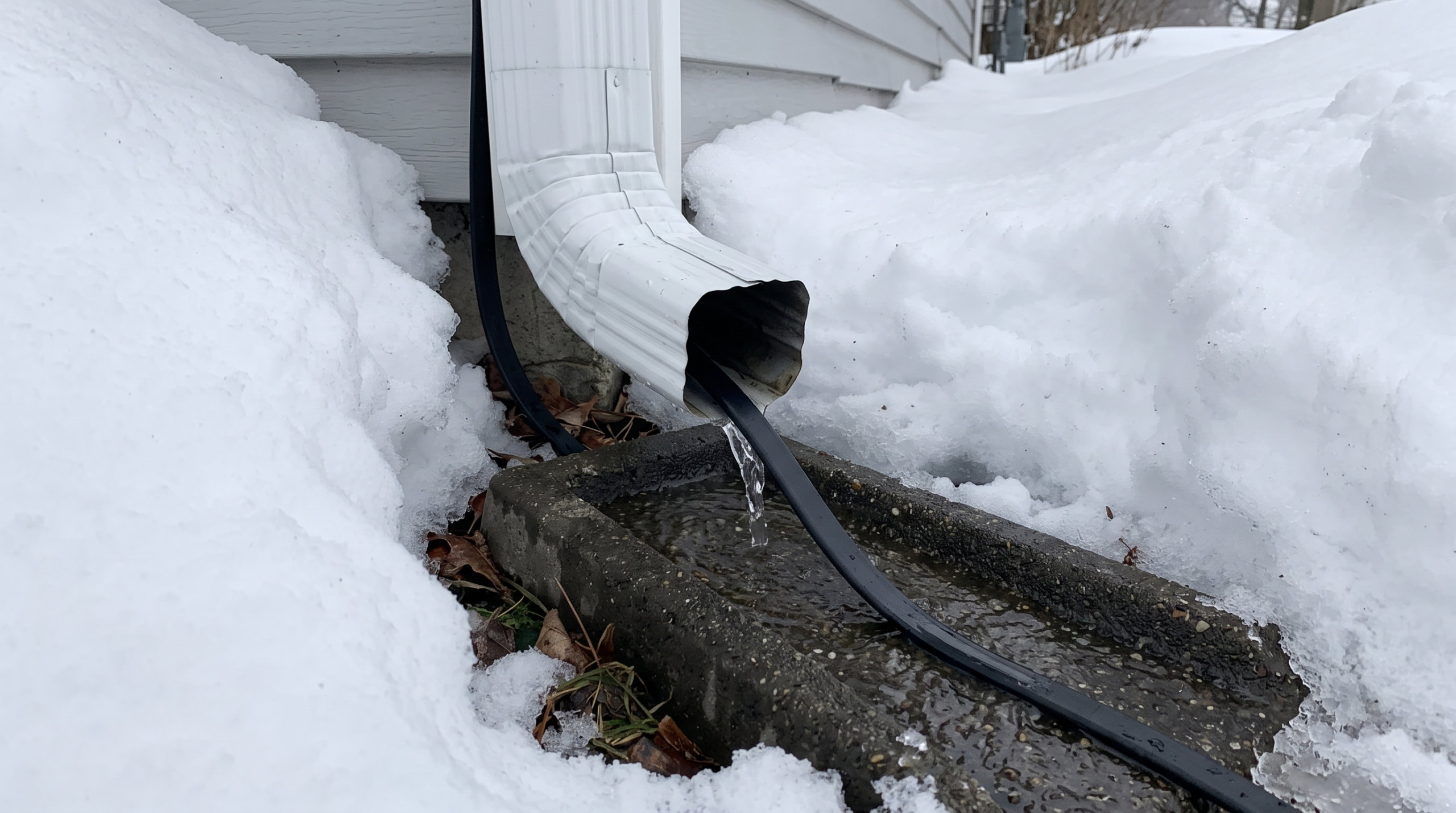
A properly designed system keeps a continuous drainage channel open from the roof surface through the gutter and down the leader to the ground. Meltwater that would have refrozen at the cold eave instead keeps running. It does not melt the snow off your roof, and it will not remove a dam that has already formed — it prevents the dam from establishing in the first place.
That distinction matters when comparing quotes. Anyone selling cable as an emergency fix for an existing dam is selling the wrong product.
The electrical side
A dedicated GFCI-protected circuit, properly rated terminations and a disconnect somebody can actually reach. Not an extension cord out of a bathroom window, which is what gets found on a surprising number of existing Fort Dodge installs.
Done properly it is an ordinary piece of exterior electrical work and it should look like one.
What you get in Fort Dodge
- Downspout traced to daylightThe drain path ends on the ground, not in a block of ice
- No fasteners through the roofClips and standoffs only, nothing driven through the covering
- Smart controlsThermostat and moisture sensing so it runs on the conditions that make ice
| Primary climate stressor | Lake-effect bands, wet heavy pack |
|---|---|
| Typical scope | Steam, 6-12 crew hours typical |
| Service | Heated Roof & Gutter Cables in Fort Dodge, IA |
| Documentation | Dated before and after photos, written scope in Xactimate line items |
| Dispatch window | Same day to 24 hours |
| Coverage area | Fort Dodge and Webster County |
| Pricing model | Billed by the crew hour, rate quoted before dispatch |
Neighborhoods and Towns We Reach From Fort Dodge
Crews working Fort Dodge cover the adjoining communities on the same route — Otho, Badger, Duncombe, Vincent and Moorland — so a storm week usually means one truck handling several addresses in Webster County rather than separate trips.
Nearest hub towns with their own heat cables pages: Ames, Ankeny, Johnston, Urbandale, Waukee, Mason City.
During a cold snap Fort Dodge gets worked alongside the neighboring Webster County towns on the same route, with active interior leaks moved to the front of the list.
Most jobs do not stop at one service. Heat Cables in Fort Dodge often runs alongside ice dam removal in Fort Dodge, and both get written into one scope rather than billed as separate visits.
Active leak right now? Our 24/7 Fort Dodge steam ice dam removal crews are dispatched first during a freeze event. Call (888) 561-9664.