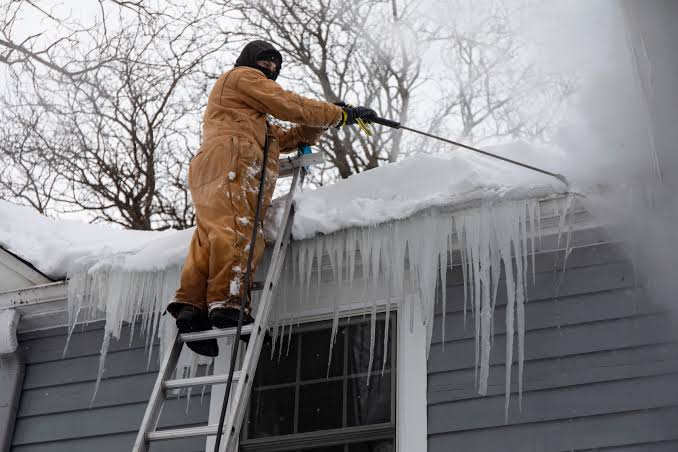
A Fort Dodge roof can look fine from the driveway and still be backing water under the shingles at the eave, where nobody can see it. As part of our complete Fort Dodge winter roof services, crews handle ice dam removal across Webster County.
What the Lake Does to a Roof in Fort Dodge
Lake-effect snow arrives in bands rather than fronts, which is why Fort Dodge can take a foot overnight while a town twenty miles inland takes two inches. It falls wet, it compacts fast, and it does not blow off.

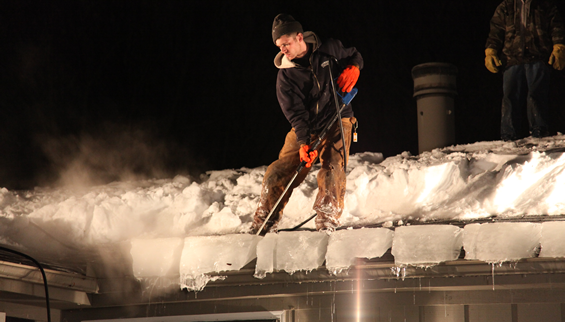
Each band is followed by a clearance and a cold night, and that is the cycle doing the damage. Meltwater released during the day sets at the eave after dark, and the ridge at the gutter line gains a layer every time.
Ice-barrier practice in Webster County
What matters on a Fort Dodge roof is not whether ice barrier exists but how far up it runs. Water backed up behind a foot of ice travels much further than the first course, and a membrane that stops short is a membrane that stops working.
Ice Dam Removal in Fort Dodge: How The Work Runs
If water already got inside
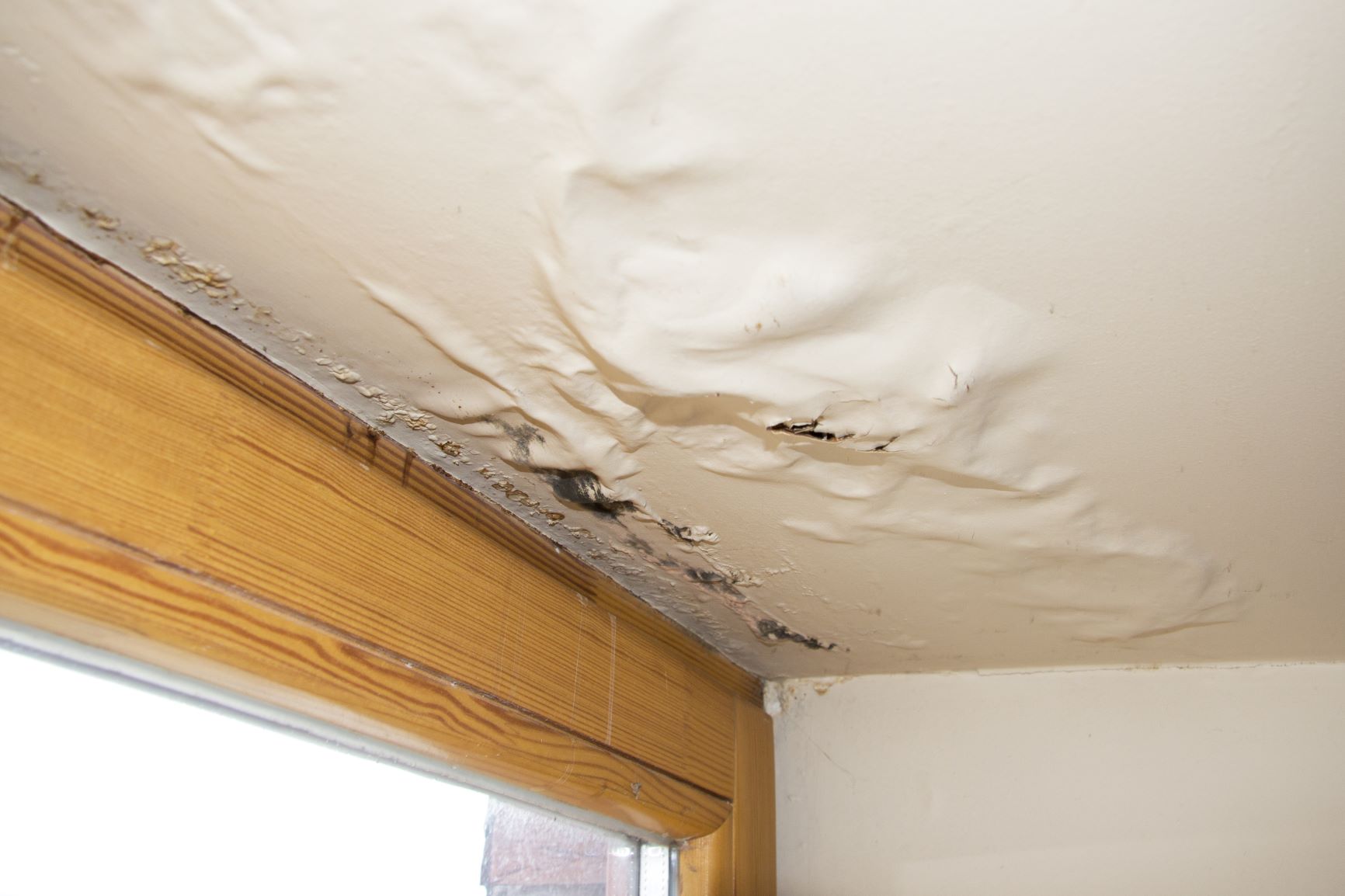
Taking the ice off stops new water. It does nothing about what is already in the insulation, the ceiling and the walls of a Fort Dodge home. Water Stain on the Ceiling in Winter.
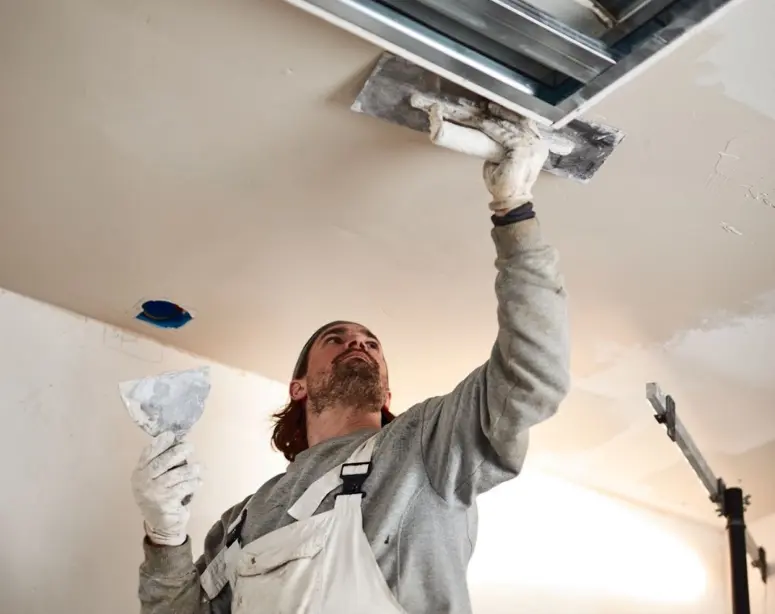
The same company handles the rest: water mitigation and dryout, mold remediation where the water has led to growth, the interior repair, and the roof where the dam damaged it, all documented on one insurance claim.
Why the gutter has to be cleared in the same visit
A dam sitting above a gutter packed solid with ice is only half the problem. Clear the eave and leave the trough frozen, and the next day's meltwater has nowhere to run — it backs up onto the roof and the dam rebuilds from the bottom.
Crews steam the trough and the downspout through to daylight on the same visit. It adds time, which is why the hour estimate given on the phone accounts for it, and it is the difference between a fix and a repeat visit in Fort Dodge the following week.
Access, ladders and what the crew needs on site
Steam equipment needs somewhere to park within hose reach, and ladders need footing that is not a buried flower bed or a sheet of ice. Clearing a path to the affected eave, moving vehicles off the driveway and unlocking a side gate takes ten minutes and saves considerably more than that on the clock.
Where the only access is through a neighbor's property, that conversation is worth having before the crew is in the street rather than while it waits.
Why the dam formed in the first place
Ice dams are a heat problem wearing a weather costume. Warm air escaping into the attic melts snow on the upper roof; that meltwater runs to the eave, which hangs past the heated envelope and stays below freezing; it refreezes there, and the ridge of ice grows a layer every cycle. Removal is the emergency fix. Before the crew leaves you will know which part of your attic is feeding it.
What happens after the ice is off
Once the eave is clear and water is draining, the crew walks the interior with you where there is visible damage and says plainly whether it needs drying. Wet insulation and a damp ceiling cavity do not resolve themselves in a cold Fort Dodge February.
If it does, that is a separate scope and it gets written separately — nobody is upsold a dryout on the strength of one damp patch.
What you get in Fort Dodge
- Gutters cleared tooTrough and downspout steamed through to daylight in the same visit
- Photographed as we workDated before and after images and a written scope your adjuster will accept
- Same-day dispatchActive interior leaks go to the front of the schedule during a freeze event
| Local ice-barrier practice | Eave membrane expected on re-roofs |
|---|---|
| Pricing model | Billed by the crew hour, rate quoted before dispatch |
| Primary climate stressor | Lake-effect bands, wet heavy pack |
| Typical scope | Steam, 6-12 crew hours typical |
| Coverage area | Fort Dodge and Webster County |
| Service | Ice Dam Removal in Fort Dodge, IA |
| Dispatch window | Same day to 24 hours |
Neighborhoods and Towns We Reach From Fort Dodge
Crews working Fort Dodge cover the adjoining communities on the same route — Otho, Badger, Duncombe, Vincent and Moorland — so a storm week usually means one truck handling several addresses in Webster County rather than separate trips.
Nearest hub towns with their own ice dam removal pages: Ames, Ankeny, Johnston, Urbandale, Waukee, Mason City.
When a storm hits Webster County, crews are dispatched by severity rather than by call order — water already inside the house goes first.
Most jobs do not stop at one service. Ice Dam Removal in Fort Dodge often runs alongside water mitigation & dryout in Fort Dodge, and both get written into one scope rather than billed as separate visits.
Active leak right now? Our 24/7 Fort Dodge steam ice dam removal crews are dispatched first during a freeze event. Call (888) 561-9664.