


Long Winters, Layered Ice: The Caledonia County Problem
The defining feature of a Caledonia County winter is persistence. It is not one storm, it is a continuous load sitting on the roof from late fall through to a spring thaw.

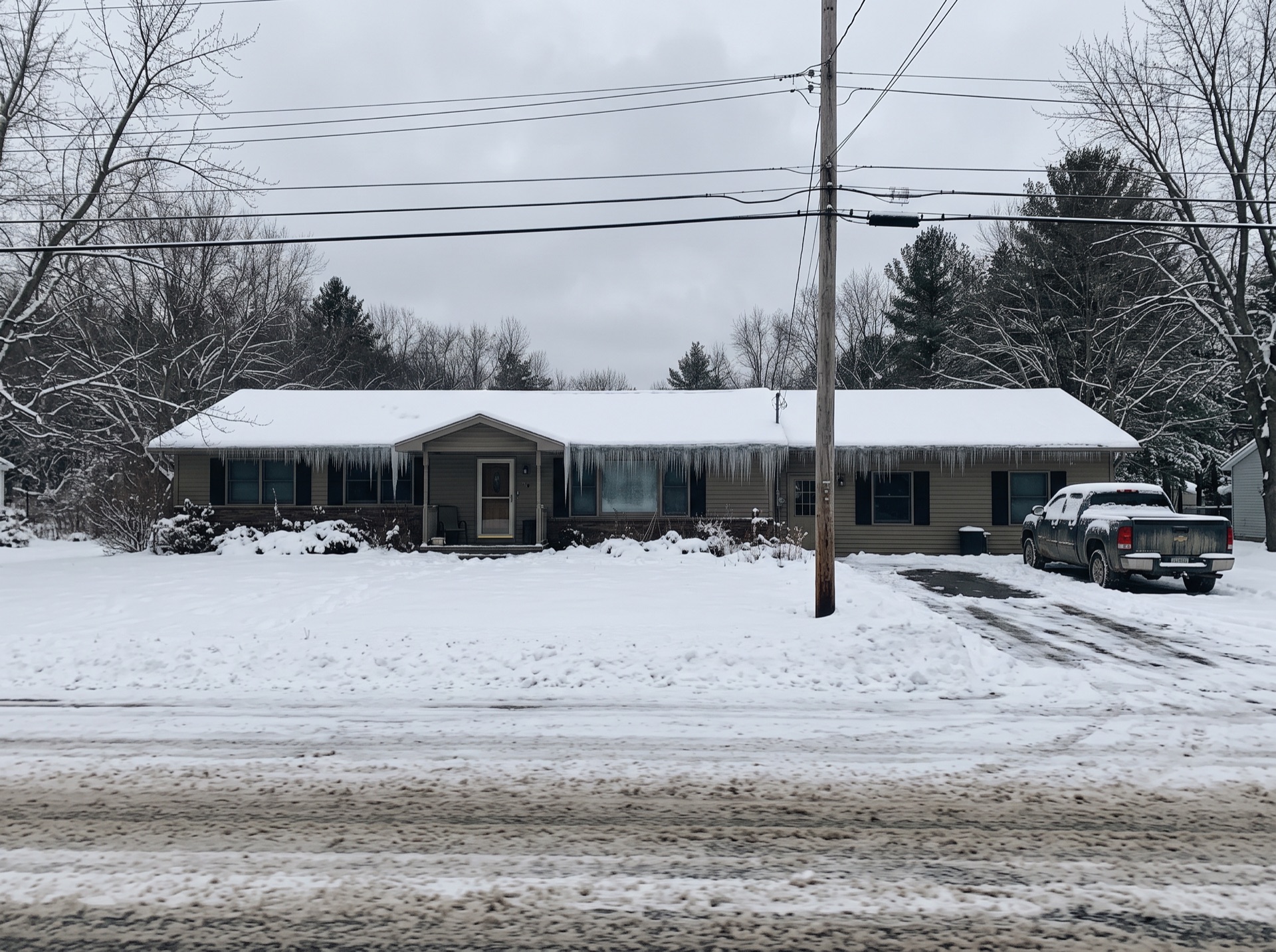
Every mild afternoon through that stretch releases a little meltwater, and every cold night sets it at the overhang. Done fifty times, that is how an eave ends up carrying several hundred pounds of ice by March.
Ice-barrier practice in Caledonia County
In the colder Vermont jurisdictions the membrane requirement extends well up the roof plane rather than stopping at the first course, precisely because the ice here does not stay near the edge.
How a St. Johnsbury Steam Call Runs, Start to Finish
Crews walk the eaves, valleys and gutter line first and photograph every dam and every point where water is tracking inside, before touching anything. You get shown what they found and quoted the crew-hour rate before work starts.
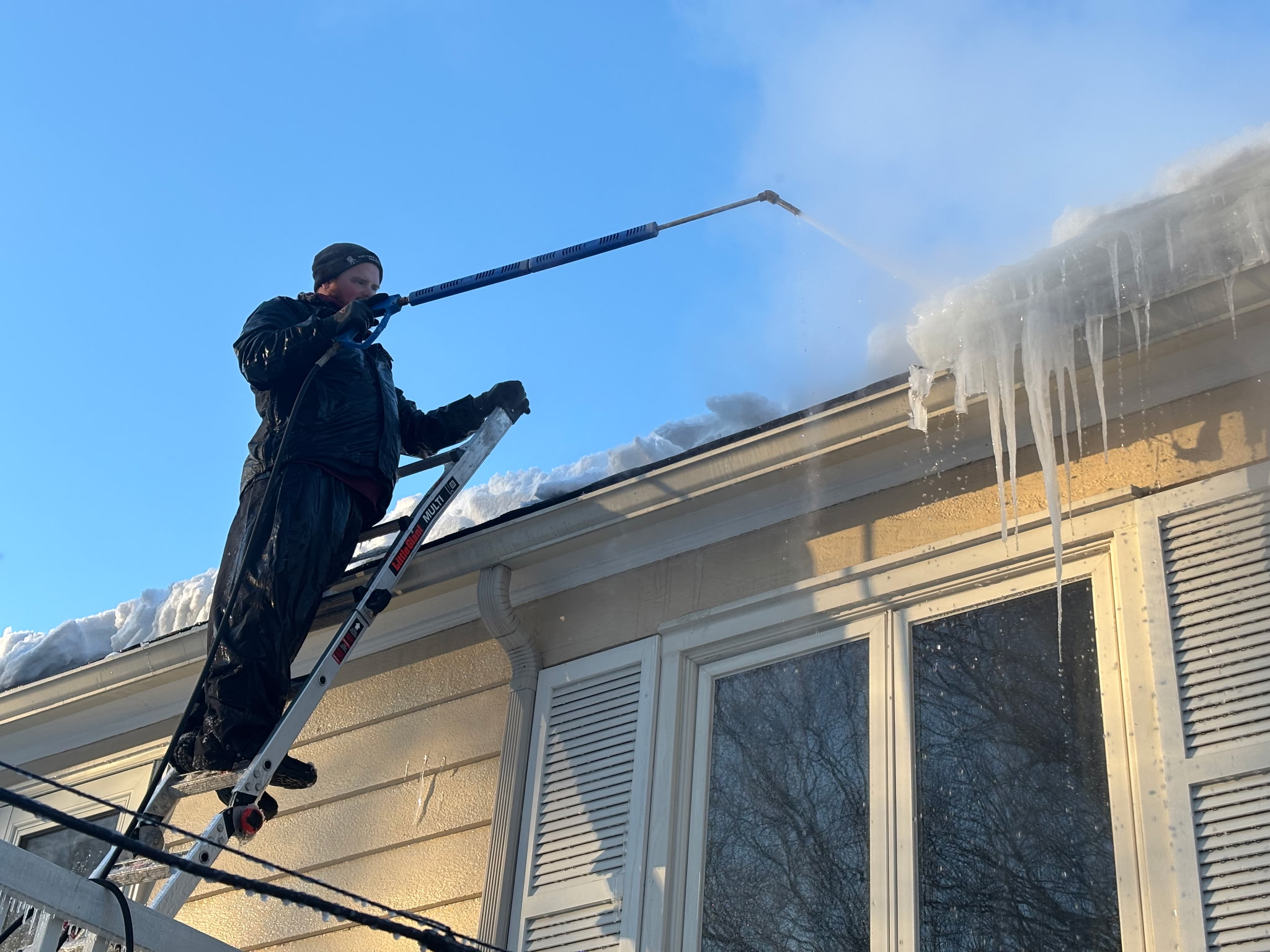
Then the ice comes off with low-pressure steam, starting wherever water is actively backing up so drainage opens early. Frozen gutters and downspouts are cleared in the same visit, because a cleared eave above a solid block of ice in the gutter dams again on the next cold night.
How long a removal actually takes
A single-story eave with a thin dam and clear gutters is often an hour or two. A two-story St. Johnsbury house with ice standing a foot deep across the front, frozen downspouts and a valley packed solid is most of a day for a two-man crew. The honest answer on the phone is a range and the reason for it, not a number designed to win the booking.
The estimate is revised out loud if the roof turns out worse than it looked from the ground, before the extra hours are worked rather than after they appear on the invoice.
Why a drainage channel is not removal
Cutting a few channels through a dam so water can get past is quick and it is sometimes sold as ice dam removal. It drains the roof for as long as the channels stay open, which in a St. Johnsbury cold snap can be a single night before they close again.
Removing the dam means taking the ice off down to the shingle along the whole affected run, so the eave can drain the way it was built to. It takes longer and it is the only version that holds.
What the dam has already done to the gutter and fascia
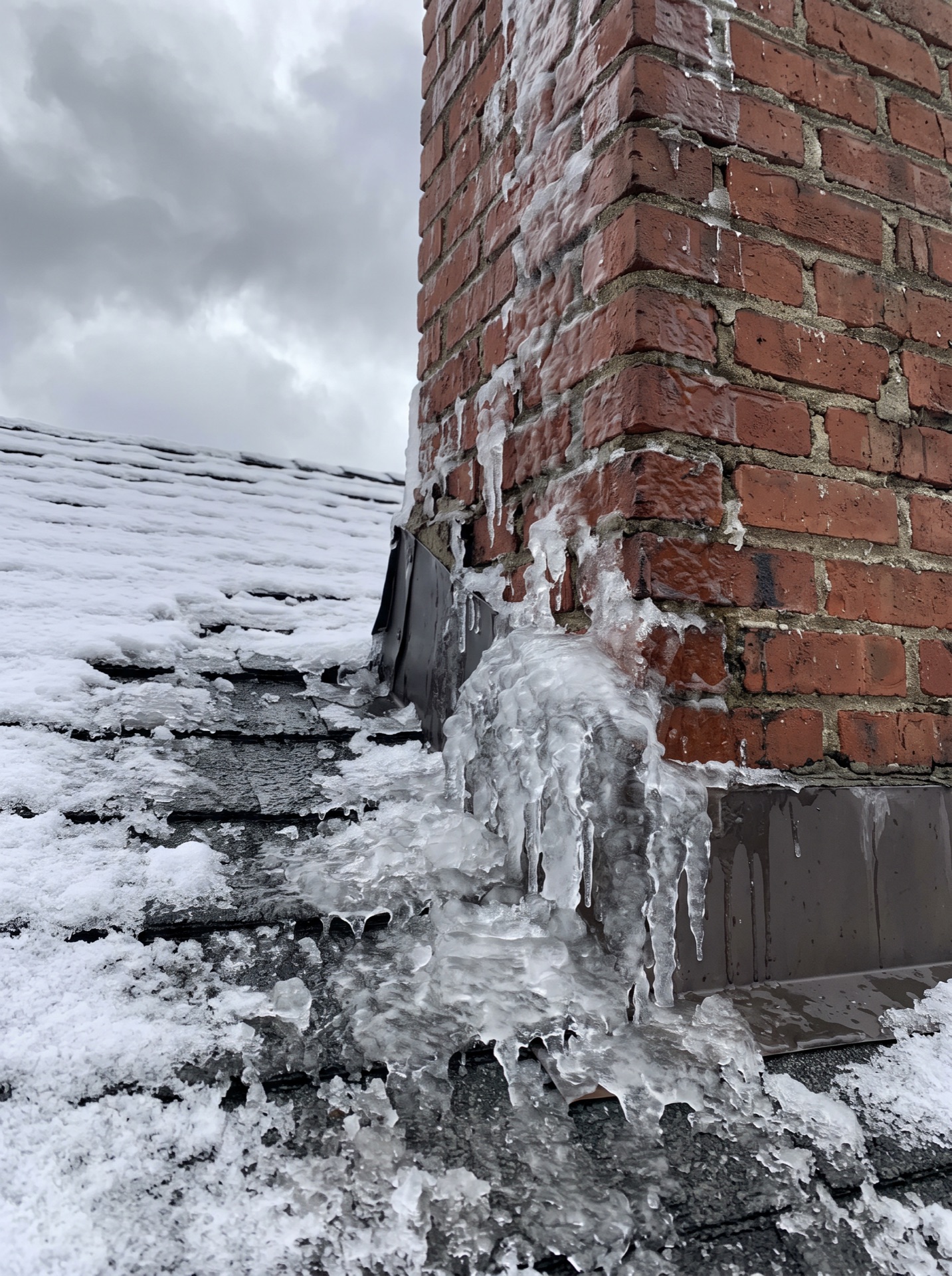
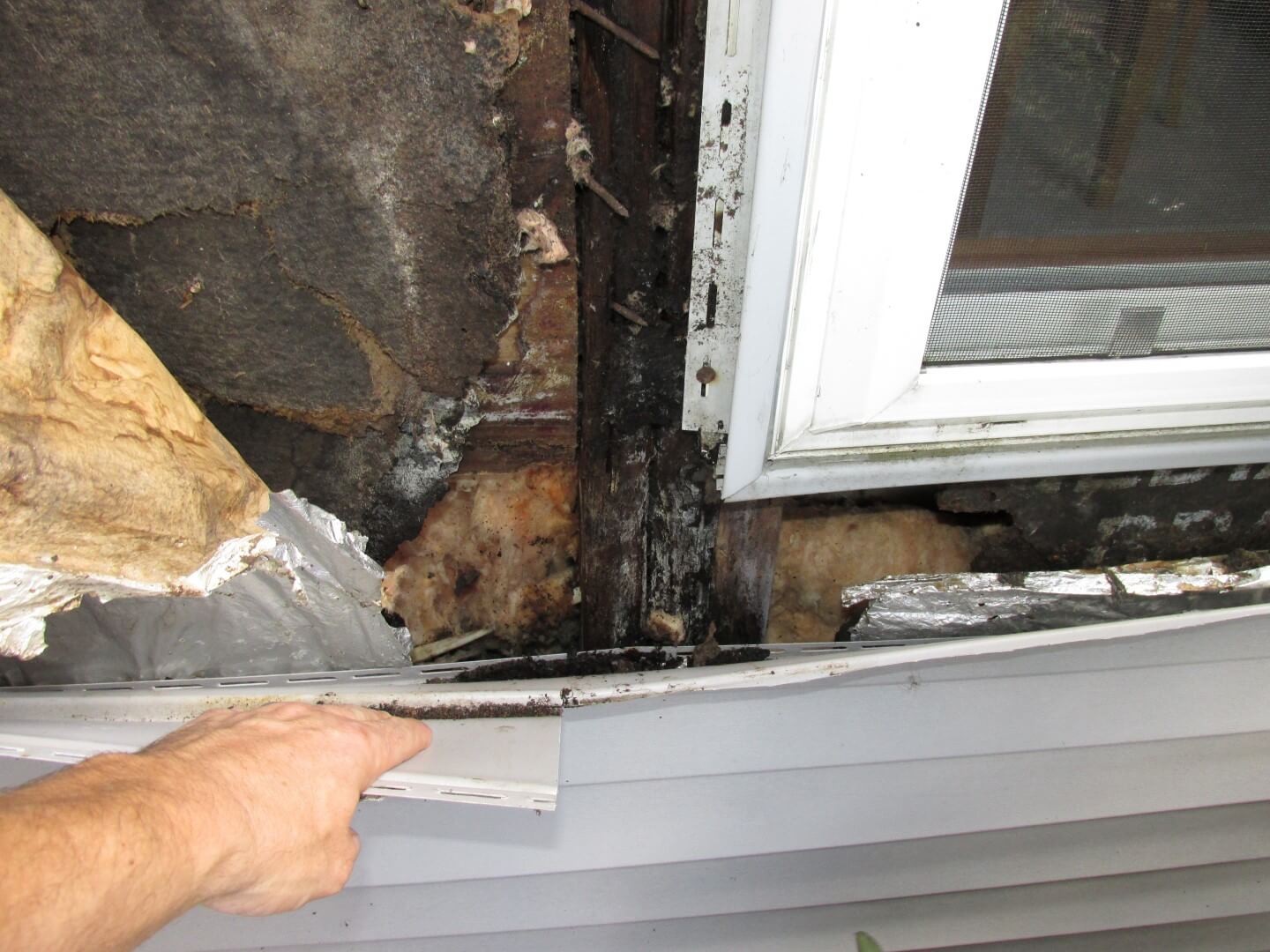
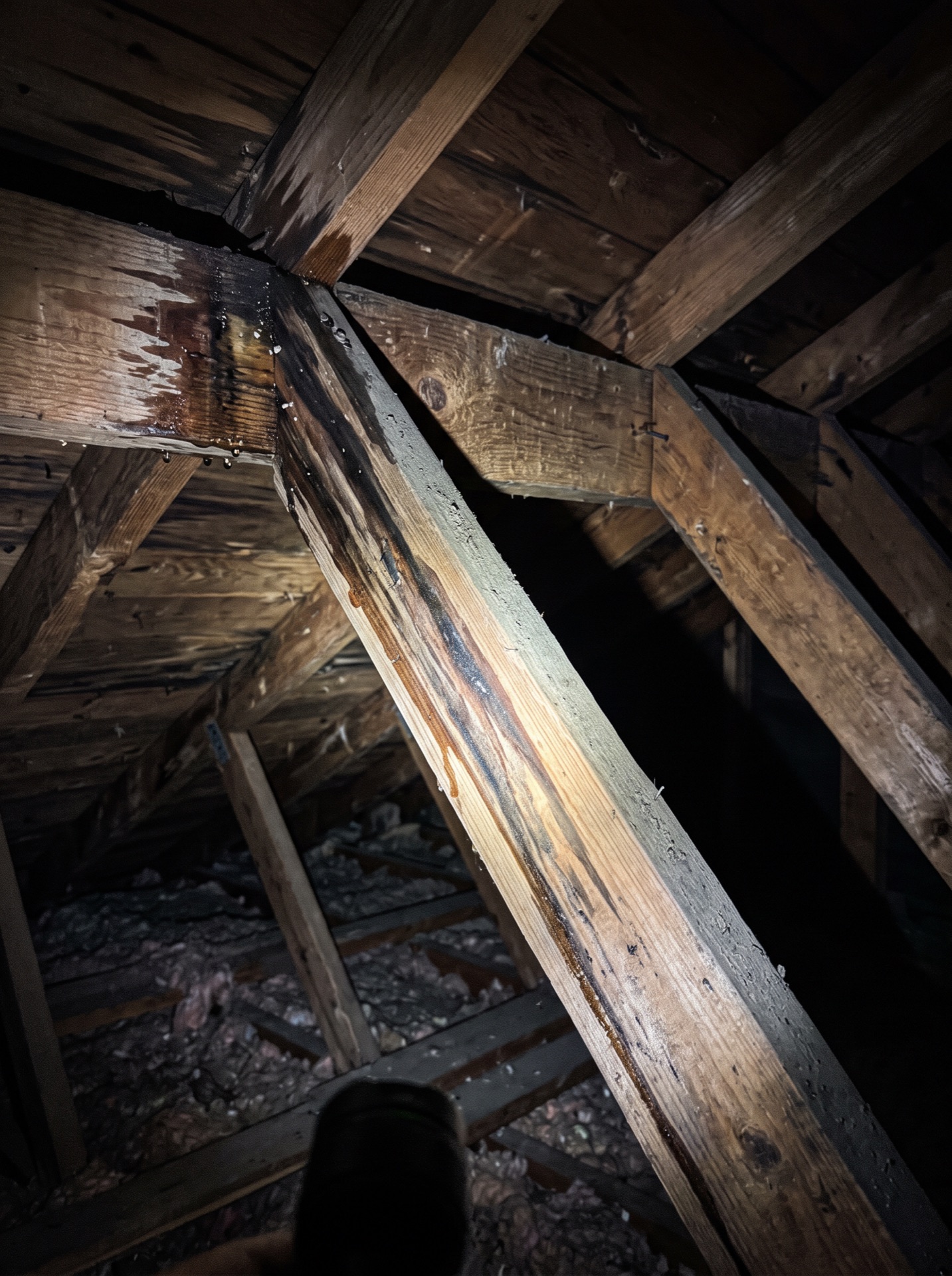
Ice expands as it forms, and a trough packed solid pushes the gutter away from the fascia a little more every cycle. By the time the dam is thick enough to leak, the hangers are often pulled, the back of the trough has lifted, and the fascia board behind it has been wet for weeks.
None of that is visible until the ice is off. It gets photographed when it appears, because a bent gutter found in February is a great deal easier to argue about with a carrier than one discovered in May.
| Dispatch window | Same day to 24 hours |
|---|---|
| Primary climate stressor | Sustained sub-freezing, long season |
| Local ice-barrier practice | Eave membrane required on new work |
| Documentation | Dated before and after photos, written scope in Xactimate line items |
| Coverage area | St. Johnsbury and Caledonia County |
| Typical scope | Steam, 6-14 crew hours typical |
| Pricing model | Billed by the crew hour, rate quoted before dispatch |
Where We Dispatch Around St. Johnsbury
Crews working St. Johnsbury cover the adjoining communities on the same route — Saint Johnsbury, Saint Johnsbury Center, East Saint Johnsbury, Passumpsic and Danville — so a storm week usually means one truck handling several addresses in Caledonia County rather than separate trips.
Nearest hub towns with their own crew pages: Barre, Montpelier, Stowe, Williston, Essex, Hartford.
Coverage runs across St. Johnsbury and the nearby towns all winter, and capacity is surged into whichever Vermont market the storm actually hits.
Active leak at an address in St. Johnsbury? (888) 561-9664 reaches dispatch directly. Interior water moves a job to the front of the day.