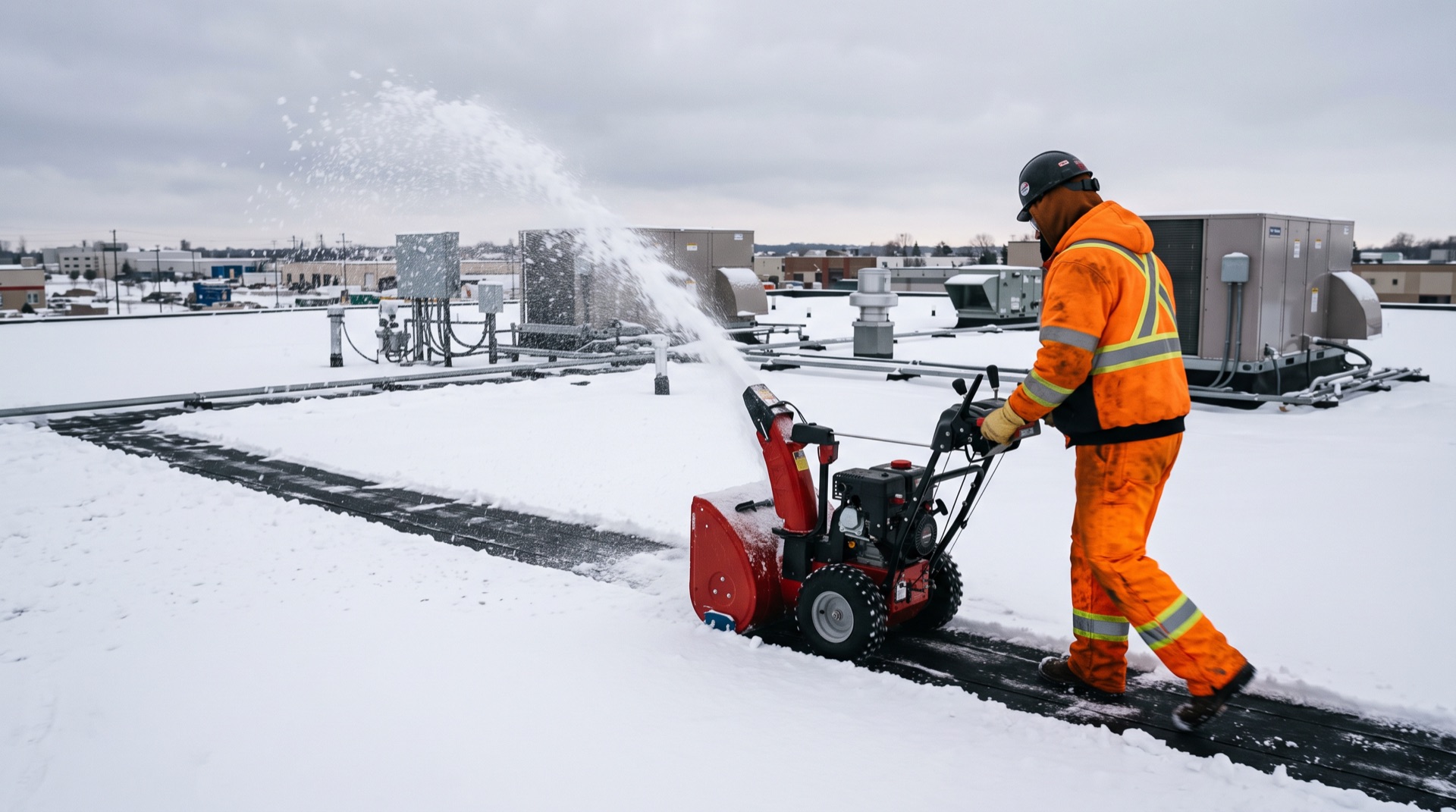
A St. Albans roof can look fine from the driveway and still be backing water under the shingles at the eave, where nobody can see it. As part of our complete St. Albans winter roof services, crews handle commercial roof snow removal across Franklin County.
St. Albans Ice Dams and the Winter That Does Not Break
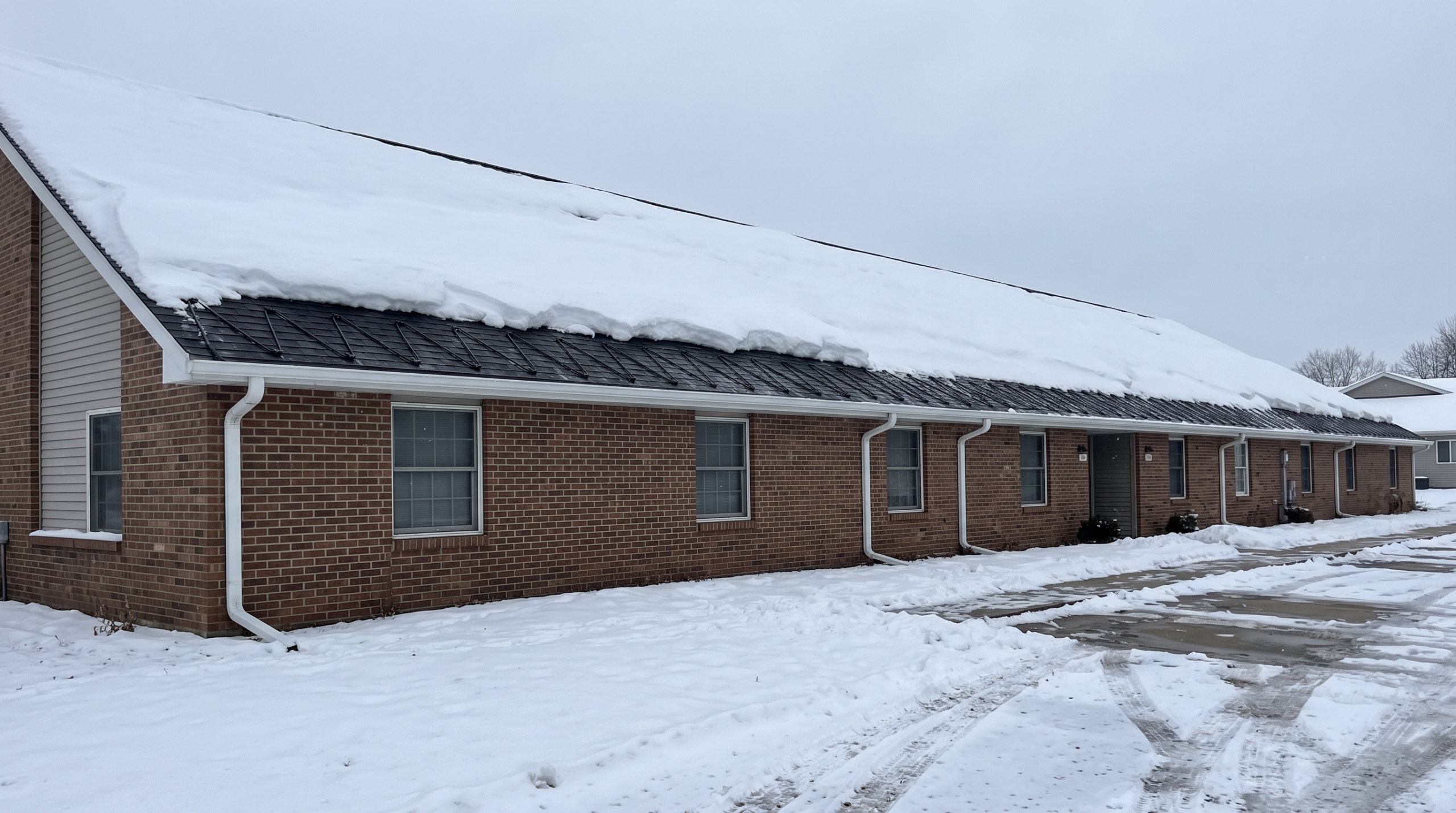
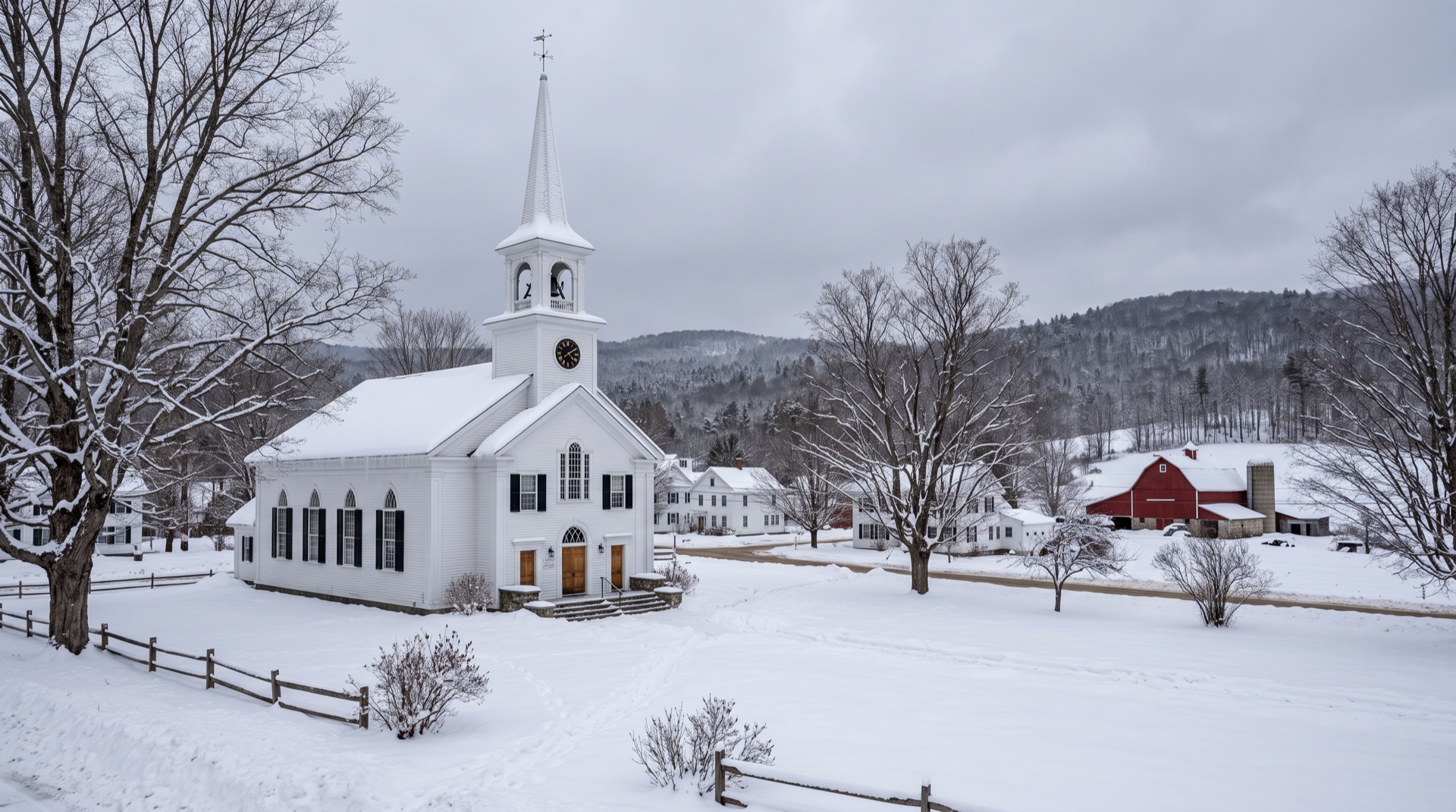
Snow that falls on a roof in St. Albans in December tends to stay there. A pack that never fully clears is a pack that keeps feeding meltwater to the same eave for months on end.

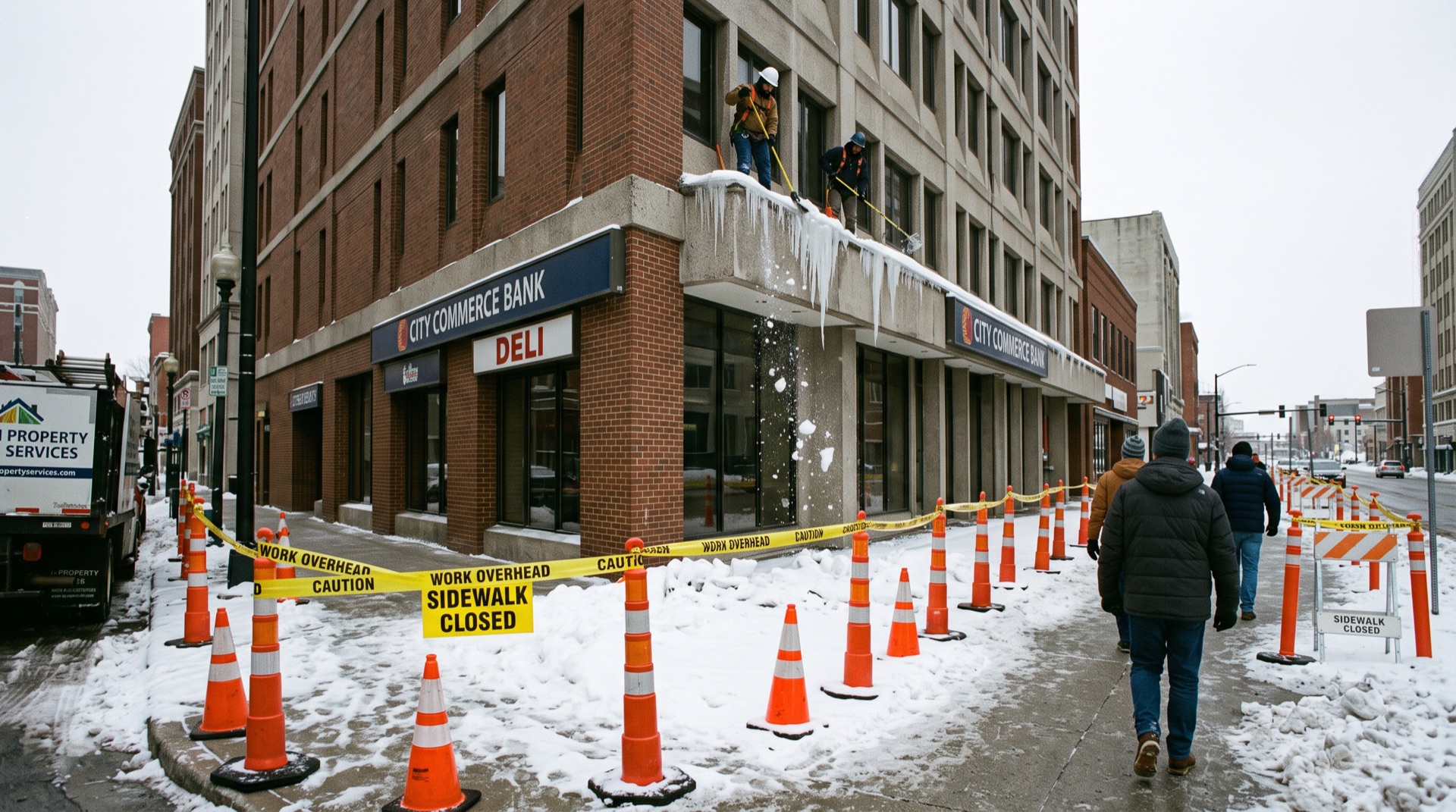
The ice that comes off a roof in St. Albans in February is rarely one event's worth. It is a laminated record of the whole season, which is why it is thick, dense and firmly bonded to the shingle.
Ice-barrier practice in Franklin County
Because the ice here does not stay near the edge, the Vermont requirement generally runs the membrane well up the roof plane. On a house in St. Albans roofed a few decades ago it is frequently missing entirely.
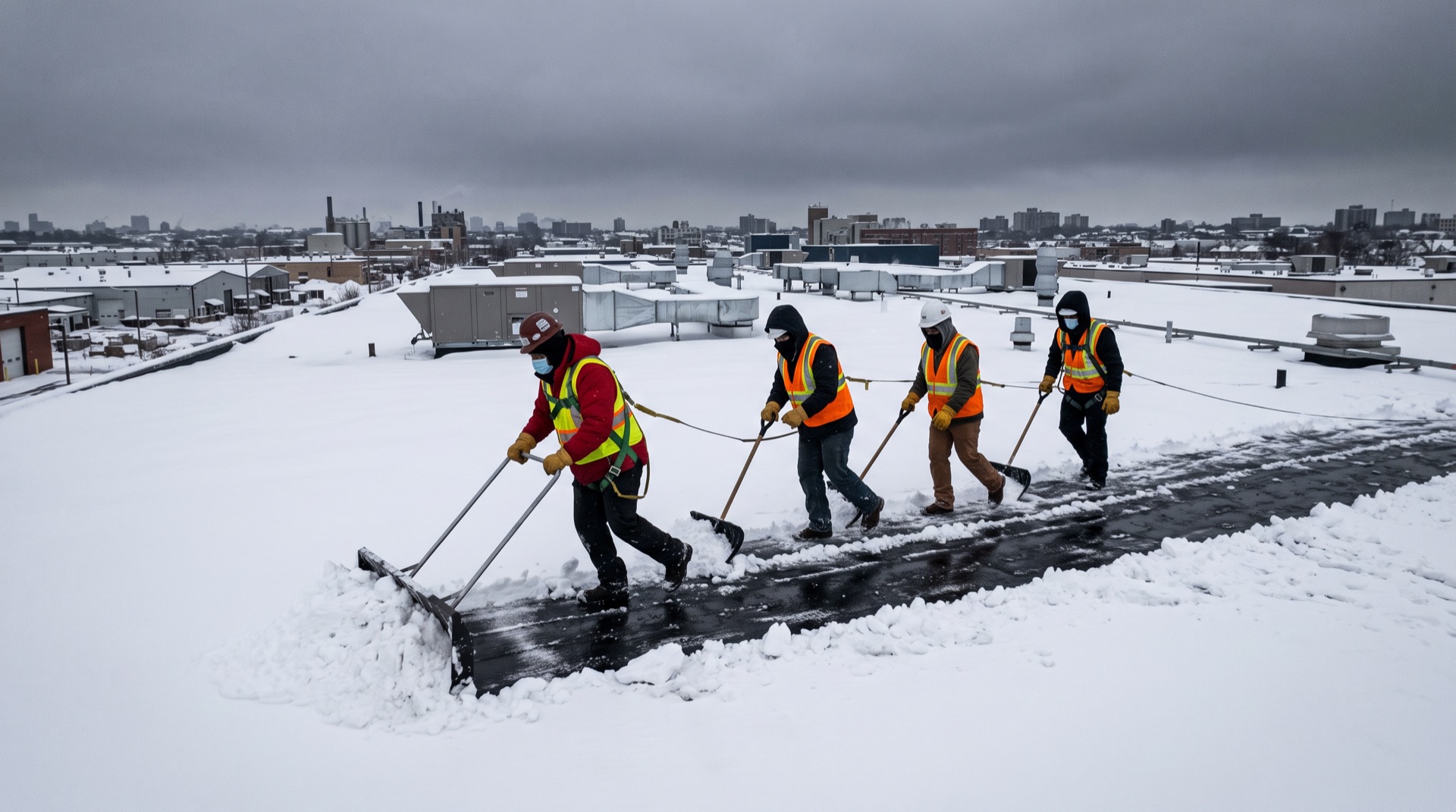
Commercial Roof Snow Removal in St. Albans: How The Work Runs
Why large decks carry the most risk
A long-span steel or open-web joist roof has the least margin exactly where the drift is deepest — mid-span. Snow does not settle evenly either: it piles against parapets, behind rooftop units, in the lee of higher adjoining roofs, and in valleys between bays. The average depth across the roof is not the number that matters. Ceiling Sagging or Bulging After Snow.
Crews survey depth and density at the drift points rather than the middle of the field, and calculate the working load from that against the structure's design capacity.
Ponding after the clear
Taking the snow off a flat roof with frozen drains leaves meltwater with nowhere to go, and water that ponds and refreezes puts load back on a deck that was just relieved.
So drains and overflows are opened as part of the clear rather than afterwards, and the roof is left draining. A clear that stops at the snow is half a job.
Unbalanced loading is the real hazard
Snow does not settle evenly on a large deck. It piles against parapets, behind rooftop units, in the lee of a higher adjoining roof and in the valleys between bays.
Clearing has to be balanced for the same reason. Taking it all off one bay and none off the next shifts the load rather than removing it.
Reduction, not bare deck
The goal is to bring the load under threshold safely, not to scrape a roof in St. Albans clean. Clearing is balanced across the deck so load is not shifted onto one bay, drains and scuppers are opened so melt has an exit, and a cushion layer always stays on the membrane.
Where the figures call for it, crews bring in crane-assisted picks instead of adding bodies to a roof that is already carrying too much.
Reading the design load off the drawings
Where structural drawings exist they state the design ground snow load and the roof's own capacity, and that number turns the whole question from opinion into arithmetic. Measured depth and density against design capacity gives a percentage rather than an argument.
Where the drawings have been lost - common on older St. Albans stock - the conservative assumption is the code minimum of the era the building went up, which is usually well below what a modern roof would be built to.
What you get in St. Albans
- Portfolio routesStanding storm schedules with per-visit condition reports
- Overflows opened firstDrains and scuppers cleared before the load comes off
- Drains kept openScuppers and internal drains cleared so meltwater has an exit
| Documentation | Dated before and after photos, written scope in Xactimate line items |
|---|---|
| Typical scope | Steam, 6-14 crew hours typical |
| Coverage area | St. Albans and Franklin County |
| Service | Commercial Roof Snow Removal in St. Albans, VT |
| Removal method | Low-pressure steam only. No chipping, salt or pressure washing. |
| Local ice-barrier practice | Eave membrane required on new work |
| Primary climate stressor | Sustained sub-freezing, long season |
St. Albans Coverage and the Adjoining Communities
Crews working St. Albans cover the adjoining communities on the same route — Saint Albans, Saint Albans Bay, Fairfield, Swanton and Sheldon — so a storm week usually means one truck handling several addresses in Franklin County rather than separate trips.
Nearest hub towns with their own commercial snow pages: Milton, Colchester, Essex, Winooski, Burlington, South Burlington.
During a cold snap St. Albans gets worked alongside the neighboring Franklin County towns on the same route, with active interior leaks moved to the front of the list.
Most jobs do not stop at one service. Commercial Snow in St. Albans often runs alongside crane-assisted snow removal in St. Albans, and both get written into one scope rather than billed as separate visits.
Active leak right now? Our 24/7 St. Albans steam ice dam removal crews are dispatched first during a freeze event. Call (888) 561-9664.