Skip to content
Sioux Falls, SD
IICRC S500 Standard · Lincoln County

Ice Dam Water Mitigation in Sioux Falls, SD — Northern Winter Crews

Ice Dam Now handles water mitigation & dryout for Sioux Falls, SD homes and the wider Lincoln County. Wet and moldy material comes out, the structure is dried to a measured standard, and the same crews put the insulation, drywall and paint back. Dated photographs and moisture logs go into one claim with the ice dam removal and any roof damage.

Containment and HEPA — Barriers and air scrubbers wherever tear-out is required
Electrical made safe — Circuits killed where water reached fixtures, before equipment goes in
Interior repair in-house — Drywall, insulation, texture, trim and paint put back by the same company
Extraction first — Standing water out before anything else starts

Get Ice Dam Help Sioux Falls

A few quick questions, then pick a time. If water is coming in, call instead.

What is the zip code of the home?

Roof leaking right now? Call (888) 561-9664 — that is faster than any form.
Water coming through the ceiling?Every hour an ice dam sits there, more water gets under the shingles.Call (888) 561-9664
Same Day
For Water Already Inside
Steam
Safe On Every Covering
Lincoln
County Coverage
Insured
Harness-Certified On Every Roof
Written
Scope Before Work Starts

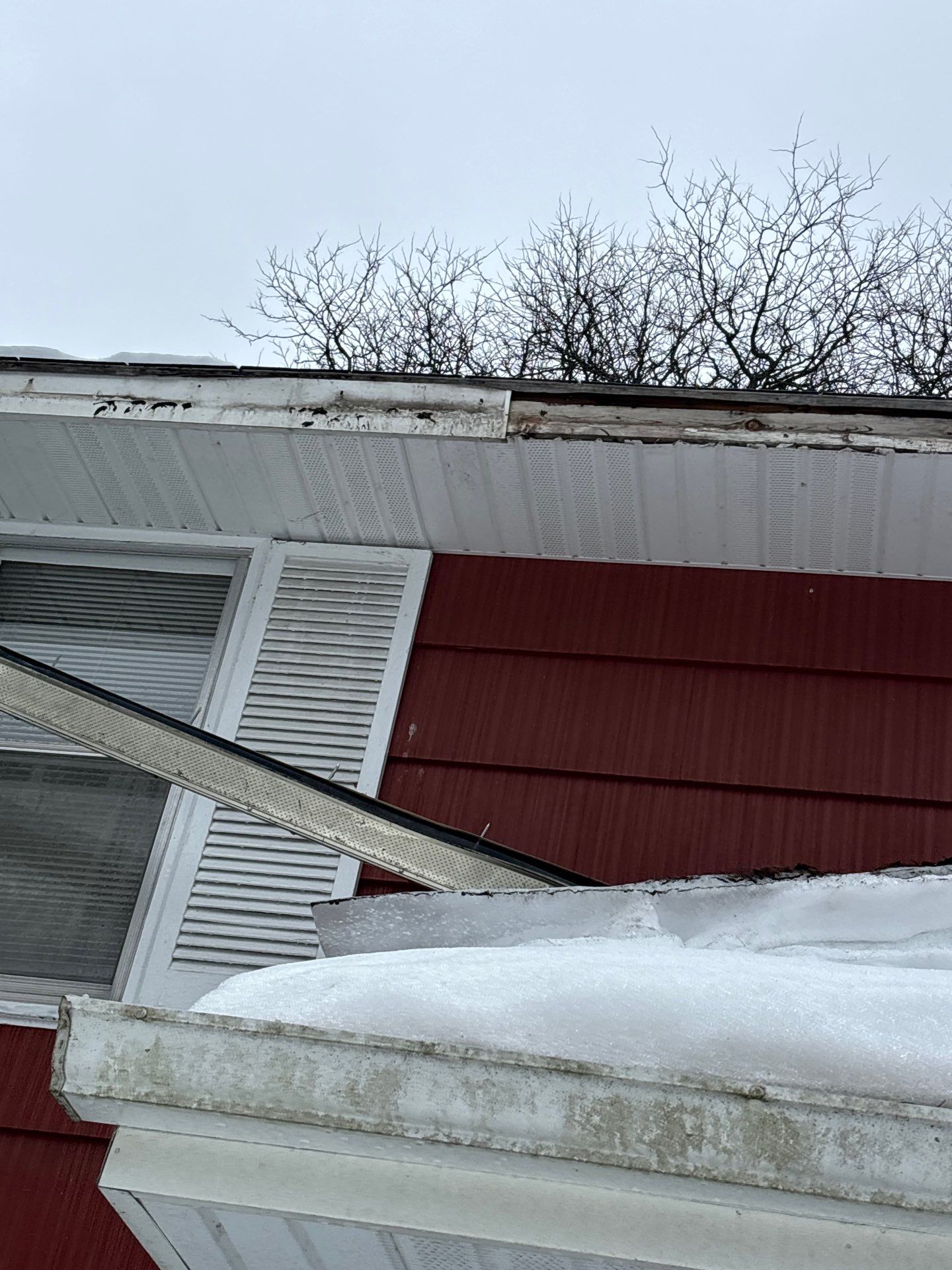
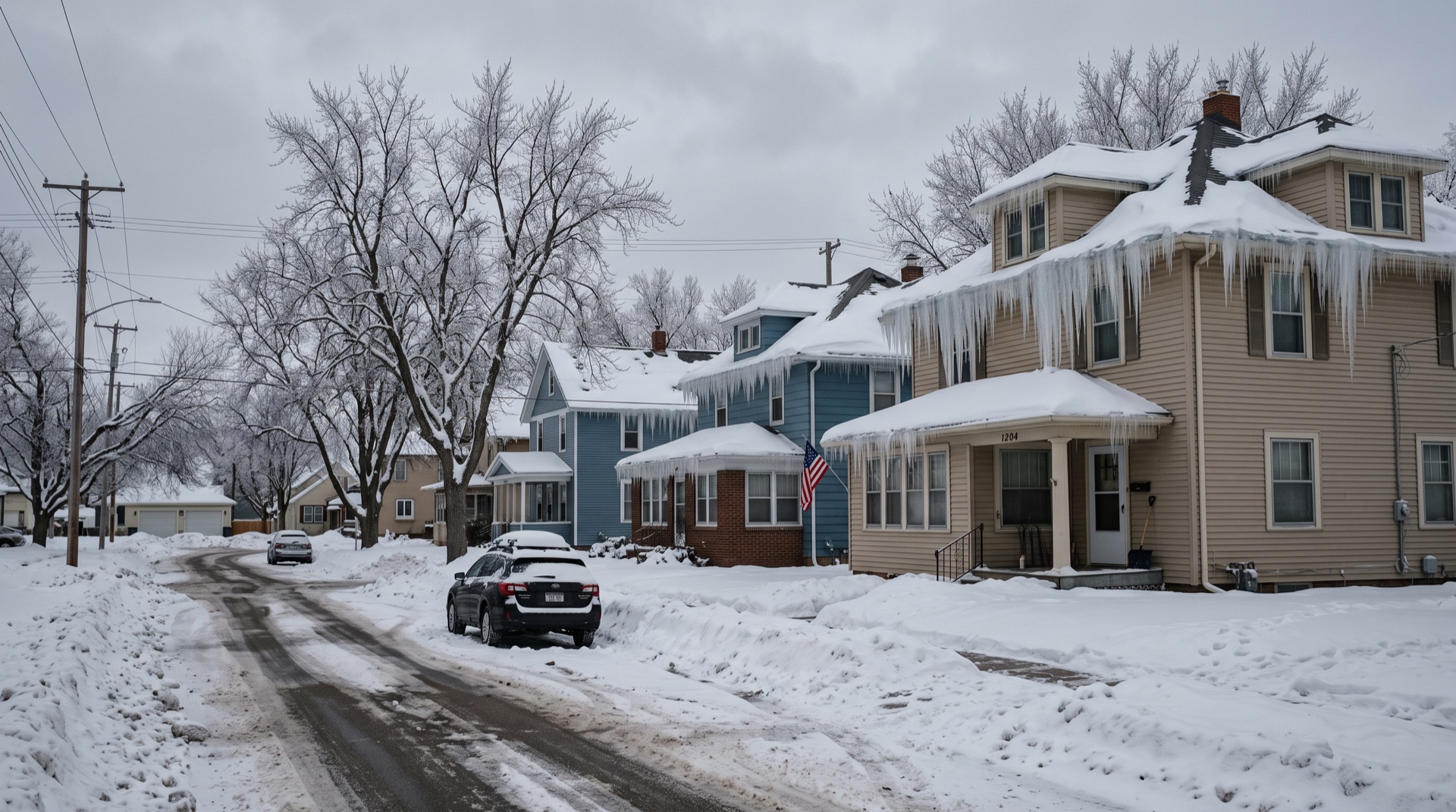
If you are in Sioux Falls watching icicles grow along the gutter line, what you are really watching is water that no longer has anywhere to drain. As part of our complete Sioux Falls winter roof services, crews handle water mitigation & dryout across Lincoln County.

Months of Load: Why Sioux Falls Eaves Carry Ice

Snow that falls on a roof in Sioux Falls in December tends to stay there. A pack that never fully clears is a pack that keeps feeding meltwater to the same eave for months on end.

Diagram showing how ice dams form on a roof from heat loss and snow melt
Heat escaping into the attic melts roof snow; the meltwater refreezes at the cold eave and the dam grows a layer every cycle.

Depth accumulates faster than people expect because nothing in between melts it away. By February a Sioux Falls eave can be carrying several hundred pounds of ice with standing water sitting behind the whole length of it.

Ice-barrier practice in Lincoln County

Ice barrier at the eaves is a standard requirement on new work across South Dakota. The question on any particular Sioux Falls house is when it was last roofed, because that decides whether it is there at all.

Water Mitigation & Dryout in Sioux Falls: How The Work Runs

Drying to a number, not to a look

Air movers and dehumidifiers get placed to the room's volume and the moisture load, not scattered around. Readings are taken daily on framing, sheathing and drywall until they hit the dry standard for that material. Wet Insulation in the Attic.

In a Sioux Falls winter, with cold cavities and dry outside air, that generally takes longer than people expect. The job closes on the readings, not on appearance.

Electrical safety where water reached fixtures

Water running into a ceiling light, a fan box or down inside a wall to a panel is an electrical matter before it is a drying matter. Affected circuits get killed before any equipment goes in.

That is standard on every Sioux Falls job where water reached a fixture, and it is worth saying out loud because homeowners often reach for a wet fixture first.

Containment before tear-out

Where drywall or insulation has to come out, barriers go up and HEPA scrubbers run inside them. That keeps the dust and whatever is growing in the wet material out of the rest of the house.

It also keeps the job to one room rather than the whole floor, which on an occupied Sioux Falls home is the difference between staying and moving out.

Why wet insulation comes out rather than dries

Saturated cellulose and fiberglass hold water against framing and sheathing for weeks, and in a cold attic there is no air movement to carry it off. It also stops insulating, which warms the deck and feeds the next dam.

So it comes out. On an attic in Sioux Falls that is usually the single biggest step toward the structure actually drying.

From dry to finished: the interior repair

Mitigation ends when the readings hit standard. The repair starts right after, with the same company: new insulation, drywall hung and finished, texture matched, trim replaced and painted, and flooring where it did not recover.

Keeping it in-house means one scope, one claim and one set of documentation from the first photograph in Sioux Falls to the last coat of paint, rather than a dried-out room sitting open while you look for a contractor.

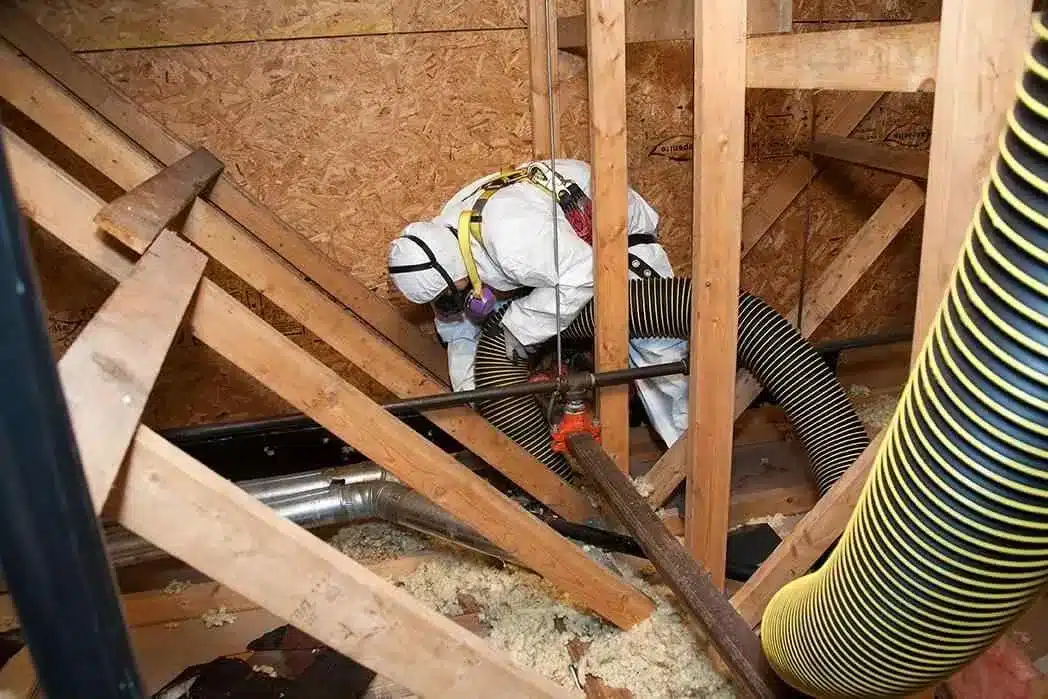
technician in Tyvek suit and respirator removing contaminated pink insulation in attic
A remediation technician removes mold-contaminated insulation from a tight attic space following ice dam damage.

What you get in Sioux Falls

  • Wet insulation removedIt cannot be dried in place and it holds water against the framing
  • Extraction firstStanding water out before anything else starts
  • Documented to standardDaily moisture readings until the structure meets IICRC S500 dry standard
Water Mitigation & Dryout in Sioux Falls, SD — specification
Service specification for Sioux Falls, SD
Primary climate stressorSustained sub-freezing, long season
Interior repairInsulation, drywall, texture, trim and paint, done in-house after drying
Coverage areaSioux Falls and Lincoln County
DocumentationDated before and after photos, written scope in Xactimate line items
Local ice-barrier practiceEave membrane required on new work
ServiceWater Mitigation & Dryout in Sioux Falls, SD
BillingXactimate line items on one claim; carrier billed directly where the policy allows

Neighborhoods and Towns We Reach From Sioux Falls

Crews working Sioux Falls cover the adjoining communities on the same route — Harrisburg, Tea, Rowena, Renner and Brandon — so a storm week usually means one truck handling several addresses in Lincoln County rather than separate trips.

Nearest hub towns with their own water mitigation pages: Yankton, Brookings, Mitchell, Watertown, Aberdeen, Pierre.

Sioux Falls sits inside the regular South Dakota service area, so a crew is usually scheduled the same day or the following morning.

Most jobs do not stop at one service. Water Mitigation in Sioux Falls often runs alongside ice dam removal in Sioux Falls, and both get written into one scope rather than billed as separate visits.

Active leak right now? Our 24/7 Sioux Falls steam ice dam removal crews are dispatched first during a freeze event. Call (888) 561-9664.

One Event, One Claim

Everything The Ice Dam Caused In Sioux Falls, On One Claim

Taking the ice off is usually the cheapest part. The water that already got in, the mold it leaves, the ceiling that has to come down and sometimes the roof itself are one loss event, so they go on one insurance claim, handled by one company.

How it goes on the claim

  • One loss, one claim number. Removal, mitigation, mold, interior repair and roof damage from the same ice dam are reported as one event.
  • Broken out by coverage. Mitigation, mold (often under its own sublimit), interior repair and the roof are written as separate Xactimate sections, so a question on one line does not hold up the rest.
  • Documented the whole way. Dated photographs and moisture readings run from the ice on the roof to the finished room, from one company, in one file.
  • Honest about the limits. Coverage depends on your policy. A roof that was simply old is not storm damage, and you and your carrier make the coverage decision.
Ice Dam Claims In Sioux Falls
Conditions We Work In

Water Mitigation & Dryout In Practice

Conditions crews work in across Lincoln County. Every job is photographed before and after.

plastic containment sheeting and air mover set up inside living room after water damage
Plastic containment barriers and a commercial air mover protect the living area during water damage remediation.
contractor using drill to repair ceiling drywall after ice dam water damage
A contractor drills into a water-damaged ceiling where drywall was removed to expose insulation after ice dam damage.
technician in Tyvek suit and respirator removing contaminated pink insulation in attic
A remediation technician removes mold-contaminated insulation from a tight attic space following ice dam damage.
FAQ

Sioux Falls and Lincoln County FAQ

It is billed by the crew hour, and the rate plus a realistic time estimate are quoted on the phone before anyone is dispatched.

  • Scope drives the hours: length and thickness of the ice, roof pitch and height, and whether the gutters are frozen solid.
  • Access matters too — a three-story Sioux Falls roof takes longer to set up on than a ranch.
  • The invoice matches the quote. There are no surprise add-ons written on the tailgate.

Because ice dams are made by heat loss, and two houses on the same street rarely leak heat the same way.

  • Attic air leaks around can lights, bath fans and the attic hatch are the usual source.
  • Crushed or missing soffit baffles stop the intake ventilation that would otherwise keep the deck cold.
  • An addition or dormer built over unheated space puts warm air right against a cold eave.
  • Local factor: sustained sub-freezing spells makes the difference show up faster here than it would further south.

Often for the interior water damage, sometimes for the removal itself, but it depends entirely on your carrier and policy wording.

  • Many policies treat emergency mitigation separately under a duty to protect property clause.
  • Denials usually cite the maintenance exclusion, which dated photographs taken during the event are the direct counter to.
  • Crews photograph the dam, the entry points and the interior damage, and write the scope in Xactimate line items.
  • The coverage decision is between you and your carrier — no contractor can promise an outcome there.

Same day or next morning for most Sioux Falls calls, with active interior leaks moved to the front of the schedule.

  • During a freeze event crews run from first light until dark across Lincoln County.
  • The same route covers Harrisburg, Tea, Rowena, so several addresses are usually handled in one run.
  • Call rather than using the form if water is coming in — the phone is always faster.

Usually. The equipment needs a water supply and a place to park within hose reach, which is normally achievable even on a tight lot.

  • Hose runs of a few hundred feet are routine.
  • Street parking in a Lincoln County residential area is generally workable.
  • Tell dispatch about access on the call so the right setup arrives.

Three to five days is typical for a contained ceiling or wall area. Cold cavities, saturated insulation and a Sioux Falls winter with low ambient temperatures all extend it. The job ends on meter readings rather than on a calendar, and the daily log shows you where it is up to.

Given moisture and an organic surface, growth can begin within a couple of days. Cold slows it but does not stop it, and the spring warm-up finds whatever is still wet. That is why drying starts immediately rather than after the roof is sorted out.

Nearby

Water Mitigation In Towns Around Sioux Falls

Same-Day Response

Get A Sioux Falls Crew Out

Every freeze-thaw cycle adds another layer to the dam and pushes a little more water under the shingles. That clock is already running.

✓ Licensed & insured✓ Low-pressure steam only✓ Rate quoted up front✓ Photos for your claim
Online Quote(888) 561-9664