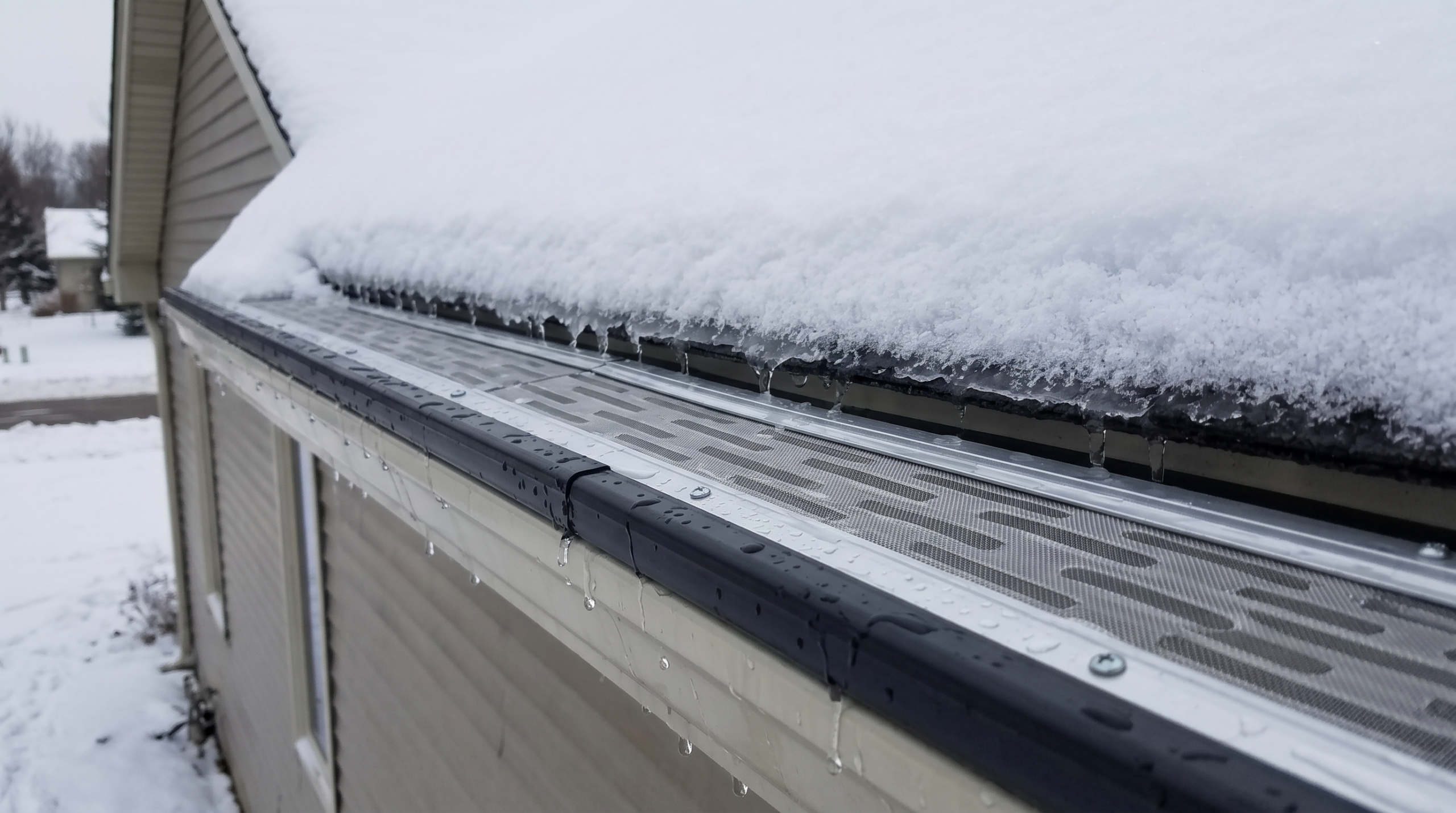
By the time a roof in Huntington has a visible ridge of ice at the eave, meltwater has already been pooling behind it for several freeze-thaw cycles. As part of our complete Huntington winter roof services, crews handle water mitigation & dryout across Cabell County.
Small Snow, Repeated Cycles: Huntington Ice Dams
Huntington does not need a blizzard to get an ice dam. A few inches that melts by afternoon and refreezes overnight builds one just as effectively, and it does it over and over through the season.

The building stock has no margin for it. Because the winters here read as mild, attics tend to be under-insulated, eave details are less considered, and ice barrier is as often absent as present on a roof in Huntington.
Ice-barrier practice in Cabell County
Because ice is not the first thing a homeowner in Huntington thinks about, the eave membrane is the detail most often value-engineered out of a re-roof quote. It is worth asking for by name.
Water Mitigation & Dryout in Huntington: How The Work Runs
Clean water does not stay clean
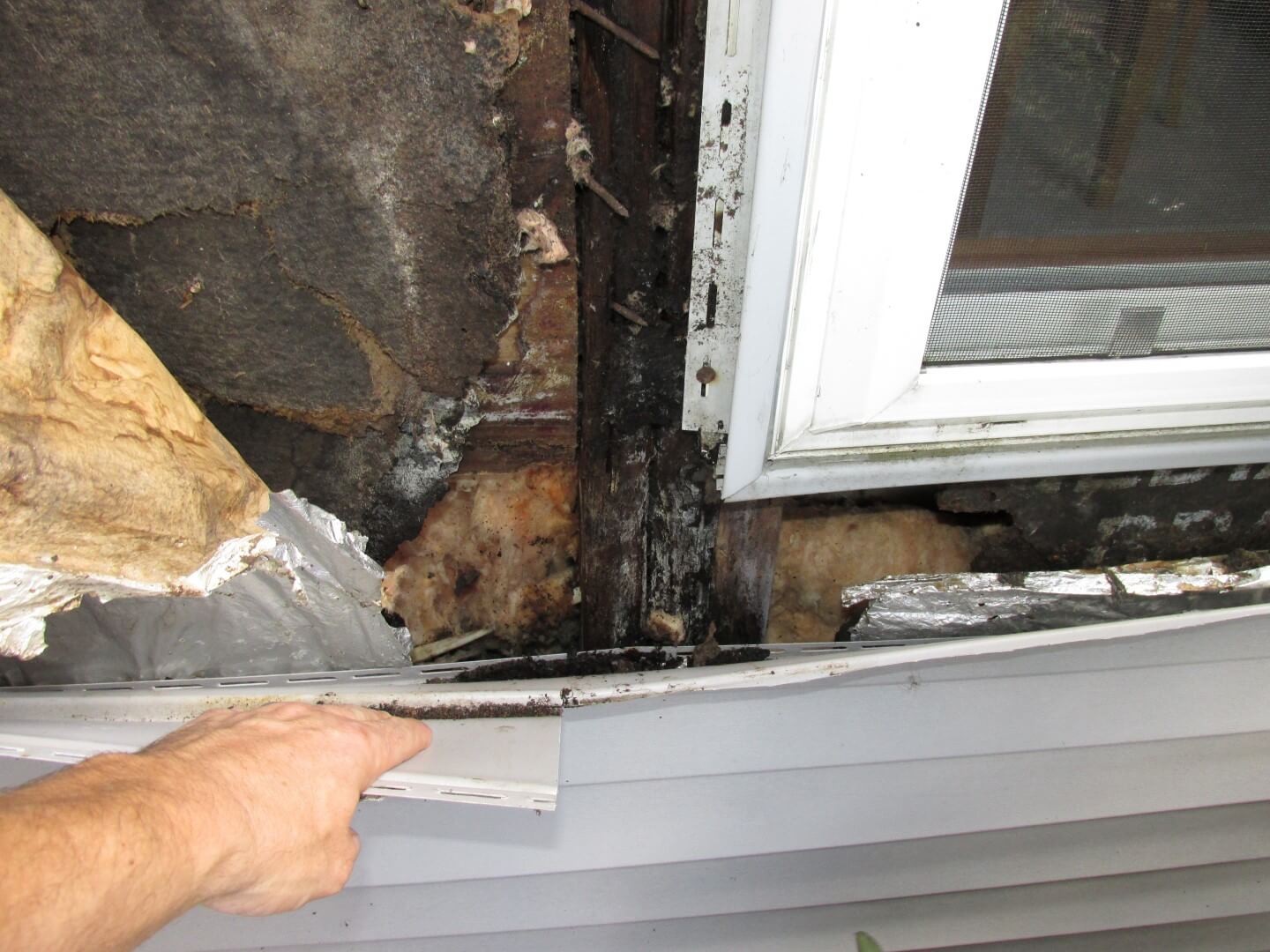
Meltwater off a roof starts as category one - essentially clean. It does not stay that way. Passing through old insulation, wall cavities, dust and whatever has accumulated in a ceiling plane for forty years degrades it, and standing more than a day or two degrades it again. Wet Insulation in the Attic.
That classification drives what can be dried in place and what has to be removed, and it is the reason a leak dealt with on day one is a smaller job than the identical leak dealt with on day five.
Electrical safety where water reached fixtures
Water running into a ceiling light, a fan box or down inside a wall to a panel is an electrical matter before it is a drying matter. Affected circuits get killed before any equipment goes in.
That is standard on every Huntington job where water reached a fixture, and it is worth saying out loud because homeowners often reach for a wet fixture first.
Why a cold attic will not dry itself
Drying is evaporation, and evaporation needs warmth and air movement. A Huntington attic in February has neither. Wet insulation and damp sheathing sit at near-freezing with no meaningful vapor drive, which is why a leak that stops in January can still be wet in March.
Equipment supplies what the season does not. Without it the structure is not drying slowly - in a cold cavity it is very largely not drying at all.
Dry does not mean dry
A ceiling stain stops spreading long before the cavity behind it is dry. Wet cellulose and fiberglass hold water against the framing for weeks, and in a cold attic the evaporation that would normally handle it simply does not happen. That is how a January leak becomes a spring mold problem.
Mitigation means getting the structure back to a documented dry standard — not back to looking fine. Moisture meter readings on framing, sheathing and drywall are what close the job, not appearance.
Ceilings: when it comes down and when it stays
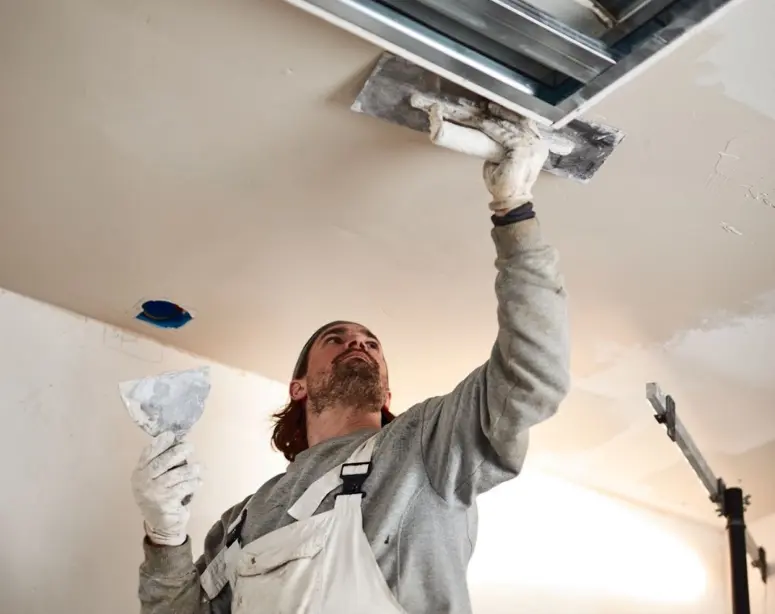
A stained ceiling is not automatically a demolished ceiling. Painted drywall that has been wetted once and can be dried from above through the insulation cavity will often flatten out and need nothing but paint.
What does come down is drywall that has lost its bond and gone soft, anything sagging under held water, textured or plaster ceilings that have delaminated, and any ceiling where the cavity above cannot be reached another way. The call is made with a meter, and shown to you before anything is opened.

What you get in Huntington
- Electrical made safeCircuits killed where water reached fixtures, before equipment goes in
- Documented to standardDaily moisture readings until the structure meets IICRC S500 dry standard
- Wet insulation removedIt cannot be dried in place and it holds water against the framing
| Coverage area | Huntington and Cabell County |
|---|---|
| Documentation | Dated before and after photos, written scope in Xactimate line items |
| Service | Water Mitigation & Dryout in Huntington, WV |
| Method | Containment, HEPA filtration and drying to a measured IICRC standard |
| Billing | Xactimate line items on one claim; carrier billed directly where the policy allows |
| Interior repair | Insulation, drywall, texture, trim and paint, done in-house after drying |
| Local ice-barrier practice | Eave membrane on new work, often absent |
Neighborhoods and Towns We Reach From Huntington
Crews working Huntington cover the adjoining communities on the same route — Lavalette, Shoals, Ceredo, Kenova and Barboursville — so a storm week usually means one truck handling several addresses in Cabell County rather than separate trips.
Nearest hub towns with their own water mitigation pages: Charleston, Parkersburg, Beckley, Lewisburg, Snowshoe, Clarksburg.
Coverage runs across Huntington and the nearby towns all winter, and capacity is surged into whichever West Virginia market the storm actually hits.
Most jobs do not stop at one service. Water Mitigation in Huntington often runs alongside ice dam removal in Huntington, and both get written into one scope rather than billed as separate visits.
Active leak right now? Our 24/7 Huntington steam ice dam removal crews are dispatched first during a freeze event. Call (888) 561-9664.