Skip to content
Eugene, OR
24/7 Emergency Steam · Lane County

Ice Dam Removal in Eugene, OR — High‑Altitude Response

Ice Dam Removal in Eugene, OR from Ice Dam Now: low-pressure steam only, across Lane County. No chipping, no salt, no pressure washing. Crews carry licensing, insurance and fall-protection certification, bill by the crew hour at a rate quoted on the phone, prioritize active interior leaks the same day, and document the work for insurance.

Cleared to the shingle — The dam comes off completely, not just a drainage channel cut through it
Photographed as we work — Dated before and after images and a written scope your adjuster will accept
Steam only — Safe on asphalt, cedar, slate, tile and metal — no chipping, no pressure, no salt
Same-day dispatch — Active interior leaks go to the front of the schedule during a freeze event

Get Ice Dam Help Eugene

A few quick questions, then pick a time. If water is coming in, call instead.

What is the zip code of the home?

Roof leaking right now? Call (888) 561-9664 — that is faster than any form.
Water coming through the ceiling?Every hour an ice dam sits there, more water gets under the shingles.Call (888) 561-9664
24/7
Storm Season Dispatch
No Chipping
Steam Only
Lane
County Coverage
Crew Hour
Rate Quoted Up Front
Documented
Photos On Every Job

The ice along a roof in Eugeneline is the symptom. The cause is warm air escaping into the attic, and it is still running right now. As part of our complete Eugene winter roof services, crews handle ice dam removal across Lane County.

Eugene Ice Dams: Melting on Days It Never Thaws

Altitude makes the sun stronger and the air colder at the same time. A roof in Eugene can be producing meltwater on its south face at midday while the thermometer reads well below freezing.

Diagram showing how ice dams form on roofs due to inadequate insulation and poor ventilation
Heat escaping into the attic melts roof snow; the meltwater refreezes at the cold eave and the dam grows a layer every cycle.

Aspect decides everything here. The sunny plane sheds water that the shaded plane and the shaded eave then lock up, so one side of a roof in Eugene is clear while the other carries a wall of ice.

Ice-barrier practice in Lane County

Design snow loads up here are among the highest in the country, and the membrane and retention details that come with them are not paperwork. On an older Eugene cabin neither is likely to be present.

Ice Dam Removal in Eugene: How The Work Runs

How long a removal actually takes

A single-story eave with a thin dam and clear gutters is often an hour or two. A two-story Eugene house with ice standing a foot deep across the front, frozen downspouts and a valley packed solid is most of a day for a two-man crew. The honest answer on the phone is a range and the reason for it, not a number designed to win the booking. Water Stain on the Ceiling in Winter.

The estimate is revised out loud if the roof turns out worse than it looked from the ground, before the extra hours are worked rather than after they appear on the invoice.

What gets photographed, and why it matters later

Before the lance comes out, the crew shoots the dam from the ground and from the roof, the icicle line, any staining visible inside, and the specific courses where water is tracking under the shingles. Timestamps are on every frame.

That record is the whole case if a claim follows. An adjuster arriving in March sees a dry roof and a stained ceiling; the photographs are what connect the two, and they are what a maintenance-exclusion denial runs into.

What the crew does on arrival

Before anything is touched, the crew walks the eaves, valleys and gutter line and photographs every dam and every point where water is tracking inside. You get shown what they found. Then the dam comes off in sections, starting wherever water is actively backing up, so drainage opens early rather than at the end.

Downspouts and gutter troughs get cleared in the same visit where they are frozen, because a dam removed above a solid block of ice in the gutter just reforms in the next cold night.

What the dam has already done to the gutter and fascia

Ice expands as it forms, and a trough packed solid pushes the gutter away from the fascia a little more every cycle. By the time the dam is thick enough to leak, the hangers are often pulled, the back of the trough has lifted, and the fascia board behind it has been wet for weeks.

None of that is visible until the ice is off. It gets photographed when it appears, because a bent gutter found in February is a great deal easier to argue about with a carrier than one discovered in May.

Working at night and during an active storm

Freeze events do not keep office hours, and the worst leaks tend to announce themselves in the evening when the day's melt refreezes. Crews run lit, and a roof that is actively collecting snow is worked anyway, because waiting for better weather means the dam is bigger when somebody finally gets to it.

What does stop a crew is wind and lightning. Both are judgment calls made on site in Eugene, and a postponed start gets explained rather than dressed up.

Worker on ladder using steam wand to remove ice dam from snowy roof
A professional uses a steam wand from a ladder to safely melt and remove a heavy ice dam from a residential roof.

What you get in Eugene

  • Same-day dispatchActive interior leaks go to the front of the schedule during a freeze event
  • Cleared to the shingleThe dam comes off completely, not just a drainage channel cut through it
  • Gutters cleared tooTrough and downspout steamed through to daylight in the same visit
Ice Dam Removal in Eugene, OR — specification
Service specification for Eugene, OR
Typical scopeSteam, 8-16 crew hours typical
Dispatch window24 to 48 hours in mountain terrain
Local ice-barrier practiceExtended membrane plus snow retention
DocumentationDated before and after photos, written scope in Xactimate line items
Primary climate stressorSolar melt on deep pack, shaded eaves
Removal methodLow-pressure steam only. No chipping, salt or pressure washing.
Pricing modelBilled by the crew hour, rate quoted before dispatch

Neighborhoods and Towns We Reach From Eugene

Crews working Eugene cover the adjoining communities on the same route — Thurston, Alvadore, Junction City, Pleasant Hill and Creswell — so a storm week usually means one truck handling several addresses in Lane County rather than separate trips.

Nearest hub towns with their own ice dam removal pages: Springfield, Corvallis, Albany, Salem, Keizer, McMinnville.

When a storm hits Lane County, crews are dispatched by severity rather than by call order — water already inside the house goes first.

Most jobs do not stop at one service. Ice Dam Removal in Eugene often runs alongside water mitigation & dryout in Eugene, and both get written into one scope rather than billed as separate visits.

Active leak right now? Our 24/7 Eugene steam ice dam removal crews are dispatched first during a freeze event. Call (888) 561-9664.


One Event, One Claim

Everything The Ice Dam Caused In Eugene, On One Claim

Taking the ice off is usually the cheapest part. The water that already got in, the mold it leaves, the ceiling that has to come down and sometimes the roof itself are one loss event, so they go on one insurance claim, handled by one company.

How it goes on the claim

  • One loss, one claim number. Removal, mitigation, mold, interior repair and roof damage from the same ice dam are reported as one event.
  • Broken out by coverage. Mitigation, mold (often under its own sublimit), interior repair and the roof are written as separate Xactimate sections, so a question on one line does not hold up the rest.
  • Documented the whole way. Dated photographs and moisture readings run from the ice on the roof to the finished room, from one company, in one file.
  • Honest about the limits. Coverage depends on your policy. A roof that was simply old is not storm damage, and you and your carrier make the coverage decision.
Ice Dam Claims In Eugene
Conditions We Work In

Ice Dam Removal In Practice

Conditions crews work in across Lane County. Every job is photographed before and after.

Worker removing ice dam from snow-covered roof with steaming tool
A roofing professional uses a steam tool to break up a heavy ice dam and icicles along a roof edge.
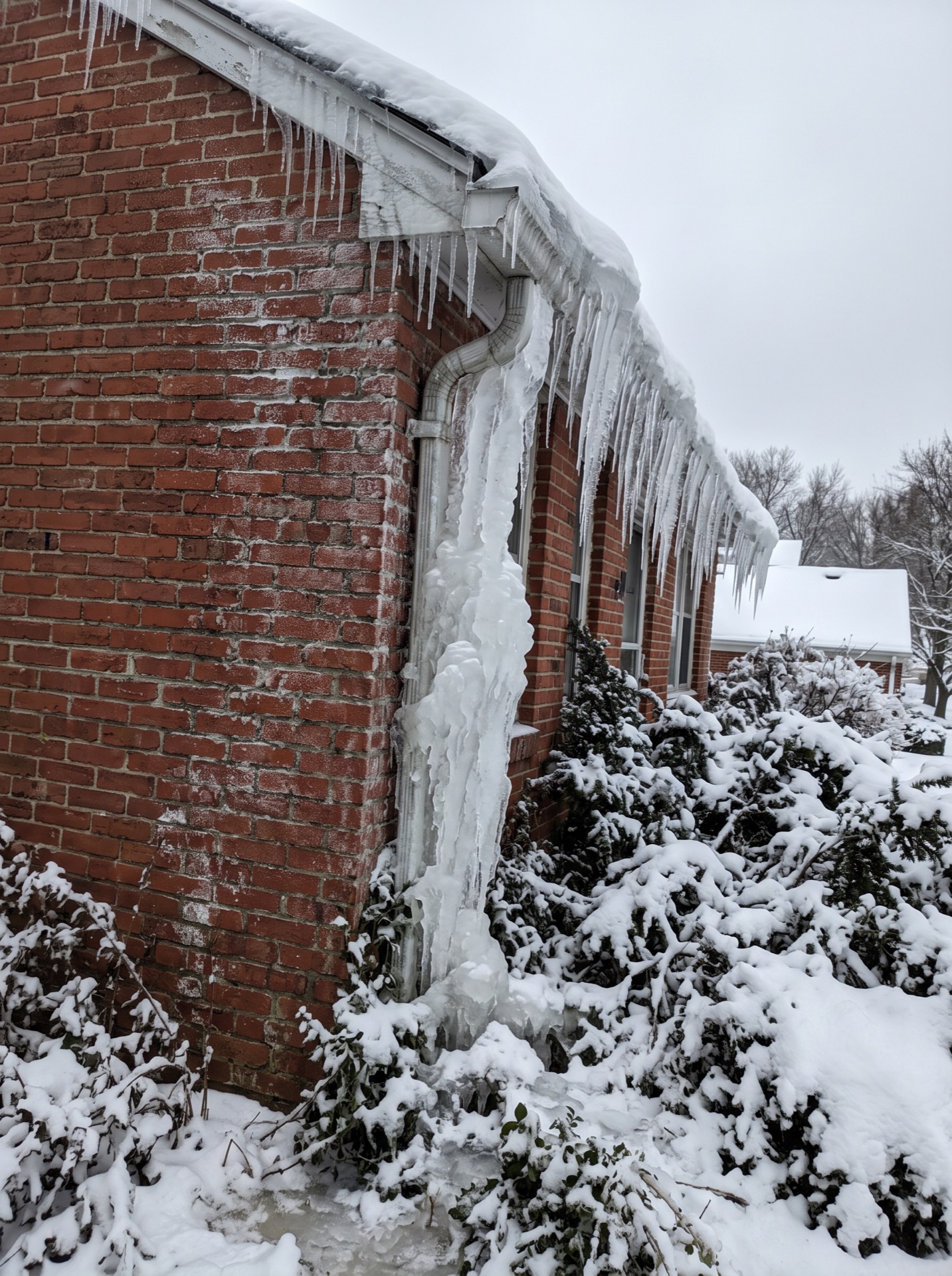
Large icicles and thick snow ice dam along roof edge of dark gray house
Heavy snow and a significant ice dam have formed along the eaves of this dark gray home.
Large icicles and ice dam forming along gutters of gray house in winter
Heavy ice dam and icicles hang from the gutters of a gray residential home after a winter storm.
FAQ

Local Questions About Eugene Roofs

It is billed by the crew hour, and the rate plus a realistic time estimate are quoted on the phone before anyone is dispatched.

  • Scope drives the hours: length and thickness of the ice, roof pitch and height, and whether the gutters are frozen solid.
  • Access matters too — a three-story Eugene roof takes longer to set up on than a ranch.
  • The invoice matches the quote. There are no surprise add-ons written on the tailgate.

Same day or next morning for most Eugene calls, with active interior leaks moved to the front of the schedule.

  • During a freeze event crews run from first light until dark across Lane County.
  • The same route covers Thurston, Alvadore, Junction City, so several addresses are usually handled in one run.
  • Call rather than using the form if water is coming in — the phone is always faster.

No, but there is a worse one: after the thaw, when the evidence has melted and the damage is all that is left.

  • Mid-storm calls are fine — crews work through freeze events.
  • An evening call for a leak that started that afternoon usually gets a next-morning slot.
  • Waiting for a weekend to pass is the most common and most expensive delay.

Yes. The dispatch area runs across Lane County, and several addresses in one area are usually handled in the same run.

  • Adjoining communities are on the same route rather than treated as a separate trip.
  • Rural addresses outside the normal radius get told the travel position on the call.
  • Capacity is moved into whichever part of Oregon the storm actually hits.

Because ice dams are made by heat loss, and two houses on the same street rarely leak heat the same way.

  • Attic air leaks around can lights, bath fans and the attic hatch are the usual source.
  • Crushed or missing soffit baffles stop the intake ventilation that would otherwise keep the deck cold.
  • An addition or dormer built over unheated space puts warm air right against a cold eave.
  • Local factor: altitude sun on deep pack makes the difference show up faster here than it would further south.

Yes. The trough and the downspout get steamed through to daylight as part of the same visit. Taking the dam off the eave and leaving a gutter packed with ice underneath it just means the dam rebuilds from the bottom up in the next cold night.

Call rather than fill in a form. In the meantime, put something under it, move what you can out of the way, and if the ceiling is bulging with held water, a small hole at the low point drains it in a controlled way instead of the whole sheet coming down at once. Do not go on the roof.

Nearby

Ice Dam Removal In Towns Around Eugene

Same-Day Response

Get A Eugene Crew Out

Nothing about an ice dam improves by waiting. It refreezes tonight, thicker, and the water behind it keeps looking for a way in.

✓ Licensed & insured✓ Low-pressure steam only✓ Rate quoted up front✓ Photos for your claim
Online Quote(888) 561-9664