Most Taos homeowners find out about an ice dam from the inside — a damp patch on a bedroom ceiling, or water tracking down the inside of a window frame. As part of our complete Taos winter roof services, crews handle heated roof & gutter cables across Taos County.
Why Taos Roofs Dam on Days It Never Thaws
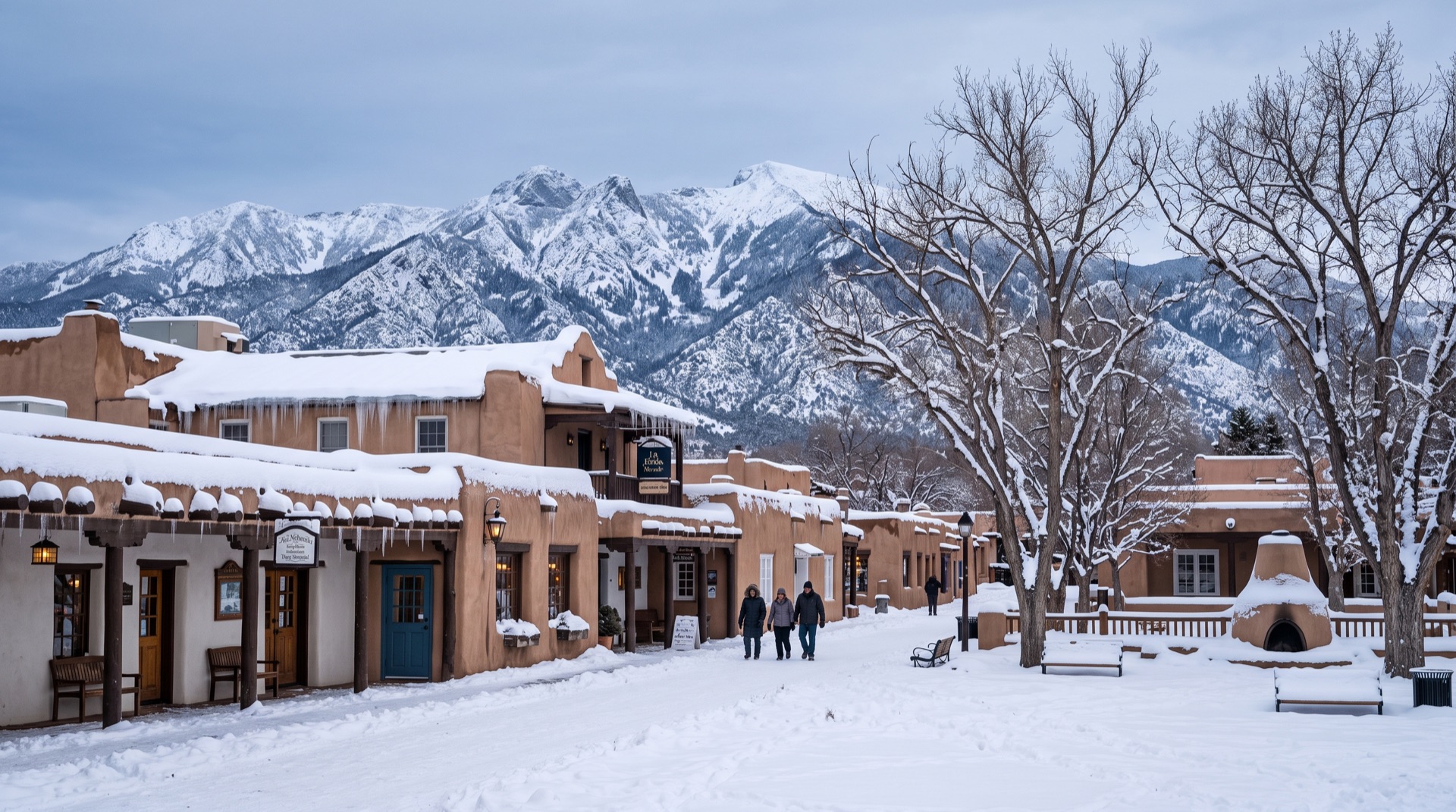
At Taos's elevation the air can stay below freezing all day while direct sun still melts the top of the snowpack. That meltwater runs down under the pack, reaches a shaded eave, and refreezes — on a day the thermometer never rose above freezing.

Aspect decides which eaves suffer. A sunny plane sheds water across a roof in Taos to a shaded eave that has not been above freezing for weeks, and that is where the ice builds into a wall.
Ice-barrier practice in Taos County
Snow retention above doors, walkways and parking is a requirement in most Taos County jurisdictions for good reason: a release off a metal mountain roof is a serious event, not an inconvenience.
Heated Roof & Gutter Cables in Taos: How The Work Runs
Cable is the backstop, not the cure
The underlying cause of an ice dam is heat leaving the house. Air sealing the attic, fixing crushed baffles and topping up insulation addresses that; cable manages what is left. Icicles and a Wet Ceiling.
A Taos property that gets both rarely needs an emergency call again. One that gets only cable usually needs fewer.
What happens when a section stops working
A dead run is usually one of four things: a tripped ground fault, a failed controller or sensor, physical damage at a specific point, or a connection at the end seal that has let water in.
They are diagnosed with a meter rather than by replacing the whole run. Self-regulating cable can generally be repaired in place with a proper splice kit, so a single damaged section does not mean a new system.
What heat trace does and does not do
A properly designed system keeps a continuous drainage channel open from the roof surface through the gutter and down the leader to the ground. Meltwater that would have refrozen at the cold eave instead keeps running. It does not melt the snow off your roof, and it will not remove a dam that has already formed — it prevents the dam from establishing in the first place.
That distinction matters when comparing quotes. Anyone selling cable as an emergency fix for an existing dam is selling the wrong product.
Layout is most of the job
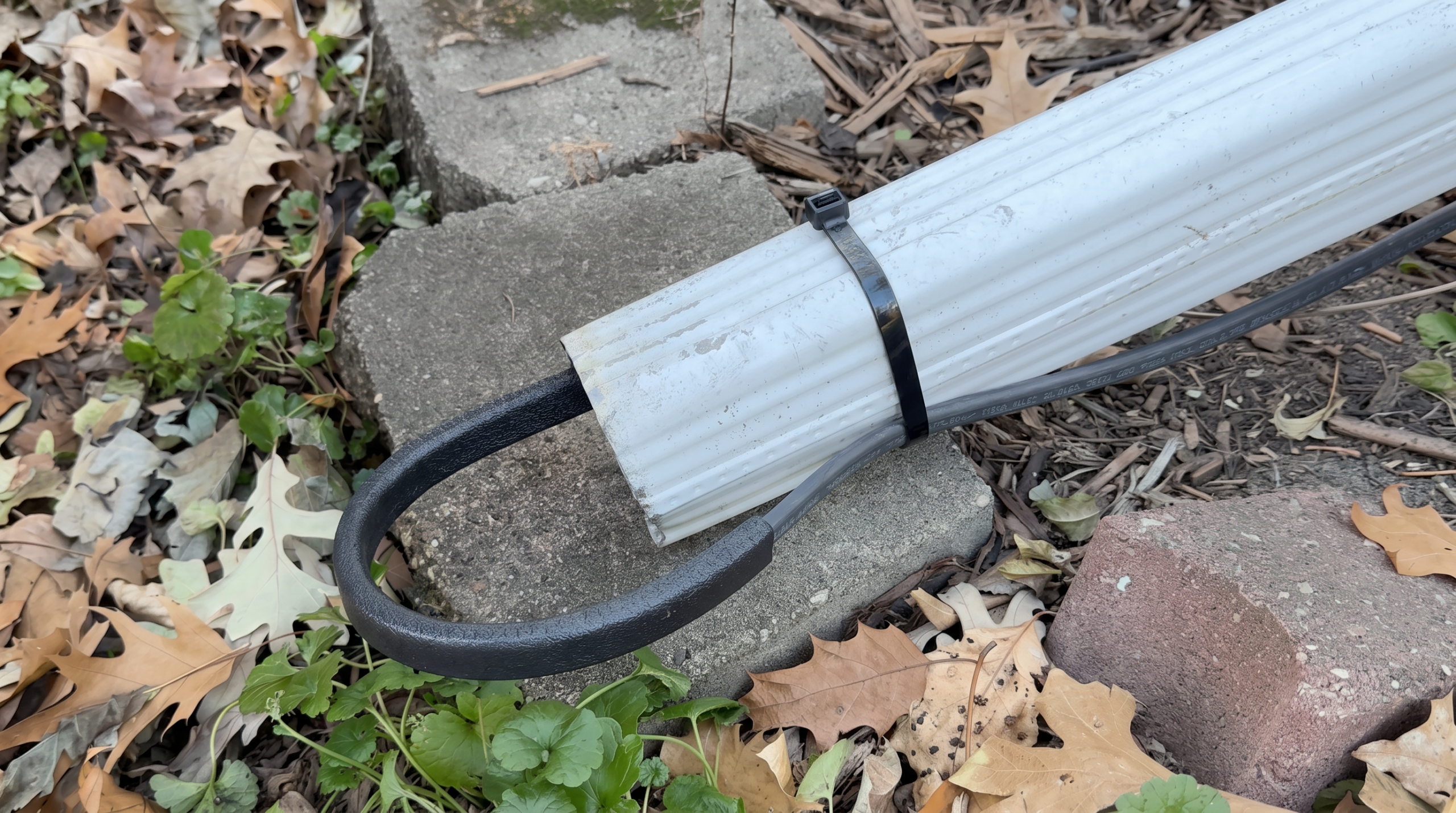
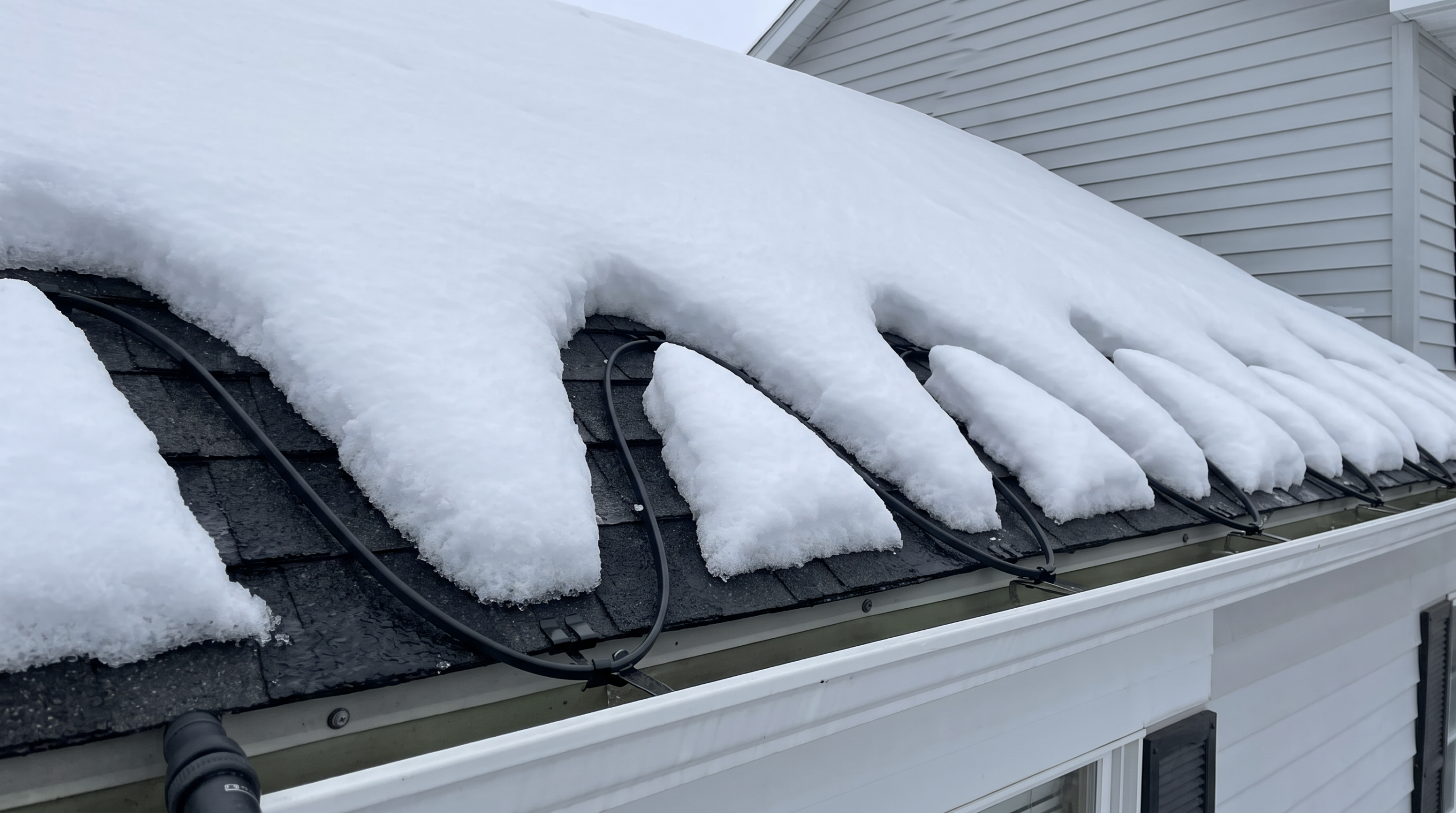
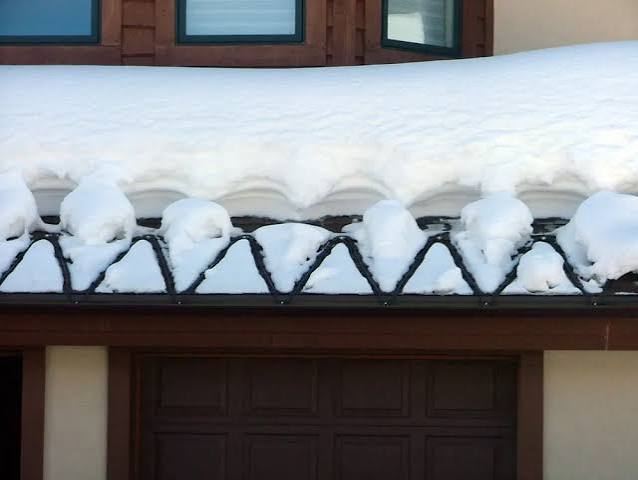
The cable has to trace a complete path: a zig-zag at the eave deep enough to cover the cold overhang, down through the valleys, along the gutter trough and all the way down the downspout to daylight. A zig-zag that stops short of the heated wall line, or a gutter run with no downspout trace, produces a channel that dead-ends into ice.
Systems get a dedicated GFCI-protected circuit, and controls run on a combination thermostat and moisture sensor so the system runs when it matters and not through a dry January cold snap.
Fastening without putting holes in the roof
Clips and standoffs designed for the job, adhered or clipped to the shingle edge. Never a fastener driven through the covering, and never left loose to abrade in the wind.
The failures that give heat cable a bad name are nearly all installation failures of this kind rather than product failures.
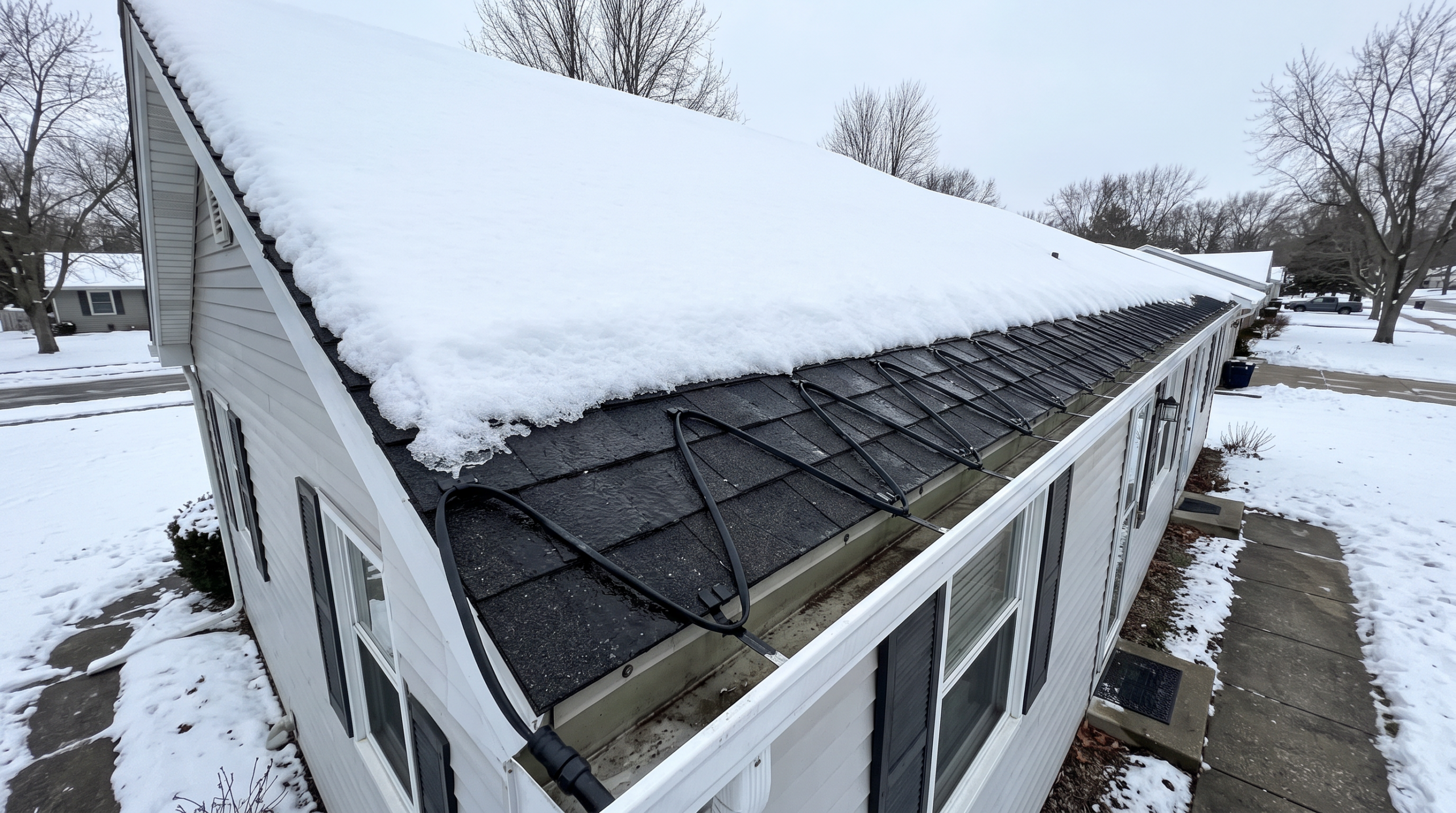
What you get in Taos
- Zig-zag sized properlyEave coverage measured against the actual cold overhang
- Downspout traced to daylightThe drain path ends on the ground, not in a block of ice
- Smart controlsThermostat and moisture sensing so it runs on the conditions that make ice
| Dispatch window | 24 to 48 hours in mountain terrain |
|---|---|
| Removal method | Low-pressure steam only. No chipping, salt or pressure washing. |
| Coverage area | Taos and Taos County |
| Pricing model | Billed by the crew hour, rate quoted before dispatch |
| Primary climate stressor | Solar melt on deep pack, shaded eaves |
| Typical scope | Steam, 8-16 crew hours typical |
| Local ice-barrier practice | Extended membrane plus snow retention |
Neighborhoods and Towns We Reach From Taos
Crews working Taos cover the adjoining communities on the same route — El Prado, Ranchos De Taos, Arroyo Seco, Arroyo Hondo and Carson — so a storm week usually means one truck handling several addresses in Taos County rather than separate trips.
Nearest hub towns with their own heat cables pages: Taos Ski Valley, Angel Fire, Red River, Espanola, Santa Fe, Los Alamos.
During a cold snap Taos gets worked alongside the neighboring Taos County towns on the same route, with active interior leaks moved to the front of the list.
Most jobs do not stop at one service. Heat Cables in Taos often runs alongside ice dam removal in Taos, and both get written into one scope rather than billed as separate visits.
Active leak right now? Our 24/7 Taos steam ice dam removal crews are dispatched first during a freeze event. Call (888) 561-9664.