Skip to content
Wilmette, IL
24/7 Emergency Steam · Cook County

Ice Dam Removal in Wilmette, IL — Freeze‑Thaw Response

Ice Dam Now handles ice dam removal for Wilmette, IL properties and the wider Cook County. Removal is by low-pressure steam, never mechanical. Dispatch is same day where water is already inside, pricing is by the crew hour quoted before a crew leaves, and every job is photographed before and after for claim purposes. Crews are licensed, insured and harness-certified.

Valleys and dormers — The dead spots that hold the deepest ice get worked specifically
No salt, no chipping — Nothing corrosive and nothing mechanical touches the covering
Steam only — Safe on asphalt, cedar, slate, tile and metal — no chipping, no pressure, no salt
Cleared to the shingle — The dam comes off completely, not just a drainage channel cut through it

Get Ice Dam Help Wilmette

A few quick questions, then pick a time. If water is coming in, call instead.

What is the zip code of the home?

Roof leaking right now? Call (888) 561-9664 — that is faster than any form.
Water coming through the ceiling?Every hour an ice dam sits there, more water gets under the shingles.Call (888) 561-9664
Same Day
For Water Already Inside
Steam
Safe On Every Covering
Cook
County Coverage
Insured
Harness-Certified On Every Roof
Written
Scope Before Work Starts

Homeowners across Cook County call about icicles. Icicles are cosmetic. The dam behind them, holding back standing water, is not. As part of our complete Wilmette winter roof services, crews handle ice dam removal across Cook County.

The Wilmette Problem Is the Thermometer, Not the Snowfall

Three inches of snow and a week of days above freezing and nights below it will build ice on a Cook County eave just as reliably as a foot of snow further north.

Diagram showing how ice dams form on roofs due to inadequate insulation and poor ventilation
Heat escaping into the attic melts roof snow; the meltwater refreezes at the cold eave and the dam grows a layer every cycle.

The building stock has no margin for it. Because the winters here read as mild, attics tend to be under-insulated, eave details are less considered, and ice barrier is as often absent as present on a roof in Wilmette.

Ice-barrier practice in Cook County

The residential code Illinois follows requires eave ice barrier on new work, and Cook County enforces it. The variable on any given house is simply when it was last roofed.

Ice Dam Removal in Wilmette: How The Work Runs

What steam actually does

A steam unit delivers water at roughly 290°F at a pressure low enough to rest your hand in the plume. It cuts a channel straight through the ice and lifts the dam off in sections, right down to the shingle. The heat does the work, not force, so granules, seal strips and flashing come through untouched. Water Stain on the Ceiling in Winter.

That is the whole difference between steam and the hot pressure washers often sold as steam. A pressure washer cuts ice fast because of its pressure — and that same pressure strips the granules off asphalt shingles and drives water up under the courses. One method removes ice. The other removes ice and roof.

Why the dam formed in the first place

Ice dams are a heat problem wearing a weather costume. Warm air escaping into the attic melts snow on the upper roof; that meltwater runs to the eave, which hangs past the heated envelope and stays below freezing; it refreezes there, and the ridge of ice grows a layer every cycle. Removal is the emergency fix. Before the crew leaves you will know which part of your attic is feeding it.

What happens after the ice is off

Once the eave is clear and water is draining, the crew walks the interior with you where there is visible damage and says plainly whether it needs drying. Wet insulation and a damp ceiling cavity do not resolve themselves in a cold Wilmette February.

If it does, that is a separate scope and it gets written separately — nobody is upsold a dryout on the strength of one damp patch.

How long a removal actually takes

A single-story eave with a thin dam and clear gutters is often an hour or two. A two-story Wilmette house with ice standing a foot deep across the front, frozen downspouts and a valley packed solid is most of a day for a two-man crew. The honest answer on the phone is a range and the reason for it, not a number designed to win the booking.

The estimate is revised out loud if the roof turns out worse than it looked from the ground, before the extra hours are worked rather than after they appear on the invoice.

Steep, high and awkward Wilmette roofs

Pitch and height change the job more than ice thickness does. A walkable ranch eave is a ladder and a lance. A three-story roof with a steep pitch means anchors, rope, staging and two people where one would otherwise do.

Crews quote on that honestly. If a property in Wilmette needs a longer setup, it is said on the phone rather than discovered at the end of the invoice.

contractor using steam equipment to remove ice dam from snowy roof
A technician uses high-pressure steam to safely melt and remove a stubborn ice dam from a residential roof.

What you get in Wilmette

  • Same-day dispatchActive interior leaks go to the front of the schedule during a freeze event
  • Gutters cleared tooTrough and downspout steamed through to daylight in the same visit
  • No salt, no chippingNothing corrosive and nothing mechanical touches the covering
Ice Dam Removal in Wilmette, IL — specification
Service specification for Wilmette, IL
ServiceIce Dam Removal in Wilmette, IL
Typical scopeSteam, 4-8 crew hours typical
Pricing modelBilled by the crew hour, rate quoted before dispatch
DocumentationDated before and after photos, written scope in Xactimate line items
Removal methodLow-pressure steam only. No chipping, salt or pressure washing.
Primary climate stressorRepeated thaw-freeze cycling
Coverage areaWilmette and Cook County

Wilmette Coverage and the Adjoining Communities

Crews working Wilmette cover the adjoining communities on the same route — Kenilworth, Winnetka, Golf, Morton Grove and Lincolnwood — so a storm week usually means one truck handling several addresses in Cook County rather than separate trips.

Nearest hub towns with their own ice dam removal pages: Evanston, Skokie, Glencoe, Glenview, Northbrook, Park Ridge.

Crews cover Wilmette and the surrounding Cook County towns through the whole season, and during a freeze event they run from first light until dark.

Most jobs do not stop at one service. Ice Dam Removal in Wilmette often runs alongside water mitigation & dryout in Wilmette, and both get written into one scope rather than billed as separate visits.

Active leak right now? Our 24/7 Wilmette steam ice dam removal crews are dispatched first during a freeze event. Call (888) 561-9664.


One Event, One Claim

Everything The Ice Dam Caused In Wilmette, On One Claim

Taking the ice off is usually the cheapest part. The water that already got in, the mold it leaves, the ceiling that has to come down and sometimes the roof itself are one loss event, so they go on one insurance claim, handled by one company.

How it goes on the claim

  • One loss, one claim number. Removal, mitigation, mold, interior repair and roof damage from the same ice dam are reported as one event.
  • Broken out by coverage. Mitigation, mold (often under its own sublimit), interior repair and the roof are written as separate Xactimate sections, so a question on one line does not hold up the rest.
  • Documented the whole way. Dated photographs and moisture readings run from the ice on the roof to the finished room, from one company, in one file.
  • Honest about the limits. Coverage depends on your policy. A roof that was simply old is not storm damage, and you and your carrier make the coverage decision.
Ice Dam Claims In Wilmette
Conditions We Work In

Ice Dam Removal In Practice

Conditions crews work in across Cook County. Every job is photographed before and after.

Large icicles and ice dam forming along gutters of gray house in winter
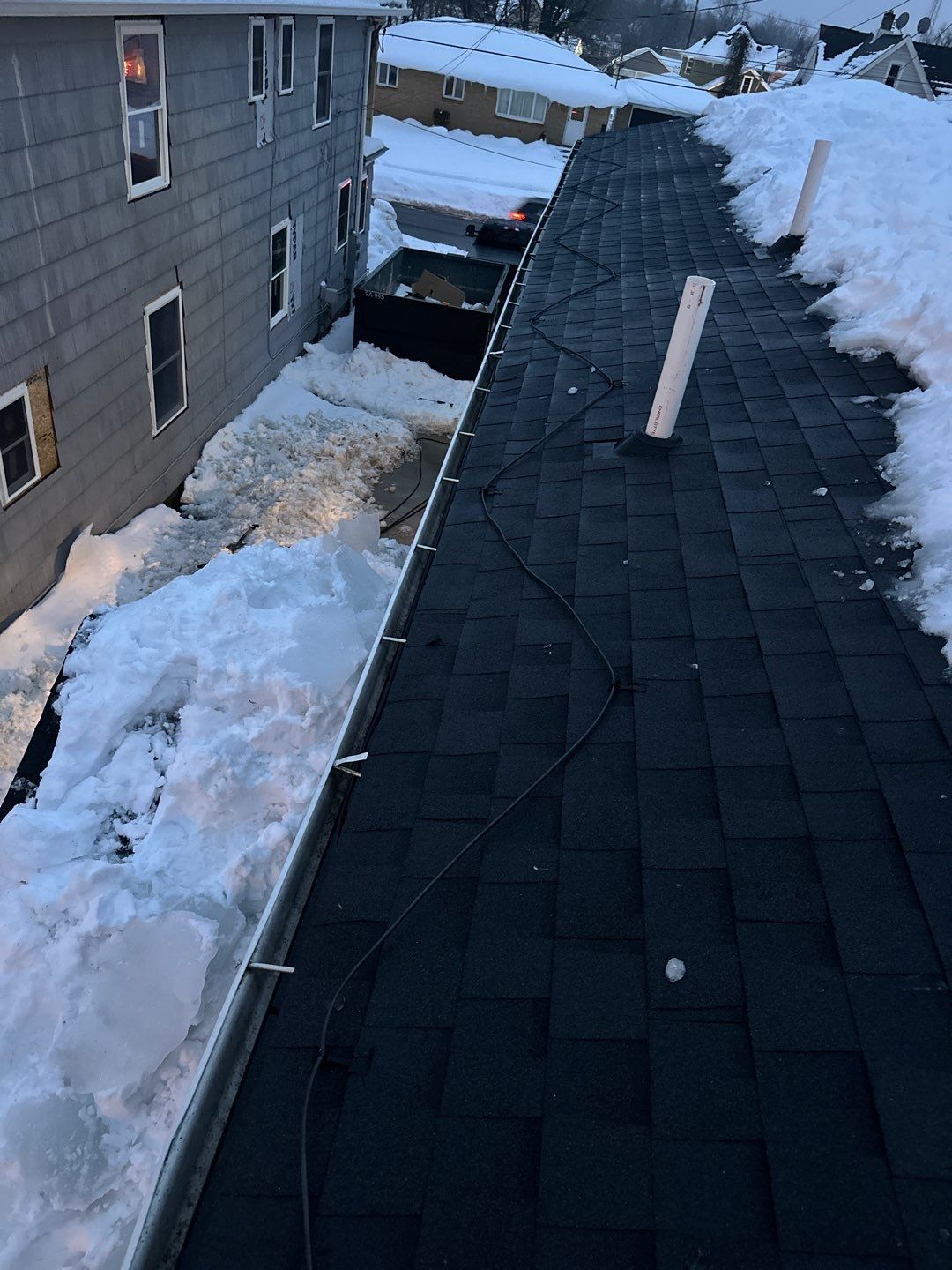
Heavy ice dam and icicles hang from the gutters of a gray residential home after a winter storm.
contractor using steam equipment to remove ice dam from snowy roof
A technician uses high-pressure steam to safely melt and remove a stubborn ice dam from a residential roof.
Worker on ladder using steam wand to remove ice dam from snowy roof
A professional uses a steam wand from a ladder to safely melt and remove a heavy ice dam from a residential roof.
FAQ

Wilmette Questions We Actually Get Asked

It is billed by the crew hour, and the rate plus a realistic time estimate are quoted on the phone before anyone is dispatched.

  • Scope drives the hours: length and thickness of the ice, roof pitch and height, and whether the gutters are frozen solid.
  • Access matters too — a three-story Wilmette roof takes longer to set up on than a ranch.
  • The invoice matches the quote. There are no surprise add-ons written on the tailgate.

On a roof that is still leaking heat, it can — removal treats the symptom and the cause is in the attic.

  • Crews say so before leaving if the attic is obviously the problem.
  • A second visit in the same season at the same property is priced as the shorter job it usually is.
  • Air sealing, insulation and heat trace are what stop the cycle for good.

Because ice dams are made by heat loss, and two houses on the same street rarely leak heat the same way.

  • Attic air leaks around can lights, bath fans and the attic hatch are the usual source.
  • Crushed or missing soffit baffles stop the intake ventilation that would otherwise keep the deck cold.
  • An addition or dormer built over unheated space puts warm air right against a cold eave.
  • Local factor: repeated thaw-freeze cycling makes the difference show up faster here than it would further south.

Only where there is interior damage to document or dry. Pure exterior removal happens entirely from outside.

  • If water has come in, seeing it is what makes the claim documentation worth anything.
  • Attic access helps identify the heat source but is not required for removal.
  • Nobody needs to be home for exterior-only work, provided access and payment are arranged.

Usually. The equipment needs a water supply and a place to park within hose reach, which is normally achievable even on a tight lot.

  • Hose runs of a few hundred feet are routine.
  • Street parking in a Cook County residential area is generally workable.
  • Tell dispatch about access on the call so the right setup arrives.

Call rather than fill in a form. In the meantime, put something under it, move what you can out of the way, and if the ceiling is bulging with held water, a small hole at the low point drains it in a controlled way instead of the whole sheet coming down at once. Do not go on the roof.

It stops this leak. It does not change the heat loss that caused the dam, so without attic air sealing and insulation work the dam will form again in the next freeze-thaw cycle. Removal is the emergency; the attic is the cure, and you will be told which part of yours is feeding it.

Nearby

Ice Dam Removal In Towns Around Wilmette

Same-Day Response

Get A Wilmette Crew Out

Waiting for a thaw is a strategy, but it is an expensive one — the melt has to go somewhere, and it goes into the insulation first.

✓ Licensed & insured✓ Low-pressure steam only✓ Rate quoted up front✓ Photos for your claim
Online Quote(888) 561-9664