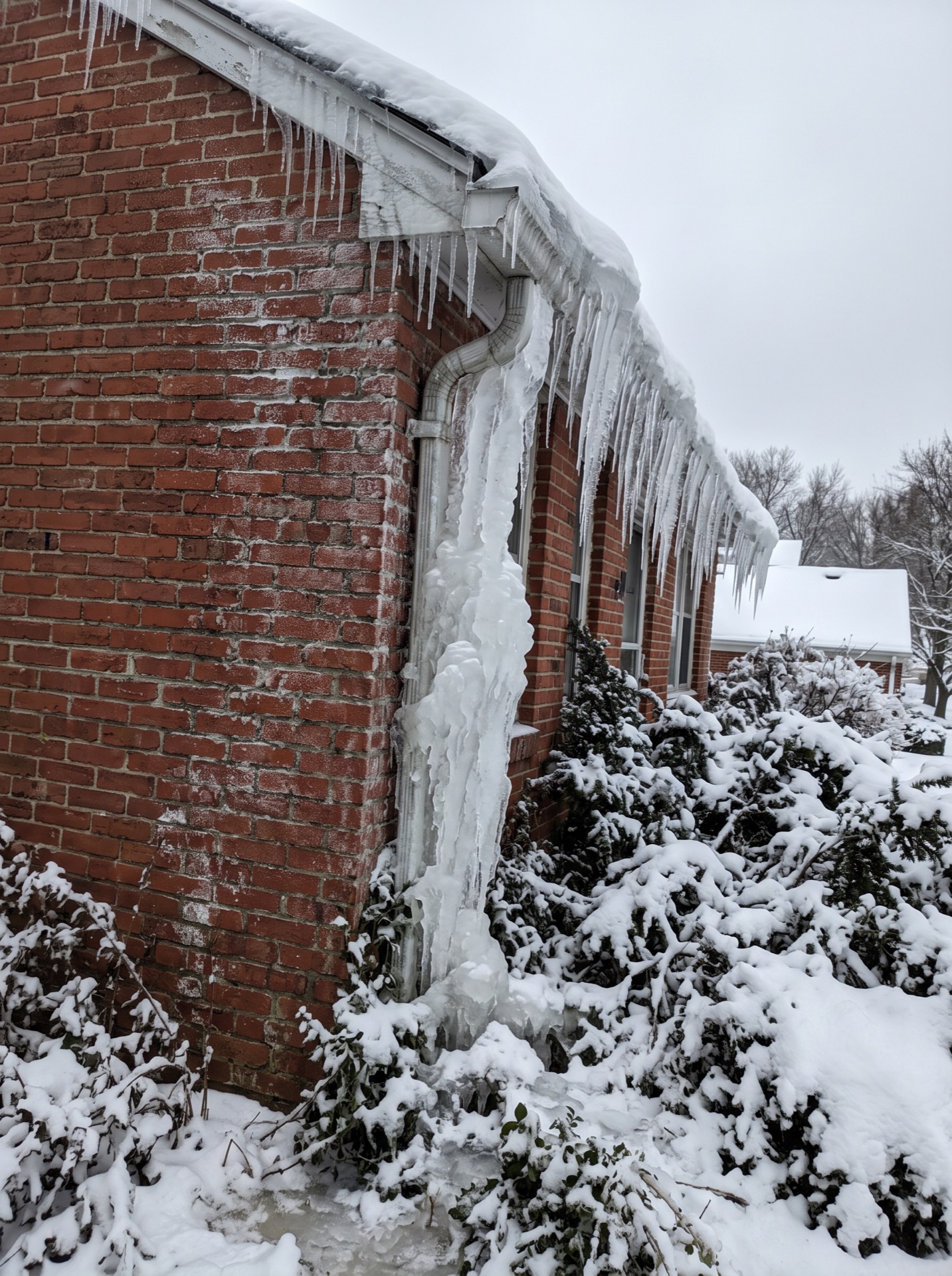
Cook County sees the same pattern every winter: snow on the roof, warm air in the attic, and a line of ice building along the eave where the two meet. As part of our complete Orland Park winter roof services, crews handle water mitigation & dryout across Cook County.
The Cook County Trap: Modest Snow, Constant Cycling
Three inches of snow and a week of days above freezing and nights below it will build ice on a Cook County eave just as reliably as a foot of snow further north.

And the cycling is relentless rather than dramatic. Fifteen or twenty crossings of freezing in a season each add a layer, and the houses with the thinnest attic insulation in Cook County all find out in the same week.
Ice-barrier practice in Cook County
The residential code Illinois follows requires eave ice barrier on new work, and Cook County enforces it. The variable on any given house is simply when it was last roofed.
Water Mitigation & Dryout in Orland Park: How The Work Runs
The sequence
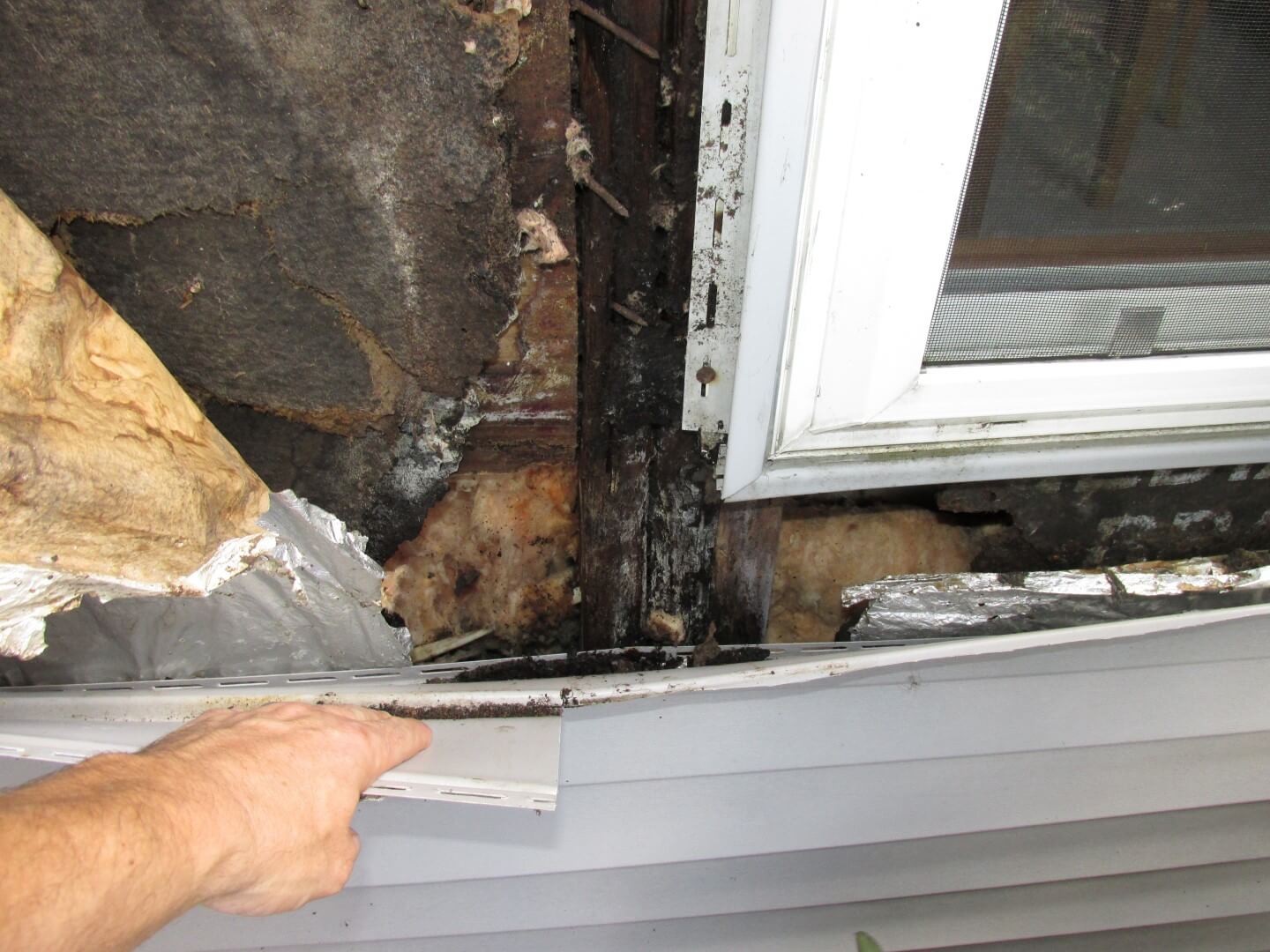
Standing water is extracted first. Saturated insulation comes out, because it cannot be dried in place and it is holding moisture against everything it touches. Containment goes up where tear-out is needed, with HEPA scrubbers running inside it. Dehumidifiers and air movers are placed to the room's volume and load rather than scattered around. Wet Insulation in the Attic.
Then the readings get taken daily until they hit standard. In an Orland Park winter, with cold cavities and low ambient humidity outside, that typically takes longer than people expect.
Contents, storage and what moves out of the way
Mitigation needs the room. Furniture gets blocked up or moved, stored boxes come out of the affected area, and in a finished basement the contents usually have to leave entirely before tear-out starts.
What is already wet gets photographed and listed as it is moved, because contents are a separate part of most policies and the list is considerably harder to assemble once everything has been shifted.
Why a cold attic will not dry itself
Drying is evaporation, and evaporation needs warmth and air movement. A Orland Park attic in February has neither. Wet insulation and damp sheathing sit at near-freezing with no meaningful vapor drive, which is why a leak that stops in January can still be wet in March.
Equipment supplies what the season does not. Without it the structure is not drying slowly - in a cold cavity it is very largely not drying at all.
Drying to a number, not to a look
Air movers and dehumidifiers get placed to the room's volume and the moisture load, not scattered around. Readings are taken daily on framing, sheathing and drywall until they hit the dry standard for that material.
In an Orland Park winter, with cold cavities and dry outside air, that generally takes longer than people expect. The job closes on the readings, not on appearance.
From dry to finished: the interior repair
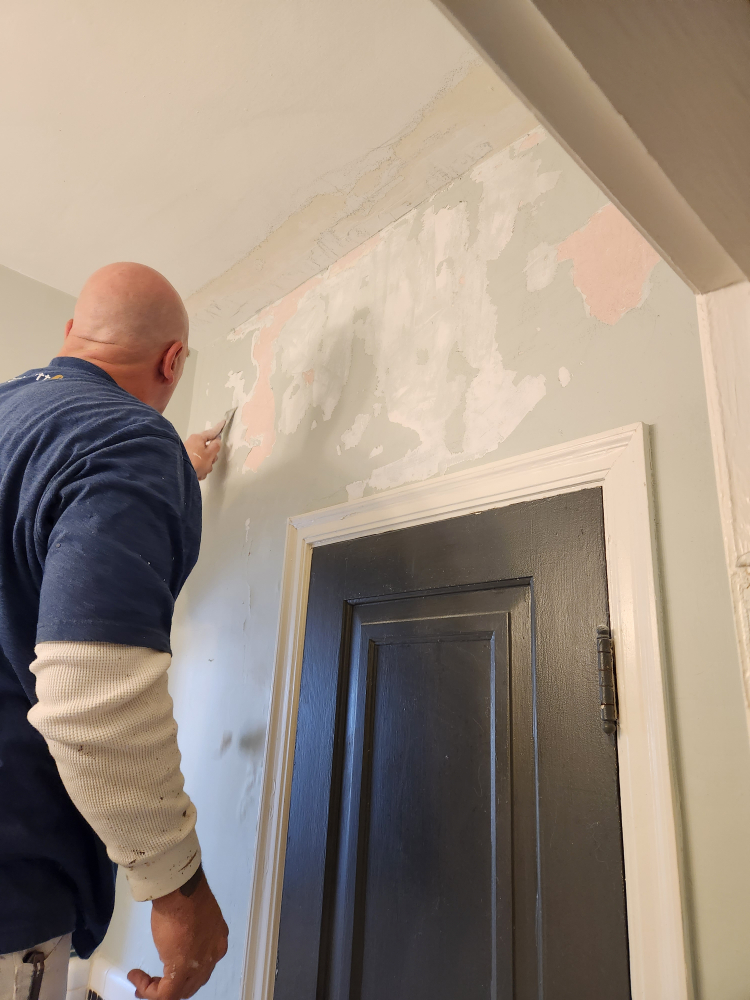
Mitigation ends when the readings hit standard. The repair starts right after, with the same company: new insulation, drywall hung and finished, texture matched, trim replaced and painted, and flooring where it did not recover.
Keeping it in-house means one scope, one claim and one set of documentation from the first photograph in Orland Park to the last coat of paint, rather than a dried-out room sitting open while you look for a contractor.

What you get in Orland Park
- Interior repair in-houseDrywall, insulation, texture, trim and paint put back by the same company
- Wet insulation removedIt cannot be dried in place and it holds water against the framing
- Documented to standardDaily moisture readings until the structure meets IICRC S500 dry standard
| Primary climate stressor | Repeated thaw-freeze cycling |
|---|---|
| Local ice-barrier practice | Eave membrane on new work, often absent |
| Service | Water Mitigation & Dryout in Orland Park, IL |
| Billing | Xactimate line items on one claim; carrier billed directly where the policy allows |
| Interior repair | Insulation, drywall, texture, trim and paint, done in-house after drying |
| Documentation | Dated before and after photos, written scope in Xactimate line items |
| Method | Containment, HEPA filtration and drying to a measured IICRC standard |
Cook County Coverage From Orland Park
Crews working Orland Park cover the adjoining communities on the same route — Palos Park, Palos Heights, Oak Forest, Homer Glen and Worth — so a storm week usually means one truck handling several addresses in Cook County rather than separate trips.
Nearest hub towns with their own water mitigation pages: Tinley Park, Oak Lawn, Hanover Park, Romeoville, Bolingbrook, Joliet.
During a cold snap Orland Park gets worked alongside the neighboring Cook County towns on the same route, with active interior leaks moved to the front of the list.
Most jobs do not stop at one service. Water Mitigation in Orland Park often runs alongside ice dam removal in Orland Park, and both get written into one scope rather than billed as separate visits.
Active leak right now? Our 24/7 Orland Park steam ice dam removal crews are dispatched first during a freeze event. Call (888) 561-9664.