



Why Hanover Park Roofs Dam Up: Cycling, Not Snowfall Totals
What catches people out in Cook County is that the snow looks harmless. Two or three inches reads as nothing, and it builds ice on an eave just as effectively as a northern storm given enough cycles.

The building stock has no margin for it. Because the winters here read as mild, attics tend to be under-insulated, eave details are less considered, and ice barrier is as often absent as present on a roof in Hanover Park.
Ice-barrier practice in Cook County
Because ice is not the first thing a homeowner in Hanover Park thinks about, the eave membrane is the detail most often value-engineered out of a re-roof quote. It is worth asking for by name.
How a Hanover Park Steam Call Runs, Start to Finish
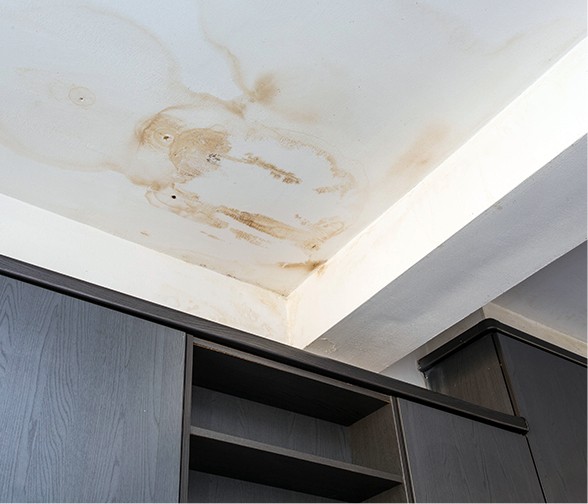
Crews walk the eaves, valleys and gutter line first and photograph every dam and every point where water is tracking inside, before touching anything. You get shown what they found and quoted the crew-hour rate before work starts.
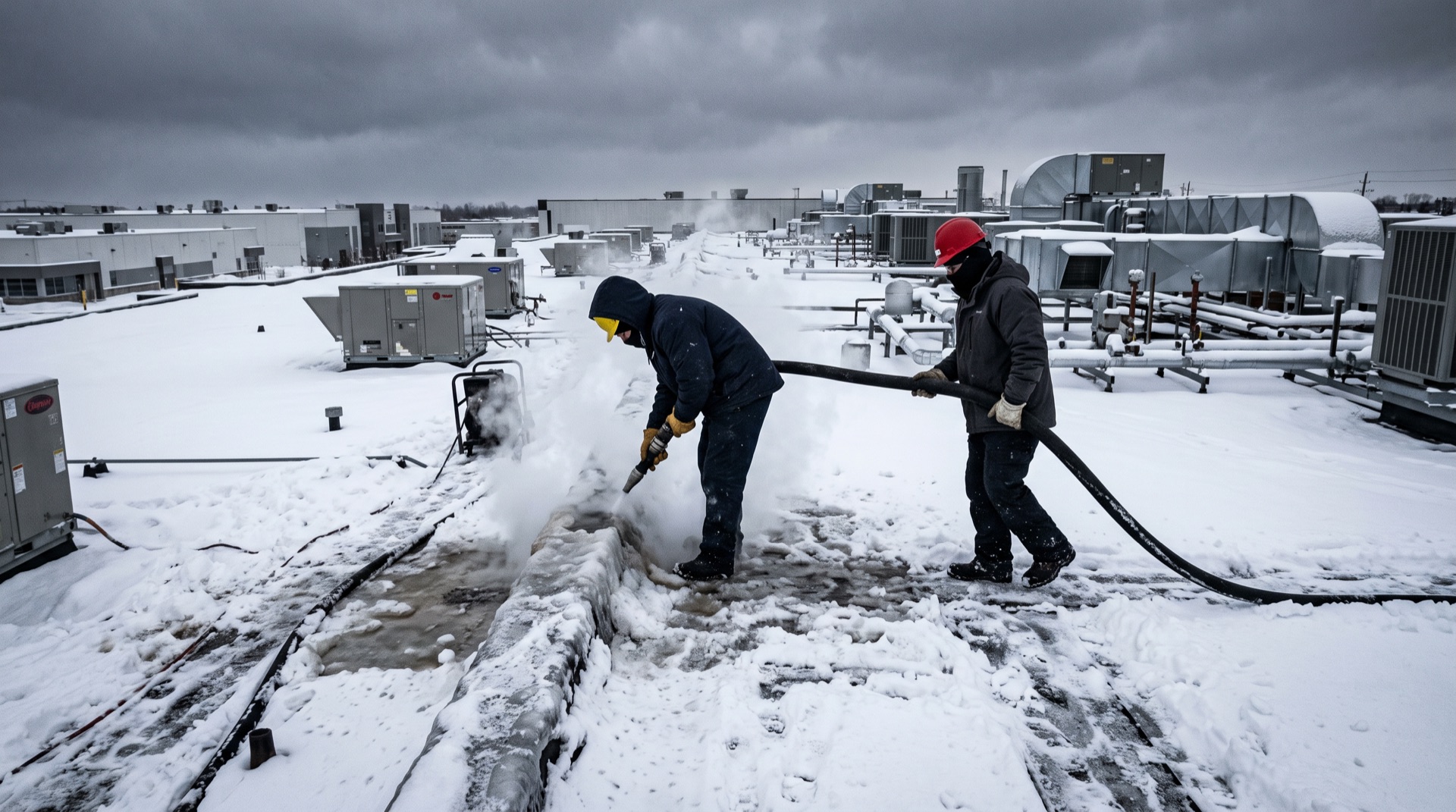
Then the ice comes off with low-pressure steam, starting wherever water is actively backing up so drainage opens early. Frozen gutters and downspouts are cleared in the same visit, because a cleared eave above a solid block of ice in the gutter dams again on the next cold night.
Why the dam formed in the first place
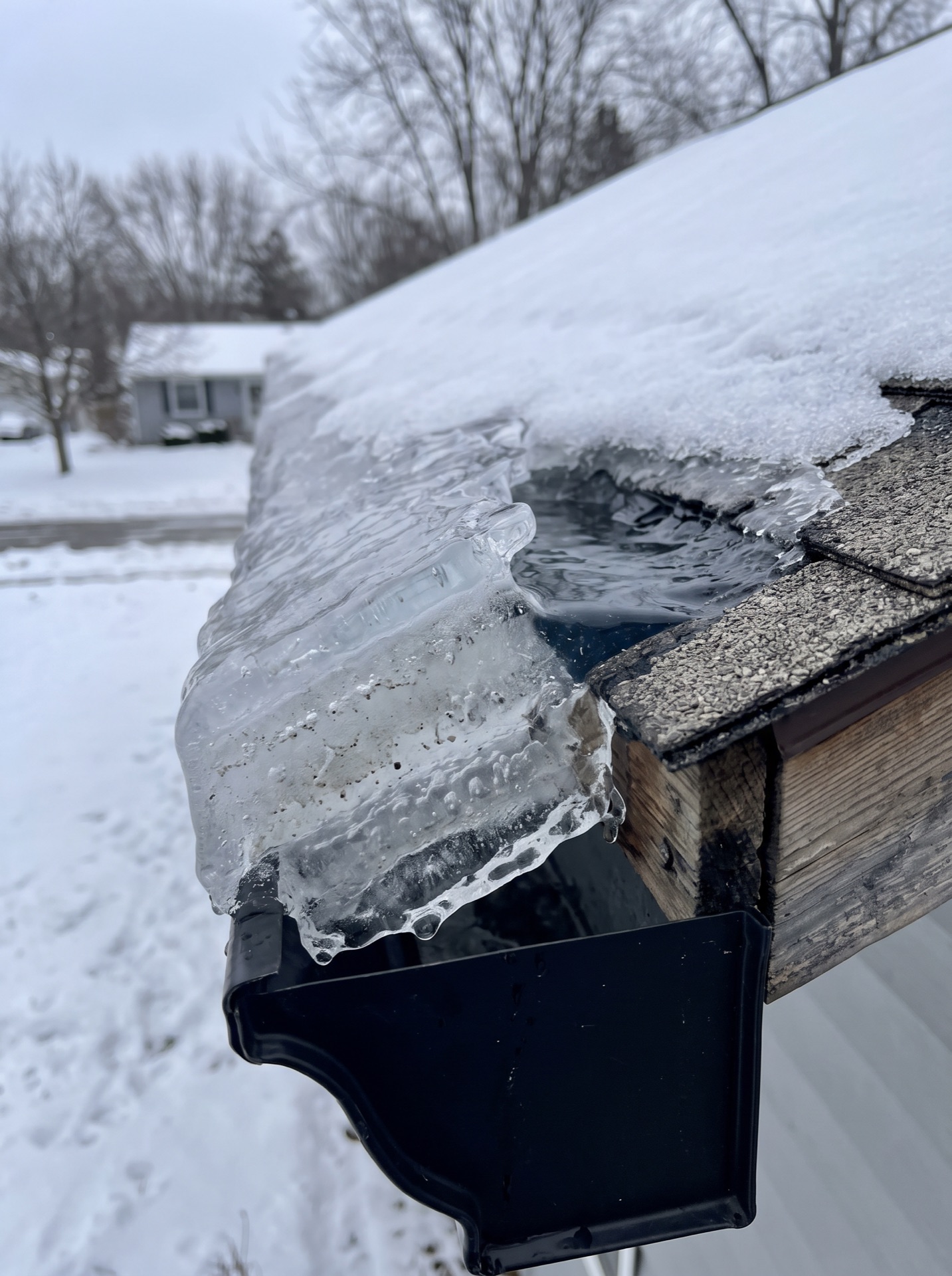
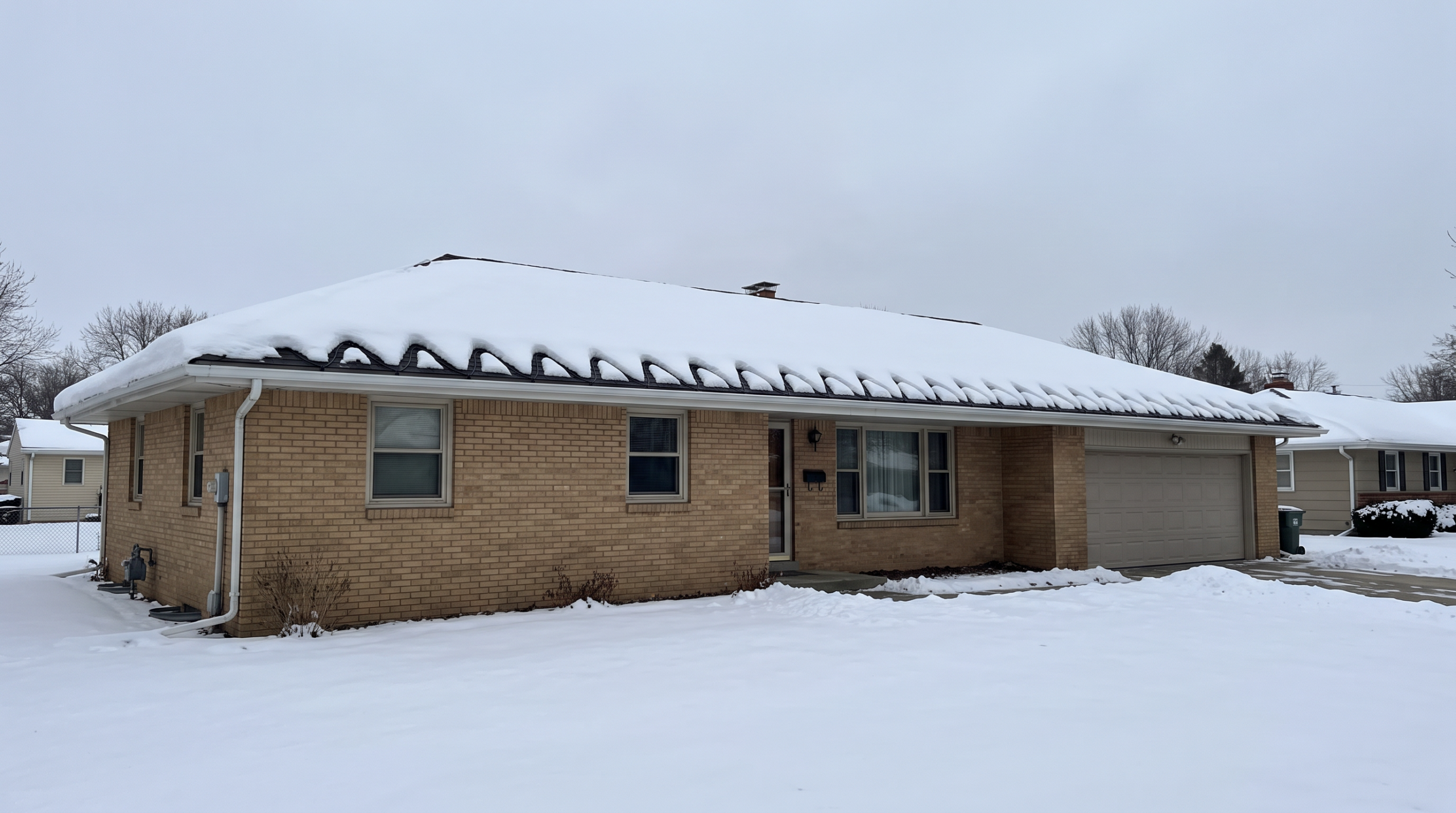
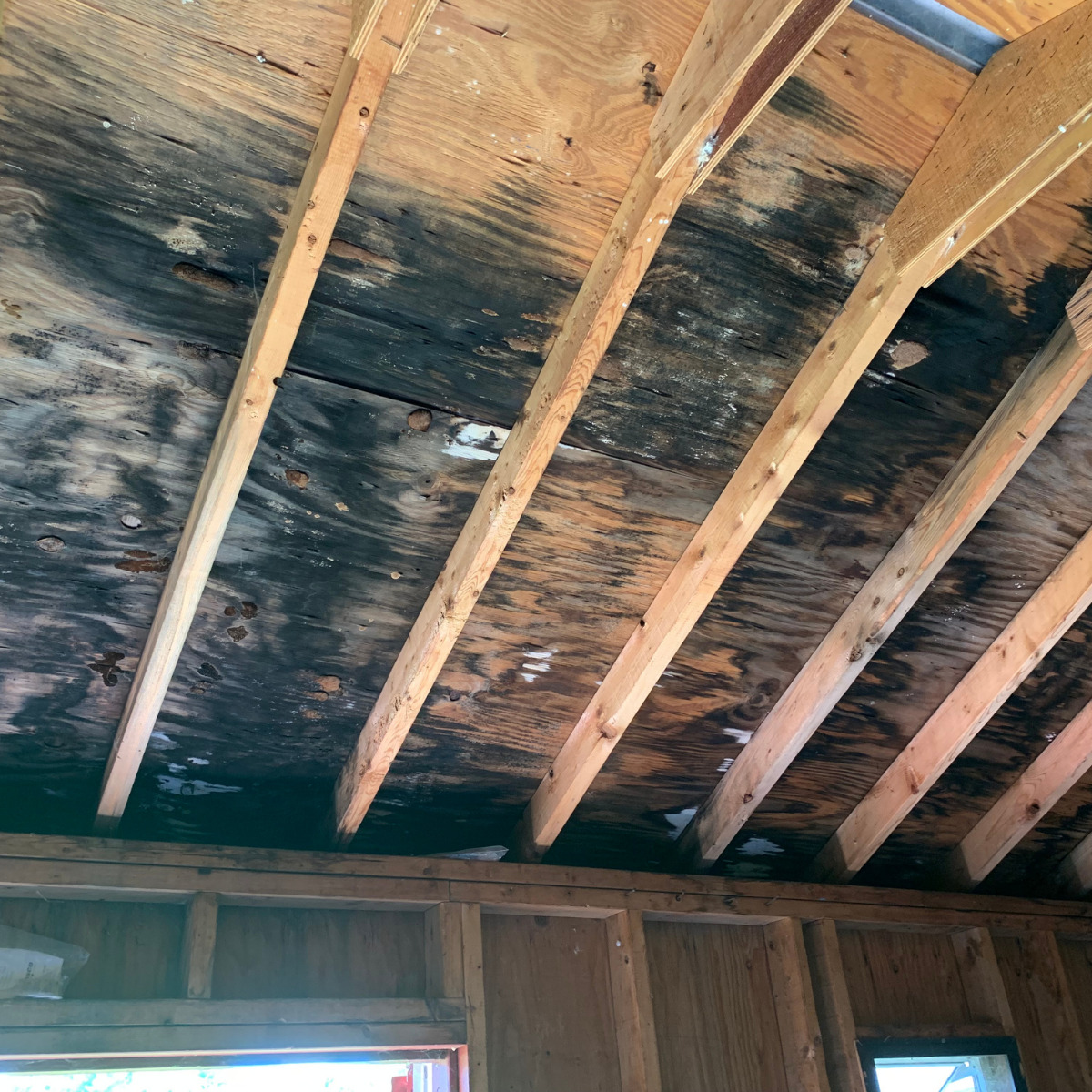
Ice dams are a heat problem wearing a weather costume. Warm air escaping into the attic melts snow on the upper roof; that meltwater runs to the eave, which hangs past the heated envelope and stays below freezing; it refreezes there, and the ridge of ice grows a layer every cycle. Removal is the emergency fix. Before the crew leaves you will know which part of your attic is feeding it.
Why the gutter has to be cleared in the same visit
A dam sitting above a gutter packed solid with ice is only half the problem. Clear the eave and leave the trough frozen, and the next day's meltwater has nowhere to run — it backs up onto the roof and the dam rebuilds from the bottom.
Crews steam the trough and the downspout through to daylight on the same visit. It adds time, which is why the hour estimate given on the phone accounts for it, and it is the difference between a fix and a repeat visit in Hanover Park the following week.
How long a removal actually takes
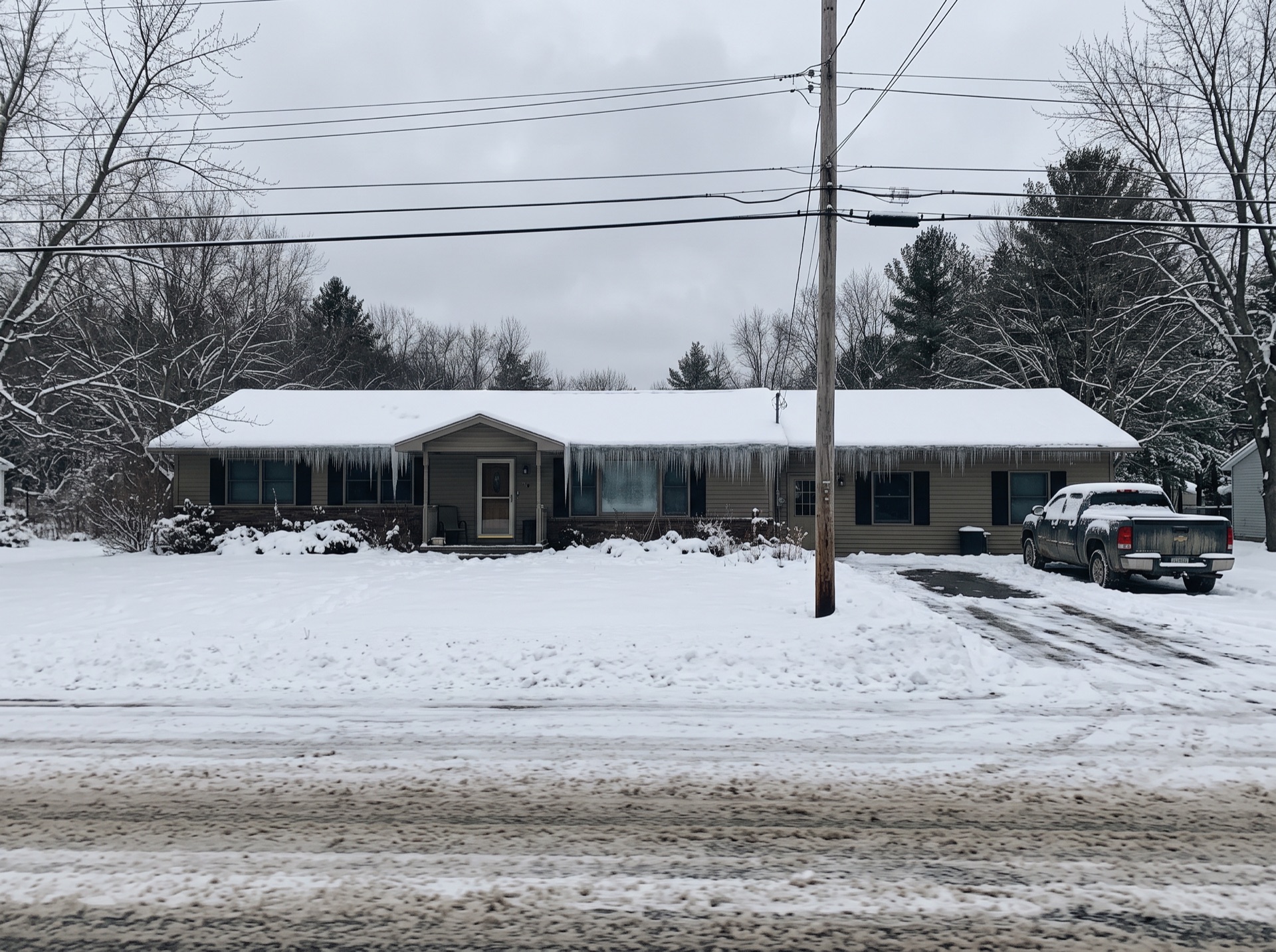
A single-story eave with a thin dam and clear gutters is often an hour or two. A two-story Hanover Park house with ice standing a foot deep across the front, frozen downspouts and a valley packed solid is most of a day for a two-man crew. The honest answer on the phone is a range and the reason for it, not a number designed to win the booking.
The estimate is revised out loud if the roof turns out worse than it looked from the ground, before the extra hours are worked rather than after they appear on the invoice.
| Typical scope | Steam, 4-8 crew hours typical |
|---|---|
| Pricing model | Billed by the crew hour, rate quoted before dispatch |
| Documentation | Dated before and after photos, written scope in Xactimate line items |
| Service | Ice dam removal in Hanover Park, IL |
| Removal method | Low-pressure steam only. No chipping, salt or pressure washing. |
| Coverage area | Hanover Park and Cook County |
| Dispatch window | Same day to 24 hours |
Where We Dispatch Around Hanover Park
Crews working Hanover Park cover the adjoining communities on the same route — Summit Argo, Lyons, Bedford Park, Brookfield and Riverside — so a storm week usually means one truck handling several addresses in Cook County rather than separate trips.
Nearest hub towns with their own crew pages: Berwyn, Cicero, Oak Lawn, Oak Park, Elmhurst, Downers Grove.
Hanover Park sits inside the regular Illinois service area, so a crew is usually scheduled the same day or the following morning.
Active leak at an address in Hanover Park? (888) 561-9664 reaches dispatch directly. Interior water moves a job to the front of the day.