Summit County sees the same pattern every winter: snow on the roof, warm air in the attic, and a line of ice building along the eave where the two meet. As part of our complete Breckenridge winter roof services, crews handle water mitigation & dryout across Summit County.
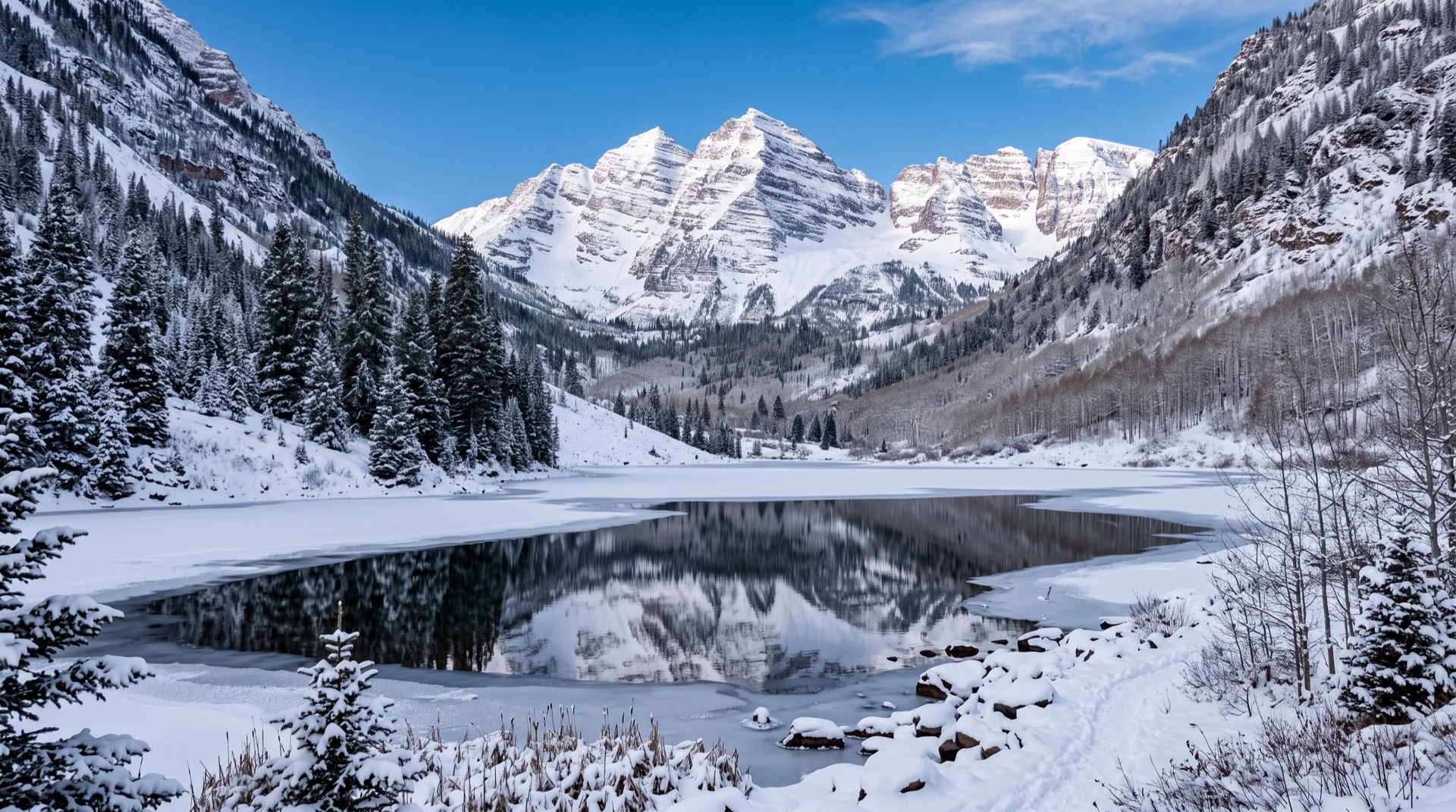
Why Breckenridge Roofs Dam Up: Altitude Sun on a Deep Pack
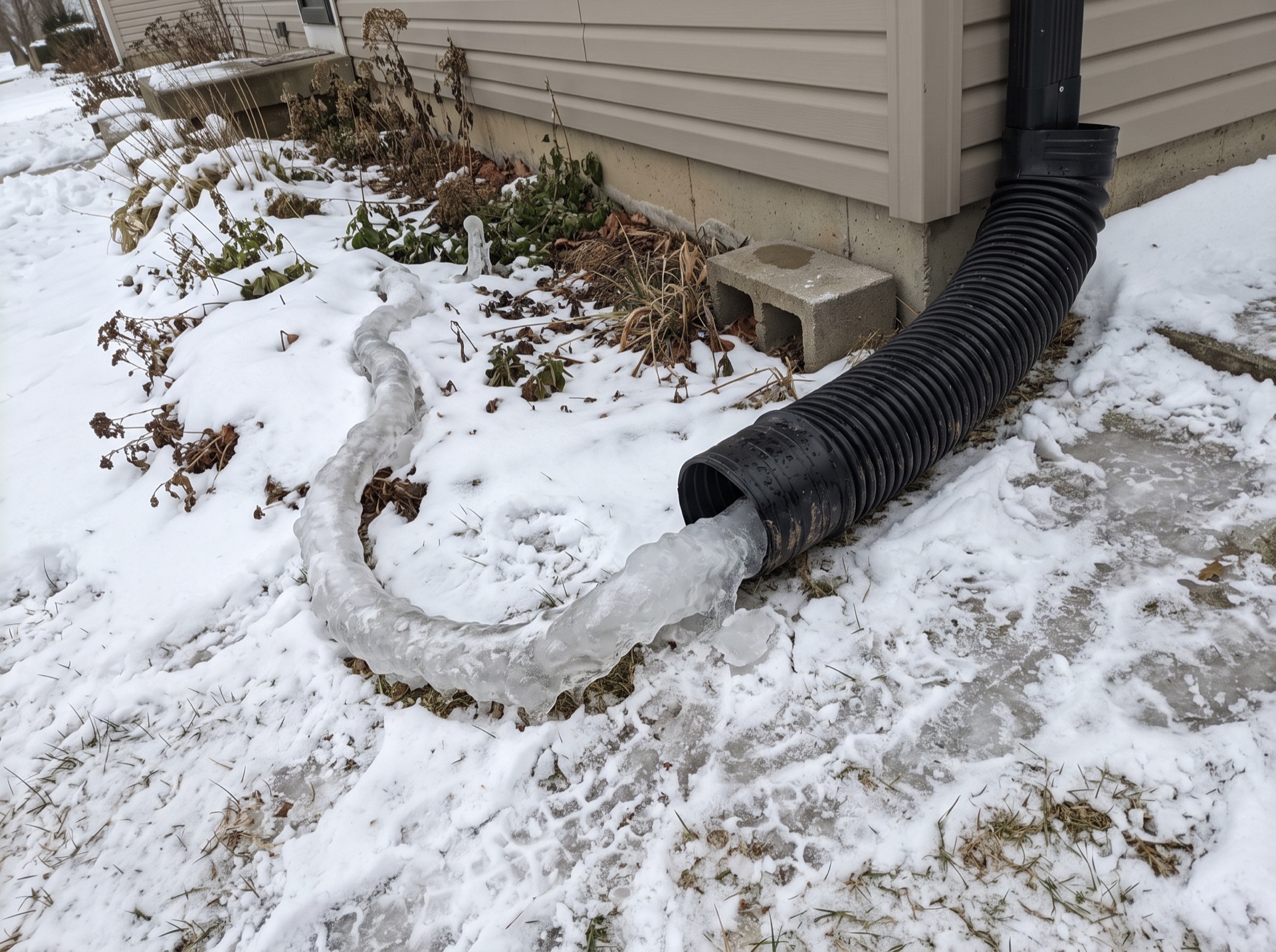
Mountain ice dams are a solar problem more than a temperature one. The sun works the pack from above while the air stays cold, so meltwater is produced and refrozen within the same afternoon.

Volume is the other factor. A Summit County roof carrying several feet of pack has an enormous reservoir above an overhang that never sees direct sun, and the supply does not run out until spring.
Ice-barrier practice in Summit County
Mountain jurisdictions across Summit County generally require ice-barrier membrane well up the roof plane, not just the first course, along with snow retention on metal roofs above entries and walkways.
Water Mitigation & Dryout in Breckenridge: How The Work Runs
Containment before tear-out
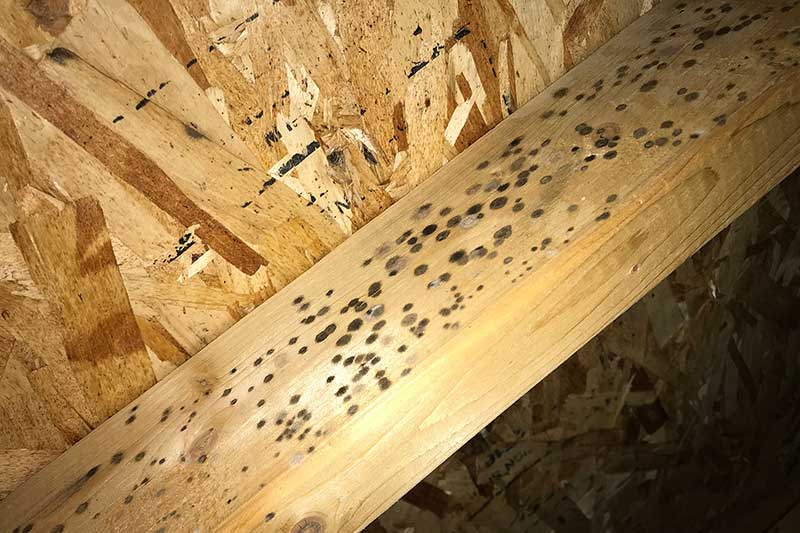
Where drywall or insulation has to come out, barriers go up and HEPA scrubbers run inside them. That keeps the dust and whatever is growing in the wet material out of the rest of the house. Wet Insulation in the Attic.
It also keeps the job to one room rather than the whole floor, which on an occupied Breckenridge home is the difference between staying and moving out.
Dry does not mean dry
A ceiling stain stops spreading long before the cavity behind it is dry. Wet cellulose and fiberglass hold water against the framing for weeks, and in a cold attic the evaporation that would normally handle it simply does not happen. That is how a January leak becomes a spring mold problem.
Mitigation means getting the structure back to a documented dry standard — not back to looking fine. Moisture meter readings on framing, sheathing and drywall are what close the job, not appearance.
Why wet insulation comes out rather than dries
Saturated cellulose and fiberglass hold water against framing and sheathing for weeks, and in a cold attic there is no air movement to carry it off. It also stops insulating, which warms the deck and feeds the next dam.
So it comes out. On an attic in Breckenridge that is usually the single biggest step toward the structure actually drying.
From dry to finished: the interior repair
Mitigation ends when the readings hit standard. The repair starts right after, with the same company: new insulation, drywall hung and finished, texture matched, trim replaced and painted, and flooring where it did not recover.
Keeping it in-house means one scope, one claim and one set of documentation from the first photograph in Breckenridge to the last coat of paint, rather than a dried-out room sitting open while you look for a contractor.
Finding the water that left no stain
The visible mark on a ceiling is the smallest part of the problem. Water tracks along top plates, runs down stud bays, and spreads across a ceiling plane well past where it finally shows.
Thermal imaging and pin meters find it. On a job in Breckenridge the mapped wet area is routinely several times the size of the stain, and drying the stain alone leaves the rest to go moldy quietly.

What you get in Breckenridge
- Hidden water mappedThermal imaging and pin meters find what left no stain
- Electrical made safeCircuits killed where water reached fixtures, before equipment goes in
- Interior repair in-houseDrywall, insulation, texture, trim and paint put back by the same company
| Method | Containment, HEPA filtration and drying to a measured IICRC standard |
|---|---|
| Service | Water Mitigation & Dryout in Breckenridge, CO |
| Local ice-barrier practice | Extended membrane plus snow retention |
| Primary climate stressor | Solar melt on deep pack, shaded eaves |
| Dispatch window | 24 to 48 hours in mountain terrain |
| Coverage area | Breckenridge and Summit County |
| Documentation | Dated before and after photos, written scope in Xactimate line items |
Summit County Coverage From Breckenridge
Crews working Breckenridge cover the adjoining communities on the same route — Alma and Como — so a storm week usually means one truck handling several addresses in Summit County rather than separate trips.
Nearest hub towns with their own water mitigation pages: Frisco, Dillon, Silverthorne, Vail, Aspen, Golden.
Scheduling for Breckenridge tightens up during a freeze event, which is exactly when the phone beats the form. Water coming in means a call, not an email.
Most jobs do not stop at one service. Water Mitigation in Breckenridge often runs alongside ice dam removal in Breckenridge, and both get written into one scope rather than billed as separate visits.
Active leak right now? Our 24/7 Breckenridge steam ice dam removal crews are dispatched first during a freeze event. Call (888) 561-9664.