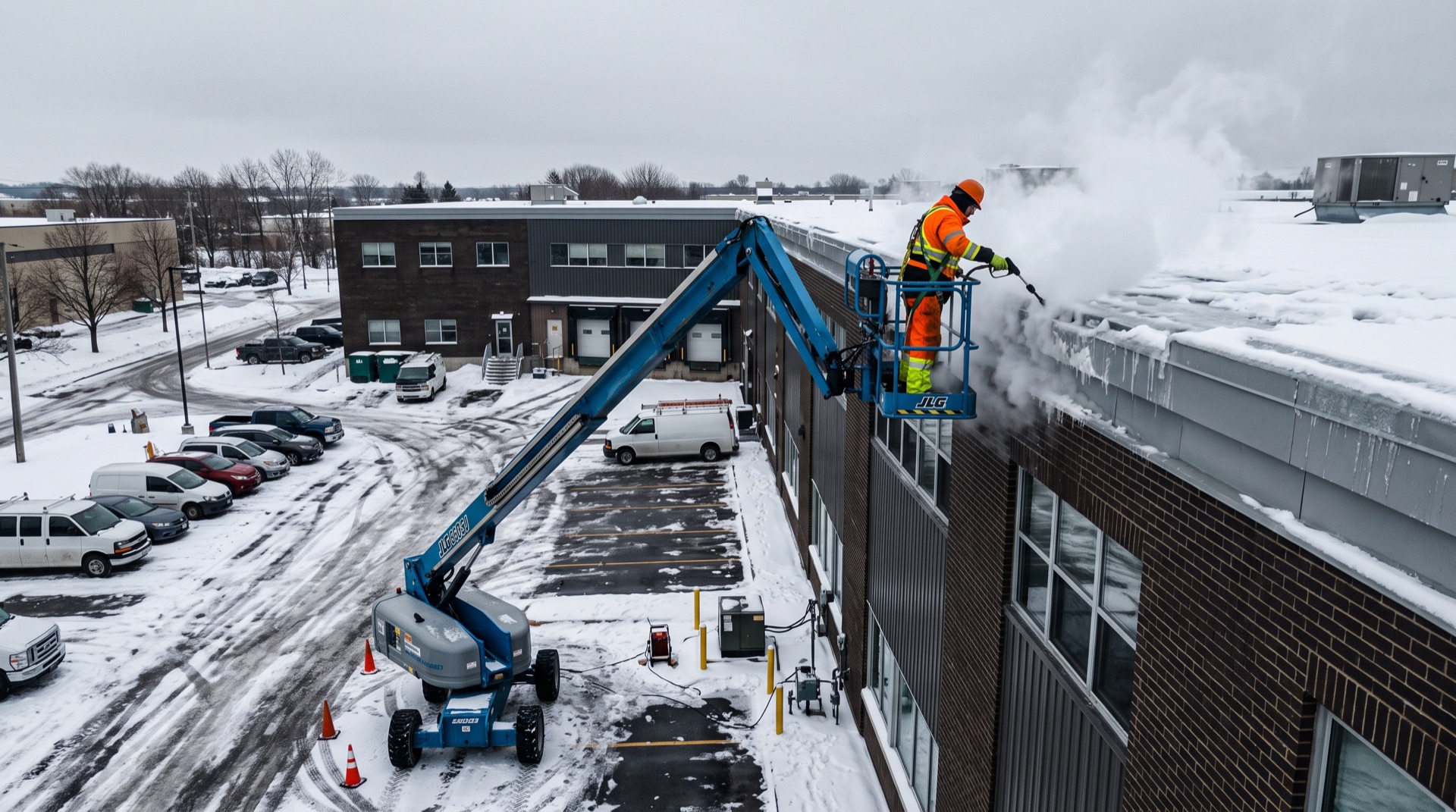
Winter in Superior does not need a record storm to put water inside a house. It needs a roof with snow on it, an attic leaking heat, and one cold night. As part of our complete Superior winter roof services, crews handle crane-assisted snow removal across Douglas County.
Snow Bands, Warm Attics and the Superior Eave
What makes Douglas County roofs dam is not the seasonal total, it is how the snow arrives. Bands dump a heavy, saturated pack in hours, and that pack becomes a water reservoir sitting on a heated surface.

Each band is followed by a clearance and a cold night, and that is the cycle doing the damage. Meltwater released during the day sets at the eave after dark, and the ridge at the gutter line gains a layer every time.
Ice-barrier practice in Douglas County
What matters on a Superior roof is not whether ice barrier exists but how far up it runs. Water backed up behind a foot of ice travels much further than the first course, and a membrane that stops short is a membrane that stops working.
Crane-Assisted Snow Removal in Superior: How The Work Runs
How a pick actually works
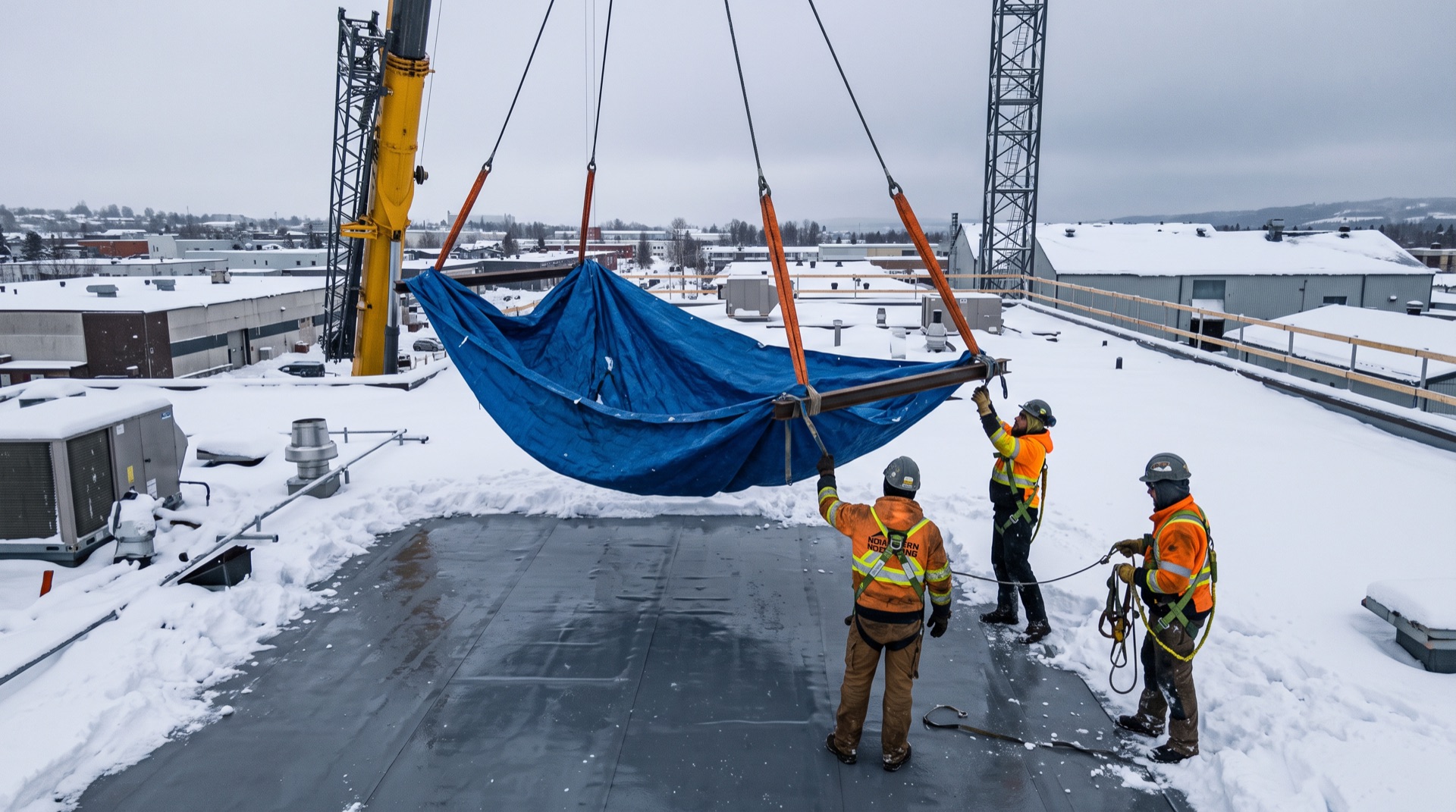
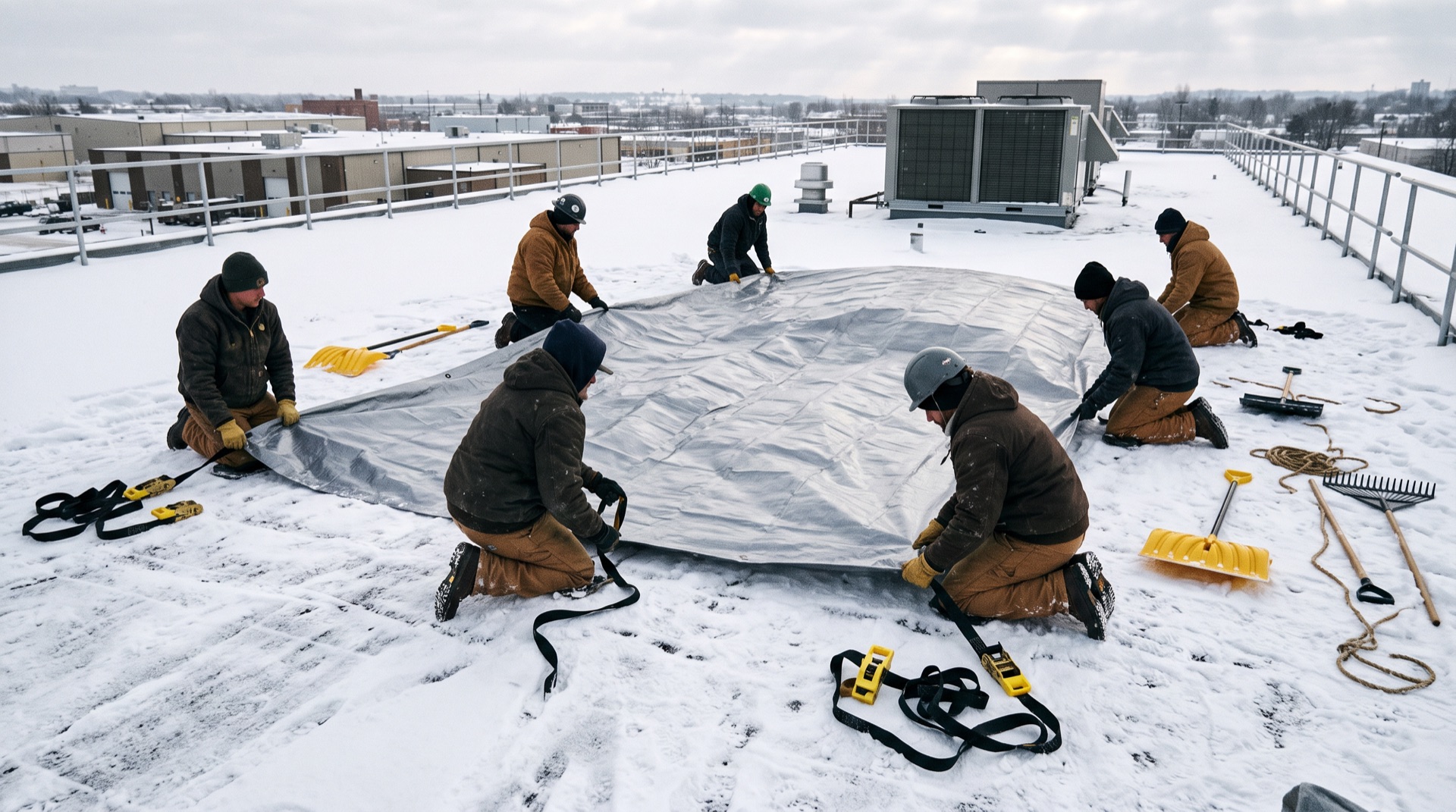
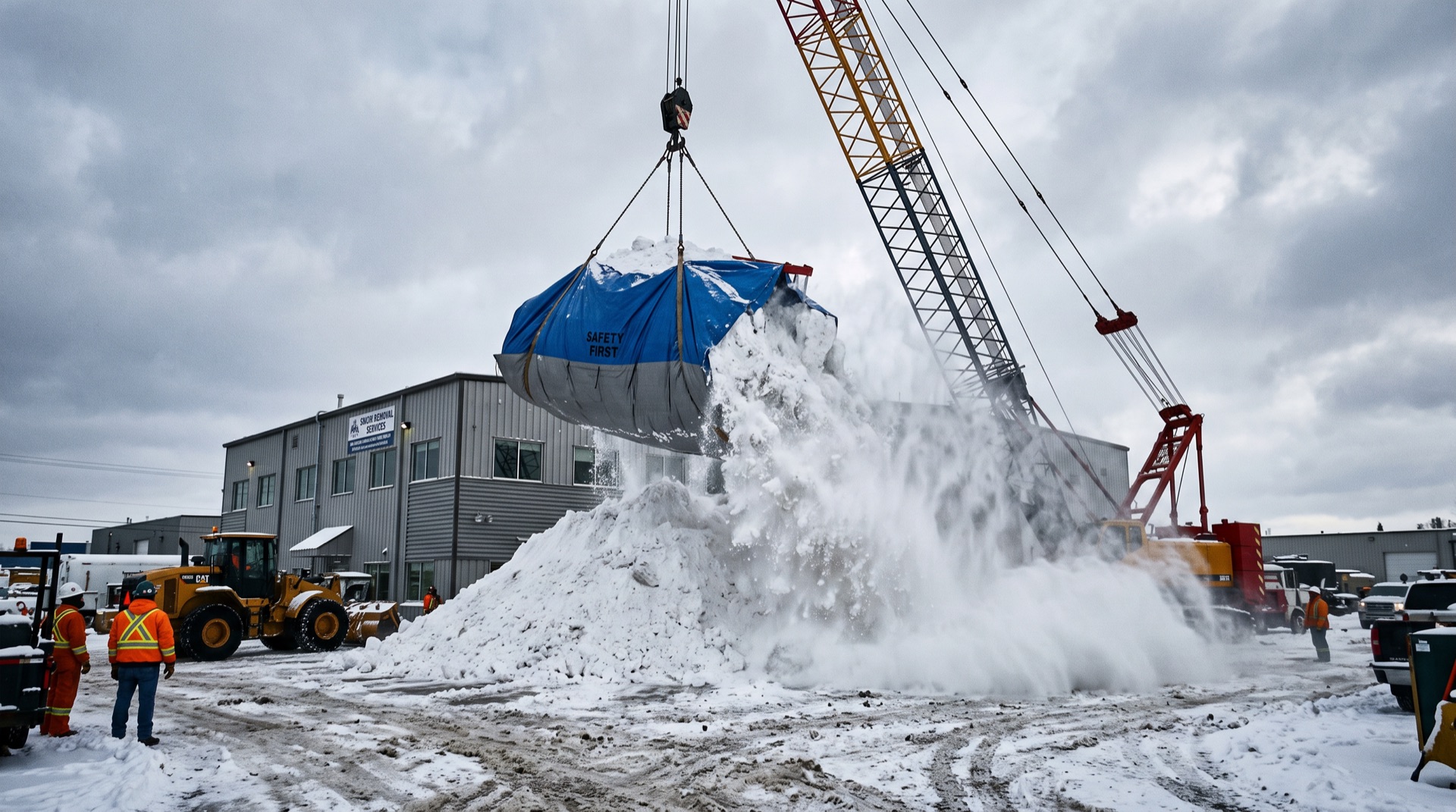
Rip-stop tarps are laid out and anchored on the deck, crews load them, and the boom lifts each loaded tarp clear and sets it down in a designated drop zone on the ground. Outrigger pads are placed on frozen ground rated for the load, and a pedestrian exclusion zone is set and marshalled for the whole operation. Ceiling Sagging or Bulging After Snow.
It is a planned lift, not an improvisation. Site access, swing radius, overhead lines, drop zone and ground bearing all get walked before the first tarp goes down.
When a crane is the right call
Multi-story homes and estates where the upper roof cannot be safely reached. Large commercial and industrial decks where the sheer tonnage makes hand clearing a multi-day job. Any roof where deflection is already visible and the load has to come off today rather than over a week.
The decision is made on numbers, not instinct. Depth, density and area give a working load figure, and that figure against the roof's design capacity is what determines whether a crane gets mobilised to a property in Superior.
What happens if the crane cannot get close enough
Overhead power, a narrow alley, soft ground that will not take outrigger loads, or a neighboring building in the swing path can all rule out a setup after a site visit.
That gets found on the walk rather than on the day. Where a crane genuinely will not work, the honest answer is a larger hand crew over more days with the cost difference laid out - not a pick that was never going to fit.
Documenting the load for the carrier
Depths, densities, calculated loads and dated photographs are recorded through the operation. Most carriers treat preventing an imminent structural failure as loss mitigation, which is a very different claim from one filed after a deck comes down.
That record is what supports it, and it only exists if somebody took the readings at the time.
Reach, radius and why the chart decides
Capacity falls away sharply with radius. A machine that lifts comfortably at thirty feet may be well short of the same load at eighty, which is why the far corner of a large deck sometimes needs a bigger crane rather than a longer day.
The chart is run before the quote, so the number given is for a machine that can actually reach the whole roof in Superior rather than most of it.
What you get in Superior
- Lift planned firstAccess, swing radius, overhead lines and drop zone walked before scheduling
- Permits handledPulled where the municipality requires them for a street setup
- Weights documentedDepths, densities and loads recorded for the carrier
| Typical scope | Steam, 6-12 crew hours typical |
|---|---|
| Primary climate stressor | Lake-effect bands, wet heavy pack |
| Coverage area | Superior and Douglas County |
| Local ice-barrier practice | Eave membrane expected on re-roofs |
| Documentation | Dated before and after photos, written scope in Xactimate line items |
| Dispatch window | Same day to 24 hours |
| Pricing model | Billed by the crew hour, rate quoted before dispatch |
Douglas County Coverage From Superior
Crews working Superior cover the adjoining communities on the same route — South Range — so a storm week usually means one truck handling several addresses in Douglas County rather than separate trips.
Nearest hub towns with their own crane snow removal pages: Eau Claire, Marshfield, Wausau, Stevens Point, Wisconsin Rapids, La Crosse.
Crews cover Superior and the surrounding Douglas County towns through the whole season, and during a freeze event they run from first light until dark.
Most jobs do not stop at one service. Crane Snow Removal in Superior often runs alongside commercial roof snow removal in Superior, and both get written into one scope rather than billed as separate visits.
Active leak right now? Our 24/7 Superior steam ice dam removal crews are dispatched first during a freeze event. Call (888) 561-9664.