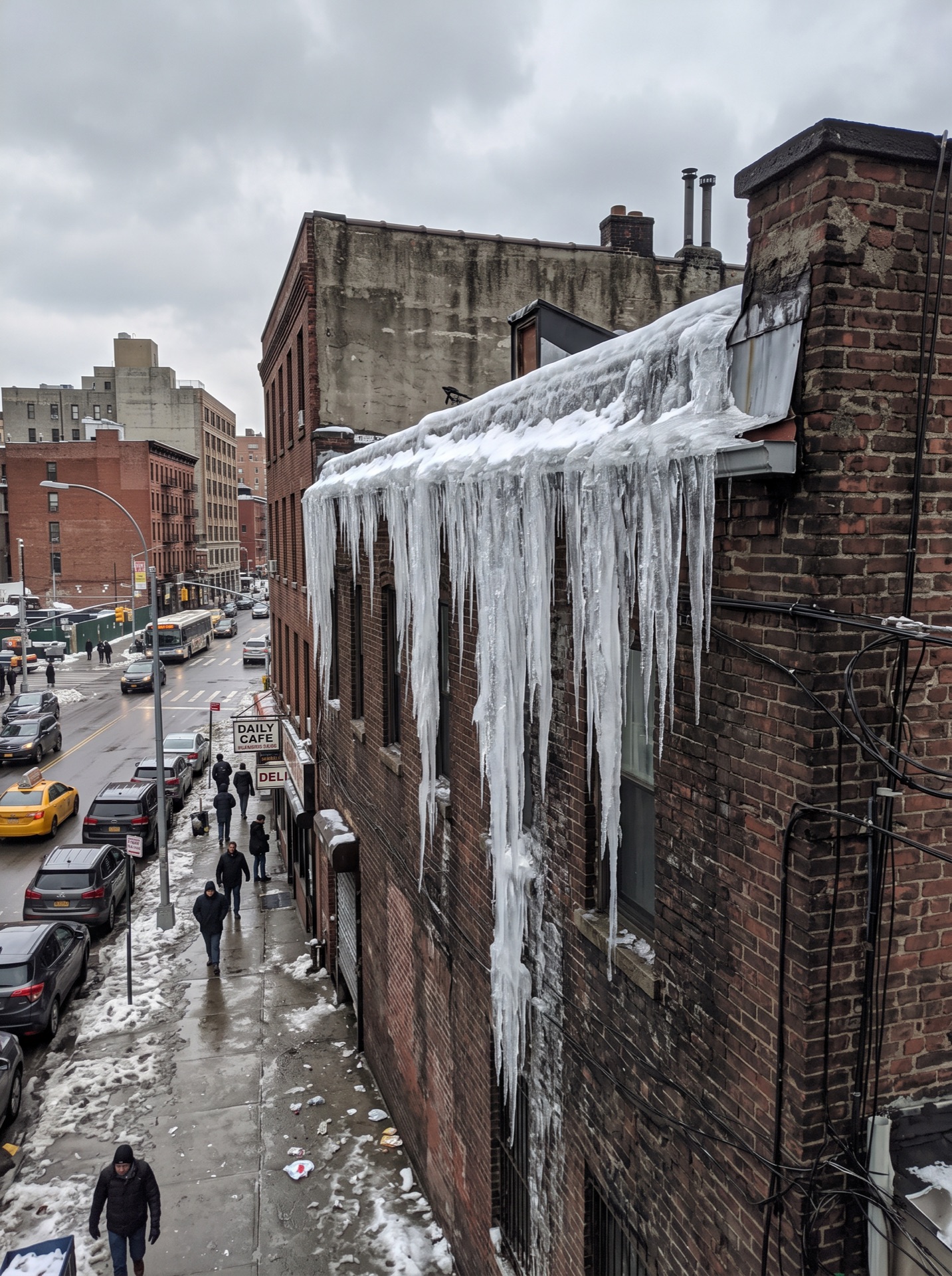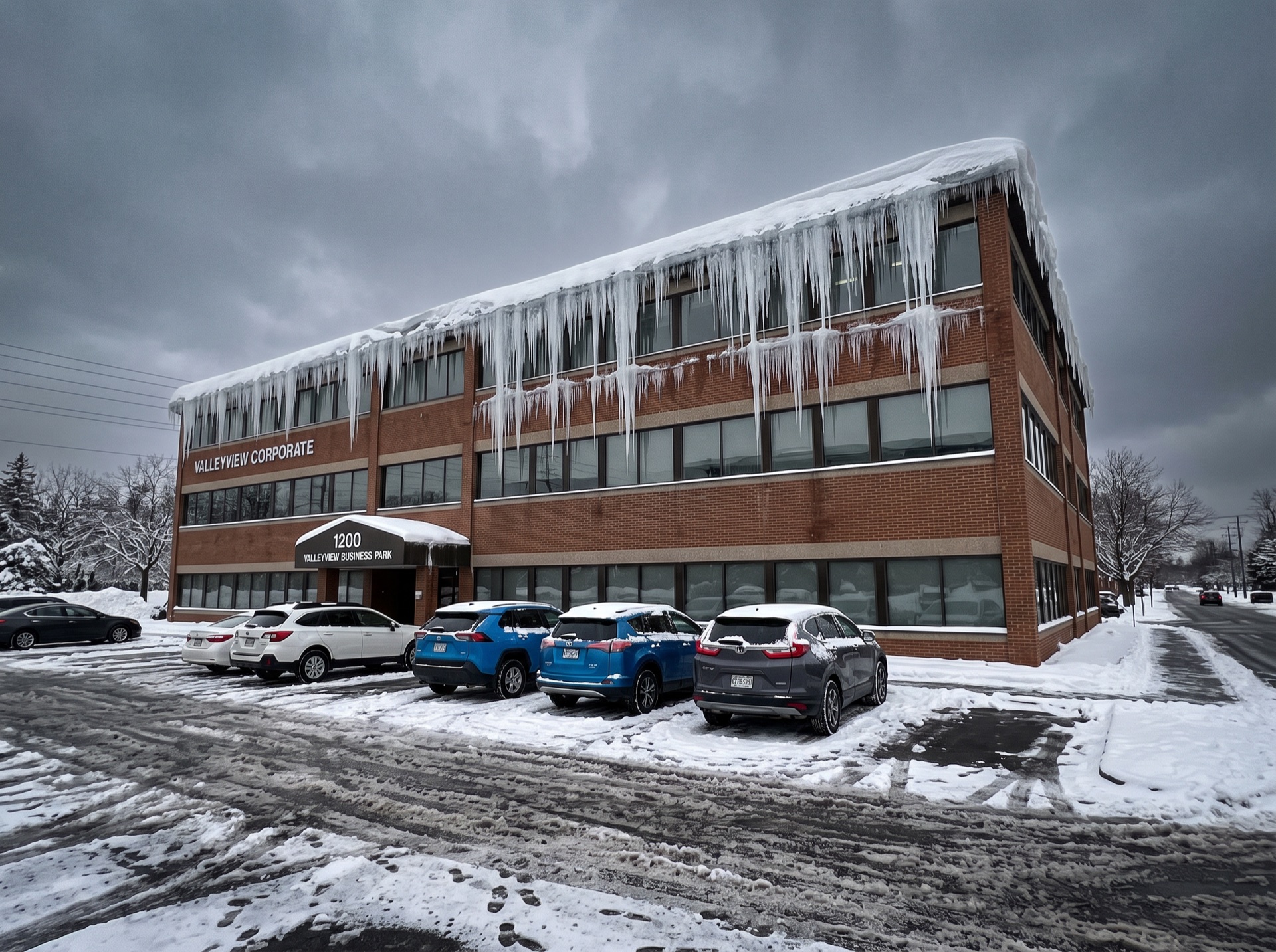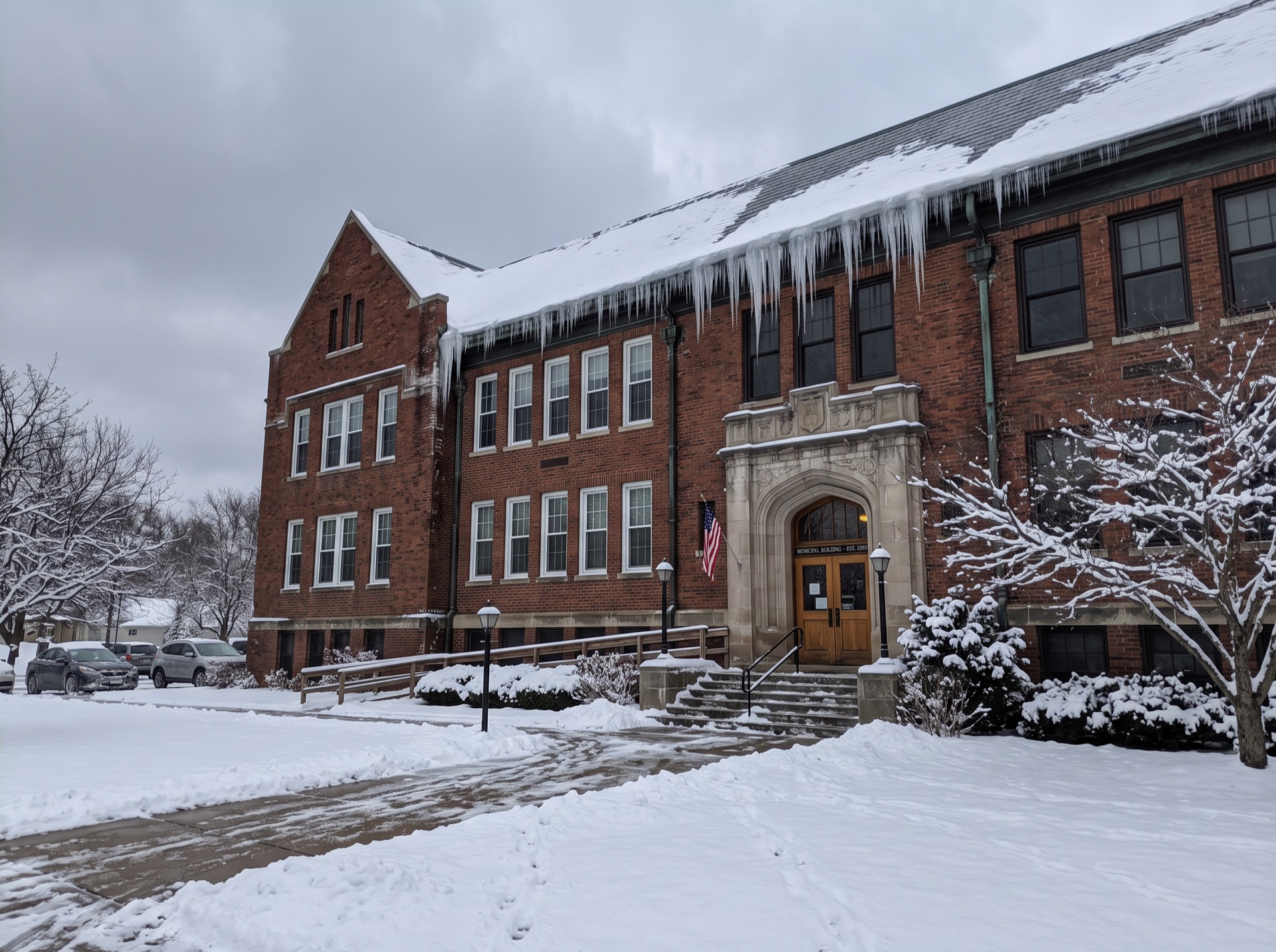
A Superior roof can look fine from the driveway and still be backing water under the shingles at the eave, where nobody can see it. As part of our complete Superior winter roof services, crews handle commercial roof snow removal across Douglas County.
Snow Bands, Warm Attics and the Superior Eave
What makes Douglas County roofs dam is not the seasonal total, it is how the snow arrives. Bands dump a heavy, saturated pack in hours, and that pack becomes a water reservoir sitting on a heated surface.

Each band is followed by a clearance and a cold night, and that is the cycle doing the damage. Meltwater released during the day sets at the eave after dark, and the ridge at the gutter line gains a layer every time.
Ice-barrier practice in Douglas County
What matters on a Superior roof is not whether ice barrier exists but how far up it runs. Water backed up behind a foot of ice travels much further than the first course, and a membrane that stops short is a membrane that stops working.
Commercial Roof Snow Removal in Superior: How The Work Runs
Ponding after the clear
Taking the snow off a flat roof with frozen drains leaves meltwater with nowhere to go, and water that ponds and refreezes puts load back on a deck that was just relieved. Ceiling Sagging or Bulging After Snow.
So drains and overflows are opened as part of the clear rather than afterwards, and the roof is left draining. A clear that stops at the snow is half a job.
Drains and overflows come first
Before anything else comes off, the drains, scuppers and overflow outlets get opened. Otherwise the melt from the clearing has nowhere to go and the roof trades a snow problem for a ponding one.
On a deck in Superior with internal drains that means confirming flow below, not just clearing the grate.
Why large decks carry the most risk
A long-span steel or open-web joist roof has the least margin exactly where the drift is deepest — mid-span. Snow does not settle evenly either: it piles against parapets, behind rooftop units, in the lee of higher adjoining roofs, and in valleys between bays. The average depth across the roof is not the number that matters.
Crews survey depth and density at the drift points rather than the middle of the field, and calculate the working load from that against the structure's design capacity.
Unbalanced loading is the real hazard
Snow does not settle evenly on a large deck. It piles against parapets, behind rooftop units, in the lee of a higher adjoining roof and in the valleys between bays.
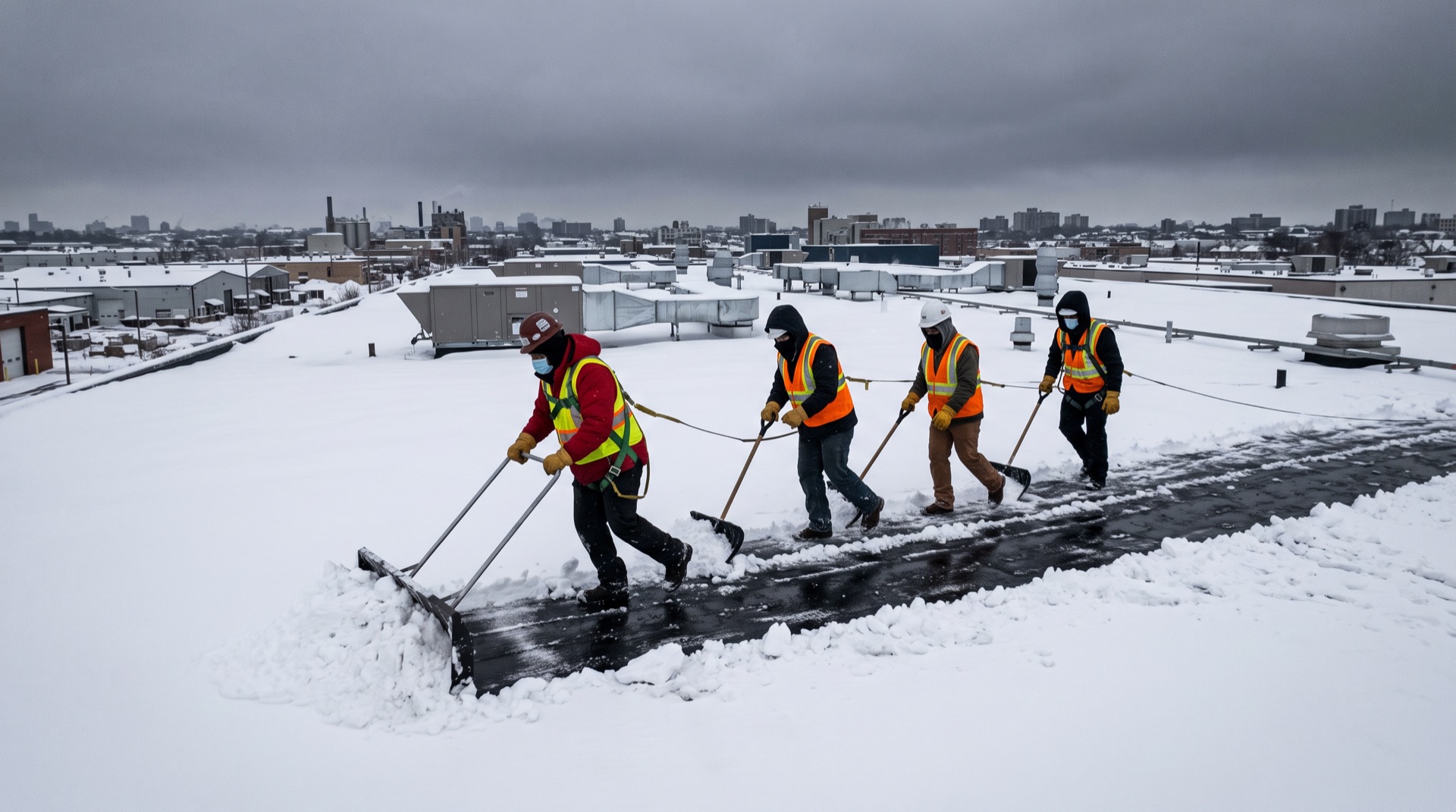
Clearing has to be balanced for the same reason. Taking it all off one bay and none off the next shifts the load rather than removing it.
Sequencing so the load comes off evenly
Stripping one bay to the deck while the next still carries two feet creates exactly the unbalanced condition that overloads a member. Structures object less to a lot of weight spread evenly than to a moderate weight concentrated on one side.
Crews work in passes across the whole span, reducing everywhere before going deeper anywhere, and the sequence is set before anybody starts rather than left to whoever gets up there first.
What you get in Superior
- Drift-point surveyDepth and density measured where it collects, not where it is convenient
- Drains kept openScuppers and internal drains cleared so meltwater has an exit
- Overflows opened firstDrains and scuppers cleared before the load comes off
| Documentation | Dated before and after photos, written scope in Xactimate line items |
|---|---|
| Typical scope | Steam, 6-12 crew hours typical |
| Service | Commercial Roof Snow Removal in Superior, WI |
| Coverage area | Superior and Douglas County |
| Dispatch window | Same day to 24 hours |
| Primary climate stressor | Lake-effect bands, wet heavy pack |
| Pricing model | Billed by the crew hour, rate quoted before dispatch |
Douglas County Coverage From Superior
Crews working Superior cover the adjoining communities on the same route — South Range — so a storm week usually means one truck handling several addresses in Douglas County rather than separate trips.
Nearest hub towns with their own commercial snow pages: Eau Claire, Marshfield, Wausau, Stevens Point, Wisconsin Rapids, La Crosse.
When a storm hits Douglas County, crews are dispatched by severity rather than by call order — water already inside the house goes first.
Most jobs do not stop at one service. Commercial Snow in Superior often runs alongside crane-assisted snow removal in Superior, and both get written into one scope rather than billed as separate visits.
Active leak right now? Our 24/7 Superior steam ice dam removal crews are dispatched first during a freeze event. Call (888) 561-9664.