


The Marathon County Pattern: Heavy Bands, Fast Thaws
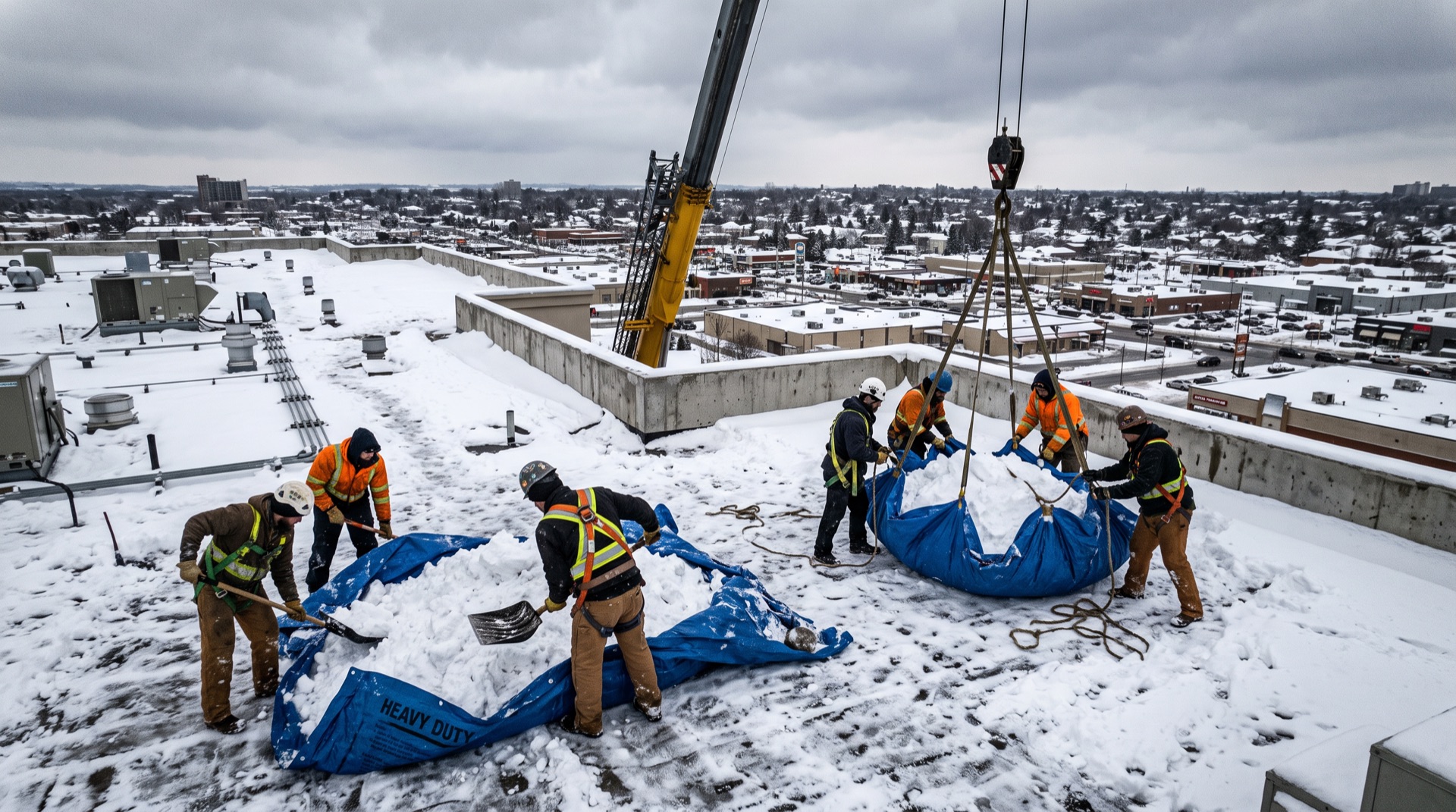
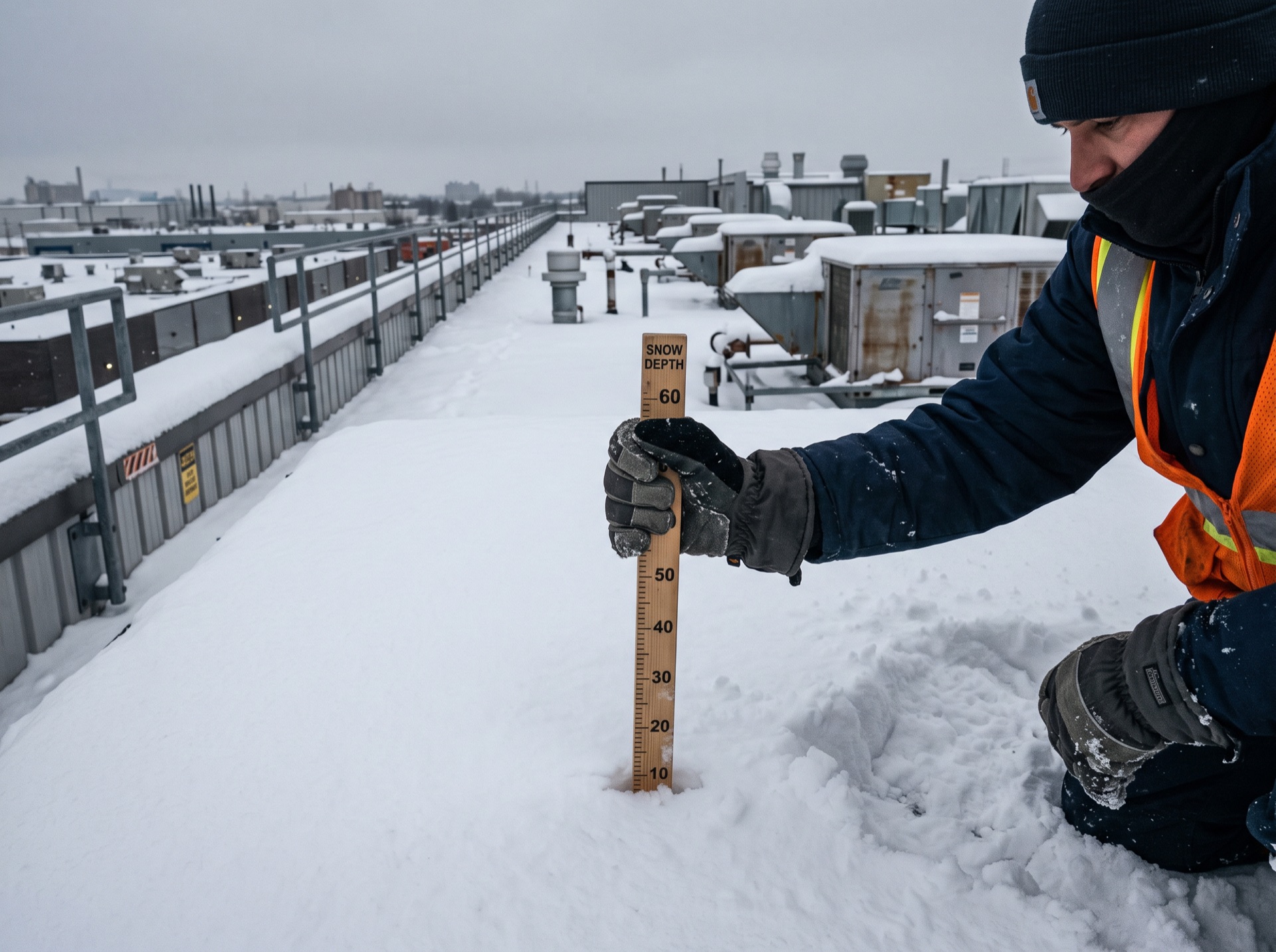
Roofs in Wausau are loaded unevenly and quickly. A band sets up, dumps for six hours and moves, and the roof is carrying a dense wet pack it did not have at breakfast. Nothing about that snow wants to slide off.

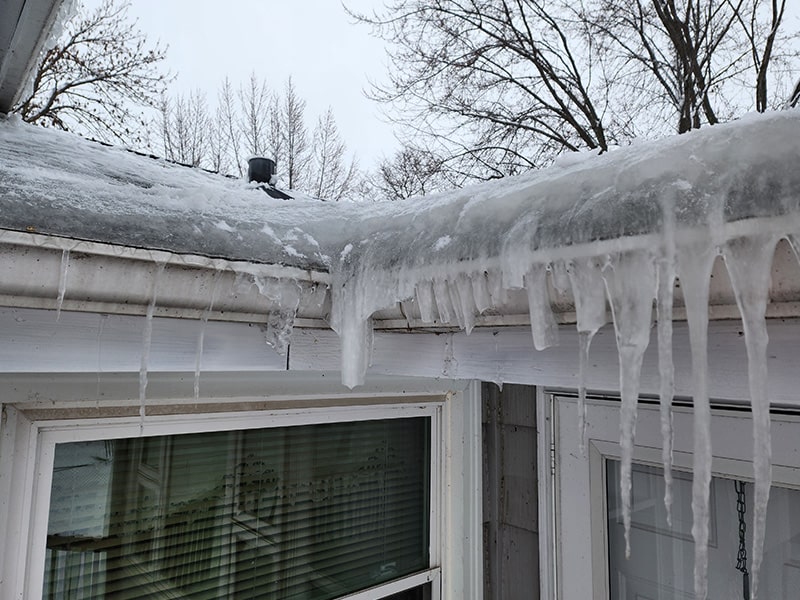
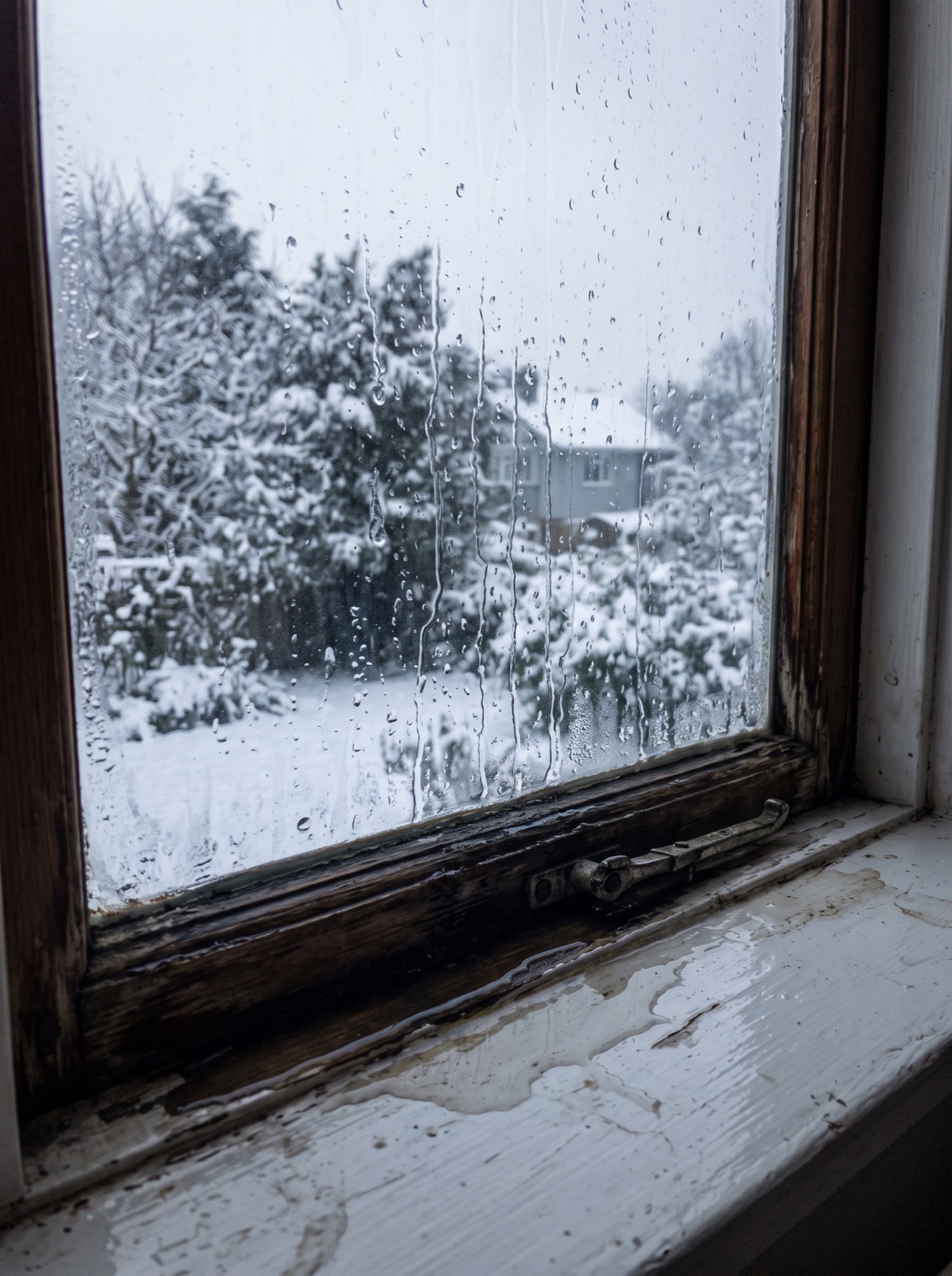
Then the temperature swings. Lake-effect regions cycle hard either side of freezing, and each cycle moves meltwater down to a cold eave and locks it there. The dam grows by a layer every time, and the water behind it rises with it.
Ice-barrier practice in Marathon County
What matters on a Wausau roof is not whether ice barrier exists but how far up it runs. Water backed up behind a foot of ice travels much further than the first course, and a membrane that stops short is a membrane that stops working.
The Wausau Dispatch Process, Step by Step
Crews walk the eaves, valleys and gutter line first and photograph every dam and every point where water is tracking inside, before touching anything. You get shown what they found and quoted the crew-hour rate before work starts.
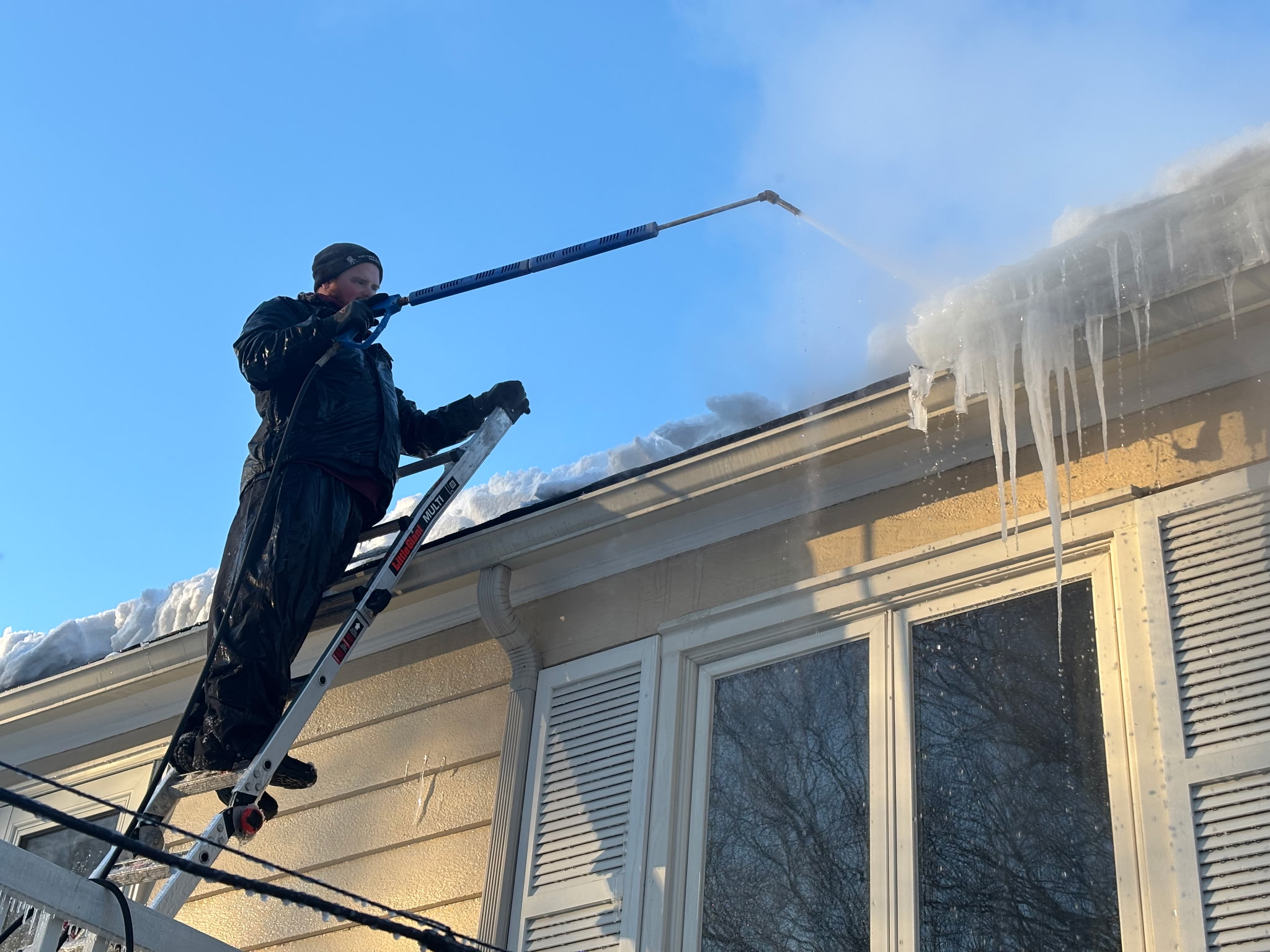
Then the ice comes off with low-pressure steam, starting wherever water is actively backing up so drainage opens early. Frozen gutters and downspouts are cleared in the same visit, because a cleared eave above a solid block of ice in the gutter dams again on the next cold night.
Why a drainage channel is not removal
Cutting a few channels through a dam so water can get past is quick and it is sometimes sold as ice dam removal. It drains the roof for as long as the channels stay open, which in a Wausau cold snap can be a single night before they close again.
Removing the dam means taking the ice off down to the shingle along the whole affected run, so the eave can drain the way it was built to. It takes longer and it is the only version that holds.
Why the gutter has to be cleared in the same visit
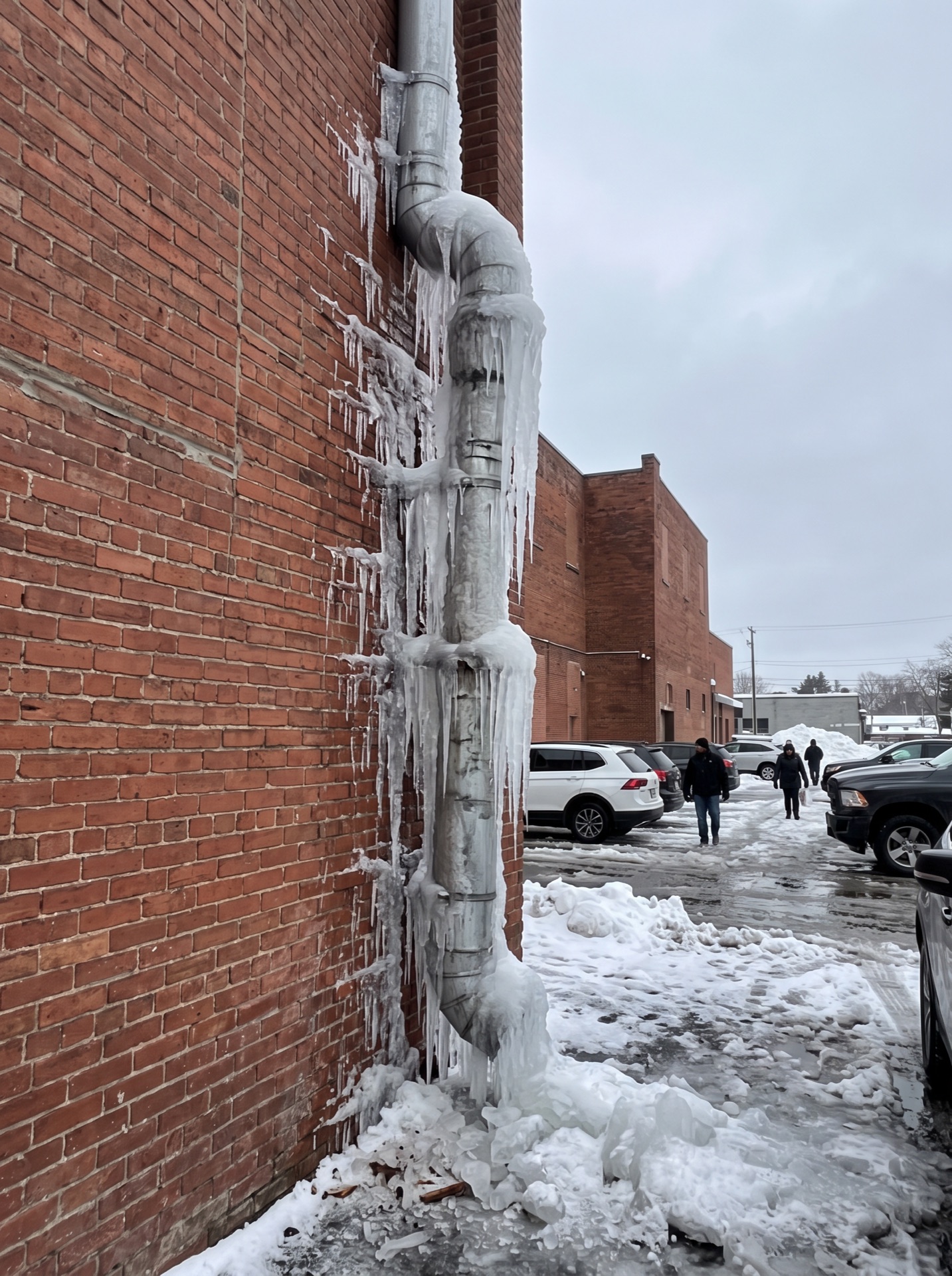
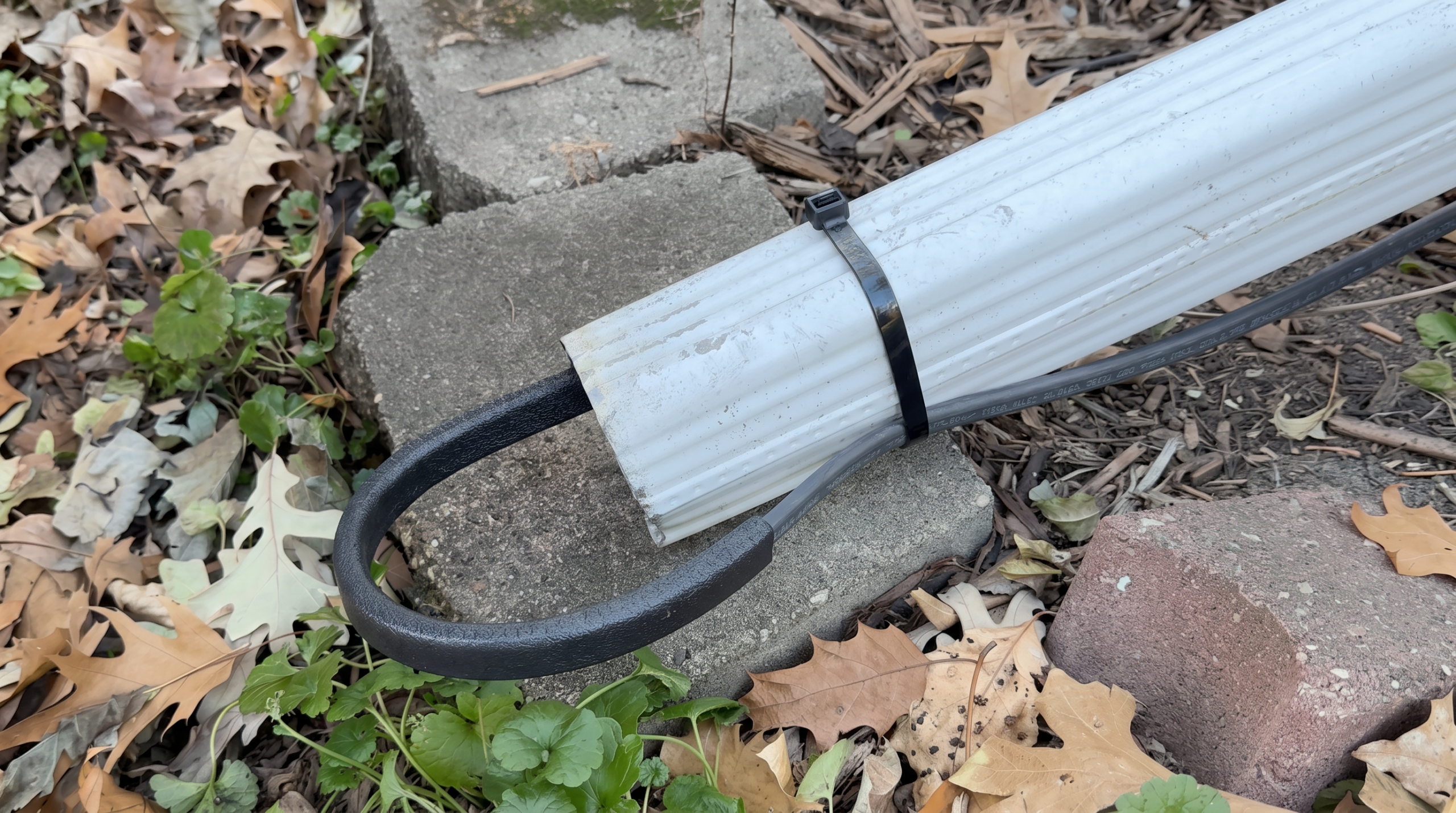
A dam sitting above a gutter packed solid with ice is only half the problem. Clear the eave and leave the trough frozen, and the next day's meltwater has nowhere to run — it backs up onto the roof and the dam rebuilds from the bottom.
Crews steam the trough and the downspout through to daylight on the same visit. It adds time, which is why the hour estimate given on the phone accounts for it, and it is the difference between a fix and a repeat visit in Wausau the following week.
What the dam has already done to the gutter and fascia
Ice expands as it forms, and a trough packed solid pushes the gutter away from the fascia a little more every cycle. By the time the dam is thick enough to leak, the hangers are often pulled, the back of the trough has lifted, and the fascia board behind it has been wet for weeks.
None of that is visible until the ice is off. It gets photographed when it appears, because a bent gutter found in February is a great deal easier to argue about with a carrier than one discovered in May.
| Dispatch window | Same day to 24 hours |
|---|---|
| Removal method | Low-pressure steam only. No chipping, salt or pressure washing. |
| Typical scope | Steam, 6-12 crew hours typical |
| Pricing model | Billed by the crew hour, rate quoted before dispatch |
| Primary climate stressor | Lake-effect bands, wet heavy pack |
| Documentation | Dated before and after photos, written scope in Xactimate line items |
| Service | Ice dam removal in Wausau, WI |
Neighborhoods and Towns We Reach From Wausau
Crews working Wausau cover the adjoining communities on the same route — Brokaw, Schofield, Rothschild, Marathon and Ringle — so a storm week usually means one truck handling several addresses in Marathon County rather than separate trips.
Nearest hub towns with their own crew pages: Stevens Point, Marshfield, Wisconsin Rapids, Appleton, Neenah, Oshkosh.
Coverage runs across Wausau and the nearby towns all winter, and capacity is surged into whichever Wisconsin market the storm actually hits.
Water coming in right now in Wausau? Call (888) 561-9664. Active interior leaks go to the front of the schedule.