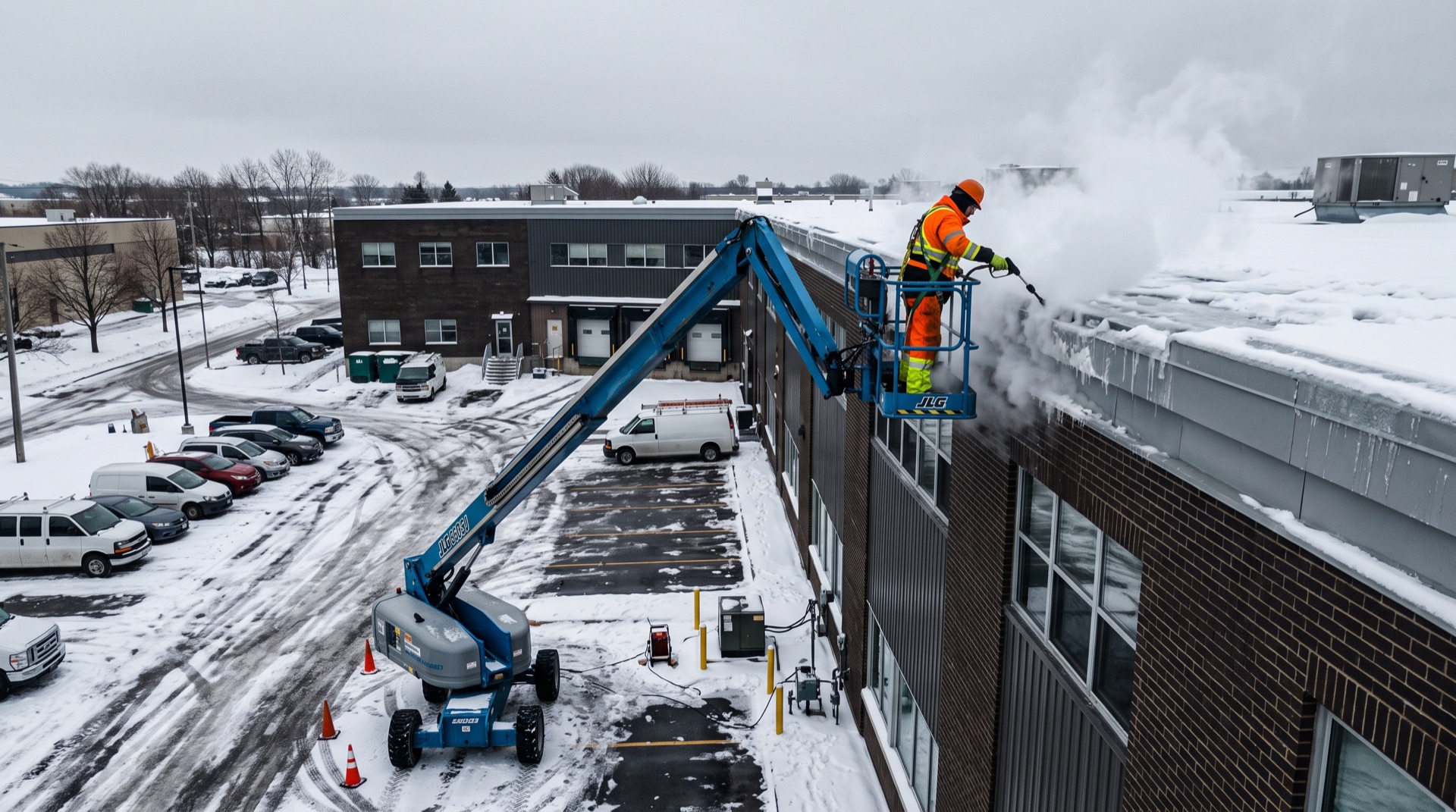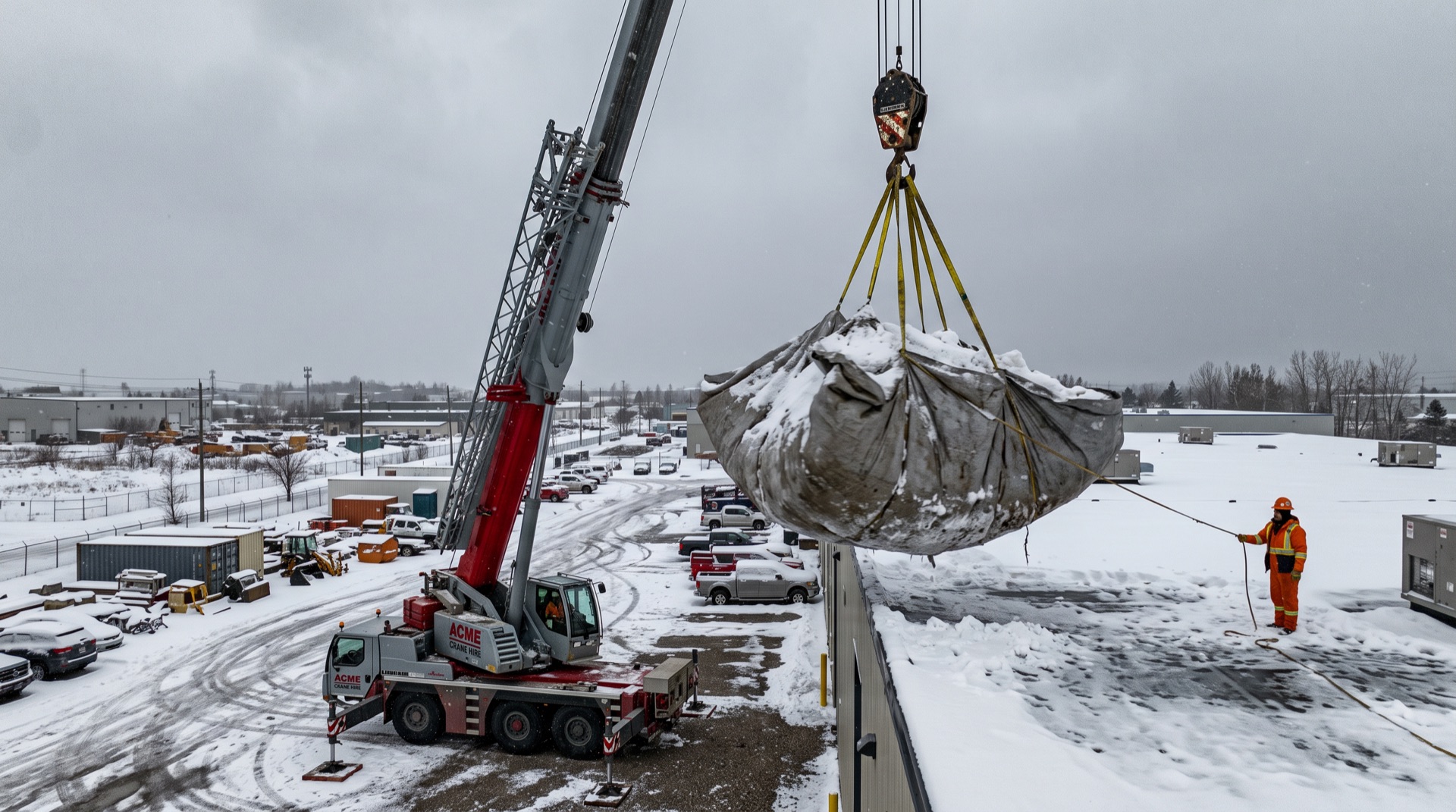
Washington County sees the same pattern every winter: snow on the roof, warm air in the attic, and a line of ice building along the eave where the two meet. As part of our complete St. George winter roof services, crews handle crane-assisted snow removal across Washington County.
Why St. George Roofs Dam on Days It Never Thaws
Thin air at altitude means intense direct sun even in deep cold. A St. George roof can be melting on its south face at midday in air that never gets near freezing, and all of that water has to go somewhere.

That is why mountain roofs dam up on clear, cold weeks that look harmless. South and west faces melt, north-facing eaves and shaded valleys hold the ice, and the pack above keeps feeding it.
Ice-barrier practice in Washington County
Design snow loads up here are among the highest in the country, and the membrane and retention details that come with them are not paperwork. On an older St. George cabin neither is likely to be present.
Crane-Assisted Snow Removal in St. George: How The Work Runs
What it protects
Avoiding a structural failure is the obvious part. The less obvious part is that most carriers treat preventing an imminent collapse as loss mitigation, which is a very different conversation from a claim filed after the deck comes down. Weights, depths and dates are documented throughout for exactly that reason. Ceiling Sagging or Bulging After Snow.
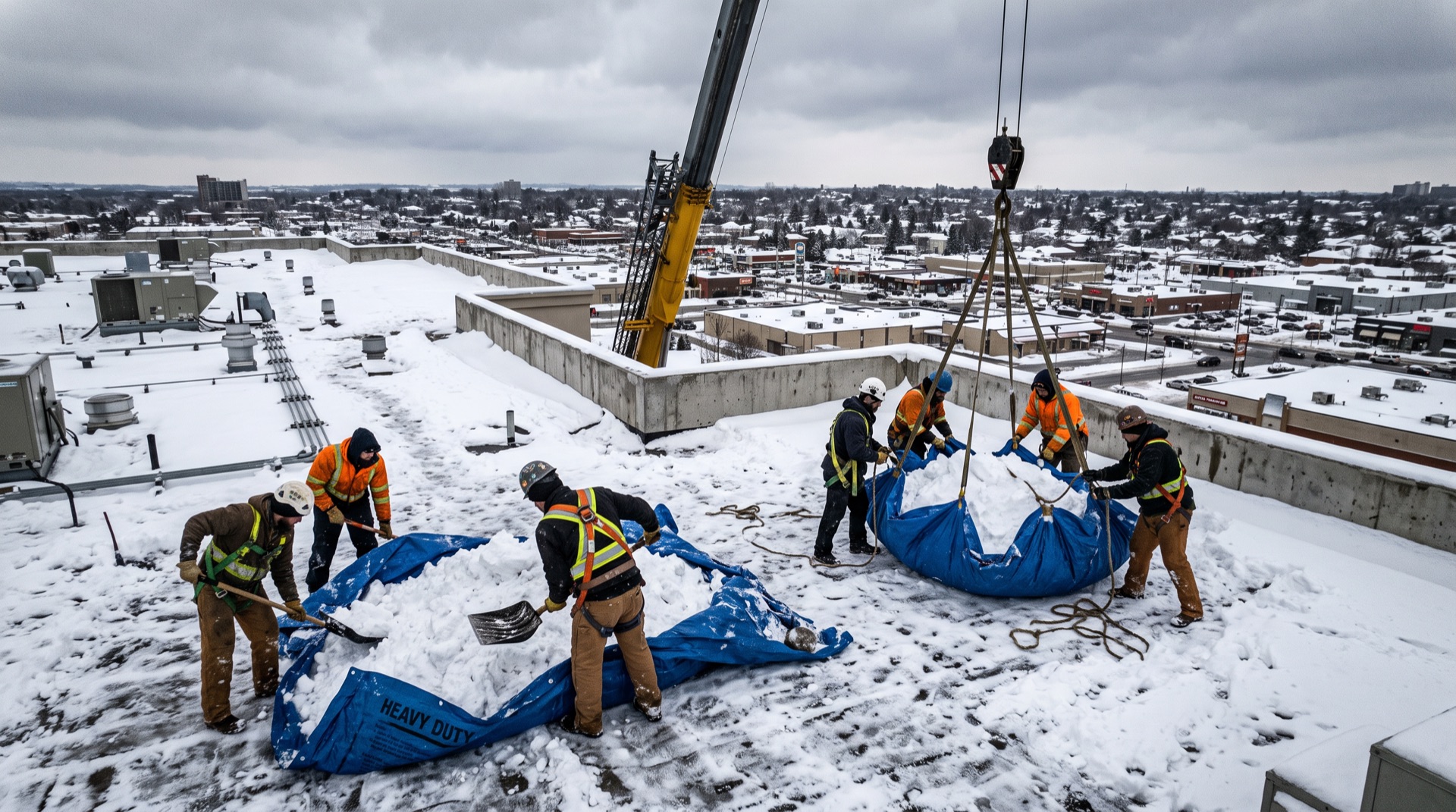
What goes in the tarp and what does not
A pick lifts loose and broken snow. It does not lift a solid sheet of ice frozen to the membrane, and trying to make it do so is how a tarp takes the roof covering with it.
So the sequence is crews cutting and breaking the pack into liftable material, the crane moving it, and steam dealing with whatever is bonded to the surface. The crane is the transport, not the demolition.
What happens if the crane cannot get close enough
Overhead power, a narrow alley, soft ground that will not take outrigger loads, or a neighboring building in the swing path can all rule out a setup after a site visit.
That gets found on the walk rather than on the day. Where a crane genuinely will not work, the honest answer is a larger hand crew over more days with the cost difference laid out - not a pick that was never going to fit.
Why it is often the cheaper number
Per hour a crane costs more than a crew with shovels. Per roof it frequently costs less, because a pick that takes an afternoon can replace several crew-days of hand clearing.
On a large St. George deck the crane is routinely both the faster and the cheaper answer, and the comparison gets shown rather than asserted.
Keeping people clear of the swing
A loaded tarp overhead is a serious exclusion zone. Pedestrian and vehicle routes get marshalled for the whole operation, and on an occupied building that means talking to whoever controls the doors before the first lift.
On a site in St. George with public frontage this is usually the part that needs the most coordination and the part that gets the least credit.
What you get in St. George
- Load calculated firstDepth, density and area against design capacity before anything mobilises
- Marshalled exclusion zonePedestrian and vehicle control for the whole operation
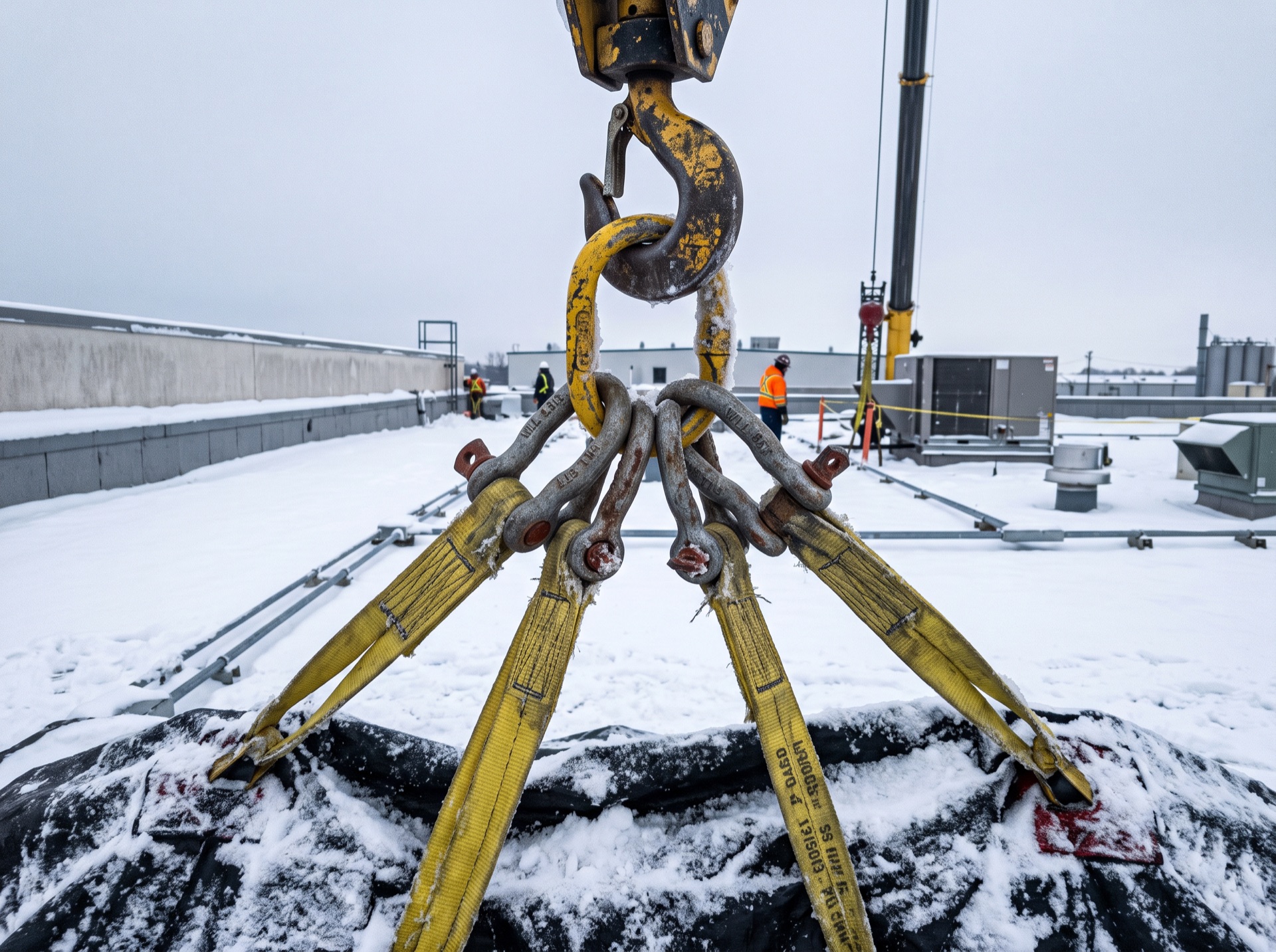
- Rip-stop tarp picksRated tarps and rigging, with lifts planned around the swing radius
| Documentation | Dated before and after photos, written scope in Xactimate line items |
|---|---|
| Typical scope | Steam, 8-16 crew hours typical |
| Local ice-barrier practice | Extended membrane plus snow retention |
| Service | Crane-Assisted Snow Removal in St. George, UT |
| Coverage area | St. George and Washington County |
| Removal method | Low-pressure steam only. No chipping, salt or pressure washing. |
| Dispatch window | 24 to 48 hours in mountain terrain |
Where We Dispatch Around St. George
Crews working St. George cover the adjoining communities on the same route — Saint George, Santa Clara, Washington, Ivins and Dammeron Valley — so a storm week usually means one truck handling several addresses in Washington County rather than separate trips.
Nearest hub towns with their own crane snow removal pages: Cedar City, Spanish Fork, Springville, Provo, Eagle Mountain, Orem.
During a cold snap St. George gets worked alongside the neighboring Washington County towns on the same route, with active interior leaks moved to the front of the list.
Most jobs do not stop at one service. Crane Snow Removal in St. George often runs alongside commercial roof snow removal in St. George, and both get written into one scope rather than billed as separate visits.
Active leak right now? Our 24/7 St. George steam ice dam removal crews are dispatched first during a freeze event. Call (888) 561-9664.