Skip to content
St. George, UT
Flat Roof & Parapet · Washington County

Commercial Ice Dam Removal in St. George, UT — Alpine Emergency Crews

Commercial Ice Dam Removal in St. George, UT from Ice Dam Now: low-pressure steam only, across Washington County. No chipping, no salt, no pressure washing. Crews carry licensing, insurance and fall-protection certification, bill by the crew hour at a rate quoted on the phone, prioritize active interior leaks the same day, and document the work for insurance.

Flow confirmed below — An open drain throat over a frozen leader is not an open drain
Documentation for the board — Condition report and photo record with every invoice
Overnight windows available — Work scheduled outside occupancy where access demands it
Drains and scuppers first — Flow restored before the ponded ice is worked

Get Ice Dam Help St. George

A few quick questions, then pick a time. If water is coming in, call instead.

What is the zip code of the home?

Roof leaking right now? Call (888) 561-9664 — that is faster than any form.
Water coming through the ceiling?Every hour an ice dam sits there, more water gets under the shingles.Call (888) 561-9664
Same Day
For Water Already Inside
Steam
Safe On Every Covering
Washington
County Coverage
Insured
Harness-Certified On Every Roof
Written
Scope Before Work Starts

If you are in St. George watching icicles grow along the gutter line, what you are really watching is water that no longer has anywhere to drain. As part of our complete St. George winter roof services, crews handle commercial ice dam removal across Washington County.

Why St. George Roofs Dam on Days It Never Thaws

Thin air at altitude means intense direct sun even in deep cold. A St. George roof can be melting on its south face at midday in air that never gets near freezing, and all of that water has to go somewhere.

Diagram showing how ice dams form on roofs due to inadequate insulation and poor ventilation
Heat escaping into the attic melts roof snow; the meltwater refreezes at the cold eave and the dam grows a layer every cycle.

That is why mountain roofs dam up on clear, cold weeks that look harmless. South and west faces melt, north-facing eaves and shaded valleys hold the ice, and the pack above keeps feeding it.

Ice-barrier practice in Washington County

Design snow loads up here are among the highest in the country, and the membrane and retention details that come with them are not paperwork. On an older St. George cabin neither is likely to be present.

Commercial Ice Dam Removal in St. George: How The Work Runs

Overflow scuppers are the tell

Water running out of an overflow scupper in winter means the primary drains are not taking it. On a St. George building that is a sign the roof is holding standing water somewhere above a frozen drain, and the load is being carried rather than shed.

Scuppers are checked first for exactly that reason, and a dry scupper above a wet roof is as informative as a running one.

Roof warranties and who is allowed up there

Most commercial membranes carry a manufacturer's warranty with conditions about who may work on the roof and what methods are permitted. Snow removal is generally fine; mechanical ice removal very often is not, and the wrong contractor with the wrong tool can void cover worth considerably more than the clearing.

The warranty gets read before the roof is walked, and the method used is one the document permits.

Parapets hold the water in

A parapet is why a commercial deck ponds instead of shedding. Scuppers through the parapet are the only exit, and they are narrow, exposed on three sides and the first thing to freeze solid.

Steaming a scupper throat open is often the single highest-value twenty minutes of a commercial St. George call.

What the board or the owner gets

A condition report with dated photographs, what was found, what was done and what is still a risk — in a form that can go to a board, an owner or a carrier without being rewritten.

For a managed St. George property that document is usually the reason the spend gets approved without a second conversation.

Working around rooftop plant

HVAC curbs, exhaust fans, conduit, gas lines, solar racking and railing are all obstacles and all drift traps. The snow behind a large unit is usually the deepest on the roof and the ice under it the thickest.

Crews work around and under them rather than over, and anything running stays running.
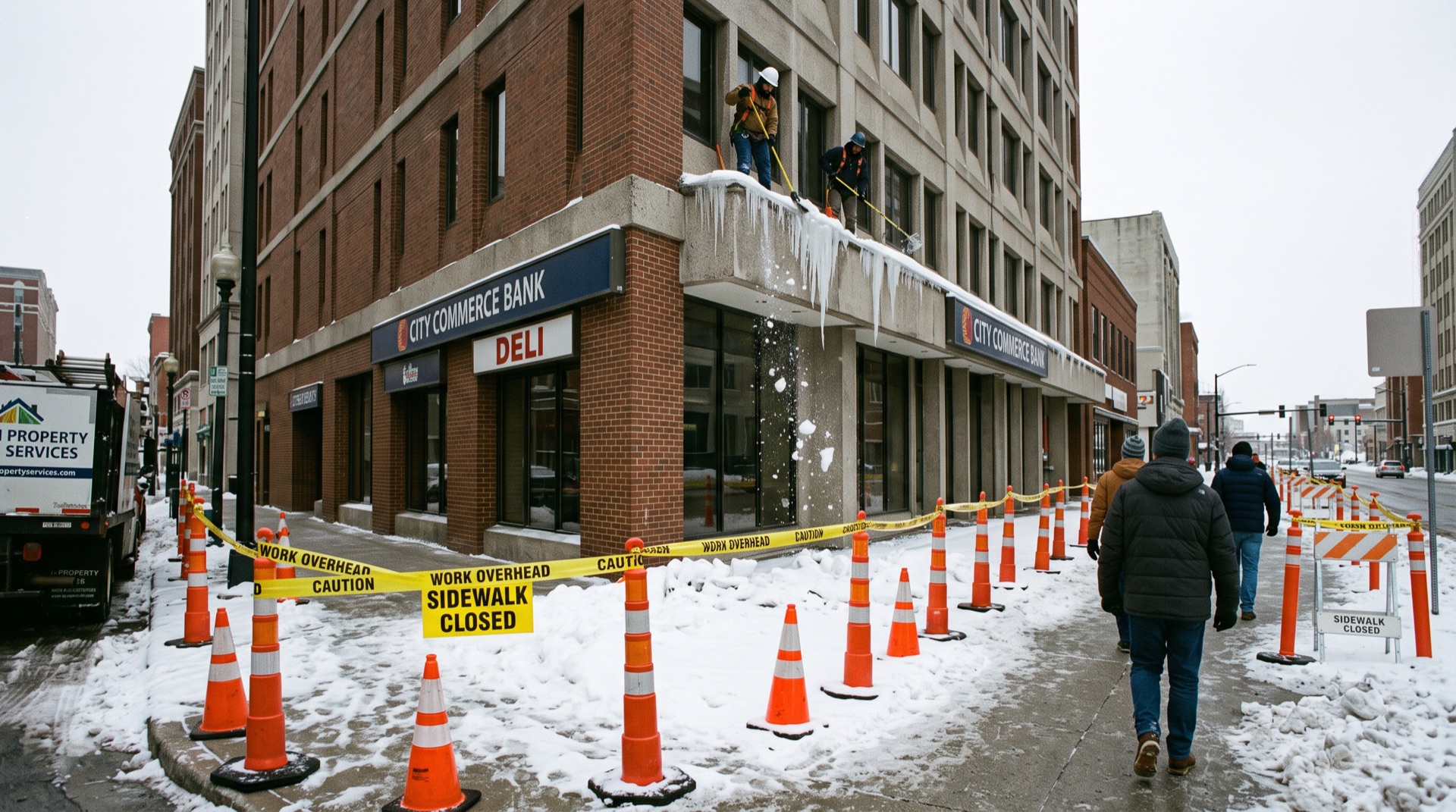
Workers removing snow and ice from building ledge above closed sidewalk with orange cones
Workers clear dangerous ice and snow from a City Commerce Bank building ledge while caution tape and cones protect pedestrians below.

What you get in St. George

  • Overnight windows availableWork scheduled outside occupancy where access demands it
  • Flow confirmed belowAn open drain throat over a frozen leader is not an open drain
  • EPDM, TPO and mod-bitLow-pressure steam only, seams and flashing details avoided
Commercial Ice Dam Removal in St. George, UT — specification
Service specification for St. George, UT
Removal methodLow-pressure steam only. No chipping, salt or pressure washing.
Pricing modelBilled by the crew hour, rate quoted before dispatch
Typical scopeSteam, 8-16 crew hours typical
Coverage areaSt. George and Washington County
ServiceCommercial Ice Dam Removal in St. George, UT
Dispatch window24 to 48 hours in mountain terrain
Primary climate stressorSolar melt on deep pack, shaded eaves

Where We Dispatch Around St. George

Crews working St. George cover the adjoining communities on the same route — Saint George, Santa Clara, Washington, Ivins and Dammeron Valley — so a storm week usually means one truck handling several addresses in Washington County rather than separate trips.

Nearest hub towns with their own commercial ice dams pages: Cedar City, Spanish Fork, Springville, Provo, Eagle Mountain, Orem.

St. George sits inside the regular Utah service area, so a crew is usually scheduled the same day or the following morning.

Most jobs do not stop at one service. Commercial Ice Dams in St. George often runs alongside commercial roof snow removal in St. George, and both get written into one scope rather than billed as separate visits.

Active leak right now? Our 24/7 St. George steam ice dam removal crews are dispatched first during a freeze event. Call (888) 561-9664.
Conditions We Work In

Commercial Ice Dam Removal In Practice

Conditions crews work in across Washington County. Every job is photographed before and after.

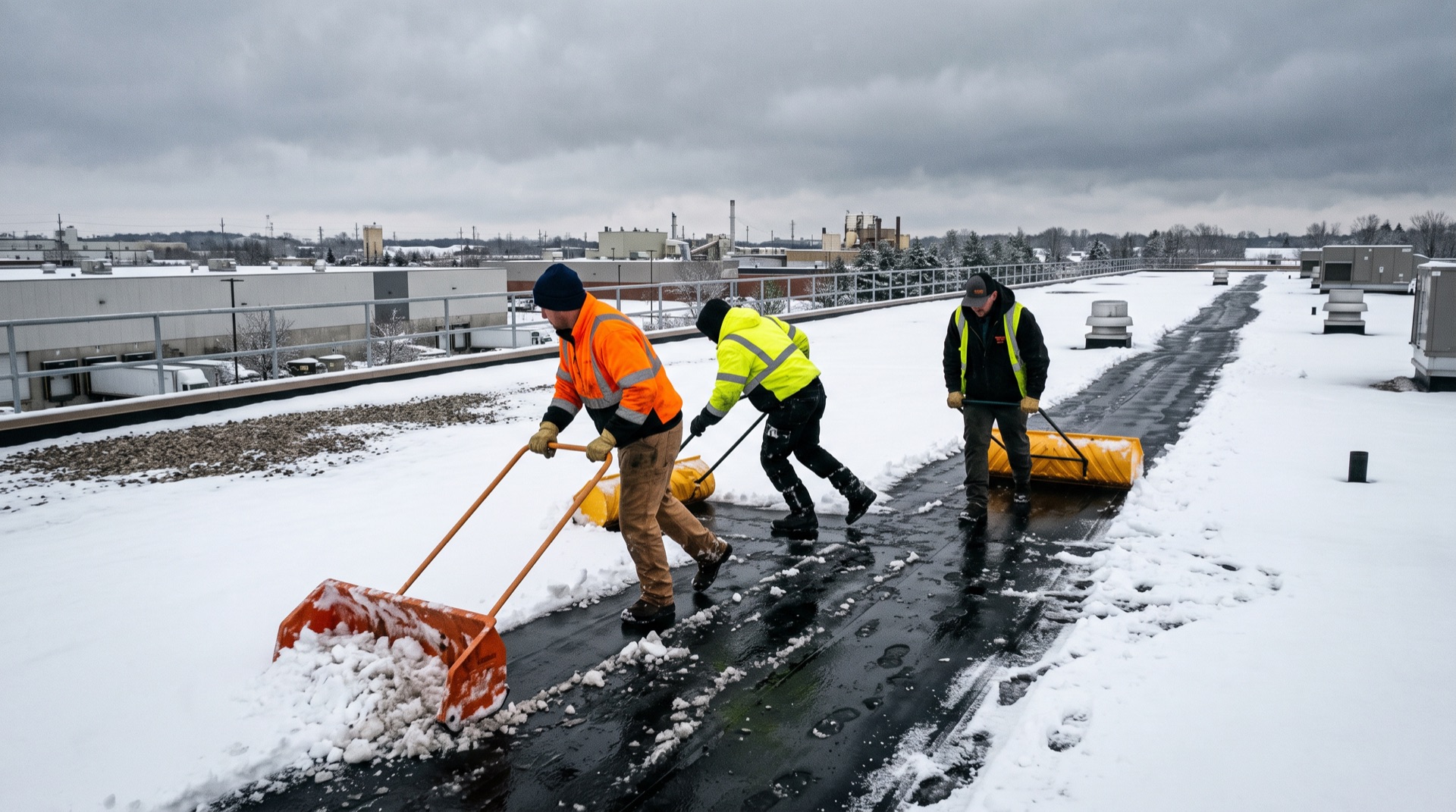
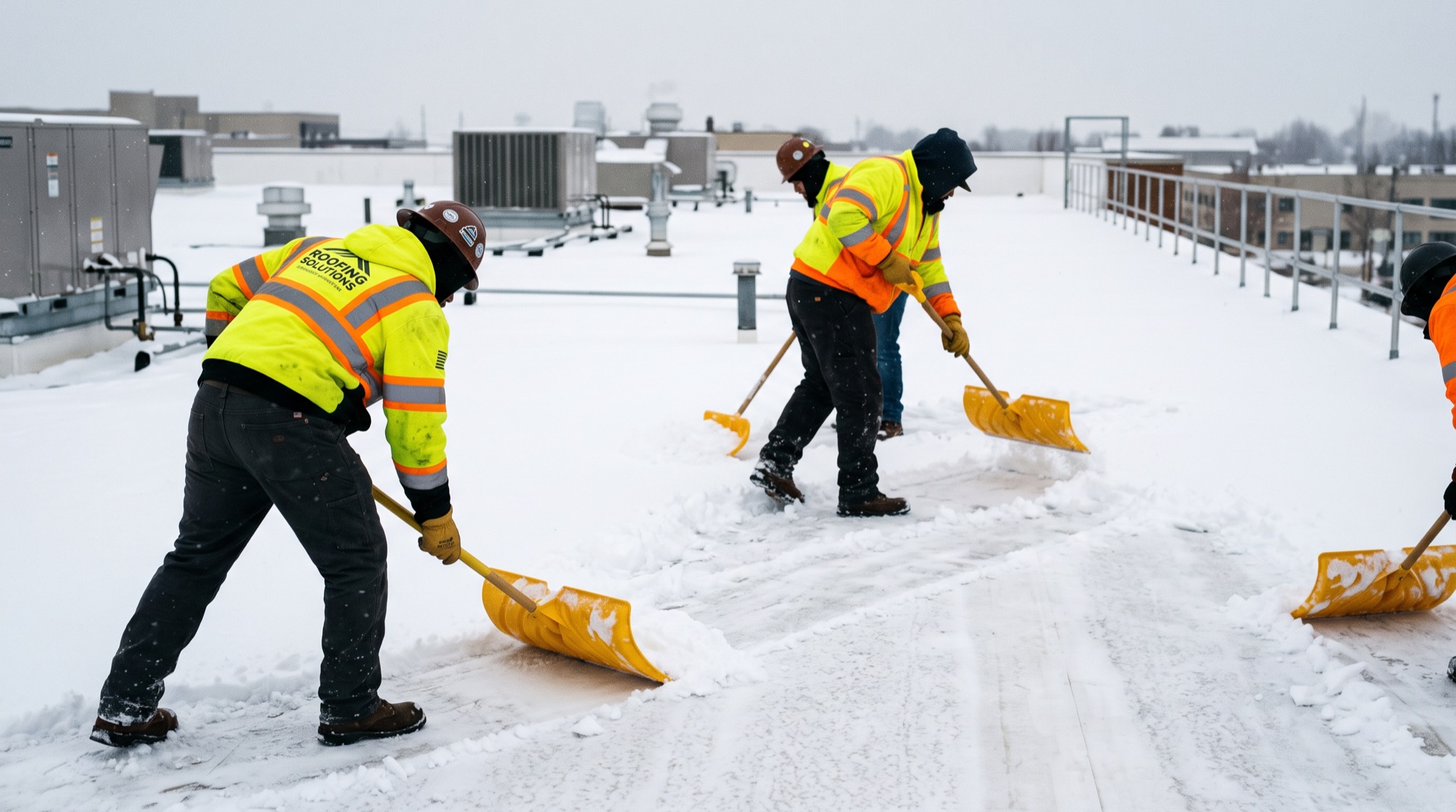
Three workers in high-visibility vests shoveling snow off a flat commercial roof
A professional roofing crew clears heavy snow accumulation from a TPO membrane roof during winter storm conditions.
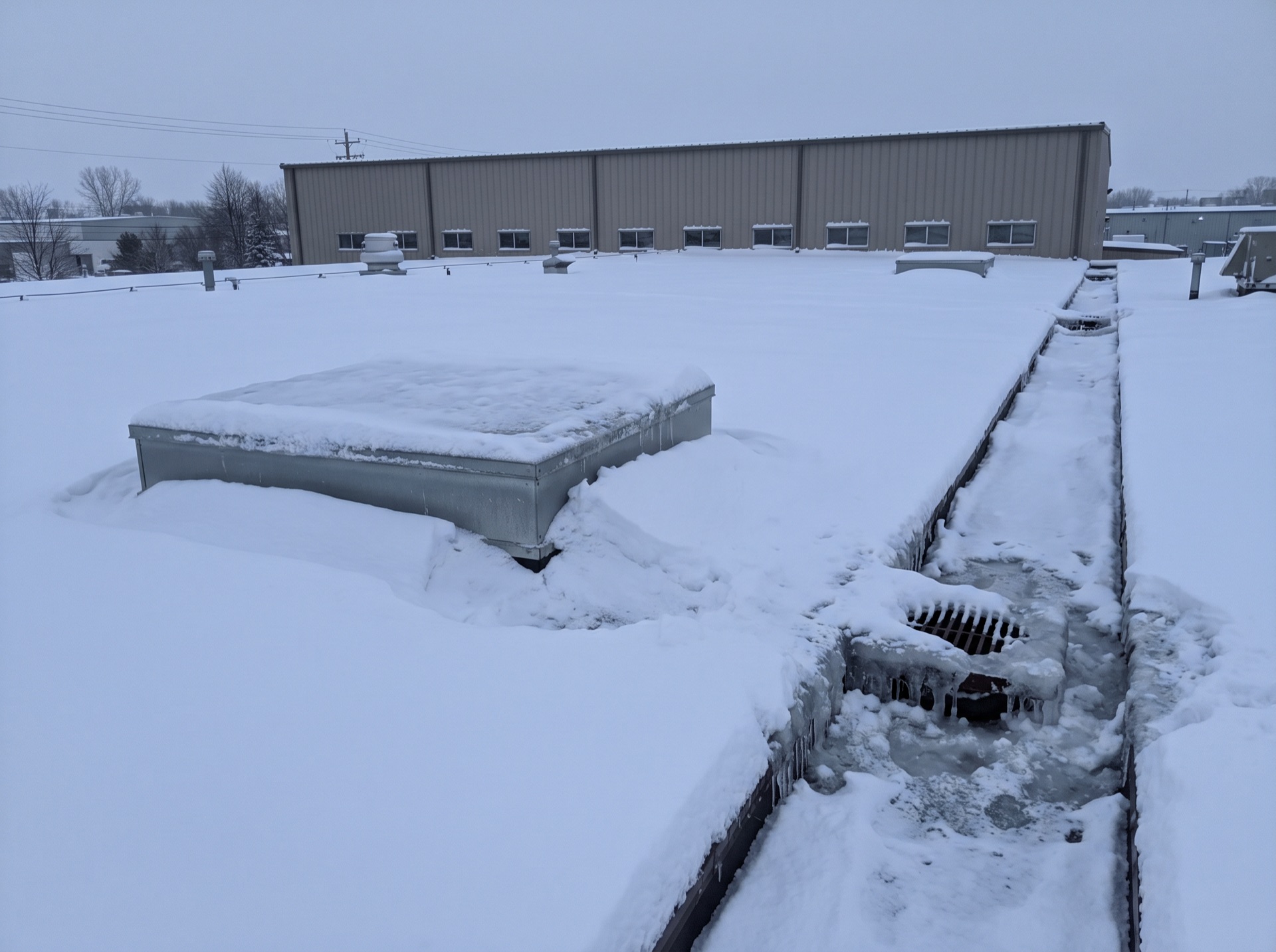
Heavy snow load on flat commercial warehouse roof with frozen drain and icicles
A flat commercial warehouse roof bears heavy snow accumulation with a completely frozen interior drain.
Three workers in high-visibility vests pushing snow off a flat warehouse roof
A three-person crew uses push plows to clear heavy snow from a large commercial flat roof.
FAQ

St. George Questions We Actually Get Asked

It is billed by the crew hour, and the rate plus a realistic time estimate are quoted on the phone before anyone is dispatched.

  • Scope drives the hours: length and thickness of the ice, roof pitch and height, and whether the gutters are frozen solid.
  • Access matters too — a three-story St. George roof takes longer to set up on than a ranch.
  • The invoice matches the quote. There are no surprise add-ons written on the tailgate.

Yes. The dispatch area runs across Washington County, and several addresses in one area are usually handled in the same run.

  • Adjoining communities are on the same route rather than treated as a separate trip.
  • Rural addresses outside the normal radius get told the travel position on the call.
  • Capacity is moved into whichever part of Utah the storm actually hits.

The crew hours on site, the equipment and the photo documentation - with the rate and an estimate given on the phone beforehand.

  • Travel to a St. George address inside the normal service area is not an added line.
  • If the roof turns out worse than described, you are told before the extra hours are worked.
  • The invoice matches what was quoted. Nothing gets added on the tailgate.

More than it looks from the ground - a foot-deep dam across a thirty-foot eave is a few thousand pounds.

  • Depth is measured at the eave rather than estimated from the driveway.
  • The gutter trough underneath is usually frozen solid too and is part of the same mass.
  • That weight is one of the reasons chipping at it from a ladder goes badly.

Because ice dams are made by heat loss, and two houses on the same street rarely leak heat the same way.

  • Attic air leaks around can lights, bath fans and the attic hatch are the usual source.
  • Crushed or missing soffit baffles stop the intake ventilation that would otherwise keep the deck cold.
  • An addition or dormer built over unheated space puts warm air right against a cold eave.
  • Local factor: altitude sun on deep pack makes the difference show up faster here than it would further south.

Yes, at the pressures used here. Heat melts ice without force, so there is nothing abrading the membrane or working at the seams. What is not safe on a membrane is a pressure washer, a chipper or any mechanical removal.

Yes. Retail frontages, restaurants and medical premises are routinely worked overnight or early, before the doors open. It costs more in labour and it usually costs less in disruption, and both numbers get put in front of you so the choice is yours.

Nearby

Commercial Ice Dams In Towns Around St. George

Same-Day Response

Get A St. George Crew Out

Every freeze-thaw cycle adds another layer to the dam and pushes a little more water under the shingles. That clock is already running.

✓ Licensed & insured✓ Low-pressure steam only✓ Rate quoted up front✓ Photos for your claim
Online Quote(888) 561-9664