
Skip to content
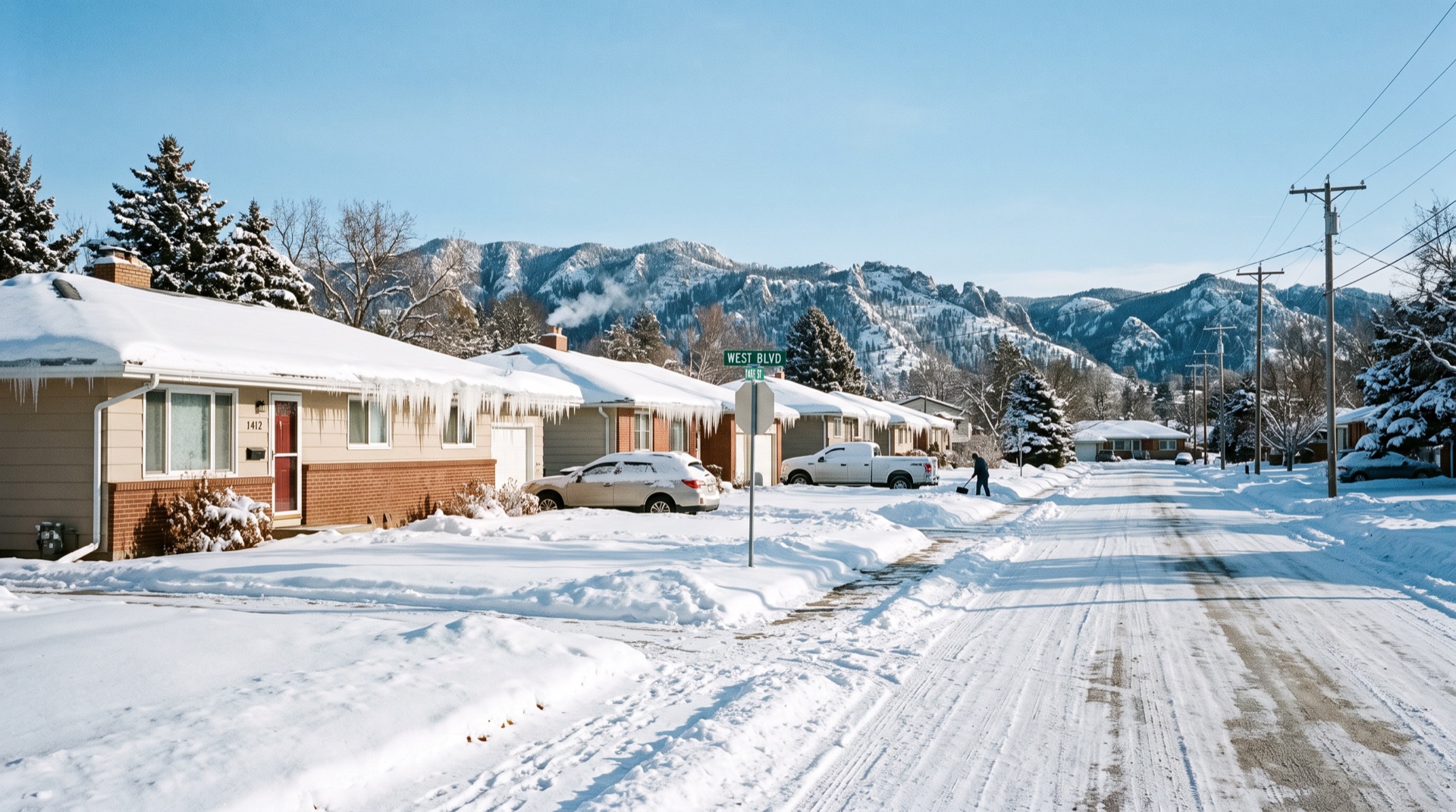
Rapid City, SD
Permanent Prevention · Pennington County

Heated Roof & Gutter Cables in Rapid City, SD — Full‑Season Storm Response

Ice Dam Now provides heated roof & gutter cables in Rapid City, SD and the surrounding Pennington County, using low-pressure steam only — never chipping, salt or pressure washing. Crews are licensed, insured and harness-certified, dispatch same day for active interior leaks, and bill by the crew hour at a rate quoted before dispatch. Dated photo documentation is supplied for insurance claims.

Self-regulating cable — Output varies along the run; safe to overlap, cut to length on site
Smart controls — Thermostat and moisture sensing so it runs on the conditions that make ice
Zig-zag sized properly — Eave coverage measured against the actual cold overhang
GFCI-protected circuit — Dedicated circuit and proper terminations, not an extension cord

Get Ice Dam Help Rapid City

A few quick questions, then pick a time. If water is coming in, call instead.

What is the zip code of the home?

Roof leaking right now? Call (888) 561-9664 — that is faster than any form.
Water coming through the ceiling?Every hour an ice dam sits there, more water gets under the shingles.Call (888) 561-9664
24/7
Dispatch All Winter
Steam
Only — No Pressure
Pennington
County Coverage
Same Day
For Active Leaks
Insured
Licensed & Harness-Certified

Homeowners across Pennington County call about icicles. Icicles are cosmetic. The dam behind them, holding back standing water, is not. As part of our complete Rapid City winter roof services, crews handle heated roof & gutter cables across Pennington County.

Months of Load: Why Rapid City Eaves Carry Ice

A roof in Pennington County spends most of the year's coldest months under continuous load. That is a different problem from a single heavy storm, and it produces a different kind of ice.

Diagram showing how ice dams form on roofs due to inadequate insulation and poor ventilation
Heat escaping into the attic melts roof snow; the meltwater refreezes at the cold eave and the dam grows a layer every cycle.

A long season is not a safer one. It means more freeze-thaw cycles, and each one adds a layer to the dam. By late winter the ice at a Pennington County eave can be a foot deep and locked to the shingle, with standing water sitting behind it.

Ice-barrier practice in Pennington County

Because the ice here does not stay near the edge, the South Dakota requirement generally runs the membrane well up the roof plane. On a house in Rapid City roofed a few decades ago it is frequently missing entirely.

Heated Roof & Gutter Cables in Rapid City: How The Work Runs

What heat trace does and does not do

A properly designed system keeps a continuous drainage channel open from the roof surface through the gutter and down the leader to the ground. Meltwater that would have refrozen at the cold eave instead keeps running. It does not melt the snow off your roof, and it will not remove a dam that has already formed — it prevents the dam from establishing in the first place. Icicles and a Wet Ceiling.

That distinction matters when comparing quotes. Anyone selling cable as an emergency fix for an existing dam is selling the wrong product.

Valleys, downspouts and the parts people forget

A zig-zag along the eave with nothing in the valley and nothing down the downspout produces a melted strip of roof draining into a solid block of ice. The water still has nowhere to go, and the dam just forms somewhere slightly different.

A system that works runs the full path: eave, valley, gutter trough and all the way down the downspout to daylight. The downspout run is the piece most often left out and the piece most often responsible for the system not working.

Layout is most of the job

The cable has to trace a complete path: a zig-zag at the eave deep enough to cover the cold overhang, down through the valleys, along the gutter trough and all the way down the downspout to daylight. A zig-zag that stops short of the heated wall line, or a gutter run with no downspout trace, produces a channel that dead-ends into ice.

Systems get a dedicated GFCI-protected circuit, and controls run on a combination thermostat and moisture sensor so the system runs when it matters and not through a dry January cold snap.

What happens when a section stops working

A dead run is usually one of four things: a tripped ground fault, a failed controller or sensor, physical damage at a specific point, or a connection at the end seal that has let water in.

They are diagnosed with a meter rather than by replacing the whole run. Self-regulating cable can generally be repaired in place with a proper splice kit, so a single damaged section does not mean a new system.

Why most cable installations underperform

Not because the cable is bad. Because the path is incomplete. A zig-zag along the first few feet of eave that does not continue into the gutter and down the leader melts a channel that ends in a block of ice.

The water has to get all the way to the ground. On a Rapid City install that means eave, valleys, trough and downspout traced as one continuous path, and it is the single thing that separates a system that works from one that does not.
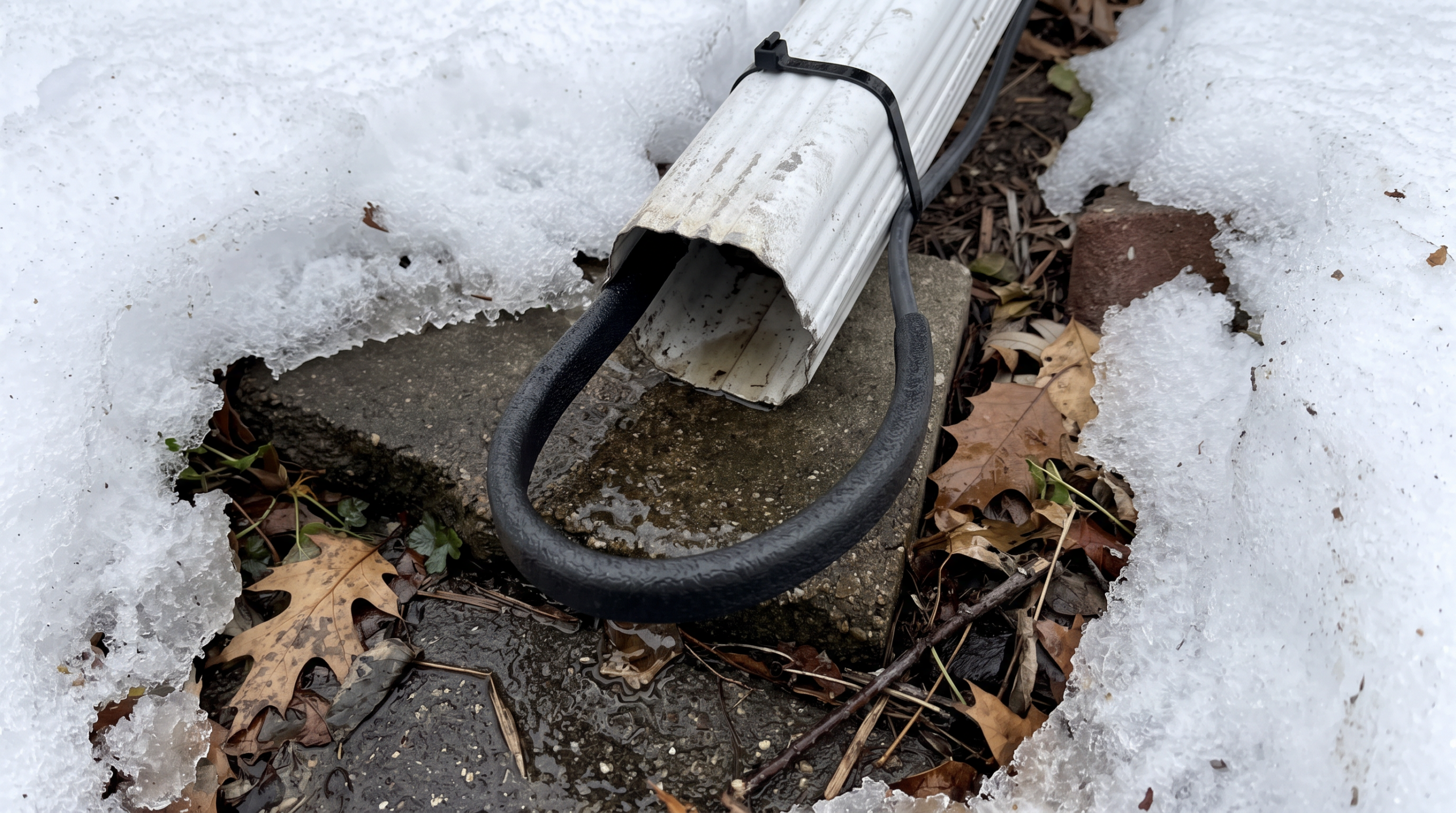
Heated cable loop preventing downspout from freezing in winter snow
A self-regulating heat cable loops through a downspout to keep water flowing during freezing temperatures.

What you get in Rapid City

  • GFCI-protected circuitDedicated circuit and proper terminations, not an extension cord
  • Zig-zag sized properlyEave coverage measured against the actual cold overhang
  • Smart controlsThermostat and moisture sensing so it runs on the conditions that make ice
Heated Roof & Gutter Cables in Rapid City, SD — specification
Service specification for Rapid City, SD
Local ice-barrier practiceEave membrane required on new work
Coverage areaRapid City and Pennington County
Dispatch windowSame day to 24 hours
DocumentationDated before and after photos, written scope in Xactimate line items
Removal methodLow-pressure steam only. No chipping, salt or pressure washing.
ServiceHeated Roof & Gutter Cables in Rapid City, SD
Typical scopeSteam, 6-14 crew hours typical

Rapid City Coverage and the Adjoining Communities

Crews working Rapid City cover the adjoining communities on the same route — Box Elder, Ellsworth Afb, Black Hawk, Keystone and Caputa — so a storm week usually means one truck handling several addresses in Pennington County rather than separate trips.

Nearest hub towns with their own heat cables pages: Deadwood, Spearfish, Pierre, Aberdeen, Mitchell, Yankton.

Coverage runs across Rapid City and the nearby towns all winter, and capacity is surged into whichever South Dakota market the storm actually hits.

Most jobs do not stop at one service. Heat Cables in Rapid City often runs alongside ice dam removal in Rapid City, and both get written into one scope rather than billed as separate visits.

Active leak right now? Our 24/7 Rapid City steam ice dam removal crews are dispatched first during a freeze event. Call (888) 561-9664.
Conditions We Work In

Heated Roof & Gutter Cables In Practice

Conditions crews work in across Pennington County. Every job is photographed before and after.

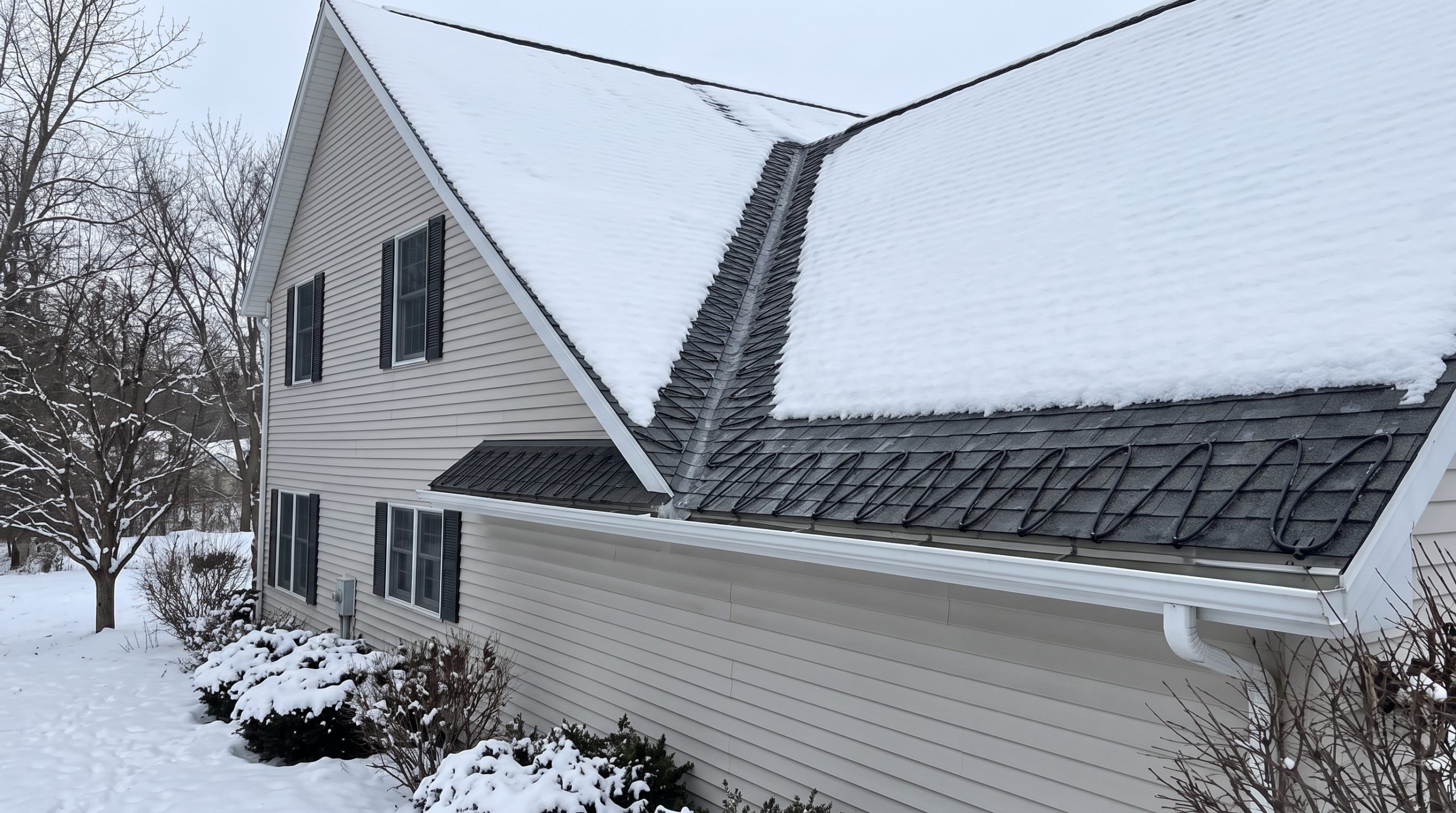
Roof valley with heat cable preventing ice dams on snow-covered house
Heat cables installed along a roof valley keep ice dams from forming during heavy snowfall.
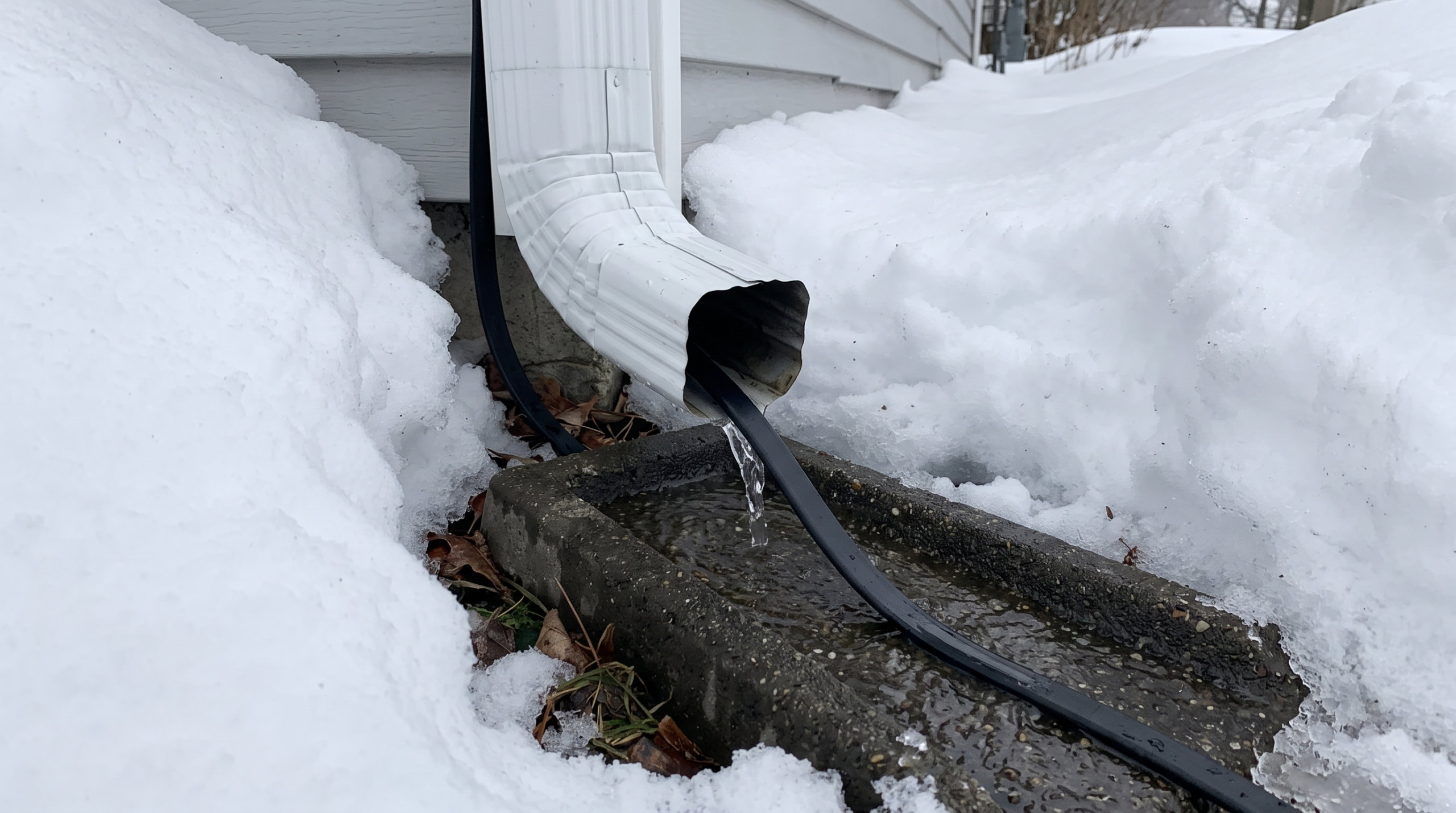
White downspout outlet draining water with heat cable in deep snow
A downspout outlet remains clear and actively draining during winter, assisted by a black heat cable.
Heated cable loop preventing downspout from freezing in winter snow
A self-regulating heat cable loops through a downspout to keep water flowing during freezing temperatures.
FAQ

Rapid City and Pennington County FAQ

It is billed by the crew hour, and the rate plus a realistic time estimate are quoted on the phone before anyone is dispatched.

  • Scope drives the hours: length and thickness of the ice, roof pitch and height, and whether the gutters are frozen solid.
  • Access matters too — a three-story Rapid City roof takes longer to set up on than a ranch.
  • The invoice matches the quote. There are no surprise add-ons written on the tailgate.

Because ice dams are made by heat loss, and two houses on the same street rarely leak heat the same way.

  • Attic air leaks around can lights, bath fans and the attic hatch are the usual source.
  • Crushed or missing soffit baffles stop the intake ventilation that would otherwise keep the deck cold.
  • An addition or dormer built over unheated space puts warm air right against a cold eave.
  • Local factor: sustained sub-freezing spells makes the difference show up faster here than it would further south.

Yes. Steam is safe on slate, cedar shake, tile and metal as well as asphalt, because it removes ice with heat rather than force.

  • Older Rapid City housing stock with original slate is exactly where chipping does the most damage.
  • Crews adjust the lance distance and dwell rather than the pressure.
  • Nothing mechanical touches the covering at any point.

More than it looks from the ground - a foot-deep dam across a thirty-foot eave is a few thousand pounds.

  • Depth is measured at the eave rather than estimated from the driveway.
  • The gutter trough underneath is usually frozen solid too and is part of the same mass.
  • That weight is one of the reasons chipping at it from a ladder goes badly.

Before the thaw rather than after it. The leak happens when the ice has water behind it, which is a day or two after the snow stops.

  • Calling during the storm is fine and often gets an earlier slot.
  • The expensive version is waiting until water appears on a ceiling.
  • Crews run across Pennington County from first light through a freeze event.

No. Heat trace keeps a drainage path open through ice that is still forming; it does not address the attic heat loss causing it, and it uses electricity rather than saving it. The permanent fix is air sealing and insulation. Cable is the backstop for the eaves and valleys that stay cold whatever you do.

Yes, with the right fixing method for each. What changes is how the cable is held on: adhesive and clip systems that do not penetrate the covering, rather than anything that puts a fastener through a slate or a standing seam. Getting that wrong creates the leak the system was meant to prevent.

Nearby

Heat Cables In Towns Around Rapid City

Same-Day Response

Get A Rapid City Crew Out

Waiting for a thaw is a strategy, but it is an expensive one — the melt has to go somewhere, and it goes into the insulation first.

✓ Licensed & insured✓ Low-pressure steam only✓ Rate quoted up front✓ Photos for your claim
Online Quote(888) 561-9664