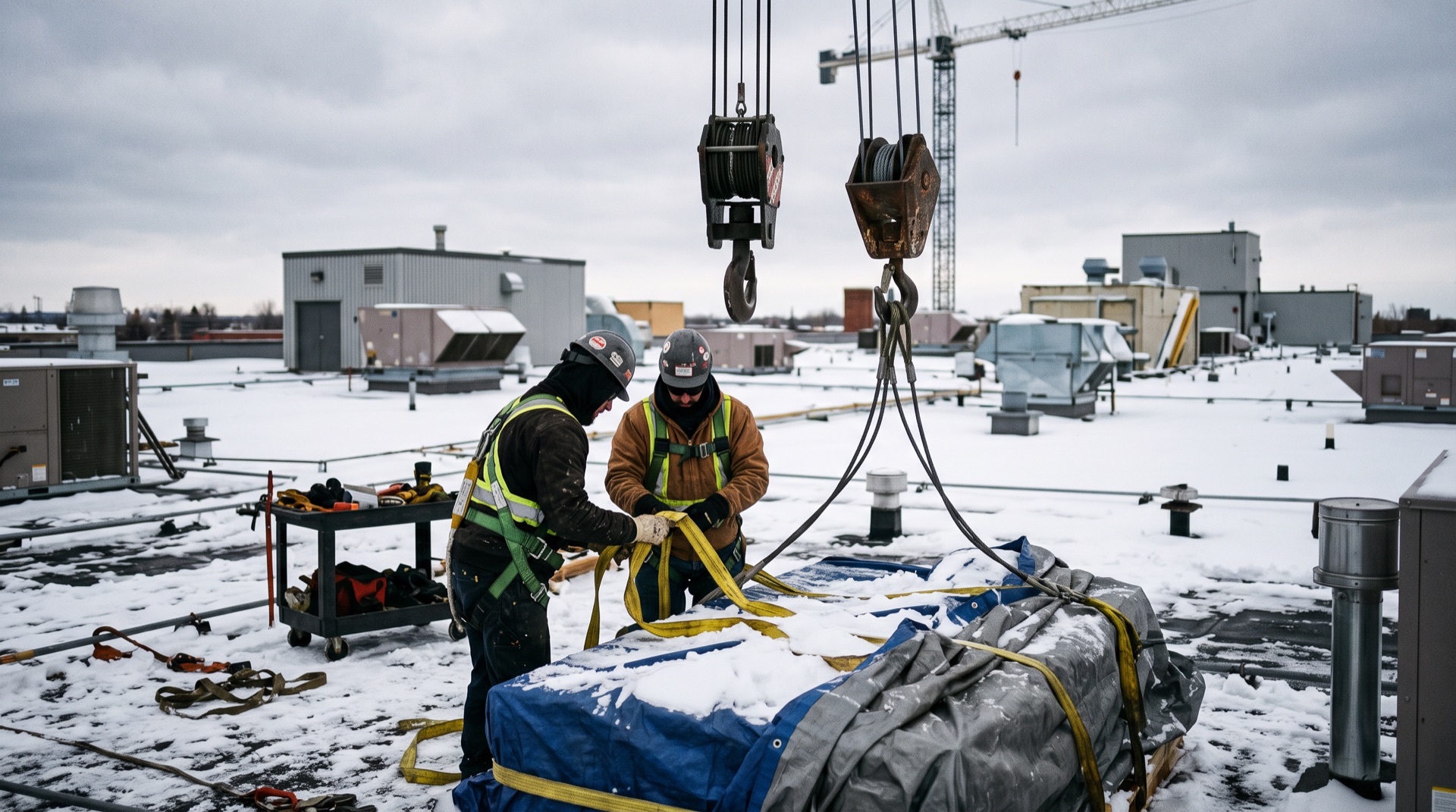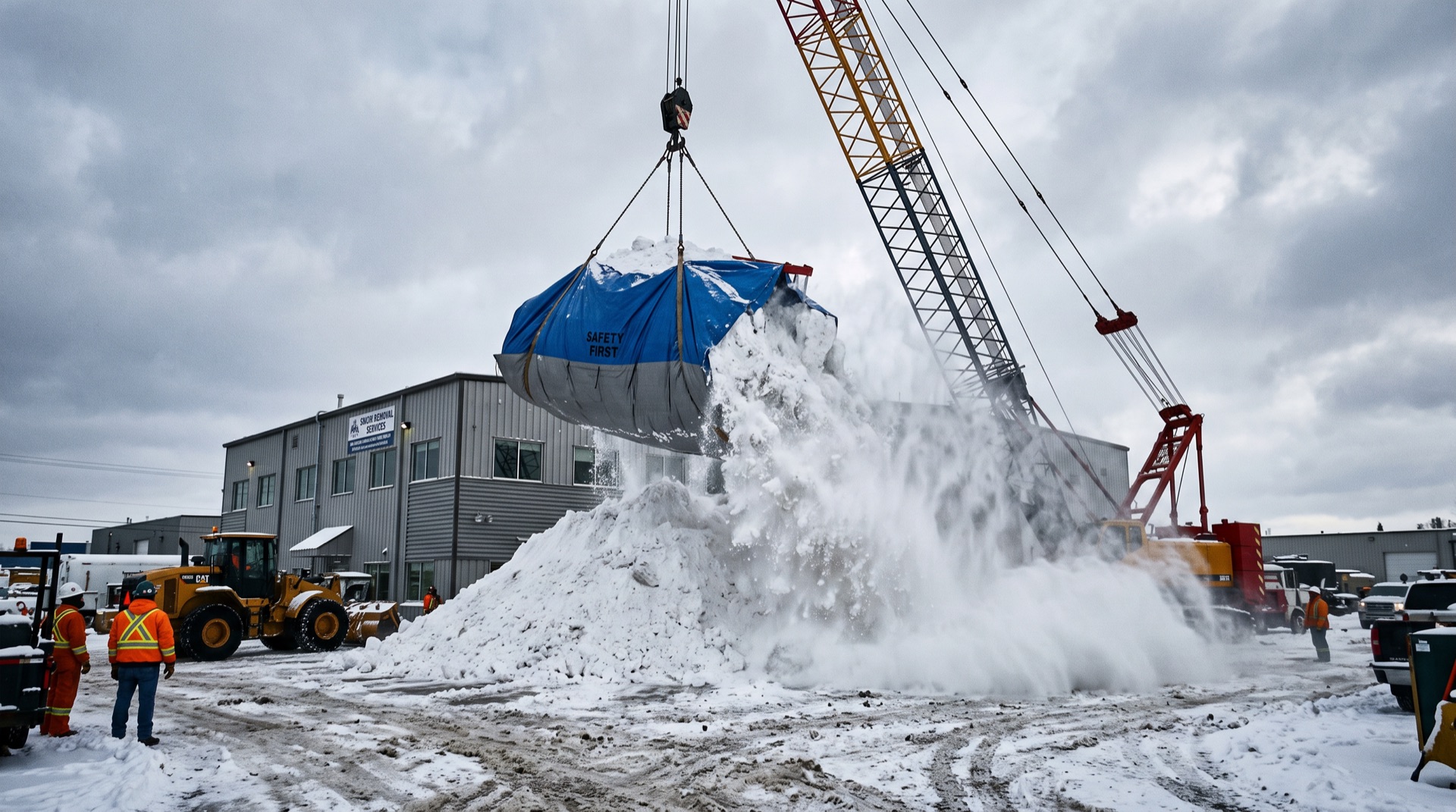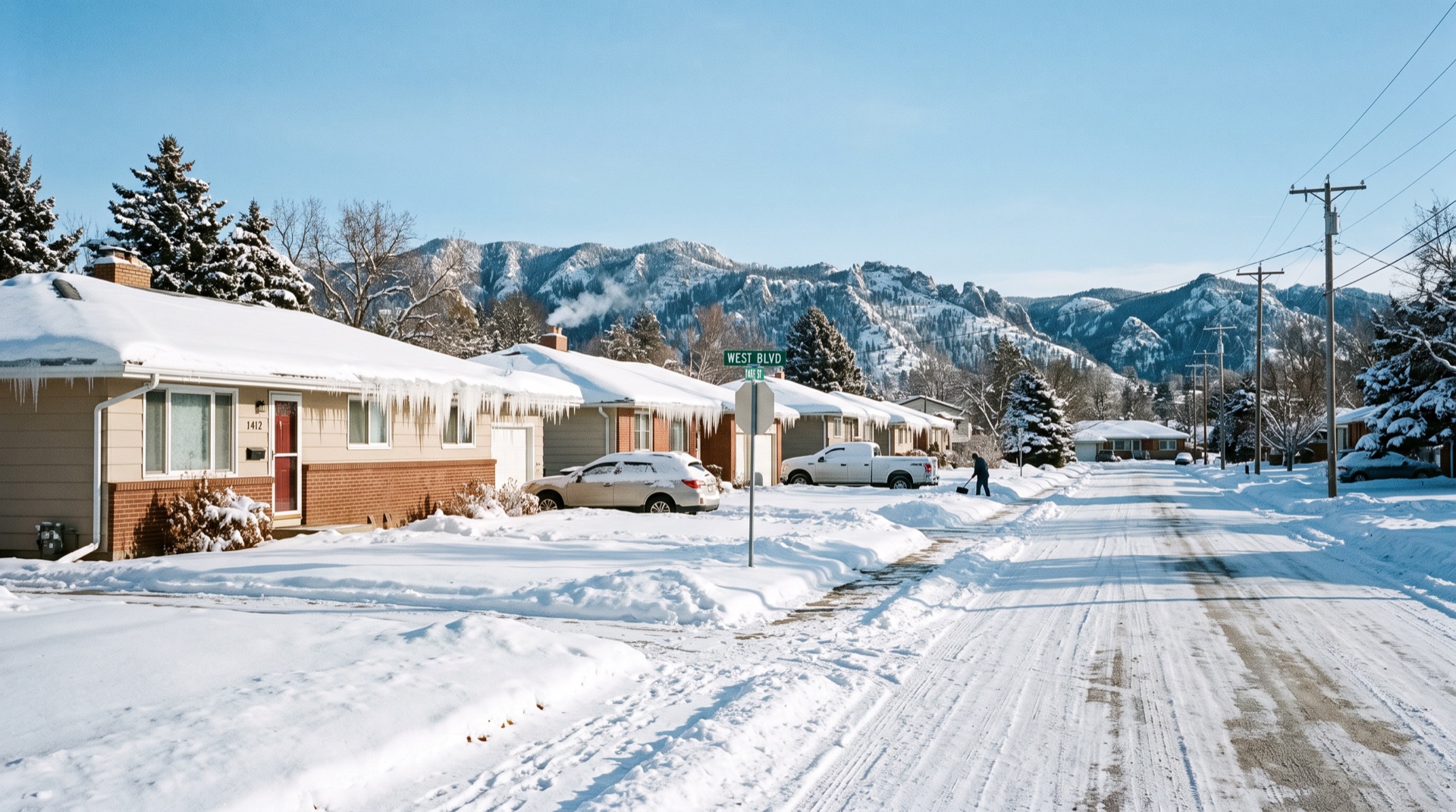
If you are in Rapid City watching icicles grow along the gutter line, what you are really watching is water that no longer has anywhere to drain. As part of our complete Rapid City winter roof services, crews handle crane-assisted snow removal across Pennington County.
Months of Load: Why Rapid City Eaves Carry Ice
A roof in Pennington County spends most of the year's coldest months under continuous load. That is a different problem from a single heavy storm, and it produces a different kind of ice.

A long season is not a safer one. It means more freeze-thaw cycles, and each one adds a layer to the dam. By late winter the ice at a Pennington County eave can be a foot deep and locked to the shingle, with standing water sitting behind it.
Ice-barrier practice in Pennington County
Because the ice here does not stay near the edge, the South Dakota requirement generally runs the membrane well up the roof plane. On a house in Rapid City roofed a few decades ago it is frequently missing entirely.
Crane-Assisted Snow Removal in Rapid City: How The Work Runs
Wind limits and when a pick gets postponed
Every crane has a wind chart, and a tarp full of snow is about the worst possible load to put on a hook in a gust - large surface area, light enough to sail, heavy enough to hurt. The limit is lower than people expect and it is not negotiable. Ceiling Sagging or Bulging After Snow.
A Rapid City pick that is cancelled for wind gets rescheduled rather than argued about. The alternative is a swinging load over an occupied building.
Keeping people clear of the swing
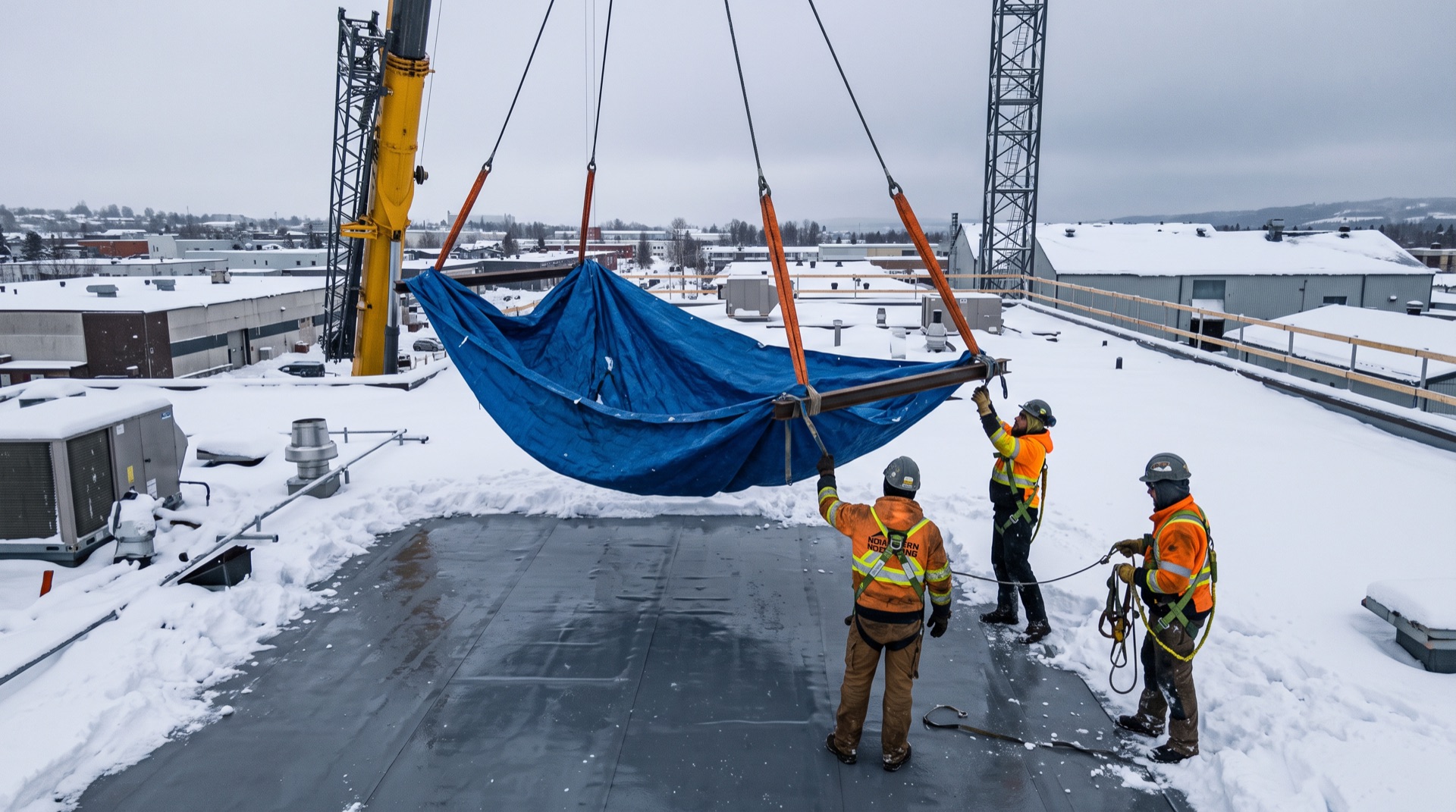
A loaded tarp overhead is a serious exclusion zone. Pedestrian and vehicle routes get marshalled for the whole operation, and on an occupied building that means talking to whoever controls the doors before the first lift.
On a site in Rapid City with public frontage this is usually the part that needs the most coordination and the part that gets the least credit.
What goes in the tarp and what does not
A pick lifts loose and broken snow. It does not lift a solid sheet of ice frozen to the membrane, and trying to make it do so is how a tarp takes the roof covering with it.
So the sequence is crews cutting and breaking the pack into liftable material, the crane moving it, and steam dealing with whatever is bonded to the surface. The crane is the transport, not the demolition.
When a crane is the right call
Multi-story homes and estates where the upper roof cannot be safely reached. Large commercial and industrial decks where the sheer tonnage makes hand clearing a multi-day job. Any roof where deflection is already visible and the load has to come off today rather than over a week.
The decision is made on numbers, not instinct. Depth, density and area give a working load figure, and that figure against the roof's design capacity is what determines whether a crane gets mobilised to a property in Rapid City.
The arithmetic that justifies a crane
Snow weight is depth times density times area. Fresh powder is light; settled wet pack can be several times heavier for the same depth, and drifted pack heavier again.
Crews take depth and density readings at the drift points on a roof in Rapid City, work out the load, and compare it to the structure's design capacity. A crane gets mobilised when that number says hand clearing cannot win the race against the next storm.
What you get in Rapid City
- Marshalled exclusion zonePedestrian and vehicle control for the whole operation
- Lift planned firstAccess, swing radius, overhead lines and drop zone walked before scheduling
- Load calculated firstDepth, density and area against design capacity before anything mobilises
| Local ice-barrier practice | Eave membrane required on new work |
|---|---|
| Coverage area | Rapid City and Pennington County |
| Removal method | Low-pressure steam only. No chipping, salt or pressure washing. |
| Documentation | Dated before and after photos, written scope in Xactimate line items |
| Dispatch window | Same day to 24 hours |
| Pricing model | Billed by the crew hour, rate quoted before dispatch |
| Typical scope | Steam, 6-14 crew hours typical |
Rapid City Coverage and the Adjoining Communities
Crews working Rapid City cover the adjoining communities on the same route — Box Elder, Ellsworth Afb, Black Hawk, Keystone and Caputa — so a storm week usually means one truck handling several addresses in Pennington County rather than separate trips.
Nearest hub towns with their own crane snow removal pages: Deadwood, Spearfish, Pierre, Aberdeen, Mitchell, Yankton.
Crews cover Rapid City and the surrounding Pennington County towns through the whole season, and during a freeze event they run from first light until dark.
Most jobs do not stop at one service. Crane Snow Removal in Rapid City often runs alongside commercial roof snow removal in Rapid City, and both get written into one scope rather than billed as separate visits.
Active leak right now? Our 24/7 Rapid City steam ice dam removal crews are dispatched first during a freeze event. Call (888) 561-9664.