Skip to content
Smithfield, RI
Structural Snow Load · Providence County

Commercial Roof Snow Removal in Smithfield, RI — Coastal Storm Response

Ice Dam Now provides commercial roof snow removal in Smithfield, RI and the surrounding Providence County, using low-pressure steam only — never chipping, salt or pressure washing. Crews are licensed, insured and harness-certified, dispatch same day for active interior leaks, and bill by the crew hour at a rate quoted before dispatch. Dated photo documentation is supplied for insurance claims.

One invoice per site — Multi-building properties scoped and billed together
Drift-point survey — Depth and density measured where it collects, not where it is convenient
Balanced reduction — Load brought under threshold without shifting it onto one bay
Mid-span measured — Depth read over the longest unsupported span, not the average

Get Ice Dam Help Smithfield

A few quick questions, then pick a time. If water is coming in, call instead.

What is the zip code of the home?

Roof leaking right now? Call (888) 561-9664 — that is faster than any form.
Water coming through the ceiling?Every hour an ice dam sits there, more water gets under the shingles.Call (888) 561-9664
24/7
Storm Season Dispatch
No Chipping
Steam Only
Providence
County Coverage
Crew Hour
Rate Quoted Up Front
Documented
Photos On Every Job

Homeowners across Providence County call about icicles. Icicles are cosmetic. The dam behind them, holding back standing water, is not. As part of our complete Smithfield winter roof services, crews handle commercial roof snow removal across Providence County.

Why a Smithfield Roof Dams Between Storms

Coastal storms deliver the heaviest snow by weight. A single nor'easter can put a wet, dense pack on a roof in Smithfield in one night, and the maritime air that follows rarely stays on one side of freezing for long.

Diagram showing how ice dams form on a roof from heat loss and snow melt
Heat escaping into the attic melts roof snow; the meltwater refreezes at the cold eave and the dam grows a layer every cycle.

Retrofits often made it worse rather than better. Insulation laid on an attic floor without sealing the bypasses underneath it keeps the living space warm and sends the same warm air straight to the roof deck.

Ice-barrier practice in Providence County

Coastal Rhode Island jurisdictions generally require the membrane to extend past the interior wall line. On a house in Smithfield with a deep overhang that is further up the roof than a single course.

Commercial Roof Snow Removal in Smithfield: How The Work Runs

Storm routes and standing contracts

Properties on a standing contract get a scheduled clear after each qualifying snowfall, with a single point of contact and a condition report per visit. For a portfolio, that means the clearing order is decided in advance by risk rather than by whoever calls first during the storm. Ceiling Sagging or Bulging After Snow.

Unbalanced loading is the real hazard

Snow does not settle evenly on a large deck. It piles against parapets, behind rooftop units, in the lee of a higher adjoining roof and in the valleys between bays.

Clearing has to be balanced for the same reason. Taking it all off one bay and none off the next shifts the load rather than removing it.

The cost of a shutdown against the cost of a clear

Clearing a large deck is a real number and it is easy to defer. The comparison that matters is not clearing against nothing, it is clearing against the day the building is closed while an engineer inspects it - lost trade, displaced tenants, and an insurer asking what was done beforehand.

The load reading is what makes that decision for you rather than a feeling about how deep the snow looks.

Mid-span is where the margin runs out

Long-span steel and open-web joist roofs carry least where the drift is deepest. The average depth across the field is not the number that matters; the depth over the longest unsupported span is.

That is where crews measure on a Smithfield building, and it is why two roofs with the same snowfall can be in very different trouble.

Sequencing so the load comes off evenly

Stripping one bay to the deck while the next still carries two feet creates exactly the unbalanced condition that overloads a member. Structures object less to a lot of weight spread evenly than to a moderate weight concentrated on one side.

Crews work in passes across the whole span, reducing everywhere before going deeper anywhere, and the sequence is set before anybody starts rather than left to whoever gets up there first.
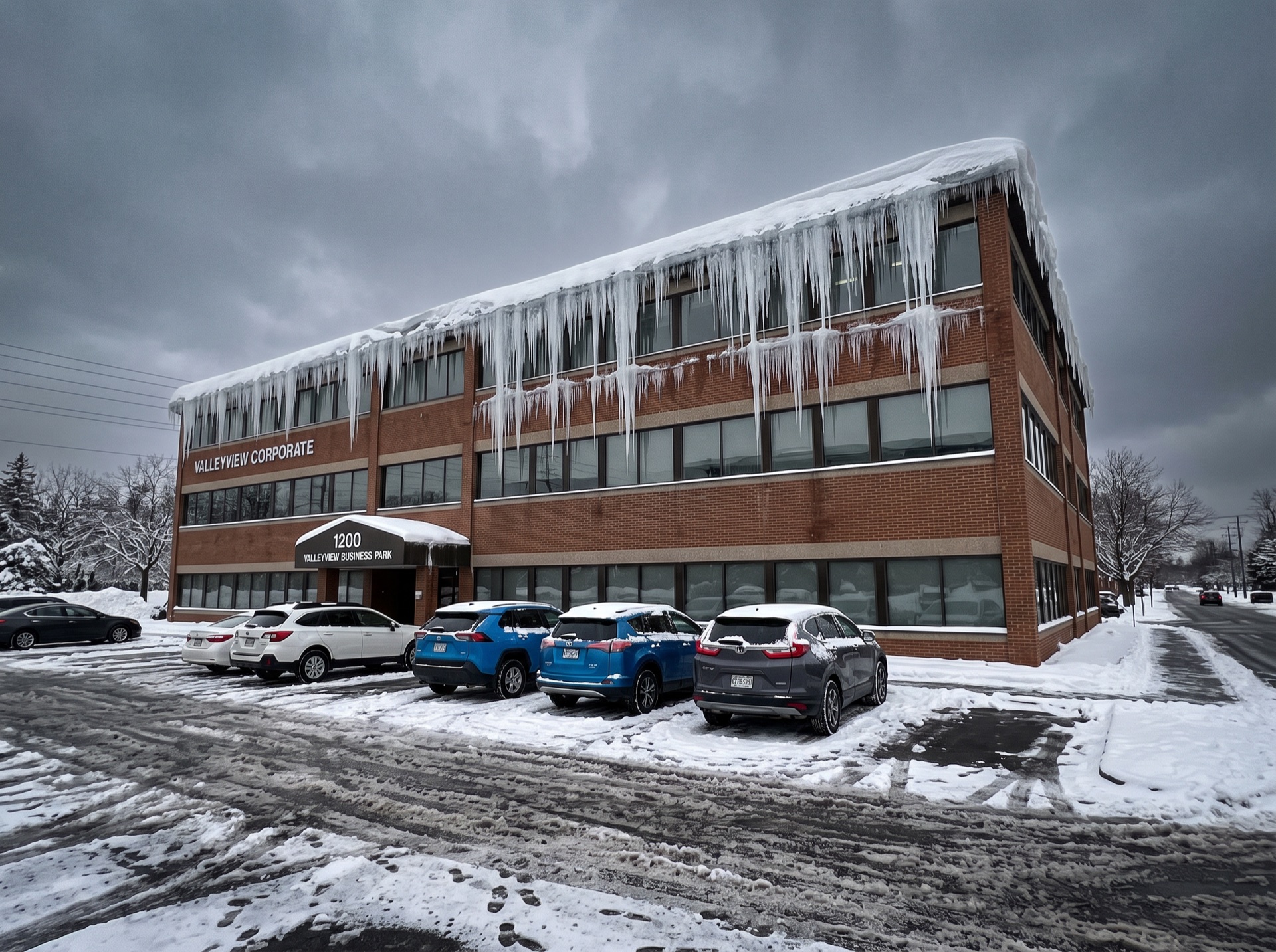
Large icicles hanging from roofline of Valleyview Corporate office building in winter
Massive icicles line the roofline of 1200 Valleyview Business Park following a heavy winter storm.

What you get in Smithfield

  • Overflows opened firstDrains and scuppers cleared before the load comes off
  • Drift-point surveyDepth and density measured where it collects, not where it is convenient
  • Portfolio routesStanding storm schedules with per-visit condition reports
Commercial Roof Snow Removal in Smithfield, RI — specification
Service specification for Smithfield, RI
Local ice-barrier practiceEave membrane standard on re-roofs
Pricing modelBilled by the crew hour, rate quoted before dispatch
Dispatch windowSame day to 24 hours
Removal methodLow-pressure steam only. No chipping, salt or pressure washing.
Typical scopeSteam, 4-10 crew hours typical
ServiceCommercial Roof Snow Removal in Smithfield, RI
DocumentationDated before and after photos, written scope in Xactimate line items

Neighborhoods and Towns We Reach From Smithfield

Crews working Smithfield cover the adjoining communities on the same route — Greenville, Harmony, Albion, North Smithfield and Manville — so a storm week usually means one truck handling several addresses in Providence County rather than separate trips.

Nearest hub towns with their own commercial snow pages: North Providence, Lincoln, Johnston, Cumberland, Pawtucket, Woonsocket.

Coverage runs across Smithfield and the nearby towns all winter, and capacity is surged into whichever Rhode Island market the storm actually hits.

Most jobs do not stop at one service. Commercial Snow in Smithfield often runs alongside crane-assisted snow removal in Smithfield, and both get written into one scope rather than billed as separate visits.

Active leak right now? Our 24/7 Smithfield steam ice dam removal crews are dispatched first during a freeze event. Call (888) 561-9664.
Conditions We Work In

Commercial Roof Snow Removal In Practice

Conditions crews work in across Providence County. Every job is photographed before and after.

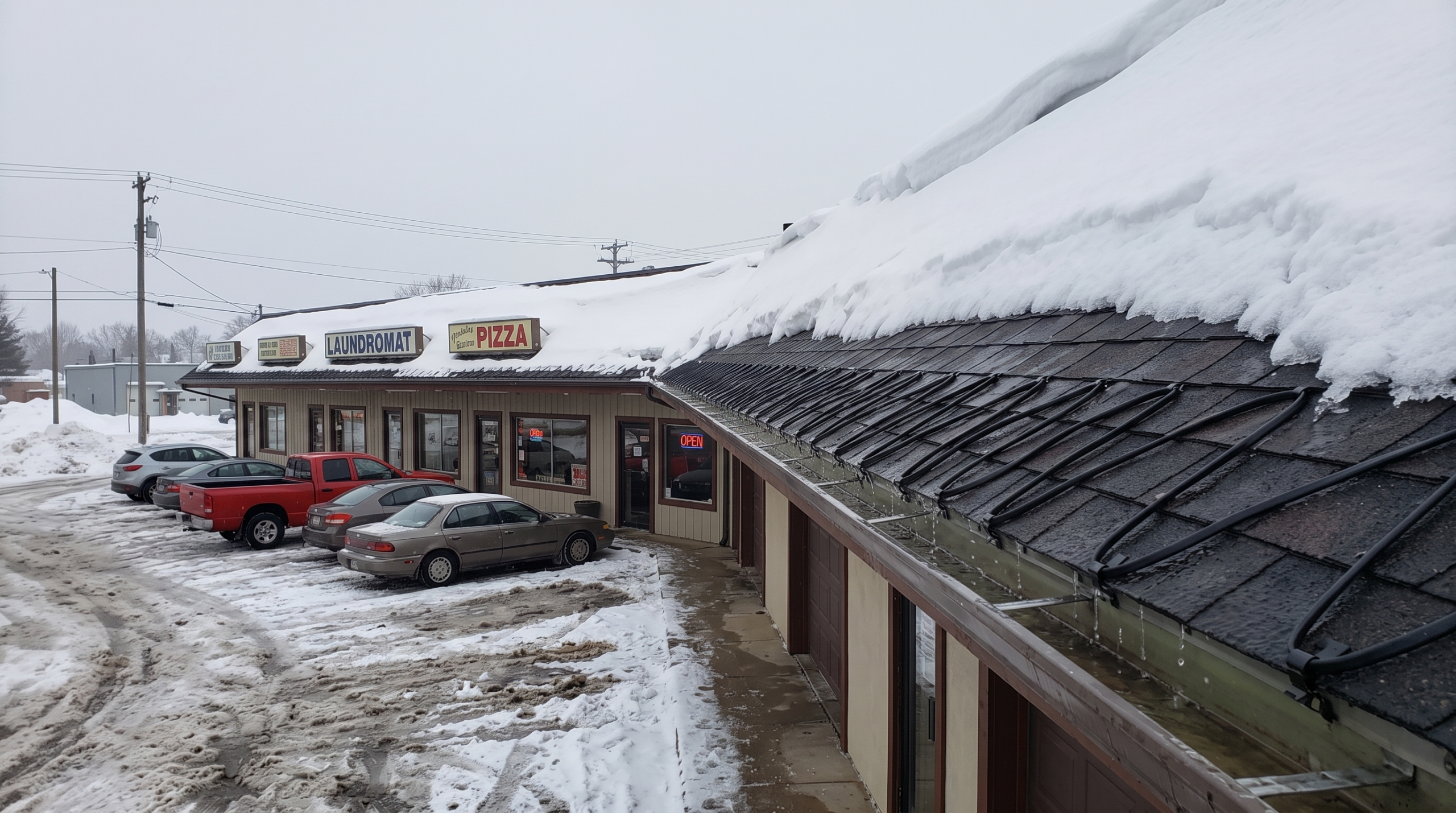
Heavy snow and ice dam buildup on commercial strip mall roofline in winter
A thick ice dam forms along the roofline of a commercial strip mall housing a laundromat and pizza restaurant.
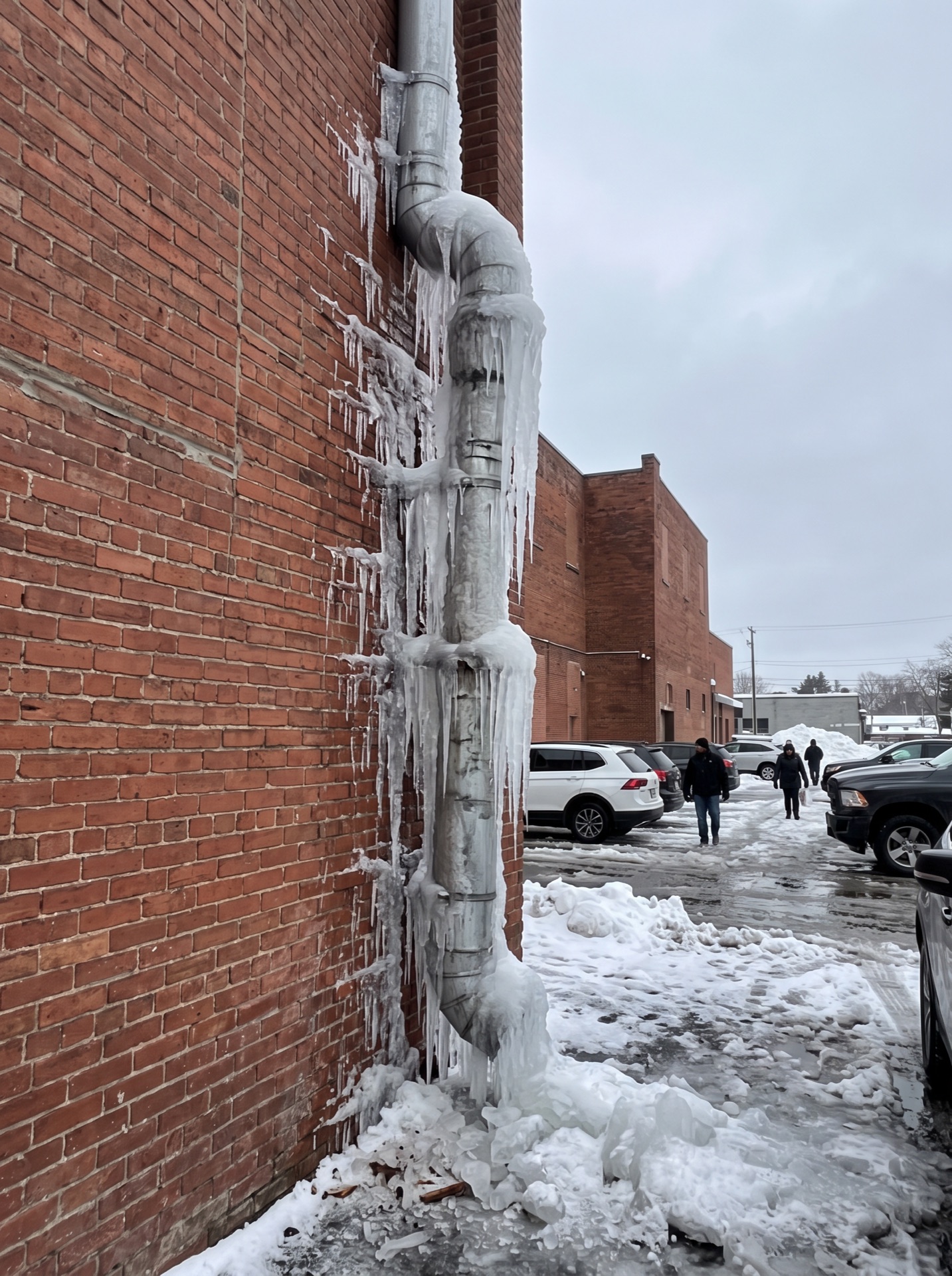
Frozen downspout covered in large icicles on brick commercial building in winter
A heavily iced-over downspout on a brick building shows the effects of extreme winter cold.
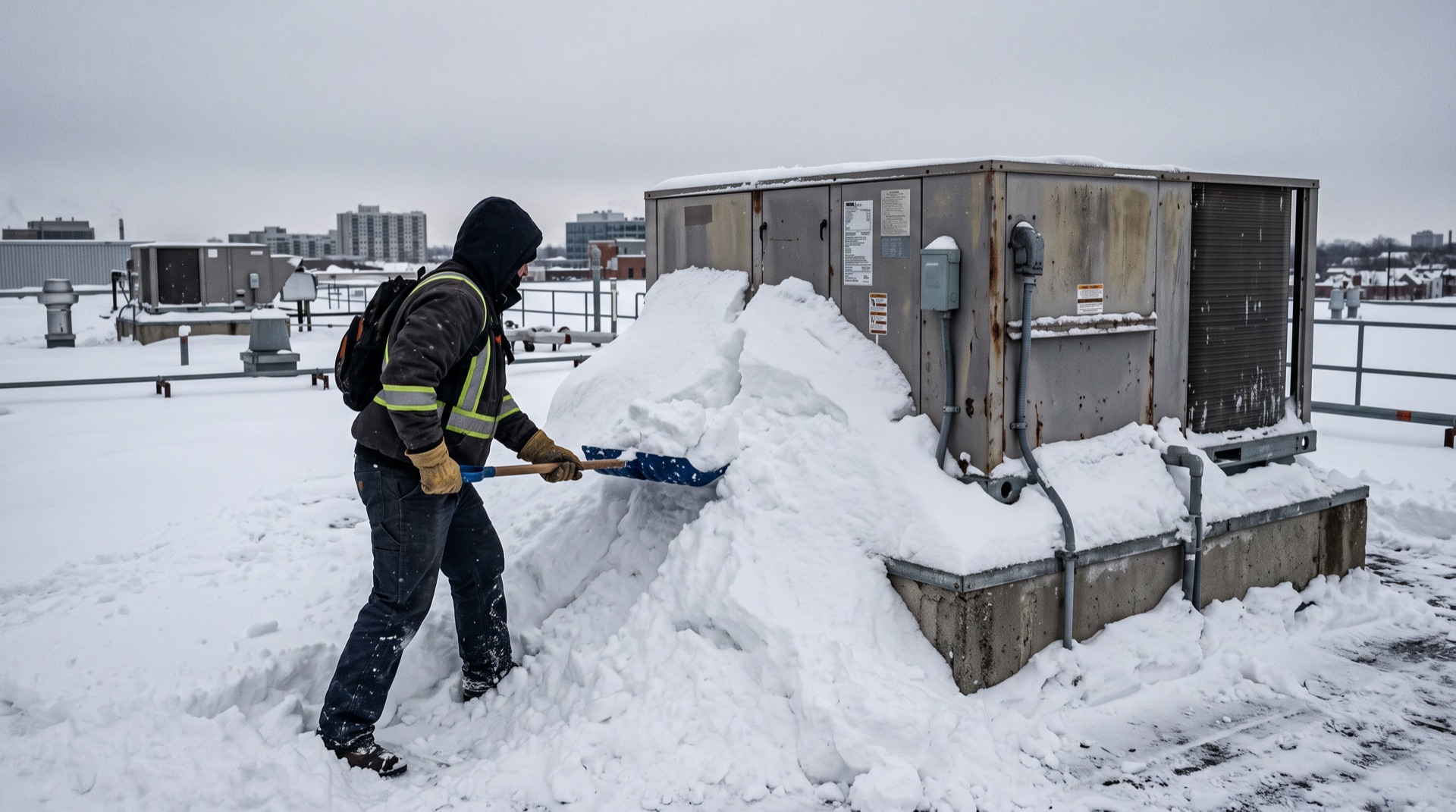
Worker in safety vest shoveling large snow drift from rooftop HVAC unit
A maintenance worker clears a heavy snow drift blocking a commercial rooftop HVAC unit after a winter storm.
FAQ

Smithfield Questions We Actually Get Asked

It is billed by the crew hour, and the rate plus a realistic time estimate are quoted on the phone before anyone is dispatched.

  • Scope drives the hours: length and thickness of the ice, roof pitch and height, and whether the gutters are frozen solid.
  • Access matters too — a three-story Smithfield roof takes longer to set up on than a ranch.
  • The invoice matches the quote. There are no surprise add-ons written on the tailgate.

Before the thaw rather than after it. The leak happens when the ice has water behind it, which is a day or two after the snow stops.

  • Calling during the storm is fine and often gets an earlier slot.
  • The expensive version is waiting until water appears on a ceiling.
  • Crews run across Providence County from first light through a freeze event.

Yes. The dispatch area runs across Providence County, and several addresses in one area are usually handled in the same run.

  • Adjoining communities are on the same route rather than treated as a separate trip.
  • Rural addresses outside the normal radius get told the travel position on the call.
  • Capacity is moved into whichever part of Rhode Island the storm actually hits.

Please do not. Salt corrodes flashing, fasteners, gutters and anything metal it drains across, and it damages whatever is planted below.

  • Calcium chloride is less aggressive than rock salt but still ends up in the soil at the drip line.
  • A puck melts a hole, not a drainage path, so the water simply refreezes a few inches further on.
  • Crews use heat and nothing else - no salt, no chemicals, nothing corrosive.

No, but there is a worse one: after the thaw, when the evidence has melted and the damage is all that is left.

  • Mid-storm calls are fine — crews work through freeze events.
  • An evening call for a leak that started that afternoon usually gets a next-morning slot.
  • Waiting for a weekend to pass is the most common and most expensive delay.

Yes. HVAC units, exhaust fans, conduit, gas lines, solar racking and safety railing are all worked around. Equipment wells and the drift shadows behind units are usually the deepest snow on the roof and get specific attention.

When the measured load approaches a meaningful fraction of design capacity, when rain is forecast onto an existing pack, when drifting has loaded one area far more than the rest, or when the drains have stopped taking water. Depth alone is a poor trigger - density is what matters, and that needs measuring.

Nearby

Commercial Snow In Towns Around Smithfield

Same-Day Response

Get A Smithfield Crew Out

Waiting for a thaw is a strategy, but it is an expensive one — the melt has to go somewhere, and it goes into the insulation first.

✓ Licensed & insured✓ Low-pressure steam only✓ Rate quoted up front✓ Photos for your claim
Online Quote(888) 561-9664