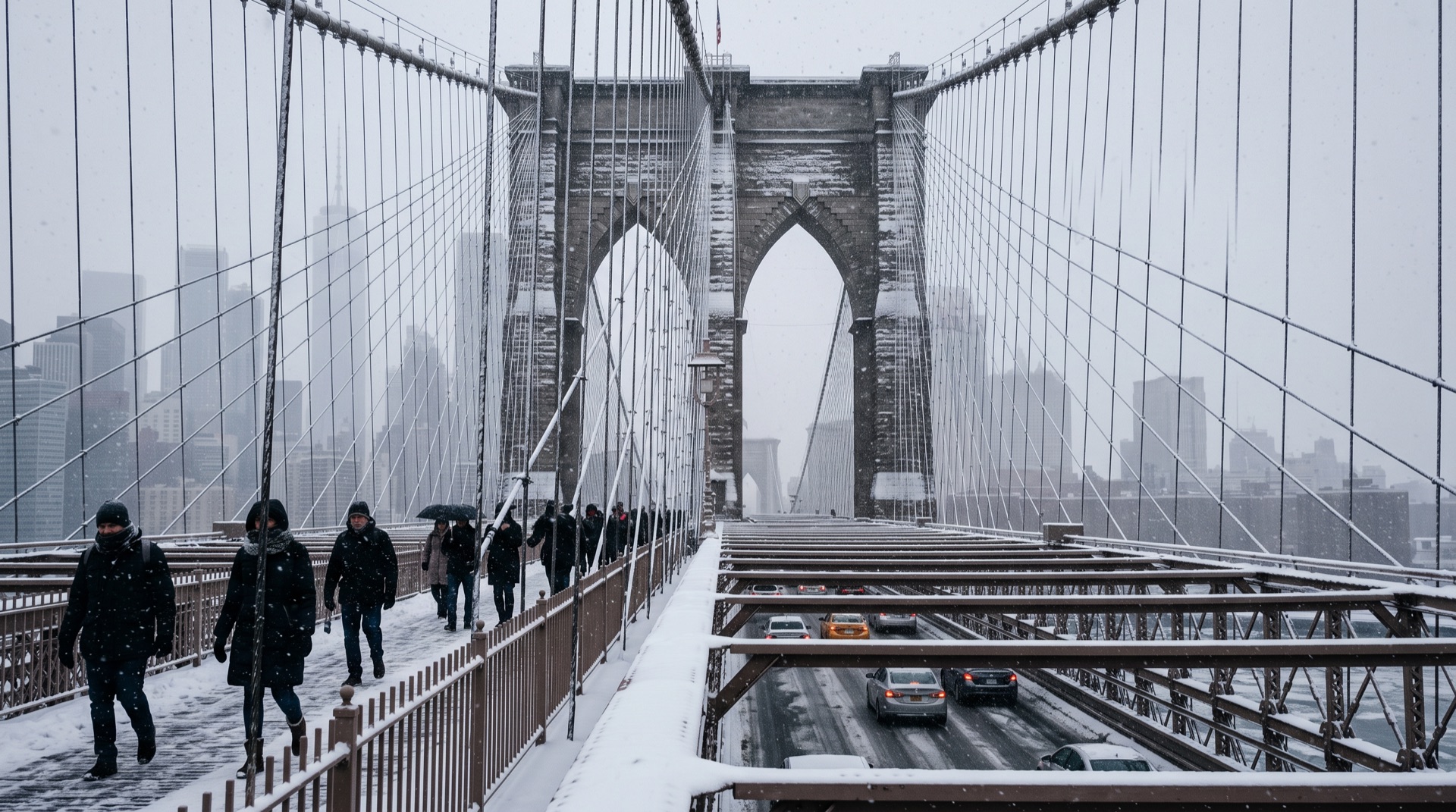
Niagara County sees the same pattern every winter: snow on the roof, warm air in the attic, and a line of ice building along the eave where the two meet. As part of our complete North Tonawanda winter roof services, crews handle mold remediation across Niagara County.
North Tonawanda Ice Dams and the Winter That Does Not Break
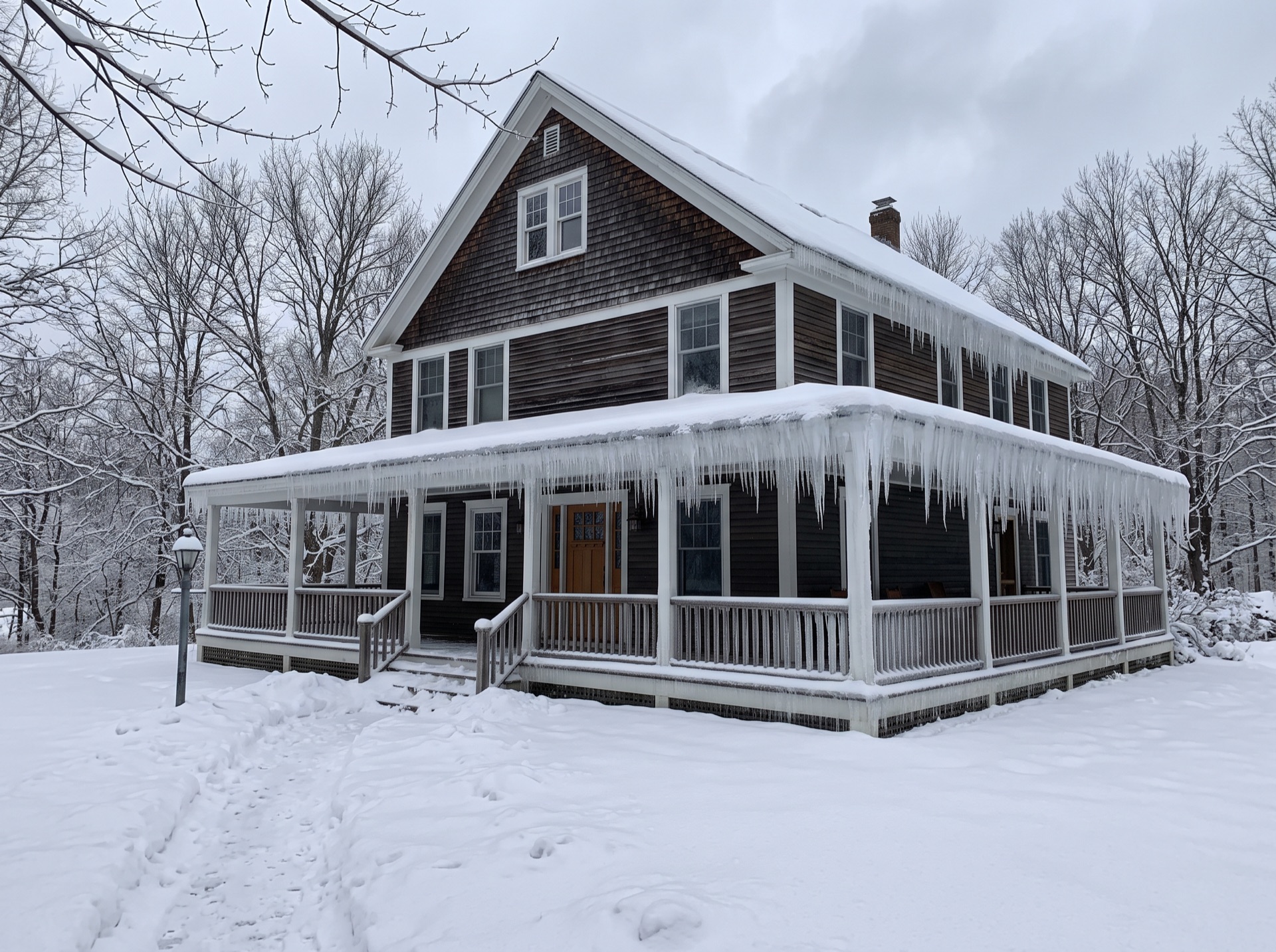
Snow that falls on a roof in North Tonawanda in December tends to stay there. A pack that never fully clears is a pack that keeps feeding meltwater to the same eave for months on end.

Depth accumulates faster than people expect because nothing in between melts it away. By February a North Tonawanda eave can be carrying several hundred pounds of ice with standing water sitting behind the whole length of it.
Ice-barrier practice in Niagara County
Ice barrier at the eaves is a standard requirement on new work across New York. The question on any particular North Tonawanda house is when it was last roofed, because that decides whether it is there at all.
Mold Remediation in North Tonawanda: How The Work Runs
Why drying comes before rebuilding
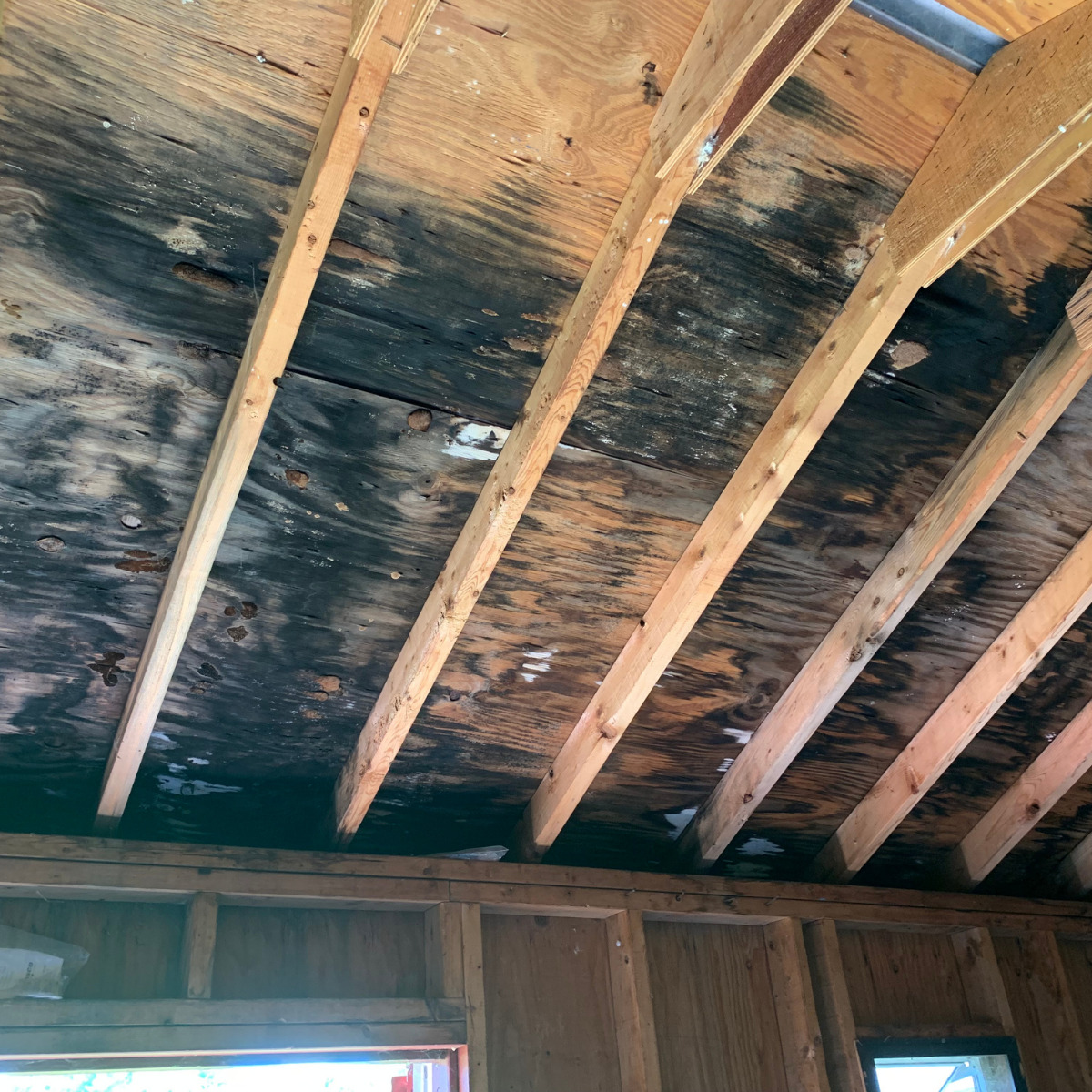
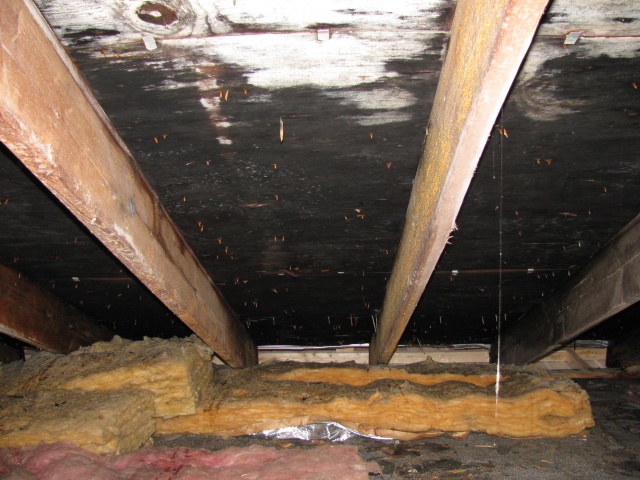
Closing up a wall or ceiling over damp framing is how mold comes back. Air movers and dehumidifiers run until moisture readings on the framing and sheathing reach a dry standard for that material. Mold in the Attic After an Ice Dam.
Only then does insulation and drywall go back in. In a North Tonawanda winter, with cold cavities, that can take longer than people expect, and the daily readings show exactly where it is up to.
Mold in the walls below an ice dam
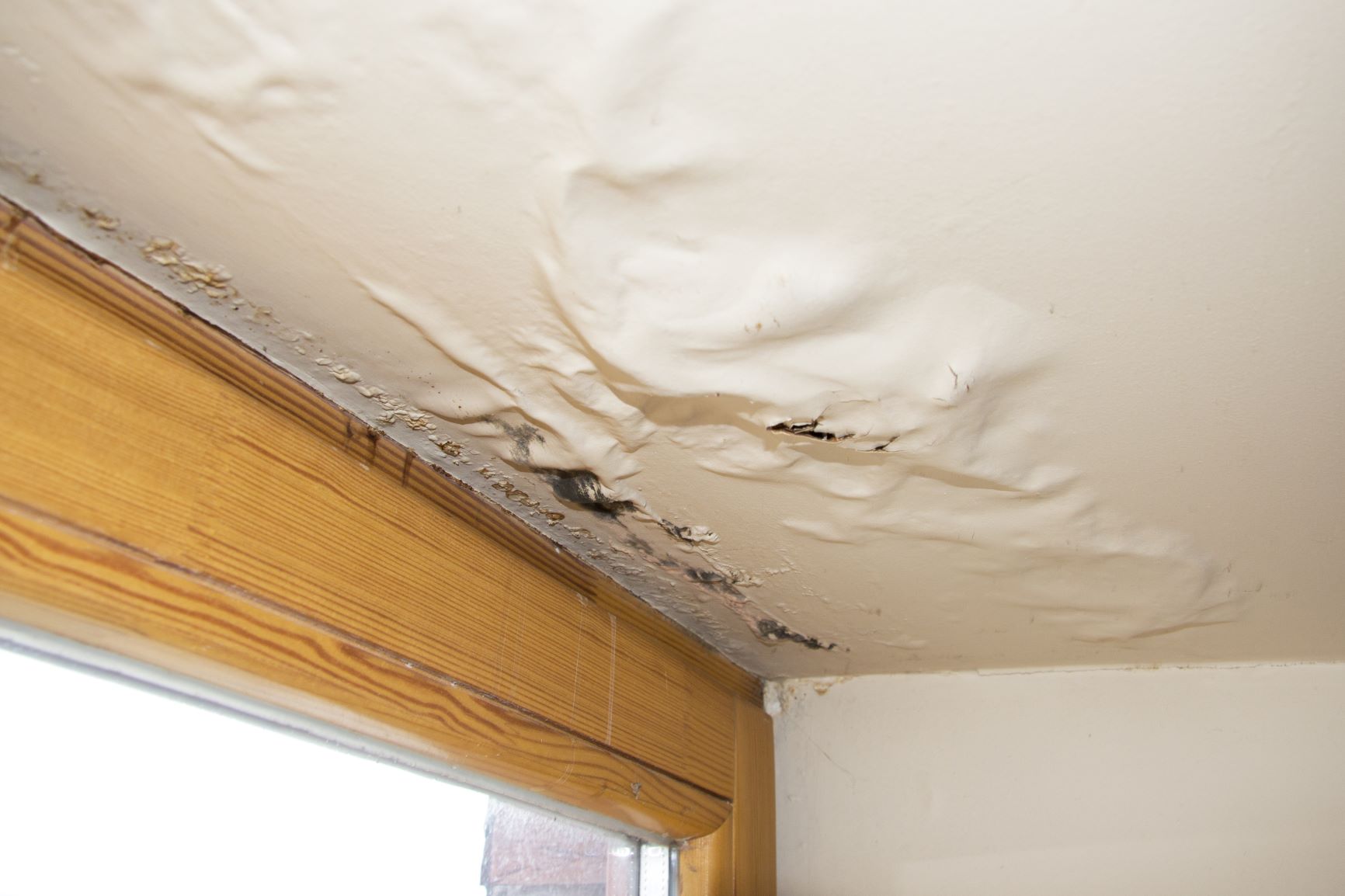
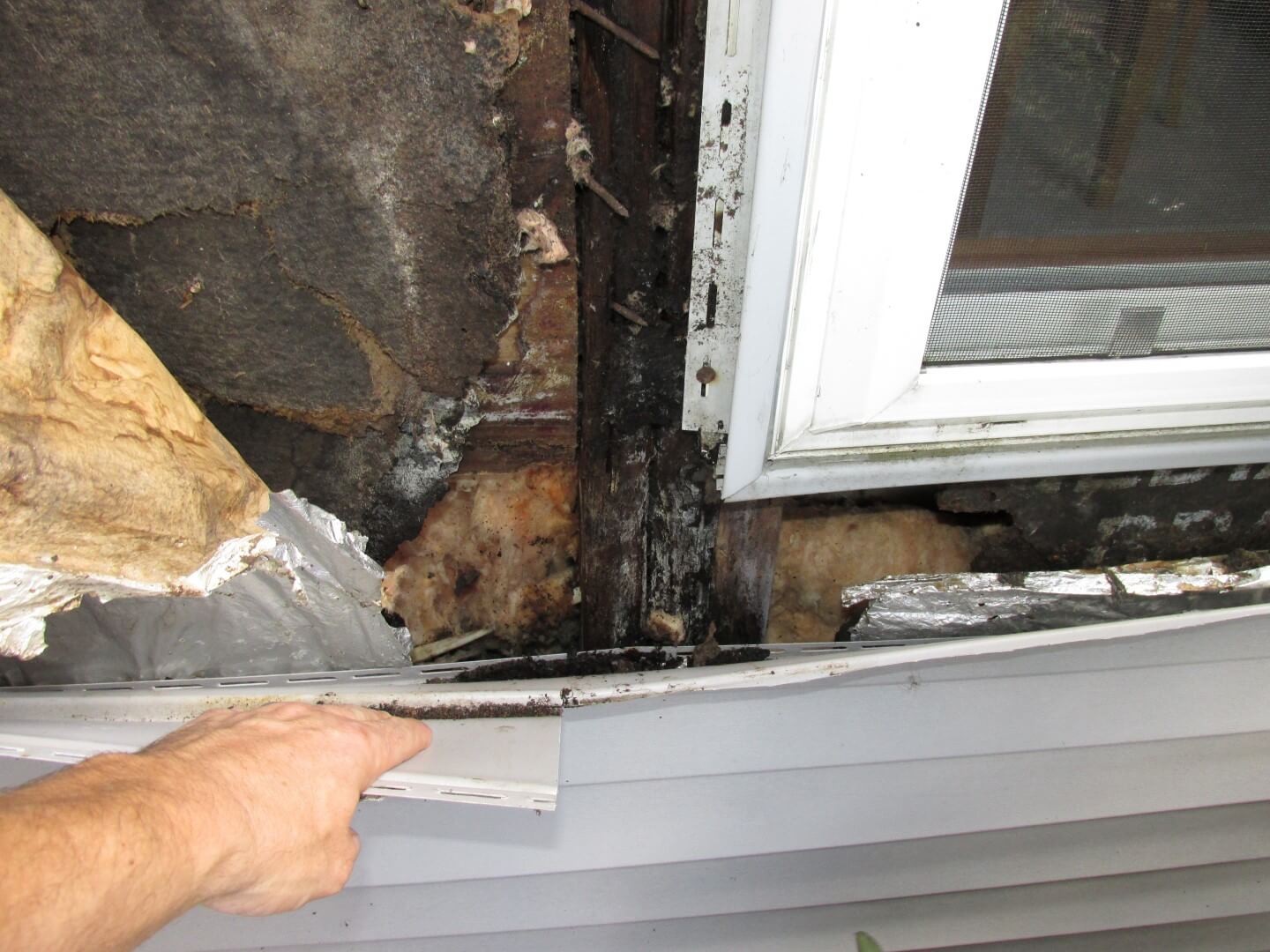
Water that gets past the attic runs down the inside of exterior walls, wetting the top plate, the insulation in the stud bays and the back of the drywall. It is common to find growth inside a wall where the only visible sign was a faint stain at the ceiling line.
Those cavities get opened, the wet insulation and drywall come out, the studs are cleaned and dried, and the wall is rebuilt once readings are at standard.
Interior repair by the same crews
Once the readings are at standard, the rebuild starts: new insulation to current R-value, drywall, tape, texture matched to the existing ceiling, trim and paint.
Doing the repair in-house keeps it in one scope and one claim, avoids the gap where a cleared room sits open waiting for another contractor, and keeps the documentation continuous from the first photo to the last coat of paint.
Containment and negative air
Before anything moldy is disturbed, the work area gets sealed off with poly sheeting and put under negative air pressure with an HEPA air scrubber exhausting it. Air flows into the work area, not out of it.
That is the step that keeps a contained attic or ceiling problem from becoming a whole-house problem in North Tonawanda. Disturbing mold without it spreads spores to rooms that were clean.
Why ice dam water turns into mold
Ice dam water does not arrive like a burst pipe. It seeps in over days or weeks, into places nobody looks: the underside of the roof sheathing, the insulation along the eave, the top of an exterior wall. Those spaces are dark, they are full of wood and paper, and in winter they barely dry at all.
That is the whole recipe. Give mold a damp organic surface and a couple of days and it starts. The cold slows it down, the spring warm-up speeds it up, and by the time there is a musty smell upstairs it has usually been growing for weeks.
What you get in North Tonawanda
- Containment firstPoly barriers and negative air so spores stay in the work area
- Moldy material removedWet insulation, drywall and trim that cannot be cleaned are bagged and taken out
- HEPA air scrubbingAir filtration running for the whole job, not just the tear-out
| Method | Containment, HEPA filtration and drying to a measured IICRC standard |
|---|---|
| Interior repair | Insulation, drywall, texture, trim and paint, done in-house after drying |
| Billing | Xactimate line items on one claim; carrier billed directly where the policy allows |
| Documentation | Dated before and after photos, written scope in Xactimate line items |
| Service | Mold Remediation in North Tonawanda, NY |
| Primary climate stressor | Sustained sub-freezing, long season |
| Local ice-barrier practice | Eave membrane required on new work |
Neighborhoods and Towns We Reach From North Tonawanda
Crews working North Tonawanda cover the adjoining communities on the same route — Tonawanda, Getzville, Grand Island, Sanborn and East Amherst — so a storm week usually means one truck handling several addresses in Niagara County rather than separate trips.
Nearest hub towns with their own mold remediation pages: Niagara Falls, Buffalo, Lockport, Batavia, Rochester, Jamestown.
When a storm hits Niagara County, crews are dispatched by severity rather than by call order — water already inside the house goes first.
Most jobs do not stop at one service. Mold Remediation in North Tonawanda often runs alongside water mitigation & dryout in North Tonawanda, and both get written into one scope rather than billed as separate visits.
Active leak right now? Our 24/7 North Tonawanda steam ice dam removal crews are dispatched first during a freeze event. Call (888) 561-9664.