Skip to content
Claremont, NH
Structural Snow Load · Sullivan County

Commercial Roof Snow Removal in Claremont, NH — Full‑Season Storm Response

Ice Dam Now provides commercial roof snow removal in Claremont, NH and the surrounding Sullivan County, using low-pressure steam only — never chipping, salt or pressure washing. Crews are licensed, insured and harness-certified, dispatch same day for active interior leaks, and bill by the crew hour at a rate quoted before dispatch. Dated photo documentation is supplied for insurance claims.

Drains kept open — Scuppers and internal drains cleared so meltwater has an exit
Balanced reduction — Load brought under threshold without shifting it onto one bay
Overflows opened first — Drains and scuppers cleared before the load comes off
One invoice per site — Multi-building properties scoped and billed together

Get Ice Dam Help Claremont

A few quick questions, then pick a time. If water is coming in, call instead.

What is the zip code of the home?

Roof leaking right now? Call (888) 561-9664 — that is faster than any form.
Water coming through the ceiling?Every hour an ice dam sits there, more water gets under the shingles.Call (888) 561-9664
24/7
Dispatch All Winter
Steam
Only — No Pressure
Sullivan
County Coverage
Same Day
For Active Leaks
Insured
Licensed & Harness-Certified

By the time a roof in Claremont has a visible ridge of ice at the eave, meltwater has already been pooling behind it for several freeze-thaw cycles. As part of our complete Claremont winter roof services, crews handle commercial roof snow removal across Sullivan County.

Long Winters, Layered Ice: The Sullivan County Problem

There is no mid-winter reset in Claremont. The snow that falls in November is still part of the pack in March, compressed by everything that landed on top of it, and the eave underneath has been below freezing the whole time.

Diagram showing how ice dams form on a roof from heat loss and snow melt
Heat escaping into the attic melts roof snow; the meltwater refreezes at the cold eave and the dam grows a layer every cycle.

Every mild afternoon through that stretch releases a little meltwater, and every cold night sets it at the overhang. Done fifty times, that is how an eave ends up carrying several hundred pounds of ice by March.

Ice-barrier practice in Sullivan County

Ice barrier at the eaves is a standard requirement on new work across New Hampshire. The question on any particular Claremont house is when it was last roofed, because that decides whether it is there at all.

Commercial Roof Snow Removal in Claremont: How The Work Runs

Storm routes and standing contracts

Properties on a standing contract get a scheduled clear after each qualifying snowfall, with a single point of contact and a condition report per visit. For a portfolio, that means the clearing order is decided in advance by risk rather than by whoever calls first during the storm. Ceiling Sagging or Bulging After Snow.

What the documentation covers

Depth and density readings, calculated load, dated photographs and a written condition report per visit.

Preventing an imminent failure is treated as loss mitigation by most carriers, and that record is what supports the position if it is ever tested.

The cost of a shutdown against the cost of a clear

Clearing a large deck is a real number and it is easy to defer. The comparison that matters is not clearing against nothing, it is clearing against the day the building is closed while an engineer inspects it - lost trade, displaced tenants, and an insurer asking what was done beforehand.

The load reading is what makes that decision for you rather than a feeling about how deep the snow looks.

Mid-span is where the margin runs out

Long-span steel and open-web joist roofs carry least where the drift is deepest. The average depth across the field is not the number that matters; the depth over the longest unsupported span is.

That is where crews measure on a Claremont building, and it is why two roofs with the same snowfall can be in very different trouble.

Drains and overflows come first

Before anything else comes off, the drains, scuppers and overflow outlets get opened. Otherwise the melt from the clearing has nowhere to go and the roof trades a snow problem for a ponding one.

On a deck in Claremont with internal drains that means confirming flow below, not just clearing the grate.
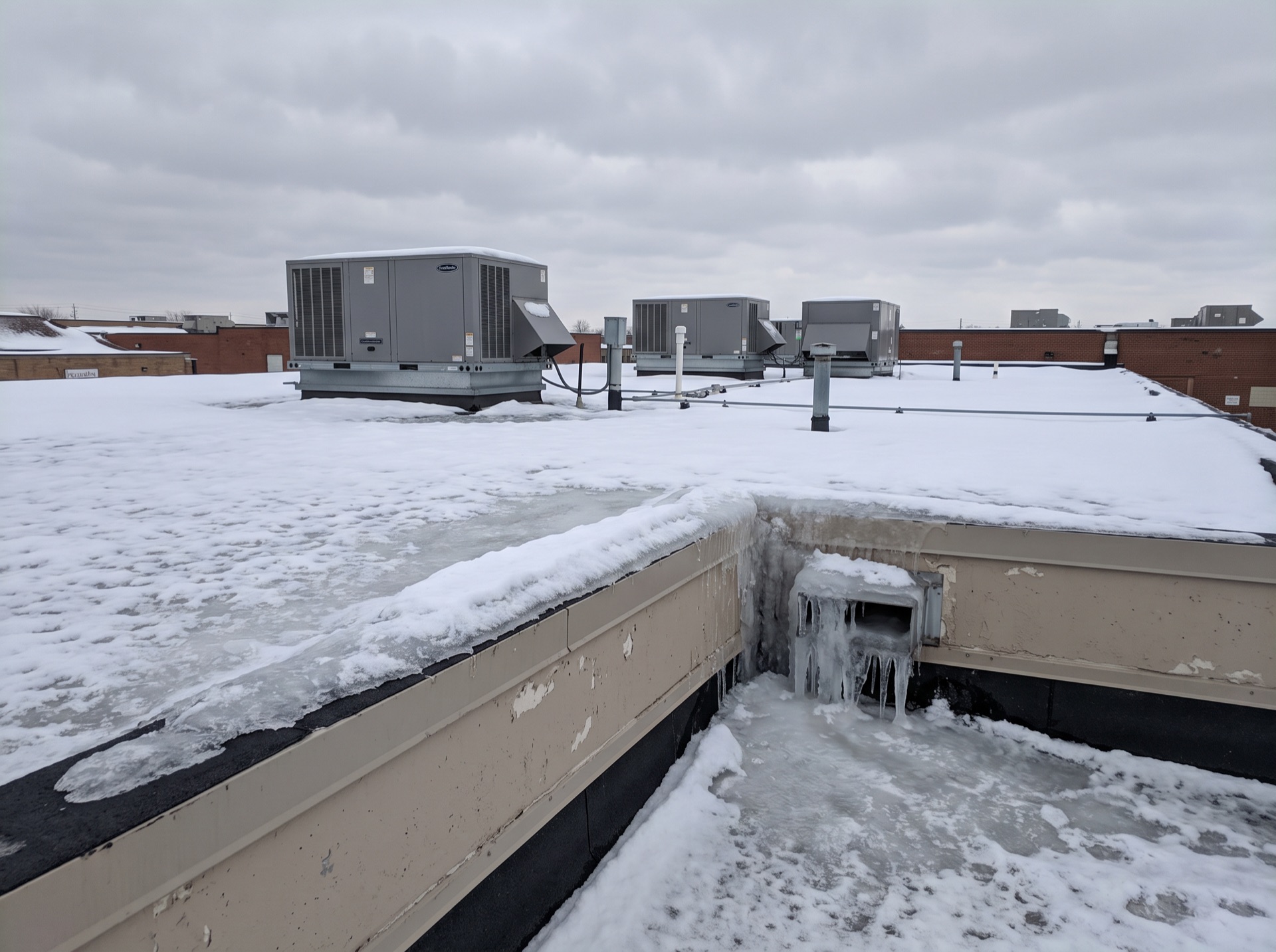
Frozen roof drain at commercial flat roof parapet wall covered in snow and ice
A blocked and frozen roof drain at a commercial building parapet wall, indicating a serious winter drainage problem.

What you get in Claremont

  • One invoice per siteMulti-building properties scoped and billed together
  • Mid-span measuredDepth read over the longest unsupported span, not the average
  • Balanced reductionLoad brought under threshold without shifting it onto one bay
Commercial Roof Snow Removal in Claremont, NH — specification
Service specification for Claremont, NH
Typical scopeSteam, 6-14 crew hours typical
Pricing modelBilled by the crew hour, rate quoted before dispatch
ServiceCommercial Roof Snow Removal in Claremont, NH
Local ice-barrier practiceEave membrane required on new work
Dispatch windowSame day to 24 hours
DocumentationDated before and after photos, written scope in Xactimate line items
Primary climate stressorSustained sub-freezing, long season

Neighborhoods and Towns We Reach From Claremont

Crews working Claremont cover the adjoining communities on the same route — Newport, Charlestown, Cornish, Cornish Flat and Guild — so a storm week usually means one truck handling several addresses in Sullivan County rather than separate trips.

Nearest hub towns with their own commercial snow pages: Lebanon, Hanover, Keene, Franklin, Concord, Goffstown.

Coverage runs across Claremont and the nearby towns all winter, and capacity is surged into whichever New Hampshire market the storm actually hits.

Most jobs do not stop at one service. Commercial Snow in Claremont often runs alongside crane-assisted snow removal in Claremont, and both get written into one scope rather than billed as separate visits.

Active leak right now? Our 24/7 Claremont steam ice dam removal crews are dispatched first during a freeze event. Call (888) 561-9664.
Conditions We Work In

Commercial Roof Snow Removal In Practice

Conditions crews work in across Sullivan County. Every job is photographed before and after.

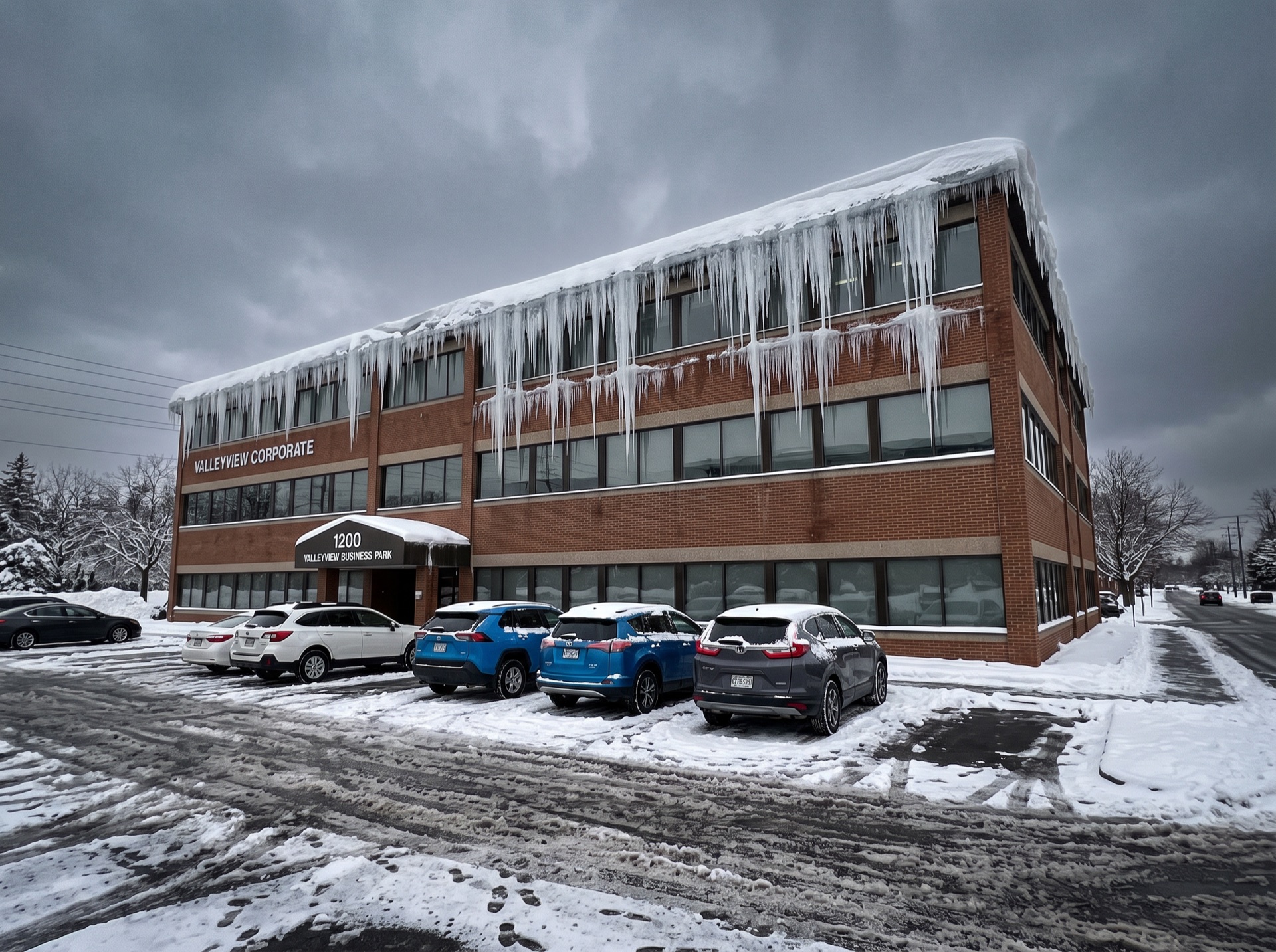
Large icicles hanging from roofline of Valleyview Corporate office building in winter
Massive icicles line the roofline of 1200 Valleyview Business Park following a heavy winter storm.
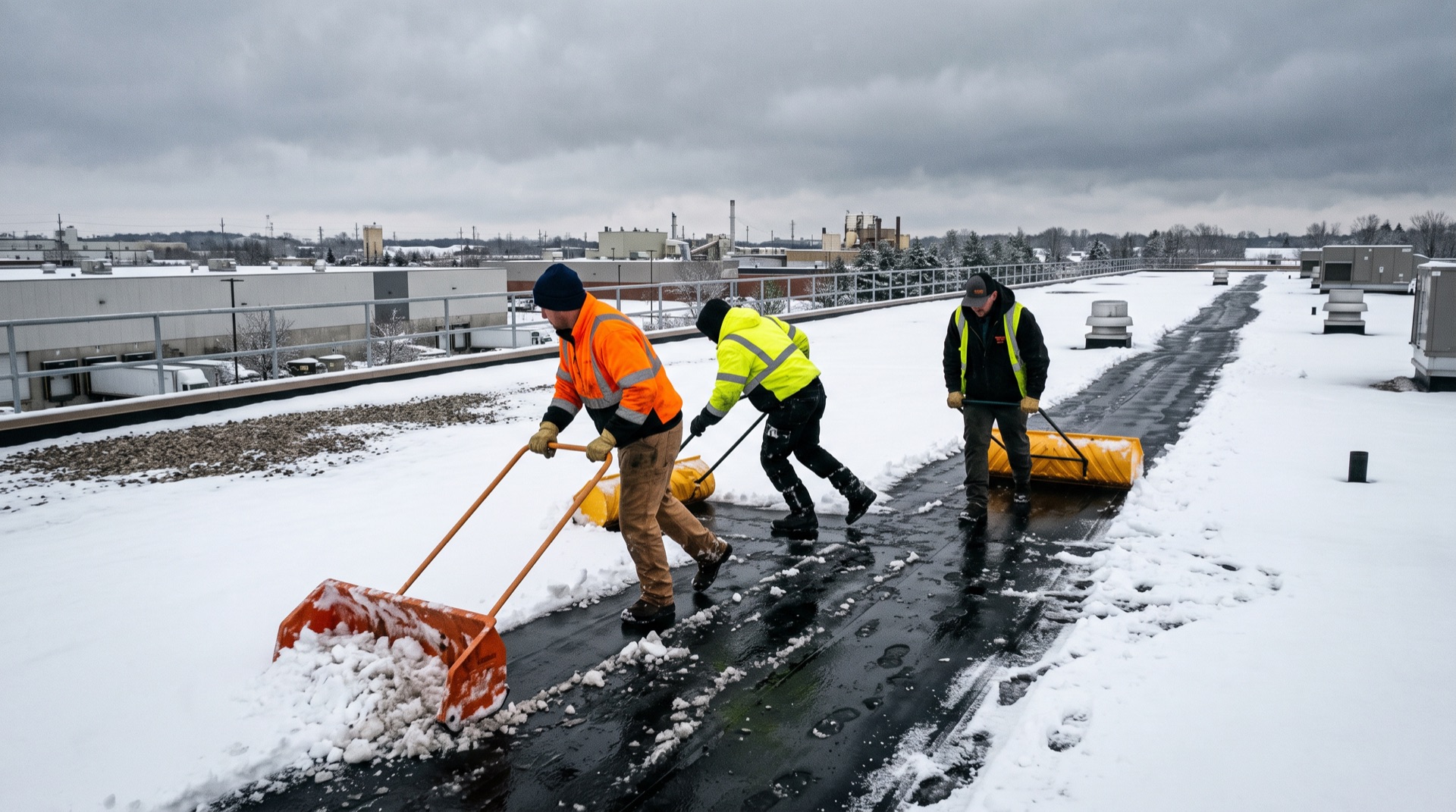
Three workers in high-visibility vests pushing snow off a flat warehouse roof
A three-person crew uses push plows to clear heavy snow from a large commercial flat roof.
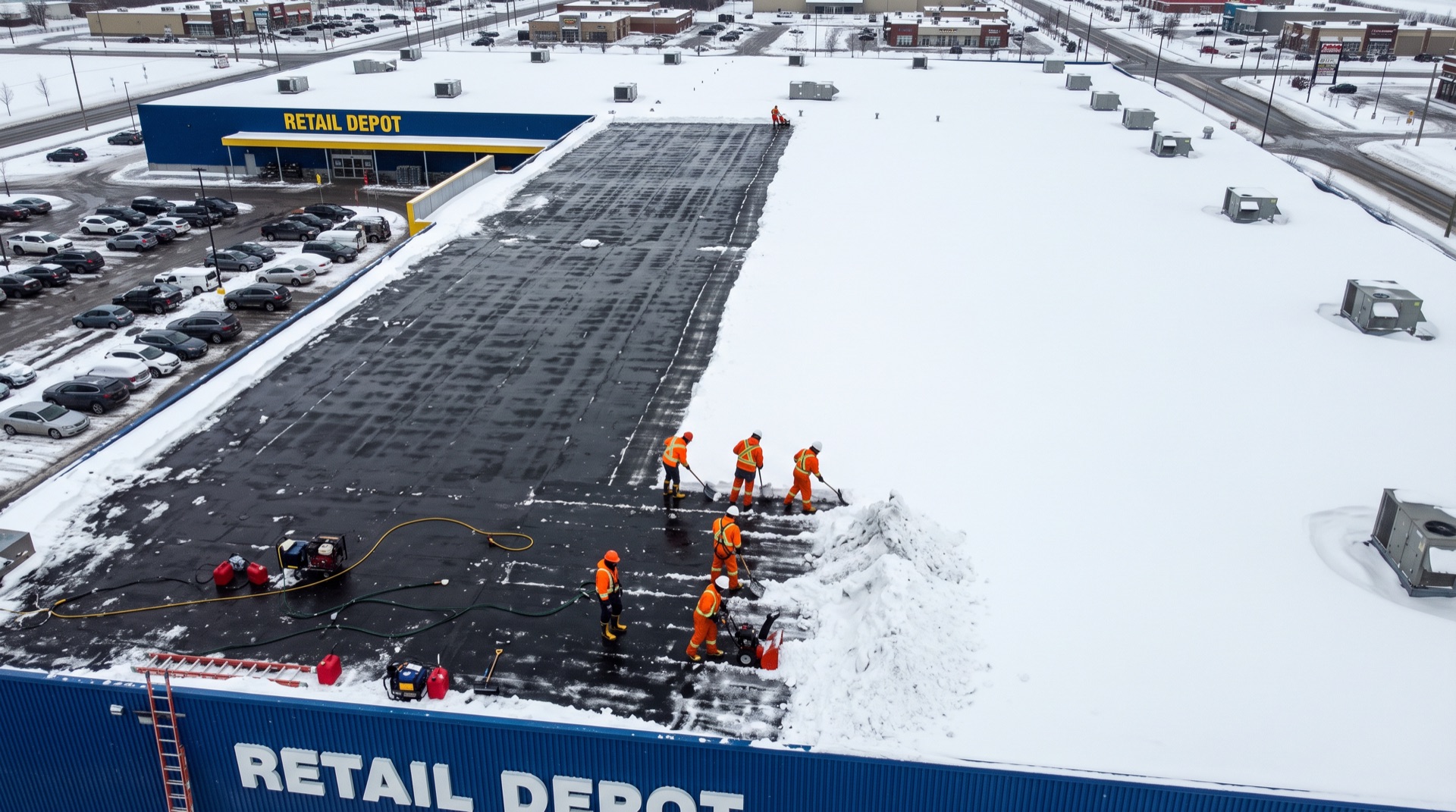
Workers in high-visibility gear clearing snow from a large retail store rooftop
A crew of workers removes heavy snow from the flat roof of a Retail Depot big-box store.
FAQ

Claremont Questions We Actually Get Asked

It is billed by the crew hour, and the rate plus a realistic time estimate are quoted on the phone before anyone is dispatched.

  • Scope drives the hours: length and thickness of the ice, roof pitch and height, and whether the gutters are frozen solid.
  • Access matters too — a three-story Claremont roof takes longer to set up on than a ranch.
  • The invoice matches the quote. There are no surprise add-ons written on the tailgate.

The crew hours on site, the equipment and the photo documentation - with the rate and an estimate given on the phone beforehand.

  • Travel to a Claremont address inside the normal service area is not an added line.
  • If the roof turns out worse than described, you are told before the extra hours are worked.
  • The invoice matches what was quoted. Nothing gets added on the tailgate.

No. Steam removal is maintenance work, not construction, so no building permit is pulled for it anywhere in Sullivan County.

  • A permit does come into it once the work becomes a repair — new decking, a re-roof or structural work.
  • That is handled through the Claremont building department, or the Sullivan County building authority where the city has no department of its own.
  • Ask before signing anything: a contractor who says a re-roof in Claremont needs no permit is telling you something useful about how they work.

Before the thaw rather than after it. The leak happens when the ice has water behind it, which is a day or two after the snow stops.

  • Calling during the storm is fine and often gets an earlier slot.
  • The expensive version is waiting until water appears on a ceiling.
  • Crews run across Sullivan County from first light through a freeze event.

Yes. Steam is safe on slate, cedar shake, tile and metal as well as asphalt, because it removes ice with heat rather than force.

  • Older Claremont housing stock with original slate is exactly where chipping does the most damage.
  • Crews adjust the lance distance and dwell rather than the pressure.
  • Nothing mechanical touches the covering at any point.

When the measured load approaches a meaningful fraction of design capacity, when rain is forecast onto an existing pack, when drifting has loaded one area far more than the rest, or when the drains have stopped taking water. Depth alone is a poor trigger - density is what matters, and that needs measuring.

Visible deflection between joists, new cracks in interior finishes, doors or roof hatches that suddenly bind, and sprinkler lines or ceiling grid that have moved are all late signals. The reliable method is measuring depth and density at the drift points and comparing the load to the design capacity.

Nearby

Commercial Snow In Towns Around Claremont

Same-Day Response

Get A Claremont Crew Out

The cost of a steam visit does not change much from one week to the next. The cost of the water damage behind the dam does.

✓ Licensed & insured✓ Low-pressure steam only✓ Rate quoted up front✓ Photos for your claim
Online Quote(888) 561-9664