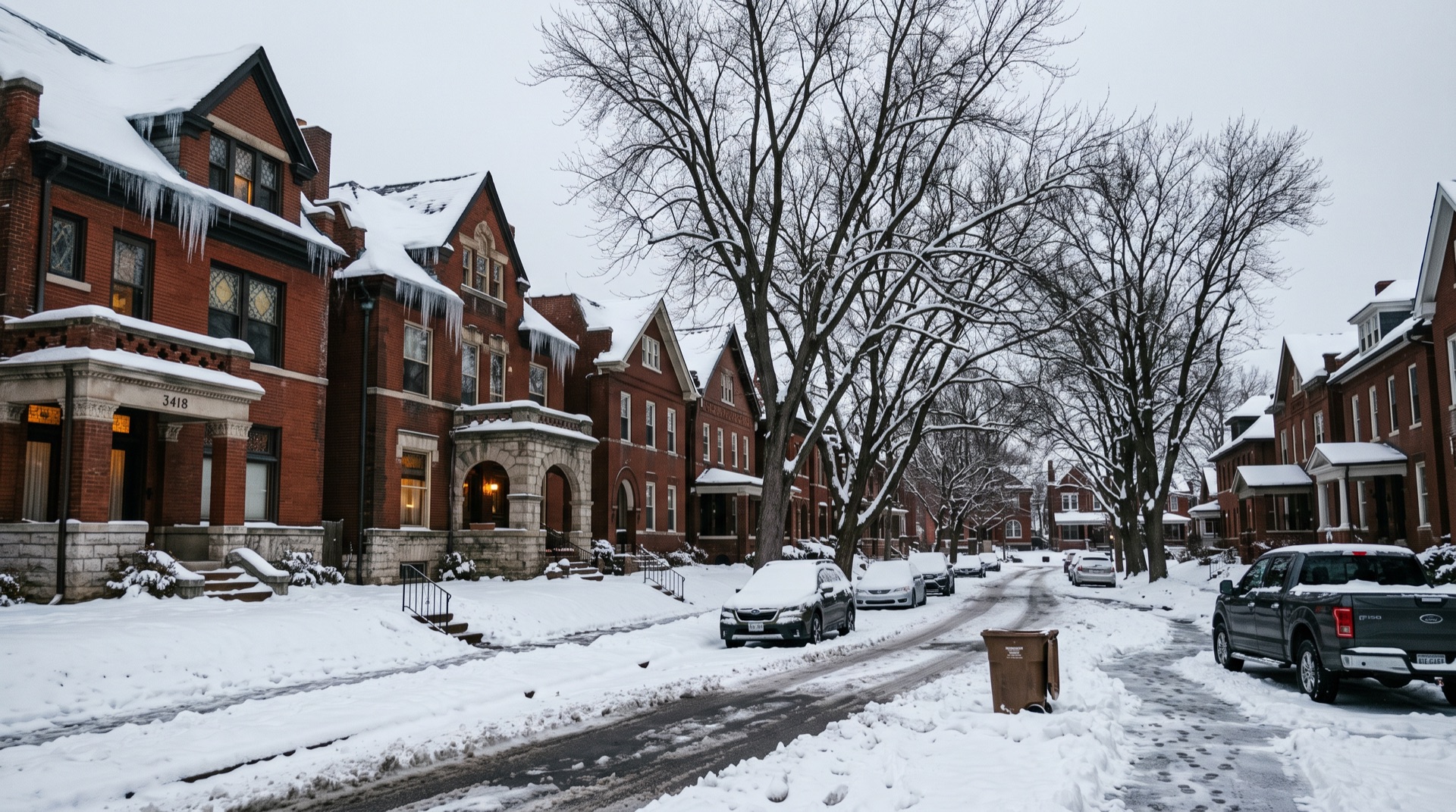
The ice along a roof in St. Louisline is the symptom. The cause is warm air escaping into the attic, and it is still running right now. As part of our complete St. Louis winter roof services, crews handle crane-assisted snow removal across Saint Louis County.
The Saint Louis County Trap: Modest Snow, Constant Cycling
What catches people out in Saint Louis County is that the snow looks harmless. Two or three inches reads as nothing, and it builds ice on an eave just as effectively as a northern storm given enough cycles.

The expectation is the problem. Nobody in St. Louis re-roofs with ice dams in mind, so when a cycling stretch arrives the houses with the least margin all leak in the same week.
Ice-barrier practice in Saint Louis County
The residential code Missouri follows requires eave ice barrier on new work, and Saint Louis County enforces it. The variable on any given house is simply when it was last roofed.
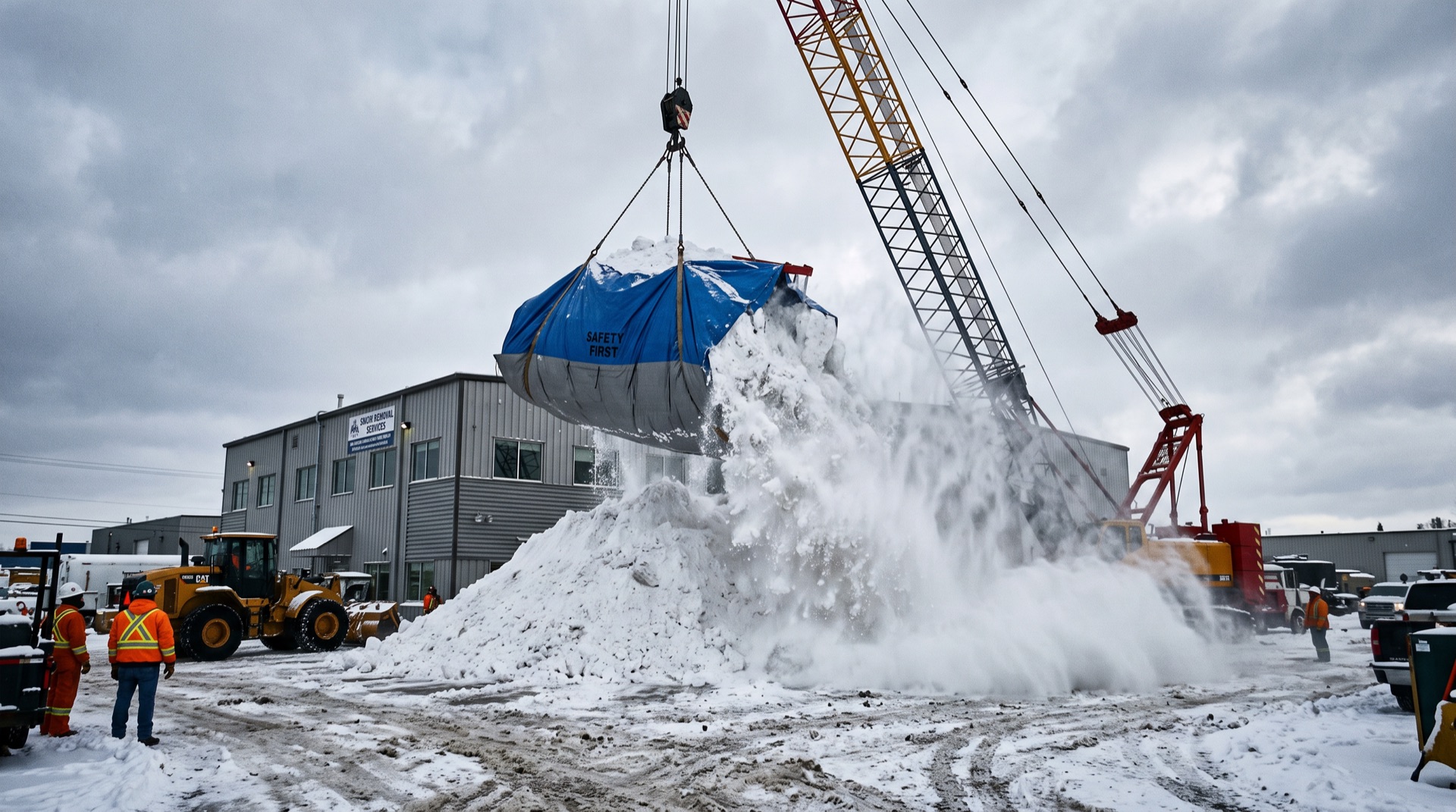
Crane-Assisted Snow Removal in St. Louis: How The Work Runs
Wind limits and when a pick gets postponed
Every crane has a wind chart, and a tarp full of snow is about the worst possible load to put on a hook in a gust - large surface area, light enough to sail, heavy enough to hurt. The limit is lower than people expect and it is not negotiable. Ceiling Sagging or Bulging After Snow.
A St. Louis pick that is cancelled for wind gets rescheduled rather than argued about. The alternative is a swinging load over an occupied building.
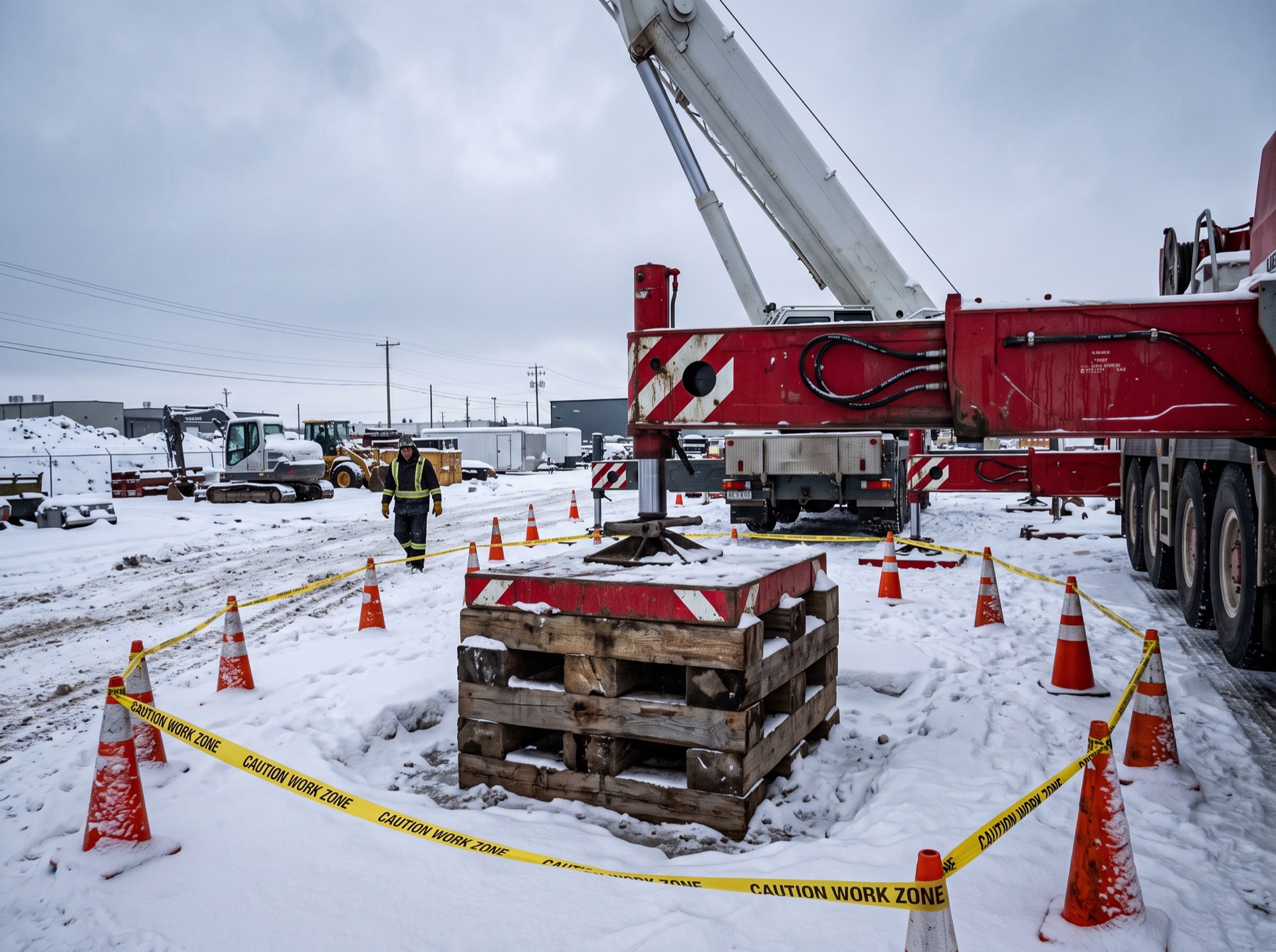
Outriggers on frozen and uneven ground
Frozen ground is not automatically good bearing. Frost heave, buried utilities, septic fields, soft fill under a lawn and anything that thaws mid-job all change what the pads are sitting on.
Pads are sized for the load and placed deliberately. It is the least visible part of a pick in St. Louis and the part with the least margin for improvisation.
The arithmetic that justifies a crane
Snow weight is depth times density times area. Fresh powder is light; settled wet pack can be several times heavier for the same depth, and drifted pack heavier again.
Crews take depth and density readings at the drift points on a roof in St. Louis, work out the load, and compare it to the structure's design capacity. A crane gets mobilised when that number says hand clearing cannot win the race against the next storm.
How a pick actually works
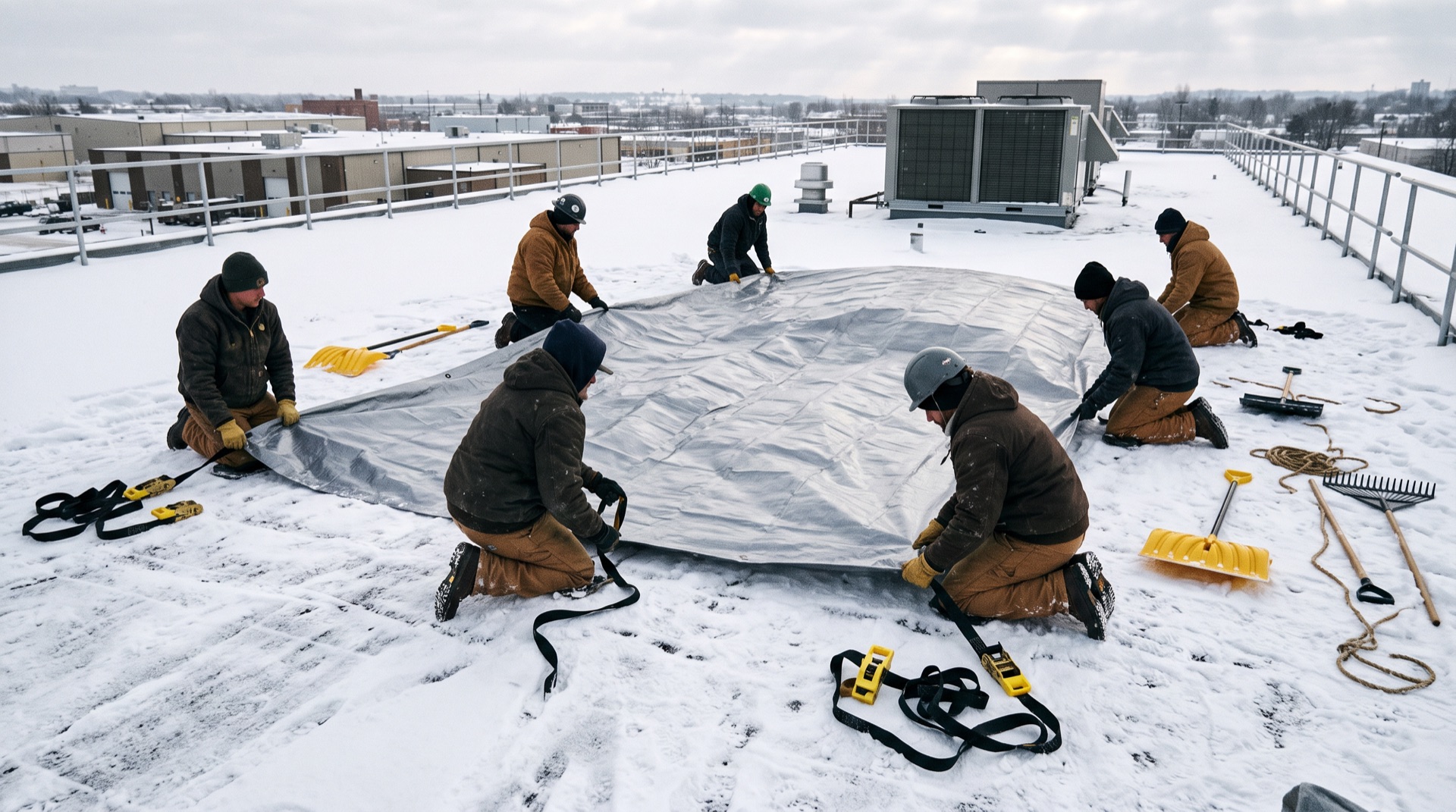
Rip-stop tarps are laid out and anchored on the deck, crews load them, and the boom lifts each loaded tarp clear and sets it down in a designated drop zone on the ground. Outrigger pads are placed on frozen ground rated for the load, and a pedestrian exclusion zone is set and marshalled for the whole operation.
It is a planned lift, not an improvisation. Site access, swing radius, overhead lines, drop zone and ground bearing all get walked before the first tarp goes down.
Traffic control and the street closure conversation
A crane set up in a street needs the street. Depending on the municipality that means a permit, cones and flaggers, a parking suspension, or all of it, and the lead time is days rather than hours.
Those applications get made as part of the booking. Discovering on the morning of the lift that the road cannot legally be occupied is an expensive way to learn the local rules in Saint Louis.
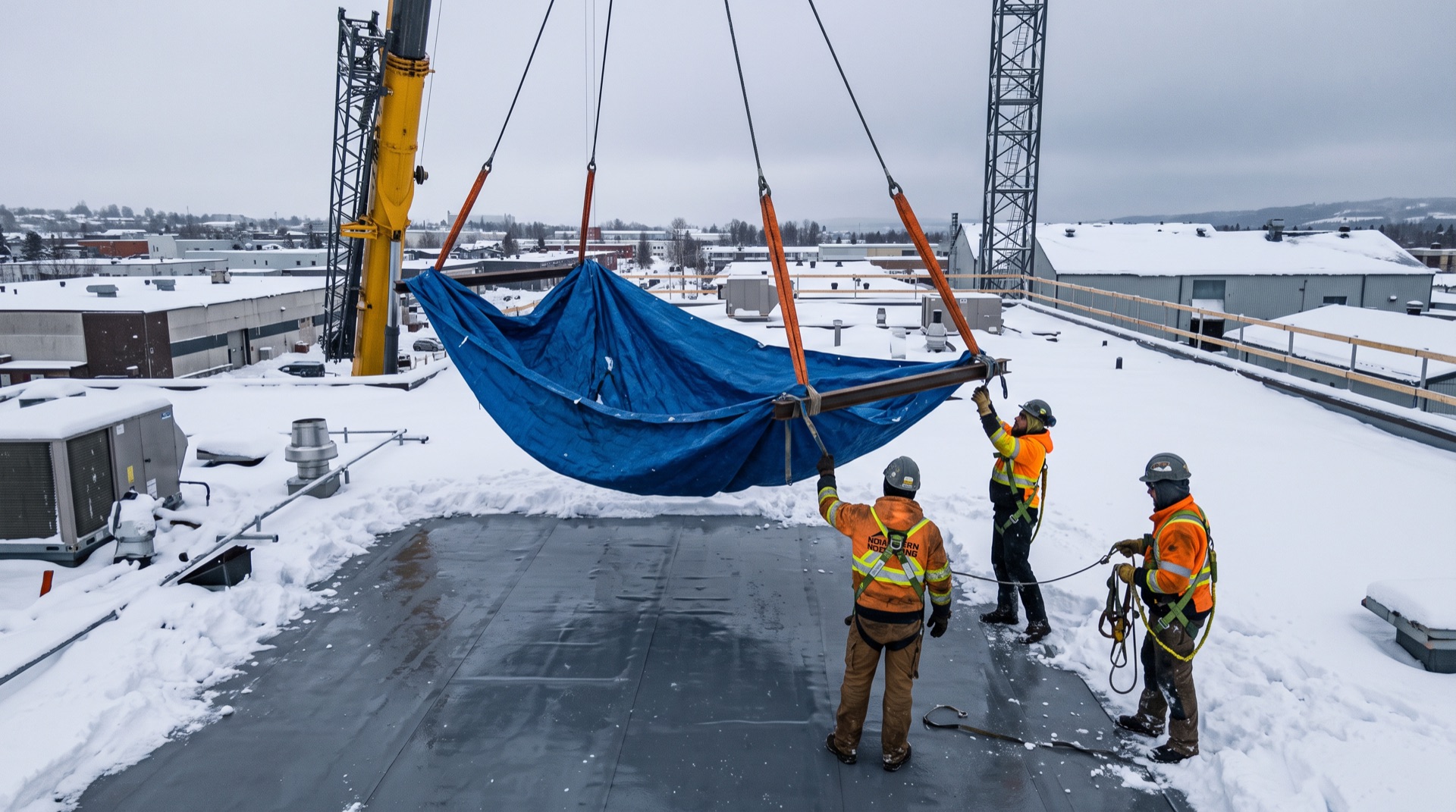
What you get in St. Louis
- Lift planned firstAccess, swing radius, overhead lines and drop zone walked before scheduling
- Weights documentedDepths, densities and loads recorded for the carrier
- Outrigger padsBearing pads sized and placed for frozen and uneven ground
| Dispatch window | Same day to 24 hours |
|---|---|
| Coverage area | St. Louis and Saint Louis County |
| Typical scope | Steam, 4-8 crew hours typical |
| Pricing model | Billed by the crew hour, rate quoted before dispatch |
| Service | Crane-Assisted Snow Removal in St. Louis, MO |
| Documentation | Dated before and after photos, written scope in Xactimate line items |
| Local ice-barrier practice | Eave membrane on new work, often absent |
Neighborhoods and Towns We Reach From St. Louis
Crews working St. Louis cover the adjoining communities on the same route — Saint Louis, Saint Ann, Maryland Heights, Bridgeton and Hazelwood — so a storm week usually means one truck handling several addresses in Saint Louis County rather than separate trips.
Nearest hub towns with their own crane snow removal pages: University City, Kirkwood, Florissant, Ballwin, St. Charles, Chesterfield.
When a storm hits Saint Louis County, crews are dispatched by severity rather than by call order — water already inside the house goes first.
Most jobs do not stop at one service. Crane Snow Removal in St. Louis often runs alongside commercial roof snow removal in St. Louis, and both get written into one scope rather than billed as separate visits.
Active leak right now? Our 24/7 St. Louis steam ice dam removal crews are dispatched first during a freeze event. Call (888) 561-9664.