Skip to content
St. Louis, MO
Flat Roof & Parapet · Saint Louis County

Commercial Ice Dam Removal in St. Louis, MO — Thaw‑Cycle Storm Response

Ice Dam Now provides commercial ice dam removal in St. Louis, MO and the surrounding Saint Louis County, using low-pressure steam only — never chipping, salt or pressure washing. Crews are licensed, insured and harness-certified, dispatch same day for active interior leaks, and bill by the crew hour at a rate quoted before dispatch. Dated photo documentation is supplied for insurance claims.

Drains and scuppers first — Flow restored before the ponded ice is worked
EPDM, TPO and mod-bit — Low-pressure steam only, seams and flashing details avoided
Overnight windows available — Work scheduled outside occupancy where access demands it
Flow confirmed below — An open drain throat over a frozen leader is not an open drain

Get Ice Dam Help St. Louis

A few quick questions, then pick a time. If water is coming in, call instead.

What is the zip code of the home?

Roof leaking right now? Call (888) 561-9664 — that is faster than any form.
Water coming through the ceiling?Every hour an ice dam sits there, more water gets under the shingles.Call (888) 561-9664
24/7
Storm Season Dispatch
No Chipping
Steam Only
Saint Louis
County Coverage
Crew Hour
Rate Quoted Up Front
Documented
Photos On Every Job

If you are in St. Louis watching icicles grow along the gutter line, what you are really watching is water that no longer has anywhere to drain. As part of our complete St. Louis winter roof services, crews handle commercial ice dam removal across Saint Louis County.

The Saint Louis County Trap: Modest Snow, Constant Cycling

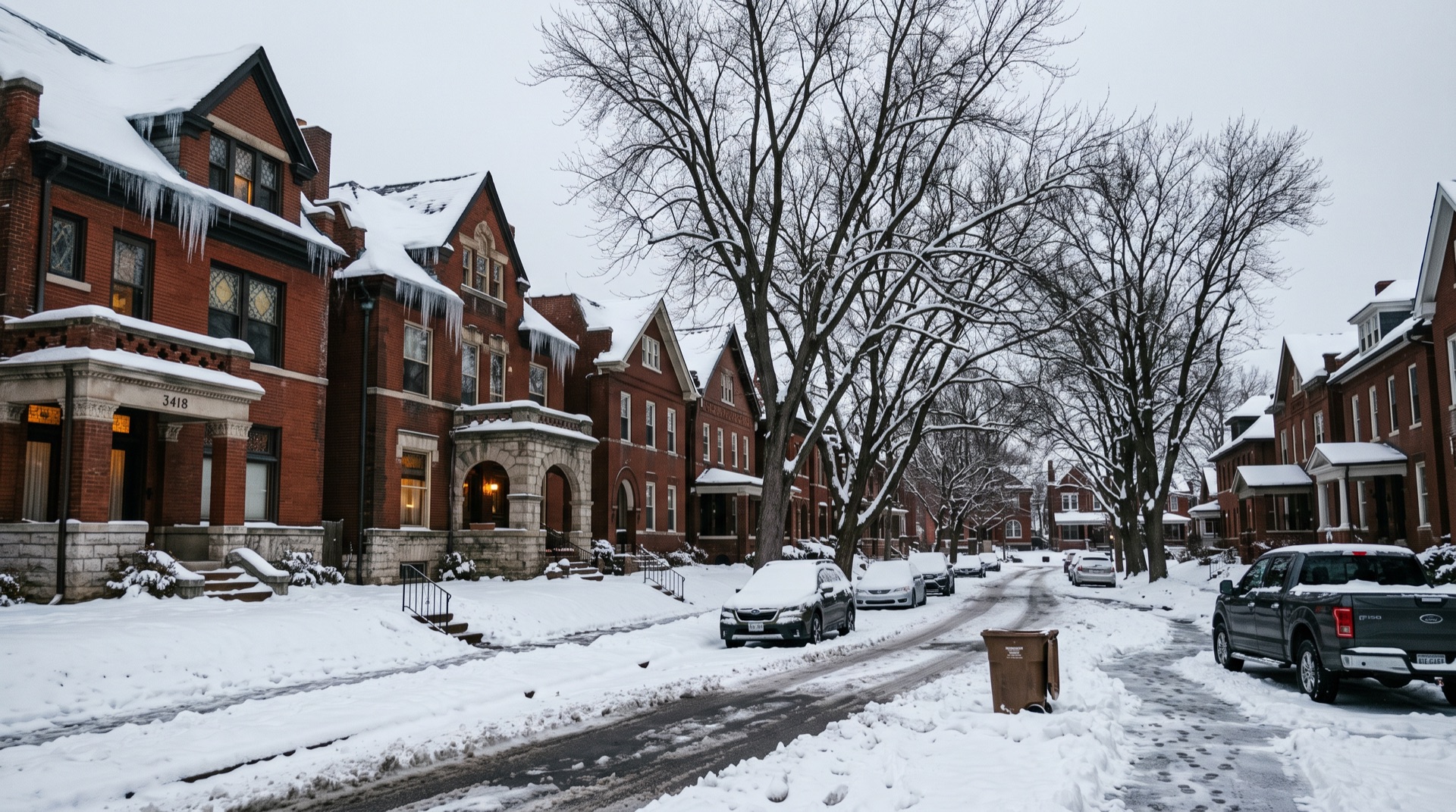
What catches people out in Saint Louis County is that the snow looks harmless. Two or three inches reads as nothing, and it builds ice on an eave just as effectively as a northern storm given enough cycles.

Diagram showing how ice dams form on roofs due to inadequate insulation and poor ventilation
Heat escaping into the attic melts roof snow; the meltwater refreezes at the cold eave and the dam grows a layer every cycle.

The expectation is the problem. Nobody in St. Louis re-roofs with ice dams in mind, so when a cycling stretch arrives the houses with the least margin all leak in the same week.

Ice-barrier practice in Saint Louis County

The residential code Missouri follows requires eave ice barrier on new work, and Saint Louis County enforces it. The variable on any given house is simply when it was last roofed.

Commercial Ice Dam Removal in St. Louis: How The Work Runs

Built for property managers

One contact, one scheduled window, one invoice coded the way your accounting needs it. Crews work around tenant hours where that matters, and the condition report goes to whoever has to show the board or the owner what was spent and why.

Access control, hatches and escorts

Getting onto a commercial roof is a procedure: keys or fobs, a hatch that may be padlocked, a ladder in a locked plant room, sometimes a site induction and an escort for the duration.

Sorting that out with the property manager in advance is the difference between a crew starting at seven and a crew waiting in the parking lot until nine. Where a tenant controls the only access, that conversation happens before the dispatch rather than on the roof.

Working around rooftop plant

HVAC curbs, exhaust fans, conduit, gas lines, solar racking and railing are all obstacles and all drift traps. The snow behind a large unit is usually the deepest on the roof and the ice under it the thickest.

Crews work around and under them rather than over, and anything running stays running.

Flat roofs fail differently

A pitched residential roof dams at the eave. A commercial deck dams at its drainage: frozen scuppers, iced-over internal drains, and ponding that refreezes into a sheet across the low spots. Water then sits on the membrane at depth, finds a seam or a flashing detail, and comes through into the tenant space below.

Parapet walls make it worse by holding the melt on the deck instead of letting it run off an edge. By the time it shows up as a ceiling tile stain in a St. Louis unit, there is usually standing water up there.

Overflow scuppers are the tell

Water running out of an overflow scupper in winter means the primary drains are not taking it. On a St. Louis building that is a sign the roof is holding standing water somewhere above a frozen drain, and the load is being carried rather than shed.

Scuppers are checked first for exactly that reason, and a dry scupper above a wet roof is as informative as a running one.
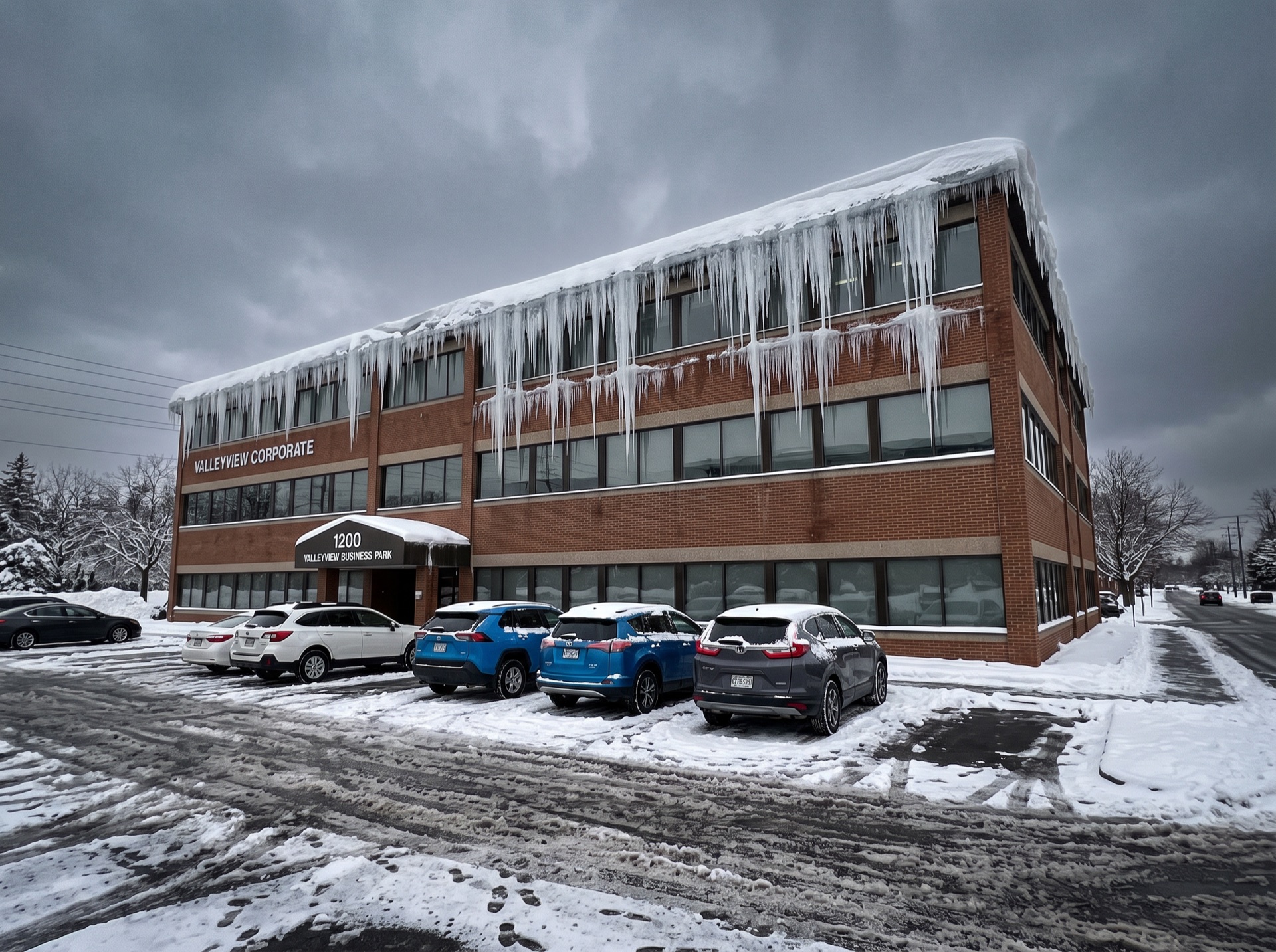
Large icicles hanging from roofline of Valleyview Corporate office building in winter
Massive icicles line the roofline of 1200 Valleyview Business Park following a heavy winter storm.

What you get in St. Louis

  • Plant worked aroundHVAC curbs, conduit, racking and railing avoided, not cleared over
  • EPDM, TPO and mod-bitLow-pressure steam only, seams and flashing details avoided
  • Overnight windows availableWork scheduled outside occupancy where access demands it
Commercial Ice Dam Removal in St. Louis, MO — specification
Service specification for St. Louis, MO
Removal methodLow-pressure steam only. No chipping, salt or pressure washing.
ServiceCommercial Ice Dam Removal in St. Louis, MO
Pricing modelBilled by the crew hour, rate quoted before dispatch
Primary climate stressorRepeated thaw-freeze cycling
Dispatch windowSame day to 24 hours
Coverage areaSt. Louis and Saint Louis County
Typical scopeSteam, 4-8 crew hours typical

Neighborhoods and Towns We Reach From St. Louis

Crews working St. Louis cover the adjoining communities on the same route — Saint Louis, Saint Ann, Maryland Heights, Bridgeton and Hazelwood — so a storm week usually means one truck handling several addresses in Saint Louis County rather than separate trips.

Nearest hub towns with their own commercial ice dams pages: University City, Kirkwood, Florissant, Ballwin, St. Charles, Chesterfield.

Coverage runs across St. Louis and the nearby towns all winter, and capacity is surged into whichever Missouri market the storm actually hits.

Most jobs do not stop at one service. Commercial Ice Dams in St. Louis often runs alongside commercial roof snow removal in St. Louis, and both get written into one scope rather than billed as separate visits.

Active leak right now? Our 24/7 St. Louis steam ice dam removal crews are dispatched first during a freeze event. Call (888) 561-9664.
Conditions We Work In

Commercial Ice Dam Removal In Practice

Conditions crews work in across Saint Louis County. Every job is photographed before and after.

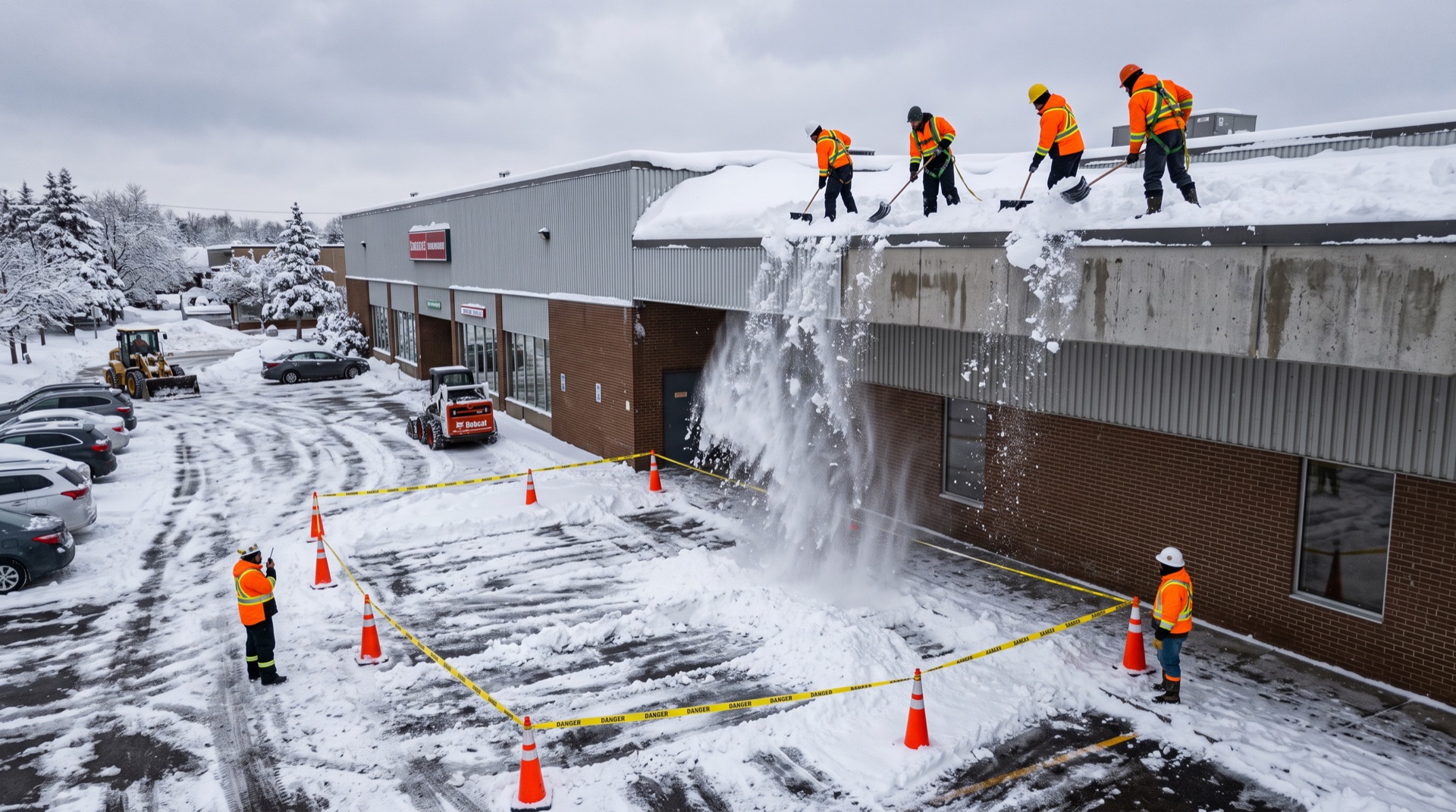
Workers in high-visibility gear shoveling snow off commercial building roof into taped-off danger zone below
A professional crew safely removes heavy snow from a commercial rooftop with a danger-taped exclusion zone below.
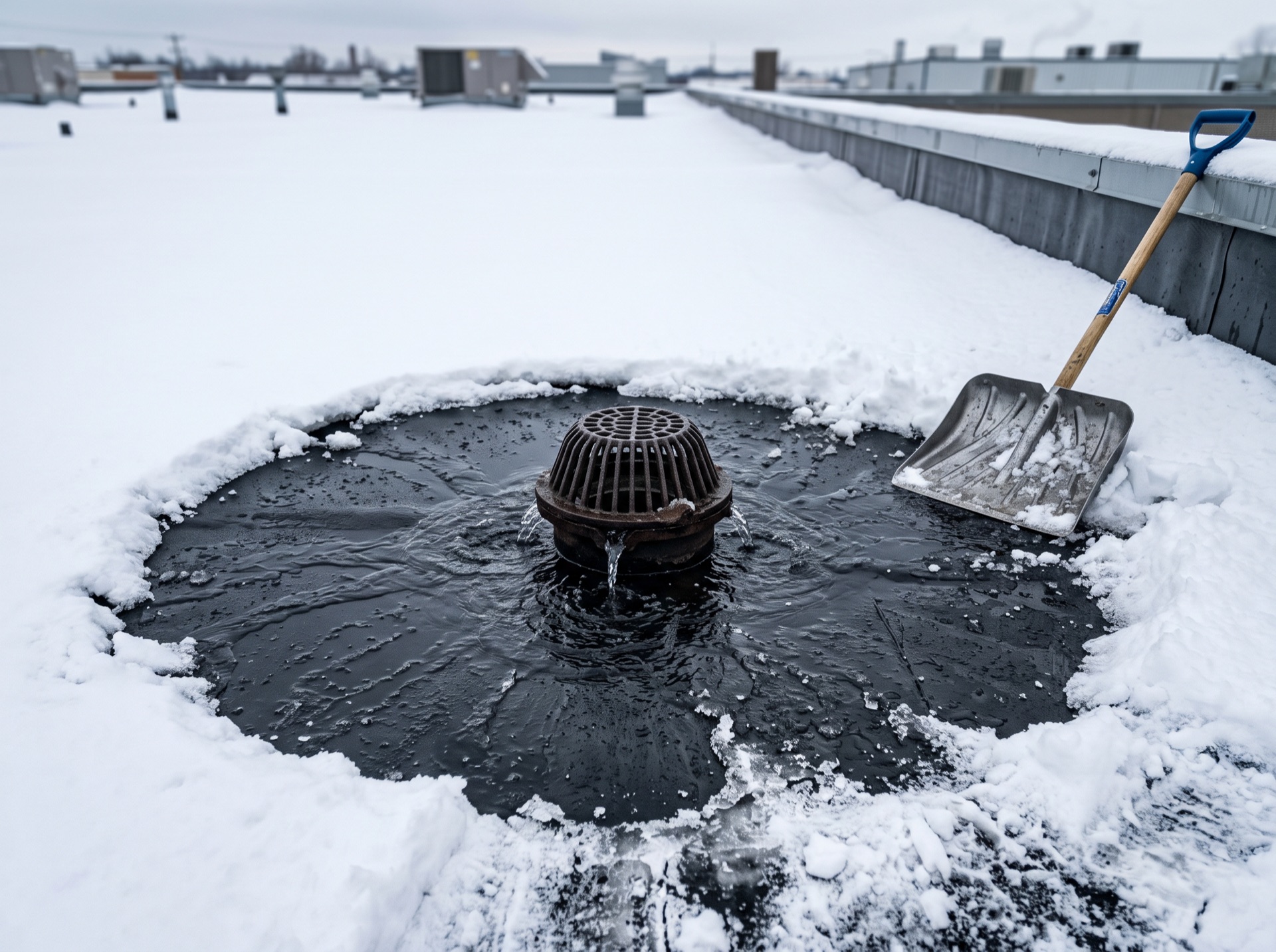
Cleared roof drain surrounded by melting snow on a flat commercial rooftop in winter
A roof drain cleared of snow and ice on a flat commercial rooftop, with a snow shovel resting nearby.
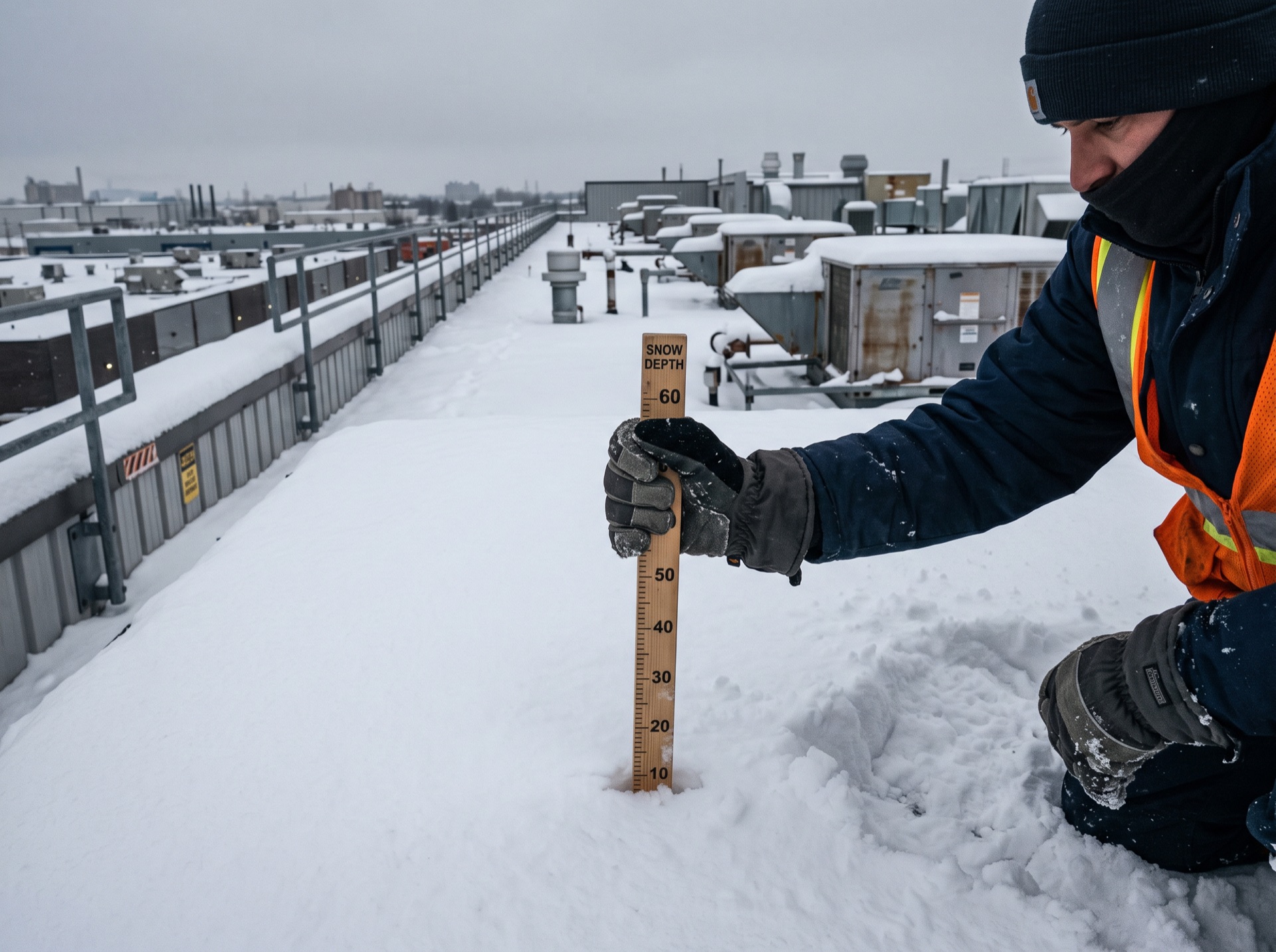
Worker in safety vest measuring snow depth on commercial rooftop with ruler
A safety worker measures accumulated snow depth on a commercial rooftop using a graduated snow depth gauge.
FAQ

St. Louis Questions We Actually Get Asked

It is billed by the crew hour, and the rate plus a realistic time estimate are quoted on the phone before anyone is dispatched.

  • Scope drives the hours: length and thickness of the ice, roof pitch and height, and whether the gutters are frozen solid.
  • Access matters too — a three-story St. Louis roof takes longer to set up on than a ranch.
  • The invoice matches the quote. There are no surprise add-ons written on the tailgate.

No, but there is a worse one: after the thaw, when the evidence has melted and the damage is all that is left.

  • Mid-storm calls are fine — crews work through freeze events.
  • An evening call for a leak that started that afternoon usually gets a next-morning slot.
  • Waiting for a weekend to pass is the most common and most expensive delay.

Material coming off a roof has to land somewhere, so drop zones are chosen before anything starts.

  • Shrubs, condensers, railings and low porch roofs get identified and worked around.
  • Walkways and the driveway are cleared again before the crew leaves.
  • On a tight St. Louis lot material sometimes has to be carried out, which is said in the quote.

Please do not. Salt corrodes flashing, fasteners, gutters and anything metal it drains across, and it damages whatever is planted below.

  • Calcium chloride is less aggressive than rock salt but still ends up in the soil at the drip line.
  • A puck melts a hole, not a drainage path, so the water simply refreezes a few inches further on.
  • Crews use heat and nothing else - no salt, no chemicals, nothing corrosive.

No. Steam removal is maintenance work, not construction, so no building permit is pulled for it anywhere in Saint Louis County.

  • A permit does come into it once the work becomes a repair — new decking, a re-roof or structural work.
  • That is handled through the St. Louis building department, or the Saint Louis County building authority where the city has no department of its own.
  • Ask before signing anything: a contractor who says a re-roof in St. Louis needs no permit is telling you something useful about how they work.

Yes. Sites get triaged by risk rather than worked in the order they were listed - occupied buildings with active interior water first, then the largest spans and the deepest loads. You get one report covering all of them with readings and photographs per address.

Yes, and crews often do. Where noise, access or tenant traffic make that difficult, work gets scheduled outside occupancy. Set the constraint on the call and the window is planned around it.

Nearby

Commercial Ice Dams In Towns Around St. Louis

Same-Day Response

Get A St. Louis Crew Out

Every freeze-thaw cycle adds another layer to the dam and pushes a little more water under the shingles. That clock is already running.

✓ Licensed & insured✓ Low-pressure steam only✓ Rate quoted up front✓ Photos for your claim
Online Quote(888) 561-9664