Skip to content
Plymouth, MN
Structural Snow Load · Hennepin County

Commercial Roof Snow Removal in Plymouth, MN — Snow‑Belt Storm Response

Ice Dam Now handles commercial roof snow removal for Plymouth, MN properties and the wider Hennepin County. Removal is by low-pressure steam, never mechanical. Dispatch is same day where water is already inside, pricing is by the crew hour quoted before a crew leaves, and every job is photographed before and after for claim purposes. Crews are licensed, insured and harness-certified.

Overflows opened first — Drains and scuppers cleared before the load comes off
Mid-span measured — Depth read over the longest unsupported span, not the average
Drift-point survey — Depth and density measured where it collects, not where it is convenient
Balanced reduction — Load brought under threshold without shifting it onto one bay

Get Ice Dam Help Plymouth

A few quick questions, then pick a time. If water is coming in, call instead.

What is the zip code of the home?

Roof leaking right now? Call (888) 561-9664 — that is faster than any form.
Water coming through the ceiling?Every hour an ice dam sits there, more water gets under the shingles.Call (888) 561-9664
24/7
Storm Season Dispatch
No Chipping
Steam Only
Hennepin
County Coverage
Crew Hour
Rate Quoted Up Front
Documented
Photos On Every Job

Most Plymouth homeowners find out about an ice dam from the inside — a damp patch on a bedroom ceiling, or water tracking down the inside of a window frame. As part of our complete Plymouth winter roof services, crews handle commercial roof snow removal across Hennepin County.

Plymouth Ice Dams: What Lake-Effect Snow Does to an Eave

What makes Hennepin County roofs dam is not the seasonal total, it is how the snow arrives. Bands dump a heavy, saturated pack in hours, and that pack becomes a water reservoir sitting on a heated surface.

Diagram showing how ice dams form on roofs due to inadequate insulation and poor ventilation
Heat escaping into the attic melts roof snow; the meltwater refreezes at the cold eave and the dam grows a layer every cycle.

What turns that pack into a dam is the house underneath it. Warm air finds its way into the attic, the underside of the snow melts, and the water travels to an overhang that has no heated space below it. There it stops.

Ice-barrier practice in Hennepin County

Ice-barrier membrane at the eaves is standard practice across the lake-effect counties, and most Minnesota jurisdictions enforce it on re-roofs. If your roof predates that, the eave has nothing under the shingles holding water out.

Commercial Roof Snow Removal in Plymouth: How The Work Runs

Reading the design load off the drawings

Where structural drawings exist they state the design ground snow load and the roof's own capacity, and that number turns the whole question from opinion into arithmetic. Measured depth and density against design capacity gives a percentage rather than an argument. Ceiling Sagging or Bulging After Snow.

Where the drawings have been lost - common on older Plymouth stock - the conservative assumption is the code minimum of the era the building went up, which is usually well below what a modern roof would be built to.

Reduction, not bare deck

The goal is to bring the load under threshold safely, not to scrape a roof in Plymouth clean. Clearing is balanced across the deck so load is not shifted onto one bay, drains and scuppers are opened so melt has an exit, and a cushion layer always stays on the membrane.

Where the figures call for it, crews bring in crane-assisted picks instead of adding bodies to a roof that is already carrying too much.

Drains and overflows come first

Before anything else comes off, the drains, scuppers and overflow outlets get opened. Otherwise the melt from the clearing has nowhere to go and the roof trades a snow problem for a ponding one.

On a deck in Plymouth with internal drains that means confirming flow below, not just clearing the grate.

Reduction to a threshold, not a bare deck

The goal is bringing the load under the structure's capacity safely, with a cushion layer left on the membrane throughout.

Scraping a commercial Plymouth roof to bare membrane costs more, takes longer and risks the roof covering for no structural benefit.

Ponding after the clear

Taking the snow off a flat roof with frozen drains leaves meltwater with nowhere to go, and water that ponds and refreezes puts load back on a deck that was just relieved.

So drains and overflows are opened as part of the clear rather than afterwards, and the roof is left draining. A clear that stops at the snow is half a job.
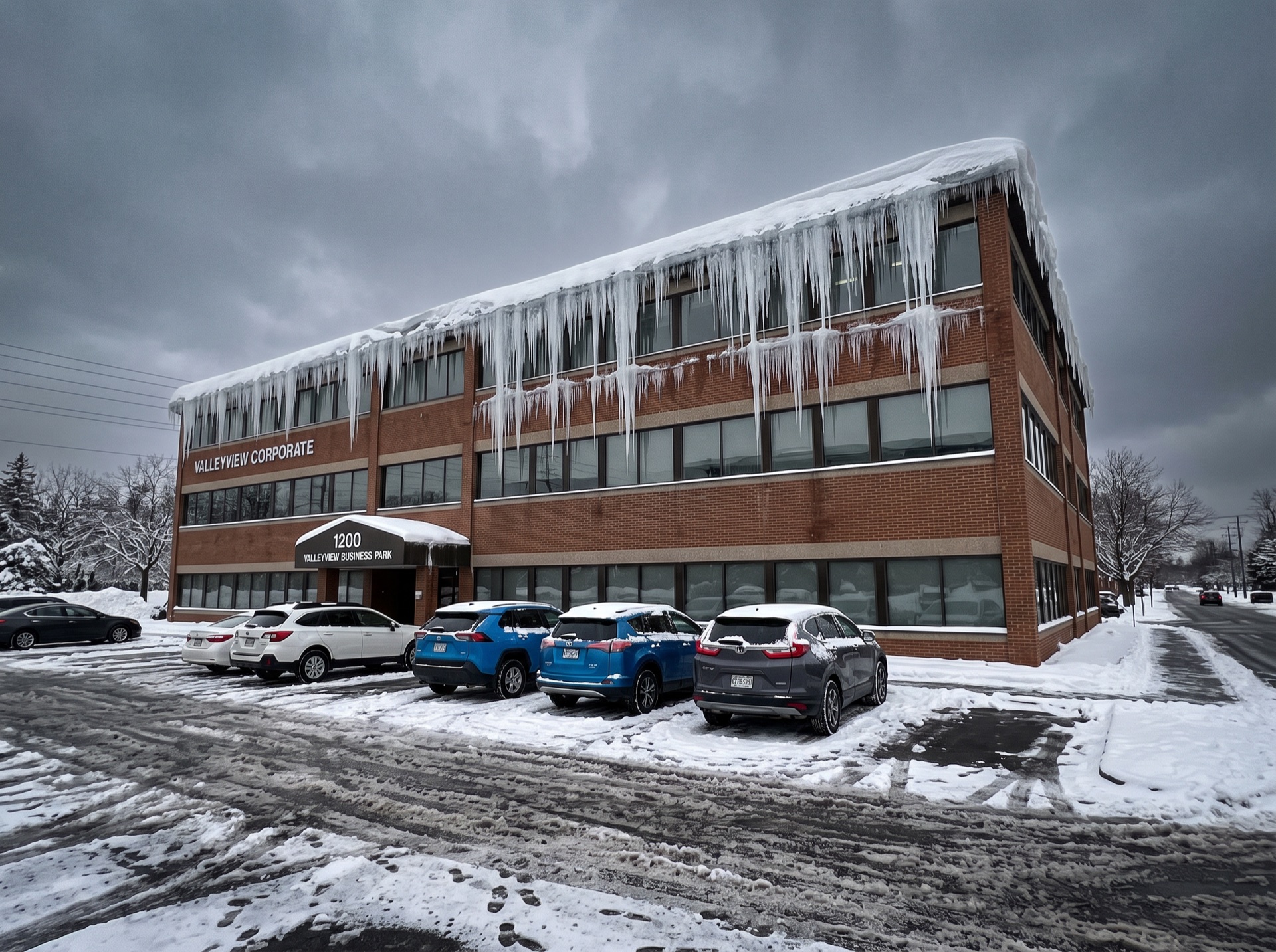
Large icicles hanging from roofline of Valleyview Corporate office building in winter
Massive icicles line the roofline of 1200 Valleyview Business Park following a heavy winter storm.

What you get in Plymouth

  • Portfolio routesStanding storm schedules with per-visit condition reports
  • Balanced reductionLoad brought under threshold without shifting it onto one bay
  • Drift-point surveyDepth and density measured where it collects, not where it is convenient
Commercial Roof Snow Removal in Plymouth, MN — specification
Service specification for Plymouth, MN
Local ice-barrier practiceEave membrane expected on re-roofs
Removal methodLow-pressure steam only. No chipping, salt or pressure washing.
Dispatch windowSame day to 24 hours
DocumentationDated before and after photos, written scope in Xactimate line items
Primary climate stressorLake-effect bands, wet heavy pack
Typical scopeSteam, 6-12 crew hours typical
Coverage areaPlymouth and Hennepin County

Plymouth Coverage and the Adjoining Communities

Crews working Plymouth cover the adjoining communities on the same route — Wayzata, Navarre, Long Lake, Osseo and Crystal Bay — so a storm week usually means one truck handling several addresses in Hennepin County rather than separate trips.

Nearest hub towns with their own commercial snow pages: Maple Grove, Golden Valley, Hopkins, Minnetonka, Brooklyn Park, St. Louis Park.

During a cold snap Plymouth gets worked alongside the neighboring Hennepin County towns on the same route, with active interior leaks moved to the front of the list.

Most jobs do not stop at one service. Commercial Snow in Plymouth often runs alongside crane-assisted snow removal in Plymouth, and both get written into one scope rather than billed as separate visits.

Active leak right now? Our 24/7 Plymouth steam ice dam removal crews are dispatched first during a freeze event. Call (888) 561-9664.
Conditions We Work In

Commercial Roof Snow Removal In Practice

Conditions crews work in across Hennepin County. Every job is photographed before and after.

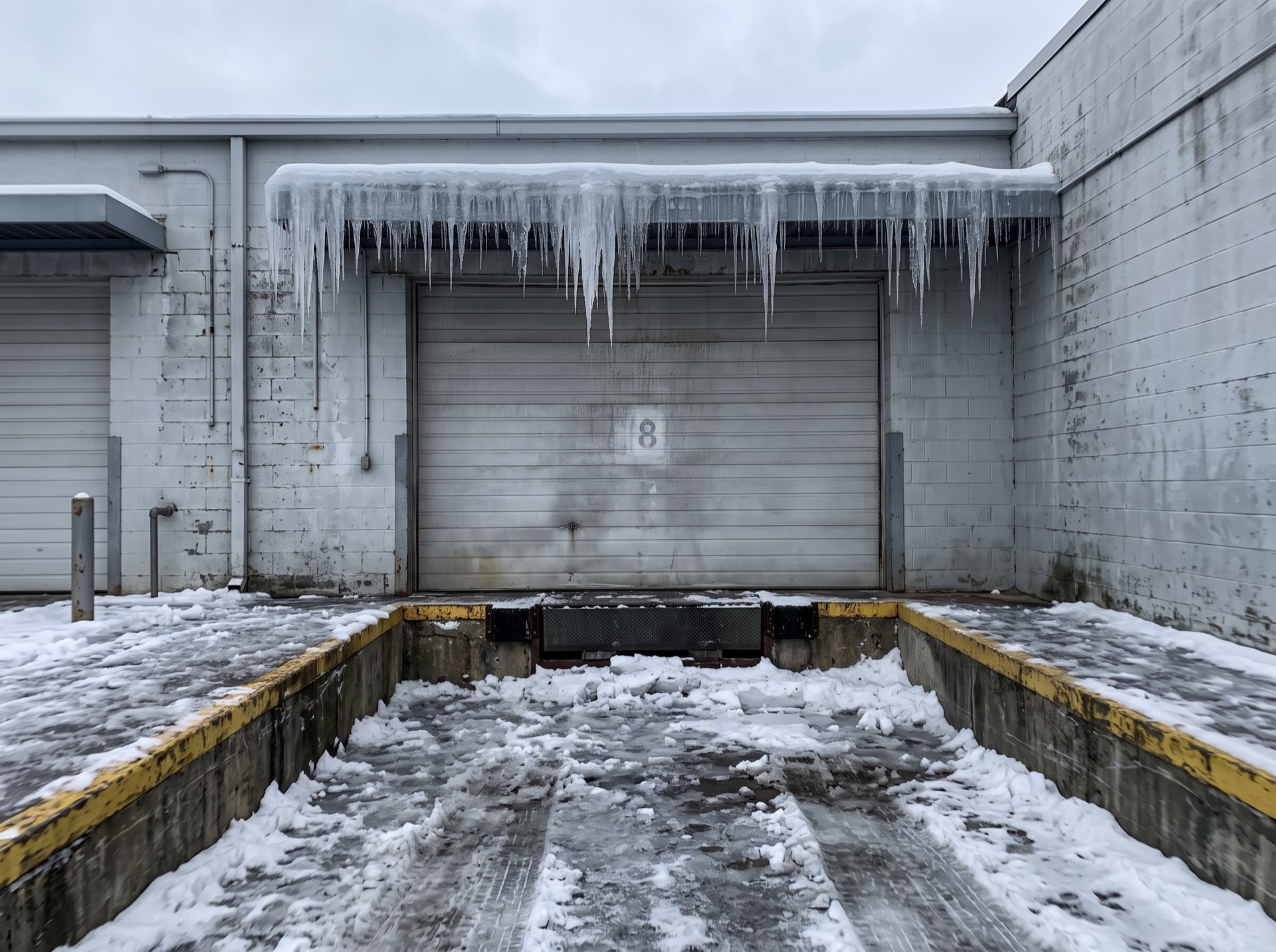
Large icicles hanging over warehouse loading dock number 8 in winter
Heavy icicles form along the roofline above a snow-covered commercial loading dock during freezing winter conditions.
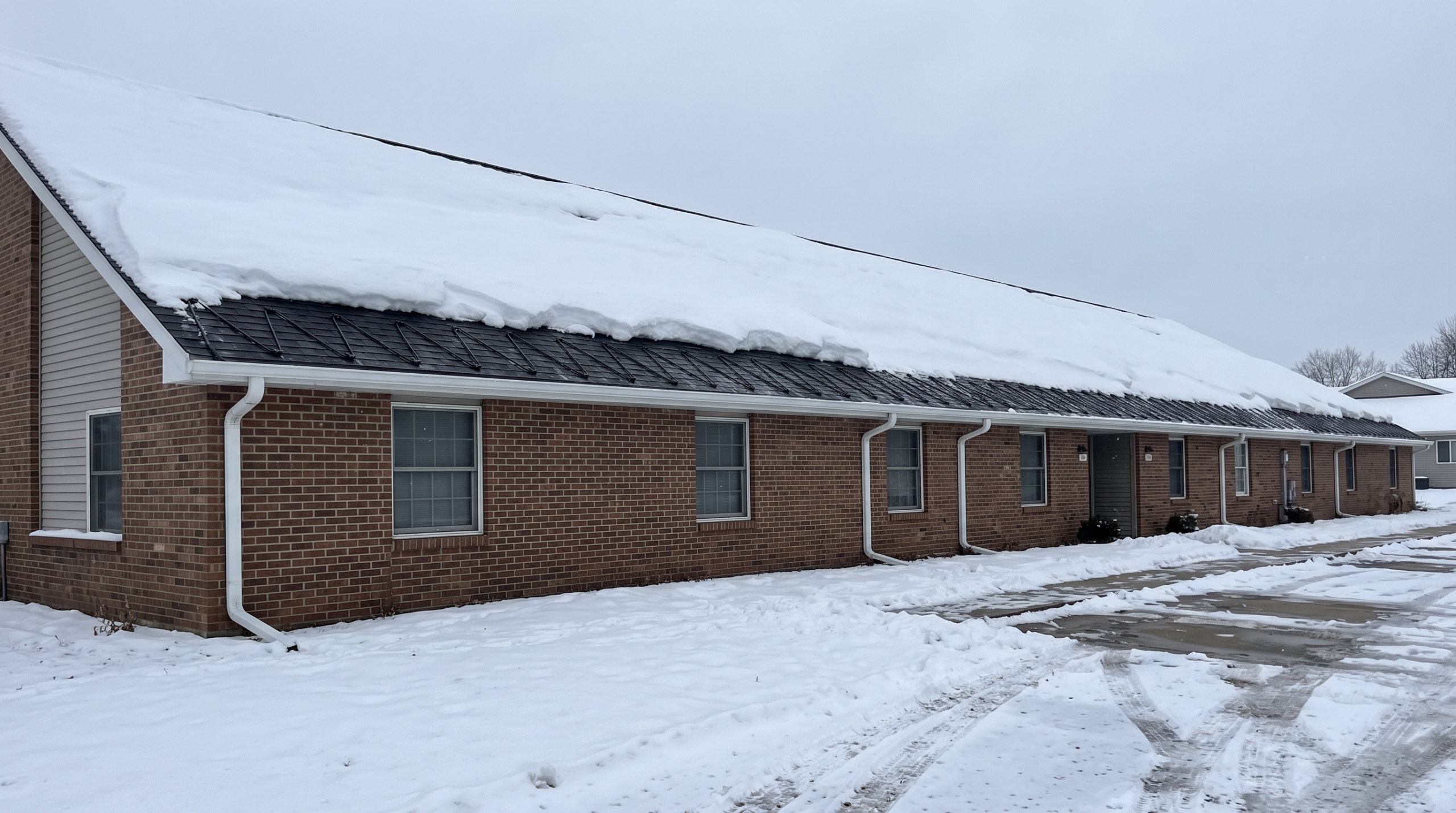
Brick apartment block with snow on roof and ice-dam-free eaves in winter
This commercial brick apartment block shows clear, ice-dam-free eaves despite heavy snow accumulation on the roof.
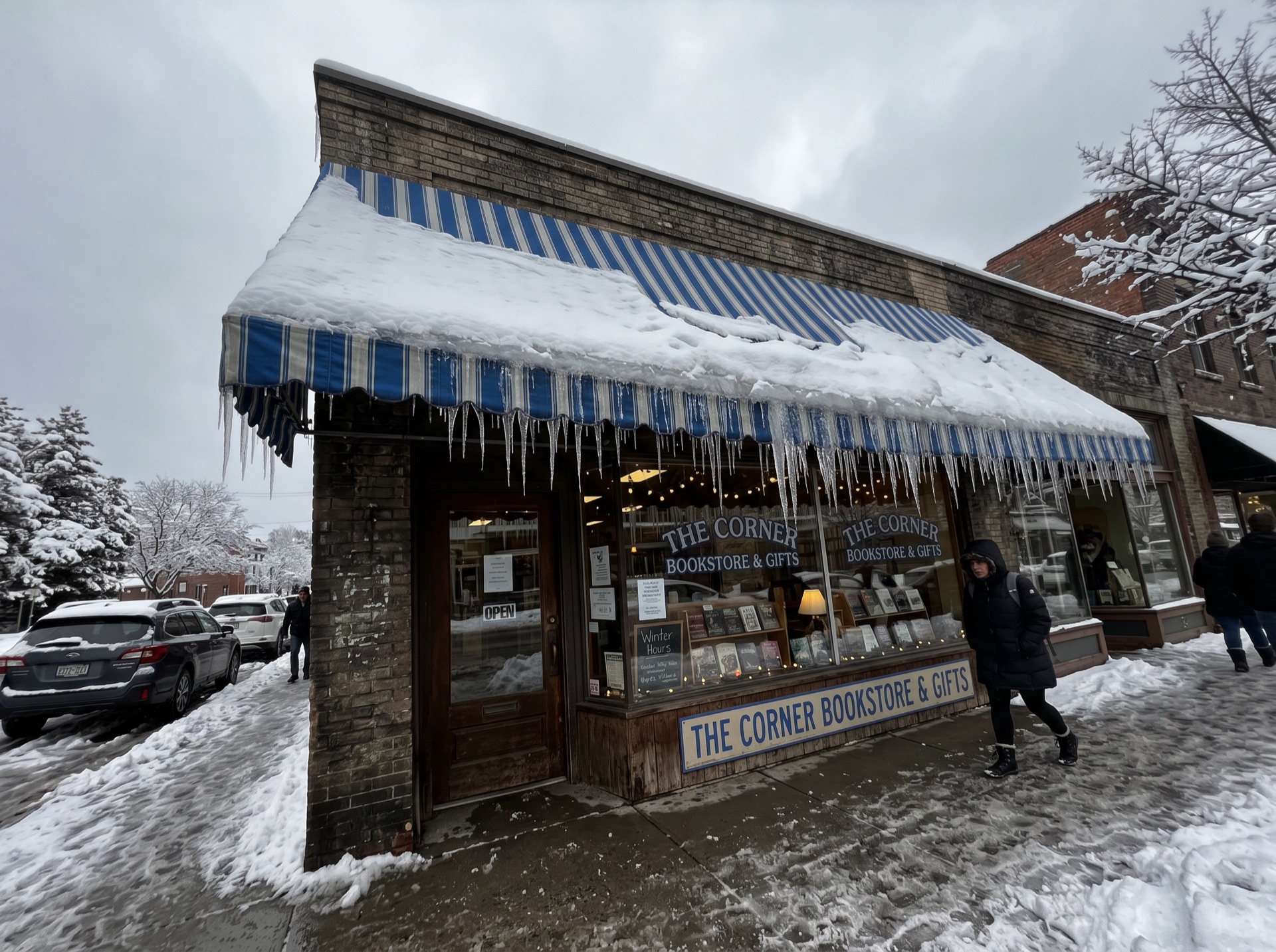
The Corner Bookstore and Gifts storefront with heavy snow and icicles on blue striped awning
Icicles hang from a snow-laden striped awning outside The Corner Bookstore & Gifts on a wintry day.
FAQ

Local Questions About Plymouth Roofs

It is billed by the crew hour, and the rate plus a realistic time estimate are quoted on the phone before anyone is dispatched.

  • Scope drives the hours: length and thickness of the ice, roof pitch and height, and whether the gutters are frozen solid.
  • Access matters too — a three-story Plymouth roof takes longer to set up on than a ranch.
  • The invoice matches the quote. There are no surprise add-ons written on the tailgate.

Please do not. Salt corrodes flashing, fasteners, gutters and anything metal it drains across, and it damages whatever is planted below.

  • Calcium chloride is less aggressive than rock salt but still ends up in the soil at the drip line.
  • A puck melts a hole, not a drainage path, so the water simply refreezes a few inches further on.
  • Crews use heat and nothing else - no salt, no chemicals, nothing corrosive.

Clear a path to the affected side, move vehicles off the driveway and unlock any side gate.

  • Put something under an active interior drip and move what you can out of the way.
  • Photograph the interior damage yourself as well - more evidence is never a problem.
  • Do not go on the roof or up a ladder. That is the part that sends people to hospital.

Usually. The equipment needs a water supply and a place to park within hose reach, which is normally achievable even on a tight lot.

  • Hose runs of a few hundred feet are routine.
  • Street parking in a Hennepin County residential area is generally workable.
  • Tell dispatch about access on the call so the right setup arrives.

Tell the crew. Chipping marks change what the roof needs and they matter for the claim.

  • Cracked shingles and punctures get photographed and reported rather than steamed over.
  • Damage caused by removal attempts is treated differently by carriers than storm damage.
  • It is extremely common and nobody is going to lecture you about it.

When the measured load approaches a meaningful fraction of design capacity, when rain is forecast onto an existing pack, when drifting has loaded one area far more than the rest, or when the drains have stopped taking water. Depth alone is a poor trigger - density is what matters, and that needs measuring.

For light snow on an accessible roof with proper edge protection, sometimes. The limits are fall protection on a deck with no anchors, membrane damage from the wrong tools, and knowing when a load is actually dangerous. Where in-house clearing is reasonable, that is worth saying, and the equipment and training it needs can be set out.

Nearby

Commercial Snow In Towns Around Plymouth

Same-Day Response

Get A Plymouth Crew Out

Waiting for a thaw is a strategy, but it is an expensive one — the melt has to go somewhere, and it goes into the insulation first.

✓ Licensed & insured✓ Low-pressure steam only✓ Rate quoted up front✓ Photos for your claim
Online Quote(888) 561-9664